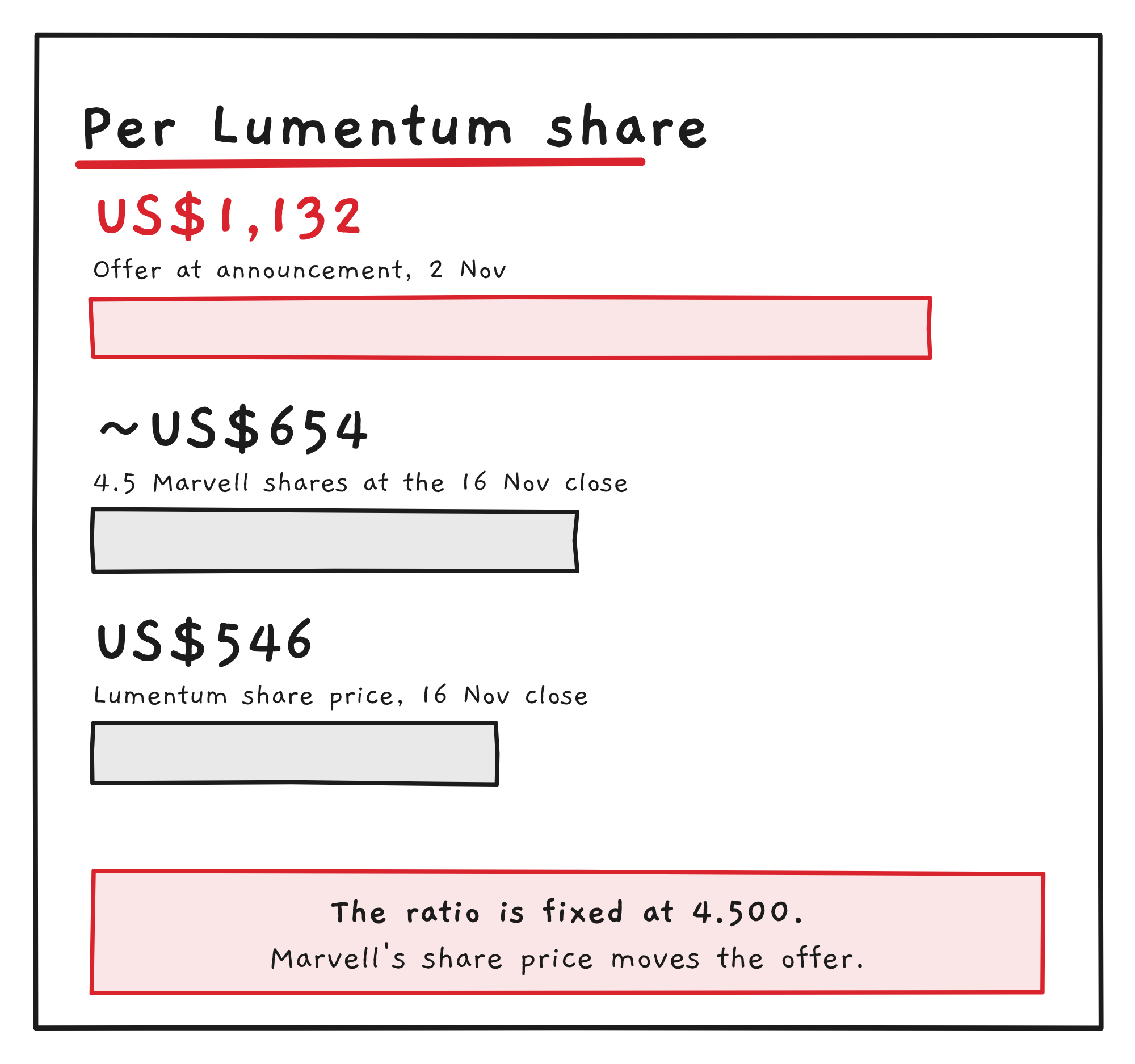
Marvell Technology agreed on 2 November, US time, to buy Lumentum in an all-stock deal that the two companies value at US$115 billion, or about US$1,132 per Lumentum share, according to their joint press release. The exchange ratio is fixed at 4.5 Marvell shares for each Lumentum share, so the offer has dropped with Marvell’s stock. At Marvell’s 16 November close of US$145.36, those 4.5 shares are worth about US$654.
The companies announced the deal in the release and filed 8-Ks the same day. The US$1,132 figure is a premium of about 23.9% over each company’s closing price on 28 October, the last trading day before deal speculation began. Lumentum closed at US$546 on 16 November, about US$108 below the value of the Marvell shares its holders are due to receive.
What Lumentum holders get
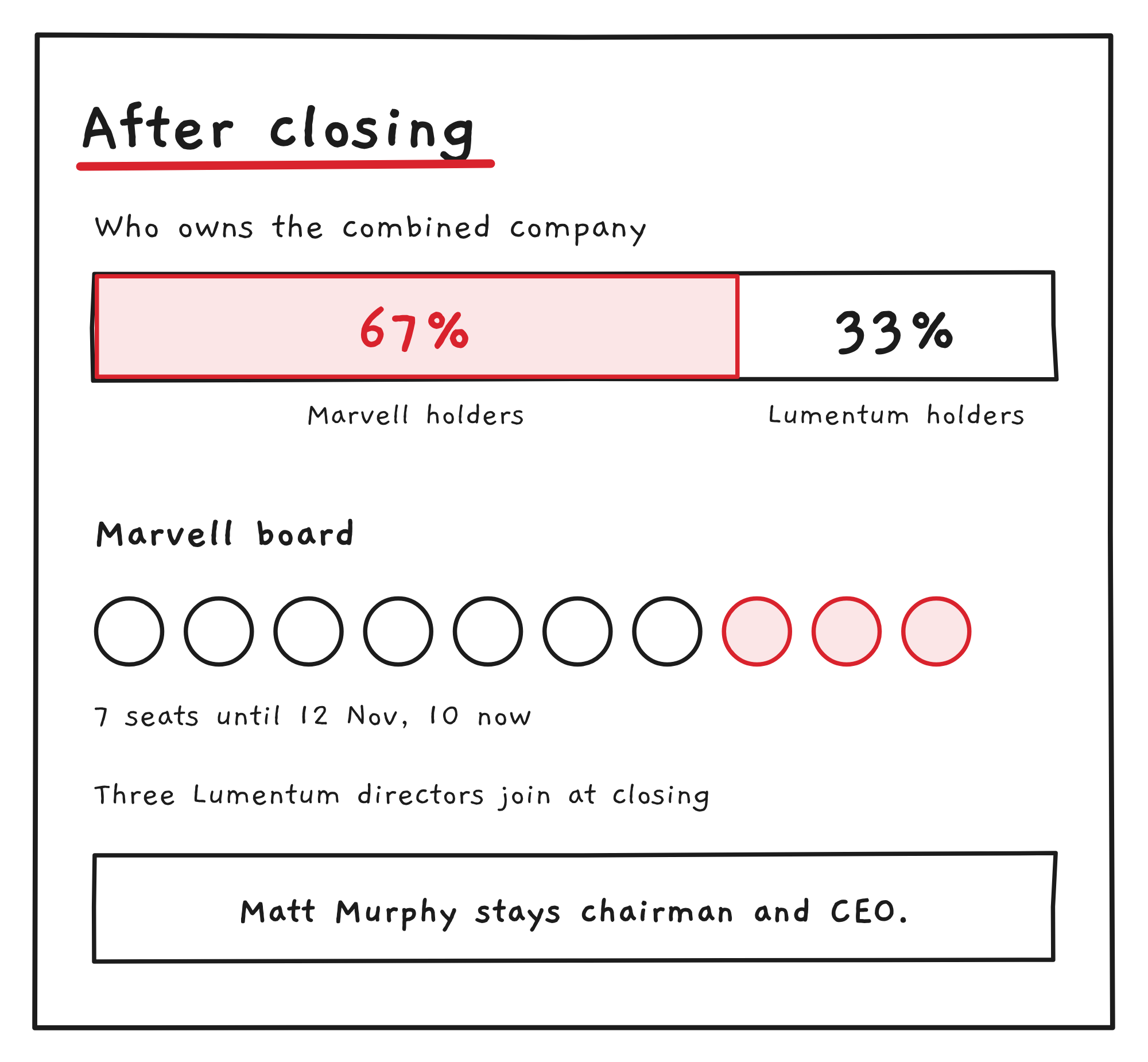
Each Lumentum common share converts into 4.500 Marvell shares, with cash paid for fractions. Marvell says its current holders will own about 67% of the combined company and Lumentum holders about 33%, on a fully diluted basis. Matt Murphy stays chairman and CEO. Three Lumentum directors, including Lumentum CEO Michael Hurlston, join Marvell’s board once the deal closes.
Why Marvell wants it
Marvell makes custom chips and the networking silicon that moves data between servers. Lumentum makes lasers, optical transceivers and optical circuit switches, the parts that send data as light through fibre. Marvell’s release says the limits of copper wiring are pushing AI data centres toward optical links, and that putting the two portfolios together lets it co-design electrical and optical parts for customers. Murphy said in the release: “AI infrastructure is undergoing a fundamental architectural shift toward optical connectivity, creating an opportunity that comes along once in a generation.”
The release puts the combined company’s addressable market at US$550 billion. Marvell says it sees more than US$1 billion in annual run-rate cost synergies and expects the deal to add to its non-GAAP earnings per share in the first year after closing. On the same day, Marvell reported preliminary revenue for its fiscal third quarter in line with guidance, with the range narrowed to plus or minus 2% from plus or minus 5%.
What has to happen before it closes
Marvell expects the deal to close in the first half of 2028. Lumentum holders must adopt the merger agreement, and Marvell holders must approve the share issue and a charter change that raises the number of shares Marvell can issue. The US antitrust waiting period under the Hart-Scott-Rodino Act has to expire, and the 8-K also lists “certain other required regulatory approvals” without naming the regulators.
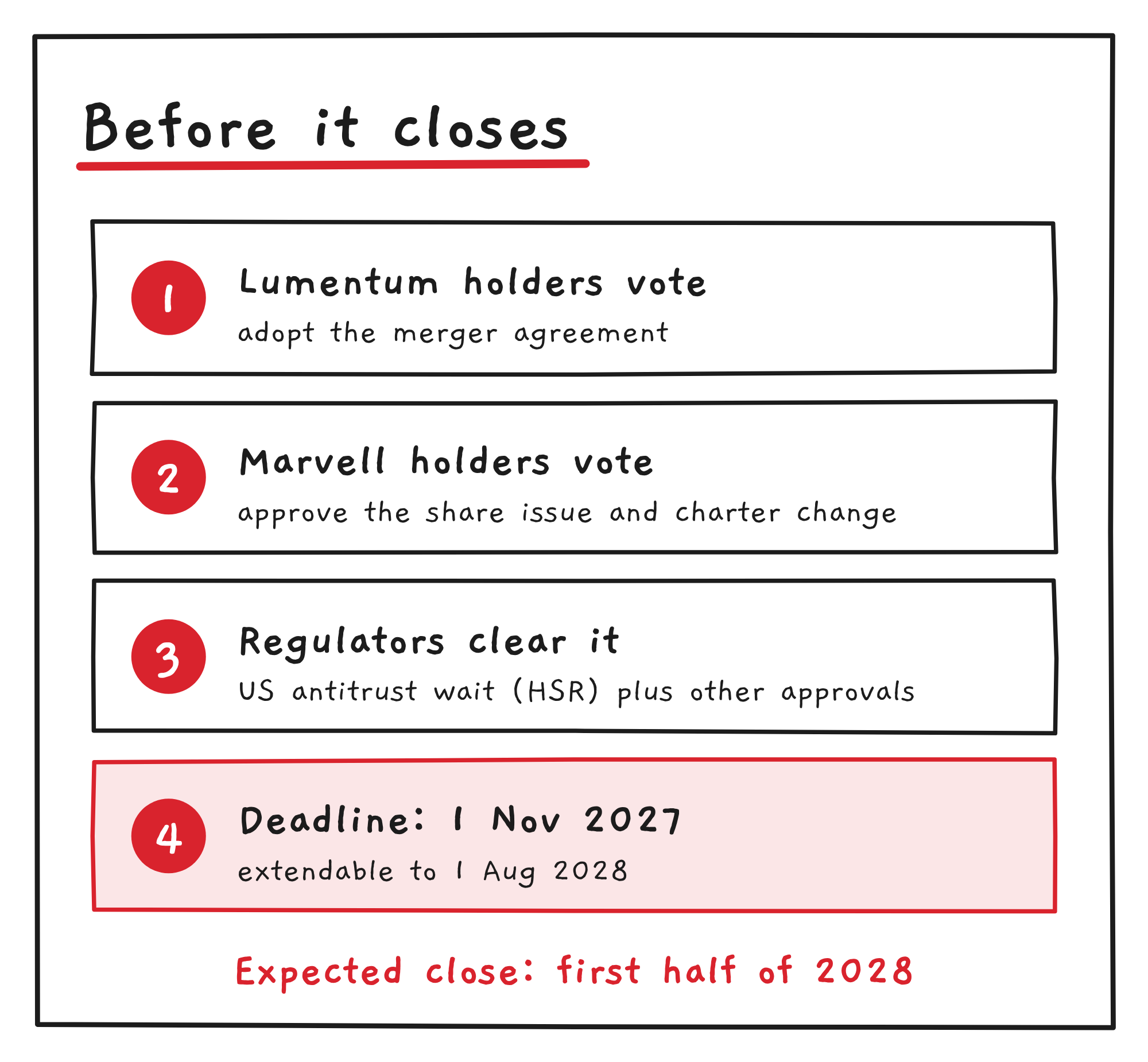
The agreement’s outside date is 1 November 2027. If regulatory approvals are still outstanding, it can be pushed back in steps to 1 February, 1 May and 1 August 2028. Marvell intends to file a Form S-4 registration statement with a joint proxy statement for both companies’ holders, and the release gives no meeting dates.
What it costs to walk away
Marvell owes Lumentum US$5.8 billion if its board withdraws its recommendation or it accepts a superior proposal. Lumentum owes Marvell US$2.9 billion in matching circumstances. Marvell owes Lumentum a separate US$3.2 billion if the deal ends because regulators block it or the outside date passes with every other condition met.
Marvell’s board before the vote
On 12 November, Marvell grew its board from seven directors to ten, adding Doug Bettinger, chief financial officer of Lam Research, Donna Morris, who leads people strategy at Walmart, and Sasan Goodarzi, CEO of Intuit, according to TheStreet’s reading of Marvell’s SEC filing. Marvell’s full fiscal third-quarter results are due in its Form 10-Q, and the release gives no filing date.
Discover more from Sulat AI & Tech News
Subscribe to get the latest posts sent to your email.