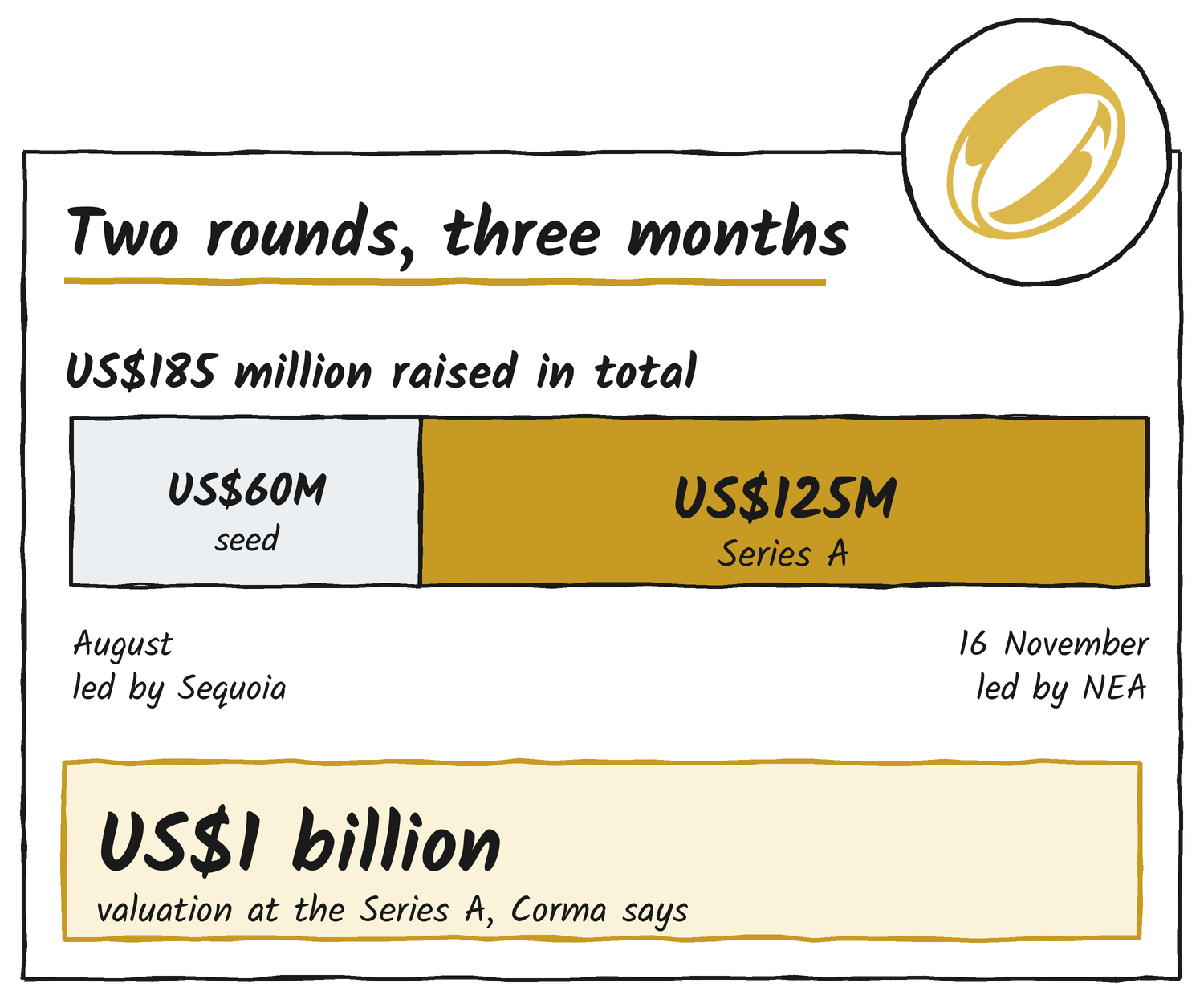
Corma, a startup that trains its own AI models for defensive cybersecurity, has raised a US$125 million Series A at a US$1 billion valuation, the company said in its announcement. NEA led the round, with Sequoia Capital, Khosla Ventures and Coatue taking part again, and Corma’s total funding is now US$185 million.
The round comes three months after Corma left stealth with a US$60 million seed round led by Sequoia. Corma announced the Series A on 16 November US time, which was 17 November in New Zealand, and The Wall Street Journal’s Angus Loten reported it the same day.
What Corma sells
Corma doesn’t sell a conventional security product. CEO Alon Pluda told Calcalist the company provides “an AI-powered workforce, driven by our foundation model” that plugs into a customer’s existing security stack. Corma’s workforce page lists identity, cloud, endpoint, SIEM (the system that collects a company’s security logs) and firewall or intrusion-detection products as the tools it works in. Staff assign tasks and approve actions through Slack, Teams or similar apps.
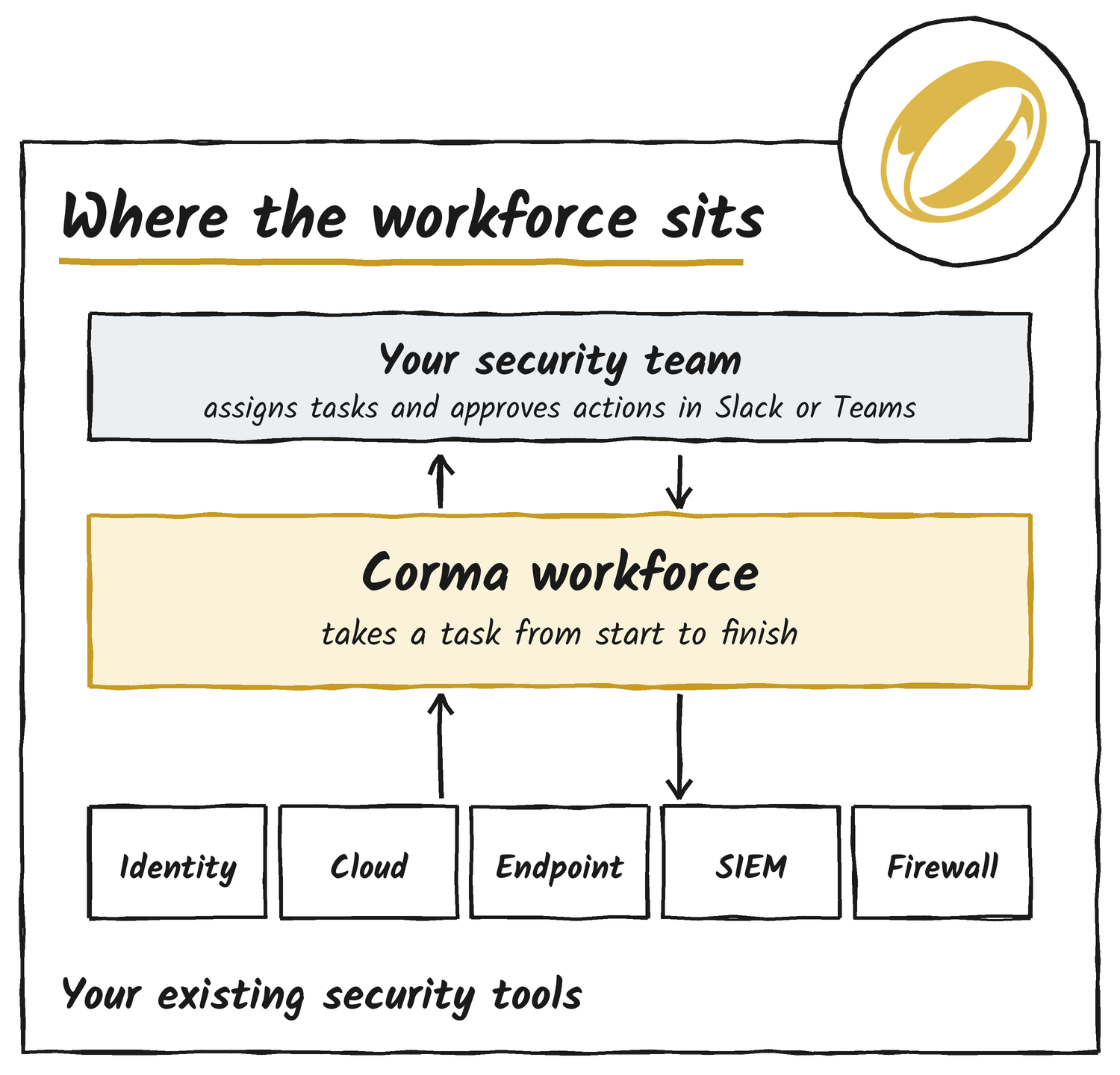
Pluda told Calcalist the process is “fully autonomous, with no human intervention involved.” NEA’s post says the workforce requests approvals when needed, and the workforce page shows an example where the agent hunts for missed infections, reports what it found, gets approval and then isolates an affected laptop.
Why Corma says defence needs its own model
Corma’s argument is that models trained for coding make good attackers because a vulnerability is another kind of bug. Defence, it says, means reading audit logs, security events and network flows, correlating weak signals over long periods and staying consistent across thousands of decisions in a row. Corma and NEA both tie the round to October’s wave of critical software flaws and breaches, which they call “Black October”.
NEA’s post says Corma trains its model with large-scale reinforcement learning, a method that rewards the model for a verifiable result, inside realistic enterprise environments, so it learns the work by doing it rather than from text.
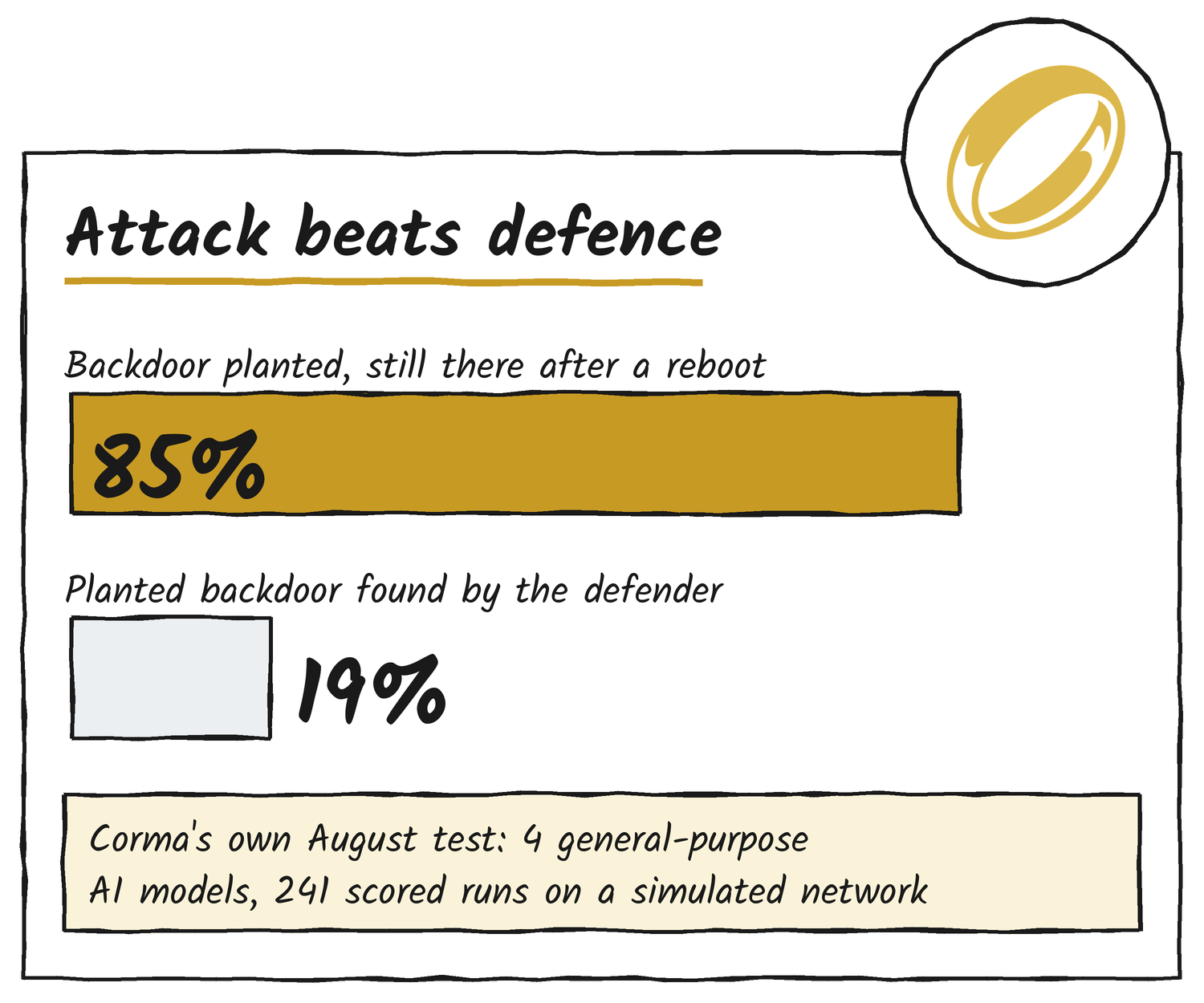
In August Corma published its own study. It put four general-purpose models, Claude Opus 4.8, GPT-5.5, Grok 4.3 and DeepSeek V4, on both sides of a simulated company network across 241 scored engagements. As attackers, the models planted a backdoor that survived a reboot in 85% of runs. As defenders, they found the planted implant in 19%. Corma designed the test, ran it on its own range and scored it against what changed on the machines.
The figures behind the pitch
Corma’s workforce page lists four figures: 99% of security tasks completed autonomously and successfully, tasks finished 100 times faster end to end, 10 times more security work per team and 95% lower cost per completed task. NEA’s post repeats the 10x figure and says tasks run “orders of magnitude faster”. The customer quotes on the page are attributed to job titles, such as “CISO, Fortune 500 Retail Company”, not to named people or companies.
Corma says demand from Fortune 100, Fortune 500 and Fortune Global 500 companies has surged and that it has raised its server capacity 24 times to keep up. Pluda wrote that securing enough compute is one of the company’s biggest challenges and that organisations are on a waitlist. The workforce page has a Request Access button.
A chart on Corma’s homepage, labelled DefenseBench V5, puts Corma v0.4 ahead of Claude Fable 5.2, Gemini 4 Carbon, GPT-6 Astra, GPT-6.1 Sol, GPT-6.1 Terra, Kimi K3.1 Pro and Grok 4.7 on defensive task performance and execution speed. The chart is Corma’s own.
The company and the round
Corma was founded in 2025 and has offices in Tel Aviv and San Francisco. NEA says Pluda served in an elite intelligence sub-unit of Israel’s Unit 8200, and that the team includes researchers from DeepMind and Microsoft alongside hackers from industry. Calcalist puts headcount at about 25 and Globes at 20. Calcalist’s interview carries no revenue figure; Pluda told it revenue is “growing very rapidly, to the point that anything we say today might already be outdated.”
NEA partner Aaron Jacobson said in the announcement that “Corma is the only company taking this on in a way that is scalable across organizations to prevent the next big cyberattack.”
Corma says the new money will go to scaling its foundation models, adding compute and hiring selectively. Pluda wrote that the next generation of its models will be shared “soon”. Corma hasn’t given a date.
Discover more from Sulat AI & Tech News
Subscribe to get the latest posts sent to your email.