Jane Street says it’s trialling new kinds of software engineering interviews in its onsites for campus candidates, with less code-writing and more focus on software design, verifying code and using LLMs to produce it. Engineer Matthew Saffer set out the change in a blog post on 2 November 2026. He joined Jane Street in 2013 and works on distributed systems infrastructure and productivity tooling.
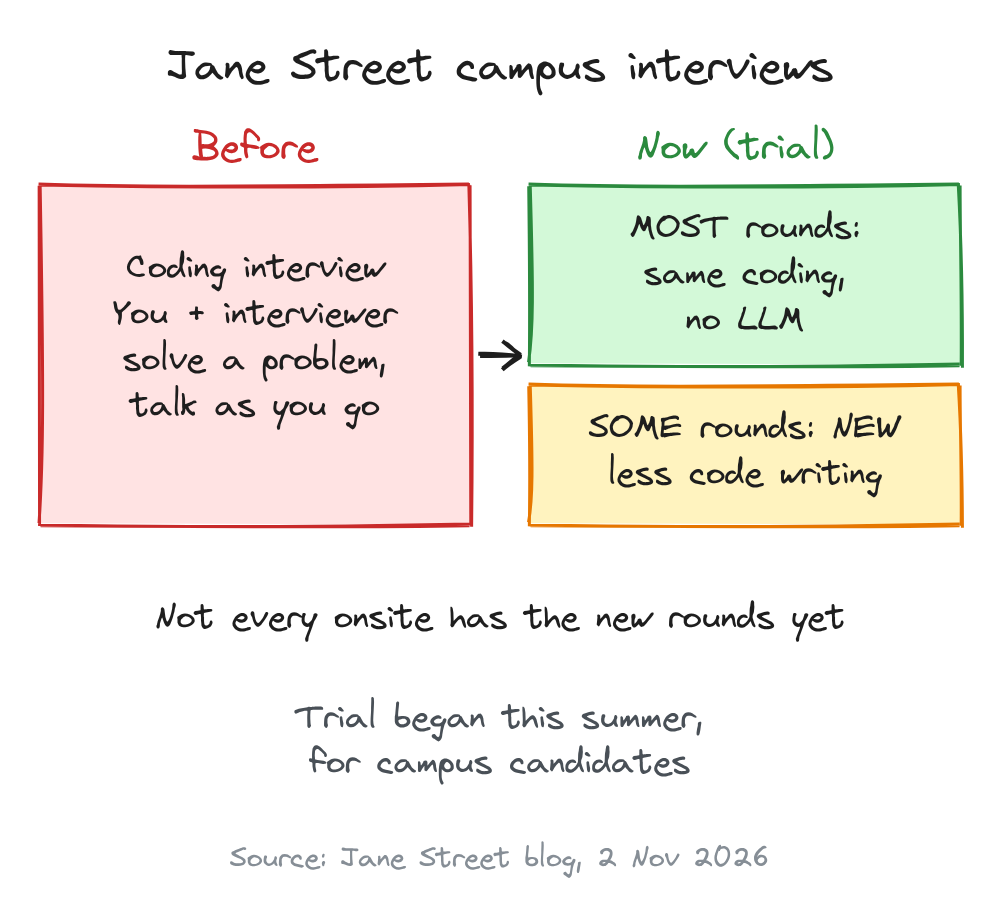
Saffer writes that most Jane Street engineers now use LLMs every day, not only to write code but to read, debug and review it, and for plenty of things that aren’t code at all. Jane Street has discussed this in a podcast on how it uses AI in development and in a post on formal methods. Its coding interviews hadn’t changed: you sit with an interviewer or two, program through a problem together and talk as you go.
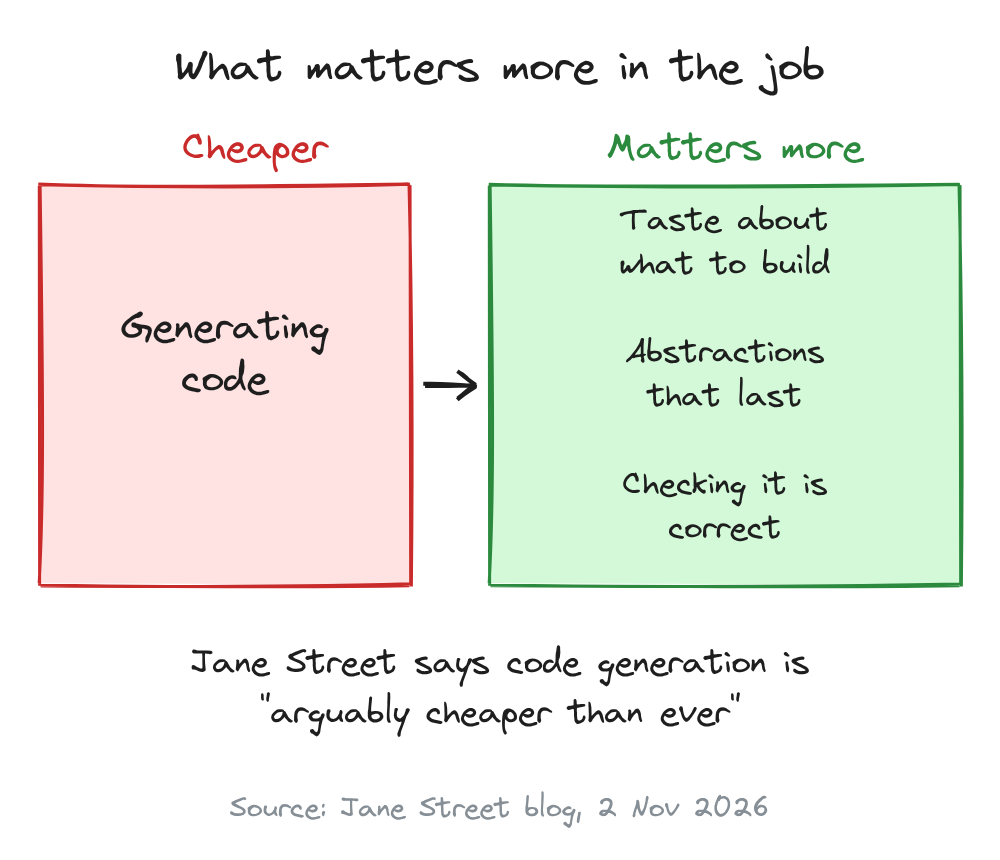
Jane Street says the goals of that style remain the same: seeing how you solve problems, structure your work, communicate and collaborate. But it says that with code generation “arguably cheaper than ever”, other parts of the job matter even more: taste about what to build, choosing abstractions that last, and making sure what got built is correct.
What’s changing in the onsites
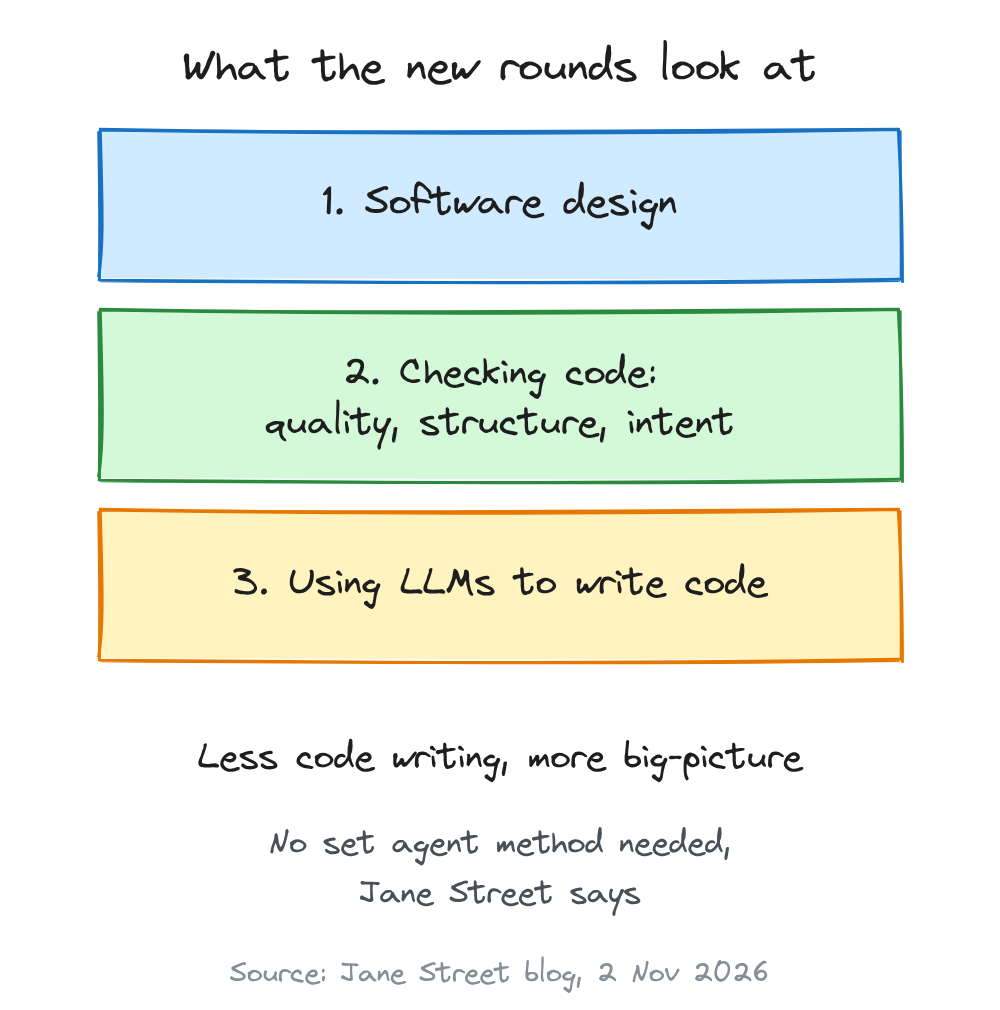
The trial started this summer. Jane Street says the new interviews involve less code-writing and lean higher-level, focusing on software design, on verifying the quality, structure and intention of code, and on using LLMs to produce code. Most rounds will continue to be traditional coding interviews, conducted without LLM assistance.
Jane Street hasn’t spelled out the formats. Saffer says that’s intentional: they’re still evolving, and the firm would rather not describe something in detail today that “looks different in six months”.
What candidates are told
Not every onsite includes the new rounds yet, and candidates get a heads-up on the day about what to expect. The rest of the process is unchanged, and Jane Street says its earlier posts about interviewing are still accurate.
On LLMs, Jane Street says you shouldn’t feel you need a highly worked-out method for working with agents to do well. It says it’s looking for people with great instincts for building software, and doesn’t “need an LLM to evaluate that”. It doesn’t expect a particular setup or LLM use for everything. What it says it cares about is that you think clearly about the tools you use: what they’re good at, where they fall short and when to reach for something else.
More experienced candidates’ interviews will continue to be more varied, Jane Street says, with styles ranging from producing software to designing systems and discussing prior work.
What the post doesn’t say
The post doesn’t describe any of the new rounds in detail, doesn’t say how many onsites include them and doesn’t give a date for extending them beyond campus candidates. Saffer ends by saying Jane Street will keep iterating and will write more when there’s more to say.
Discover more from Sulat AI & Tech News
Subscribe to get the latest posts sent to your email.