The Electronic Frontier Foundation (EFF) says smart glasses, smartwatch transcription and AI pendants from Apple, Meta, Google and Amazon turn one person’s privacy choices into everyone else’s problem. EFF’s Thorin Klosowski made the argument in a Deeplinks post on 13 November.
The post says companies once framed privacy as personal choice, and that choice now reaches strangers, colleagues, family and friends who never made it. EFF says the companies expect owners to use the devices responsibly and to tell people nearby what they can do, and calls that “not reasonable, nor how consent works in any practical sense.” EFF’s list includes Meta and Google’s smart glasses, Apple’s Audio Intelligence on Apple Watch and Amazon’s Bee devices.
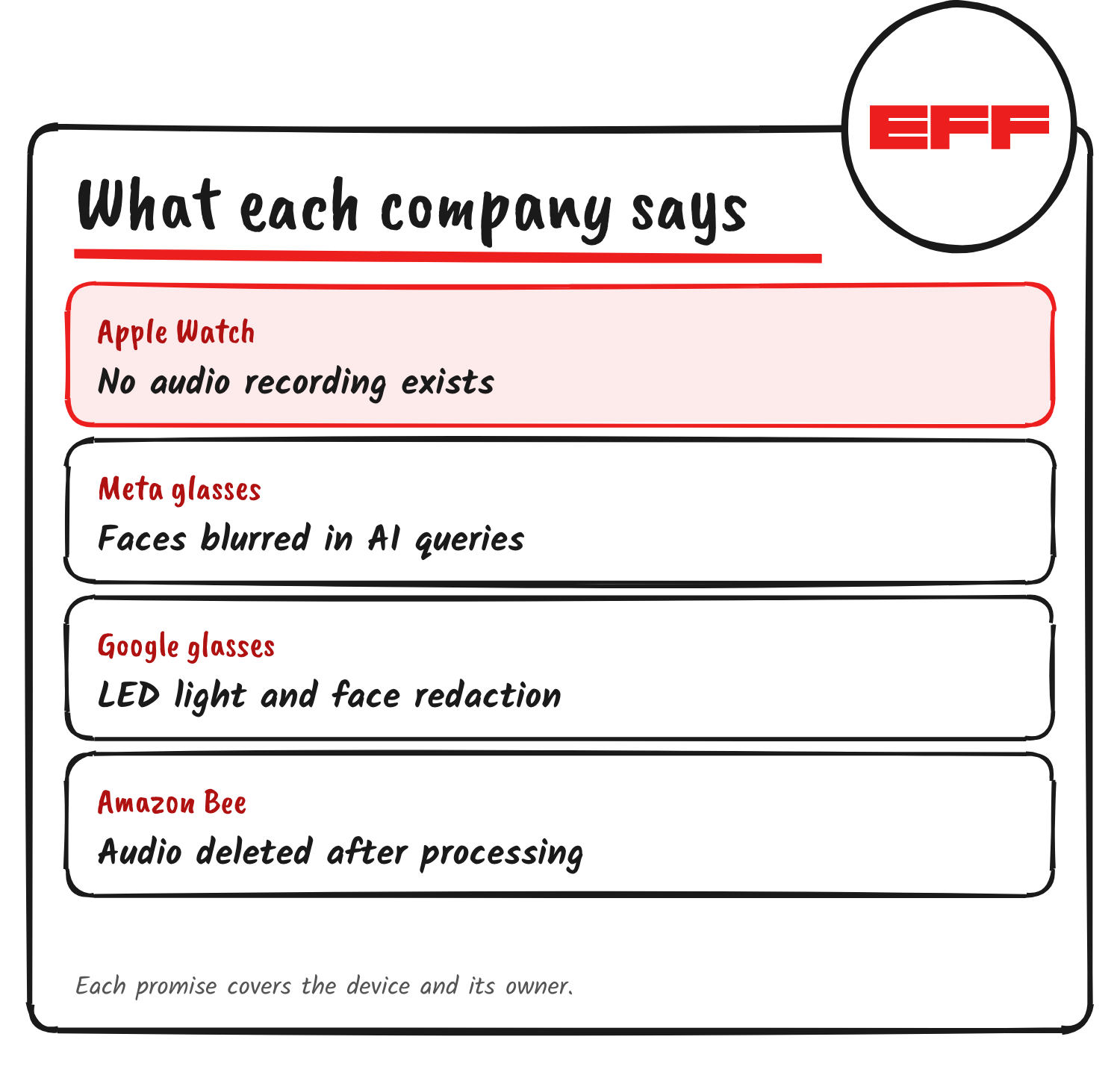
What the four companies say
| Device | What the company says | Status |
|---|---|---|
| Apple Watch Series 12 and Ultra 4 | Siri Recap and Live Rewind create no audio recording anyone can access | watchOS 27.3 developer beta |
| Meta AI glasses | Recording starts only when the wearer activates it; faces and license plates are blurred in Meta AI queries | Controls in the Meta AI app |
| Google Intelligent Eyewear | An outward LED lights when a photo or video is saved; faces are redacted before Gemini processes images | Ships 10 December, from US$395 |
| Amazon Bee Frontier | Audio is processed in real time and deleted; a button and an LED show when it’s on | US$74.99 |
Apple. Apple’s support page says Audio Intelligence doesn’t record or store audio, and that “there is no recording to share, forward, or produce if requested by any party, because no recording exists.” Apple’s privacy paper says audio passes through the Secure Exclave, a hardware-isolated compartment on the watch’s S11 chip, to the paired iPhone, which turns it into text on the device. A condensed version of that text goes to Apple’s Private Cloud Compute for the summary. Live Rewind needs a double press of the Digital Crown and covers the previous 15 seconds. Apple says it can transcribe what someone said word for word but doesn’t attribute quotes to speakers. 9to5Mac reports both features arrived in the first watchOS 27.3 developer beta on 3 November. EFF says Apple is an EFF donor and that donors don’t influence its positions.
Meta. Meta’s privacy page says its AI glasses record only when the wearer deliberately activates them by voice or button. When you ask Meta AI about something you’re looking at, Meta says faces and license plates are blurred and the images aren’t saved to your gallery. EFF says the blurring doesn’t apply during standard recording.
Google. Google launched its Intelligent Eyewear on 12 November. 9to5Google reports Warby Parker frames start at US$395 and Gentle Monster frames at US$449, with shipping from 10 December. Google’s privacy post says an outward LED lights when a photo or video goes to the gallery, sensors stop capture if the light is covered, and the glasses redact bystanders’ faces before Gemini processes images. It also says wearers must agree not to record others without permission or in sensitive places, and that breaking those terms can get the glasses disabled.
Amazon. Amazon’s announcement of Bee Frontier and Bee Eclipse on 15 October says audio is processed in real time and deleted, and that users are prompted to get permission from call participants each time a recording starts. Bee Pro, the paid tier, adds Amazon.com and Alexa+ integrations. EFF says the Amazon store integration means conversations can lead to ads for products.
Where EFF says the promises stop
EFF says every one of these safeguards covers the owner. “There is no technical protection for you as a non-user of these devices, the person who finds yourself captured by them,” the post says. On the law, EFF says Apple’s and Amazon’s devices are best treated like an always-recording microphone, because they capture raw audio before converting it to a summary or transcript and discarding it.
EFF also expects police to try to compel the data these products create, whether live audio or the summaries. It says some products, Apple’s among them, are engineered to make that hard and not every product will be.
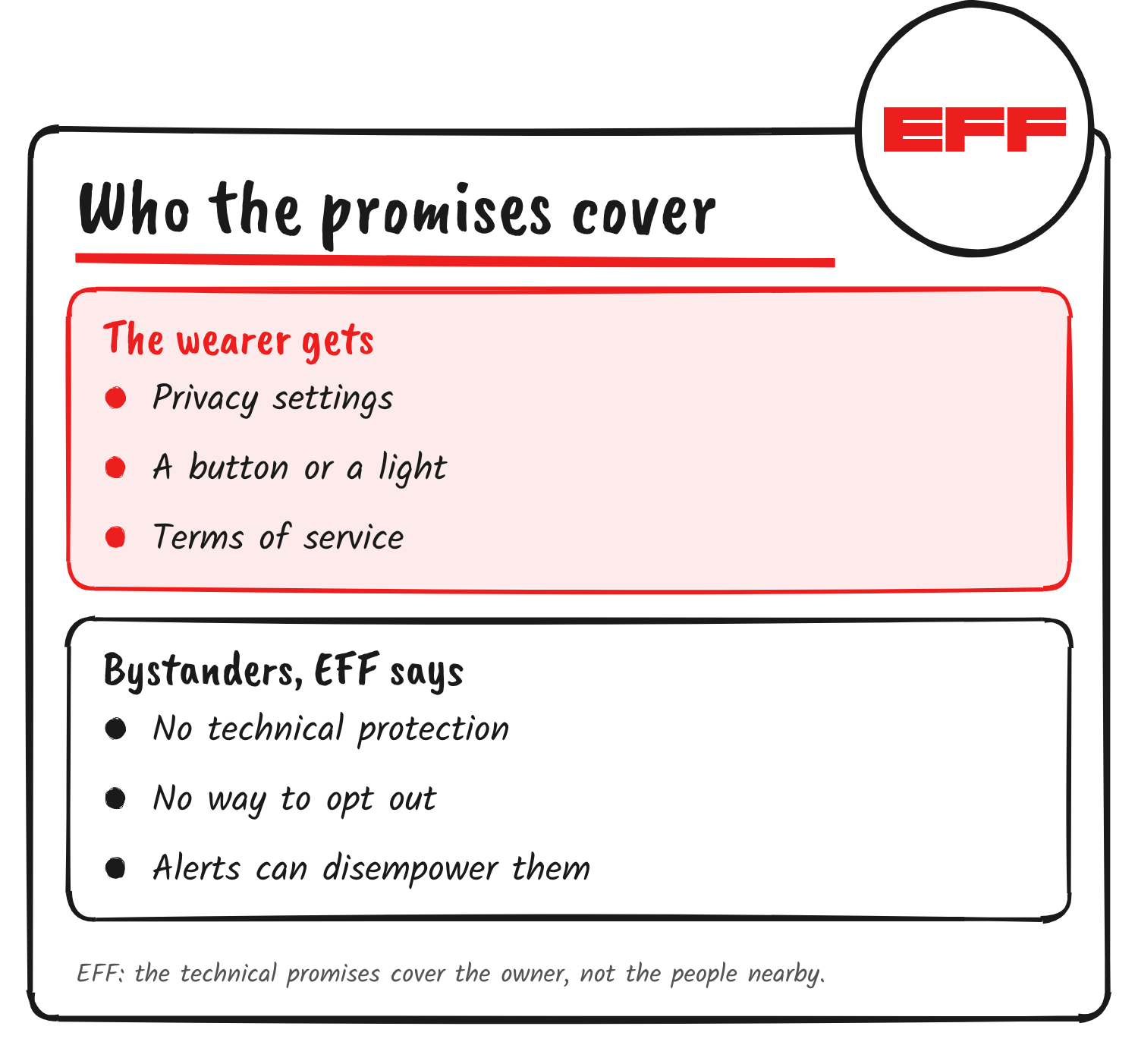
The post cites Google’s own product director. Juston Payne told CNN that Google is looking into more ways to alert bystanders, and that alerting them alone can be “weirdly disempowering to you in that you’re like, ‘What am I meant to do now?'”
The social norm EFF says is at stake
EFF’s larger point is that no technical or legal fix reaches the social cost. It says secretly documenting conversations makes every private conversation less spontaneous and open, and breaks the norm that you don’t record and summarise every talk with friends, family, colleagues or strangers. Taking notes in a work meeting is normal, the post says; getting a summary of a conversation with your best friend about their divorce isn’t.
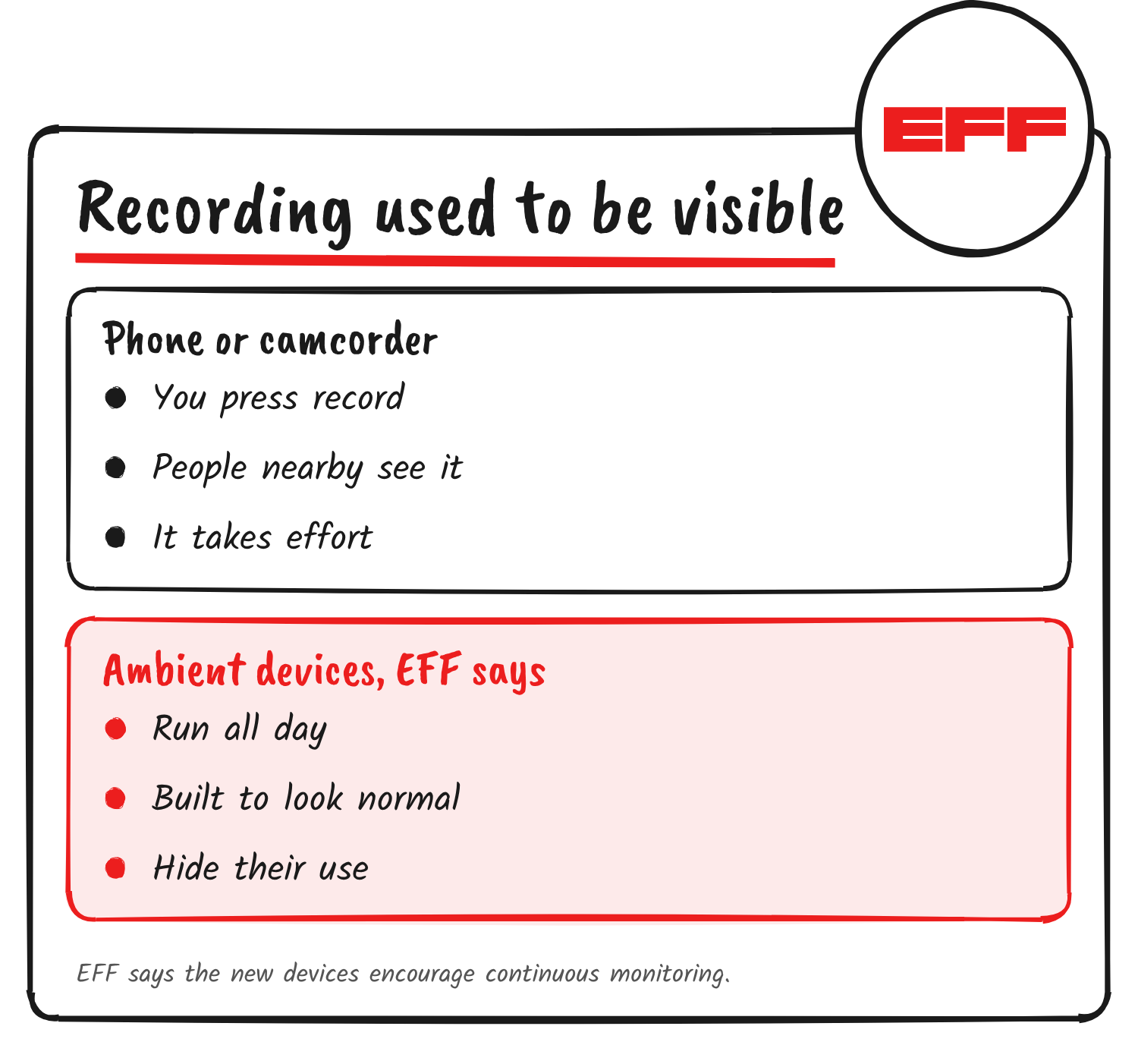
EFF rejects the companies’ line that these products are no different from a phone, a camcorder or a cassette recorder. Those take a deliberate step that the people around you can see, it says, while the new devices are “designed to encourage continuous monitoring and hide its use.”
What EFF asks people to do
EFF says the products aren’t inevitable, pointing to product categories that came and went within a few years. It asks Apple Watch beta users to send Apple feedback through its feedback forms or the Feedback Assistant app, and says it’s worth politely and clearly raising discomfort with people who use these devices around you. It also asks people to report abusive videos made with them, and, if they use the devices themselves, to say so to those nearby and record only with consent.
EFF says it plans a closer look at the technical differences between these devices. Google’s glasses ship on 10 December, and Apple’s Audio Intelligence features remain in beta.
Discover more from Sulat AI & Tech News
Subscribe to get the latest posts sent to your email.