Amazon CEO Andy Jassy called the 2015 purchase of chip designer Annapurna Labs “one of the very best acquisitions” in the company’s history, “if not the best”, in an interview with the venture firm a16z.
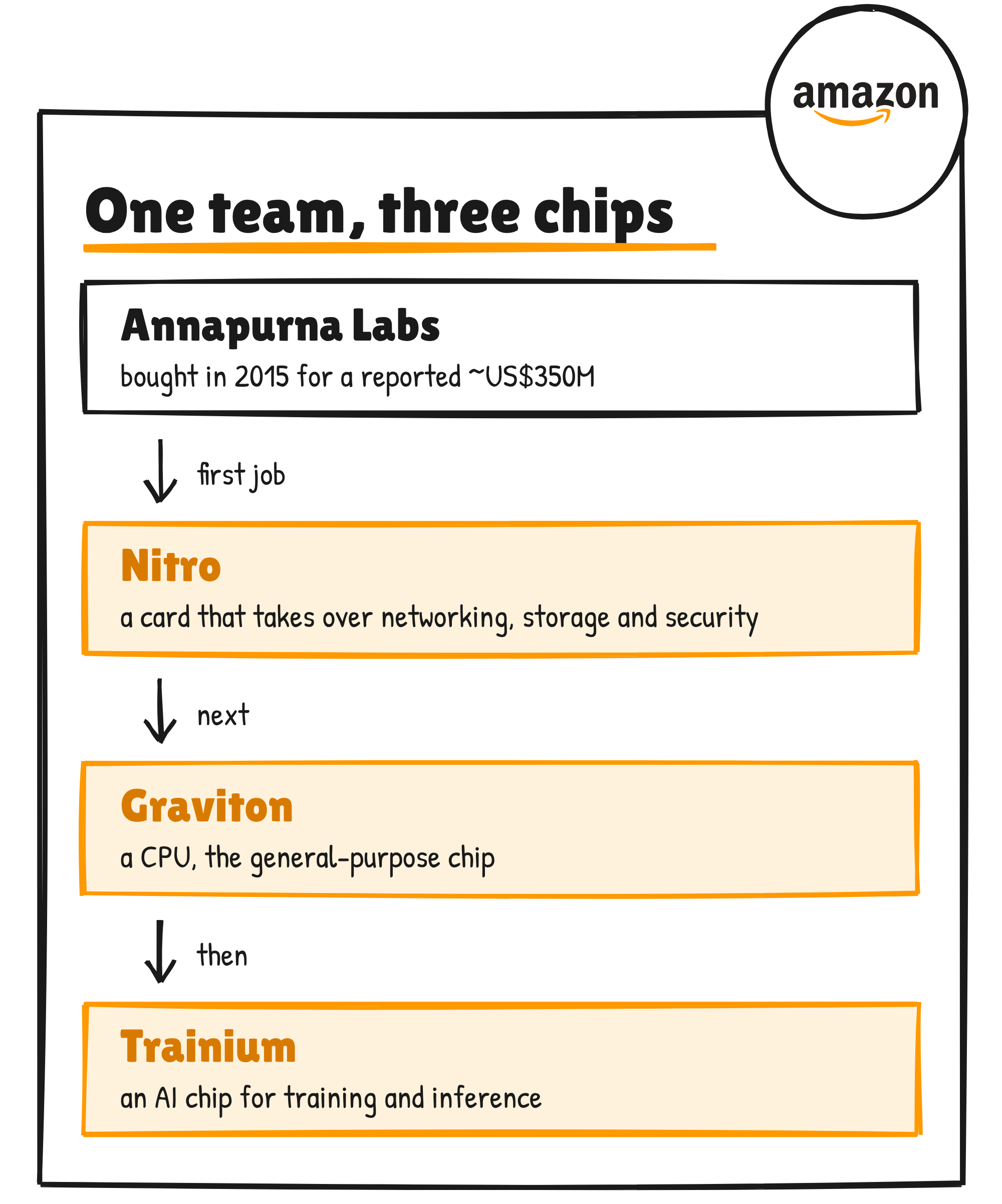
Jassy spoke to a16z co-founder Ben Horowitz and host Erik Torenberg in an episode published on 23 October 2026. Amazon confirmed the Annapurna deal in January 2015 and declined to discuss the terms; The New York Times reported a price of about US$350 million.
It wasn’t bought for AI chips
Jassy said Amazon didn’t buy Annapurna for AI chips. Amazon’s servers were spending too much of their capacity on virtualisation, networking, security and storage, he said, and Amazon wanted to use “nearly 100%” of each server for customers’ computing. It had already been working with Annapurna on a NIC, a network interface card, that took over those jobs. Jassy says that card is now in every server Amazon has. Amazon calls it Nitro.
The next job for the team was a CPU, the general-purpose processor. Jassy said Intel held virtually all of the CPU market and wasn’t pushing price-performance, which Amazon’s customers wanted. The result was Graviton, which Amazon’s 2025 shareholder letter says has up to 40% better price-performance than other x86 processors and is used by 98% of its top 1,000 EC2 customers. EC2 is the AWS service that rents out servers.
Jassy said Amazon then saw “the same movie” in AI, with one dominant chip supplier, and spun out a separate Annapurna team to build an AI accelerator. That chip is Trainium. The letter says Trainium2 had about 30% better price-performance than comparable GPUs, an Amazon figure that hasn’t been independently benchmarked.
How big the chips business is
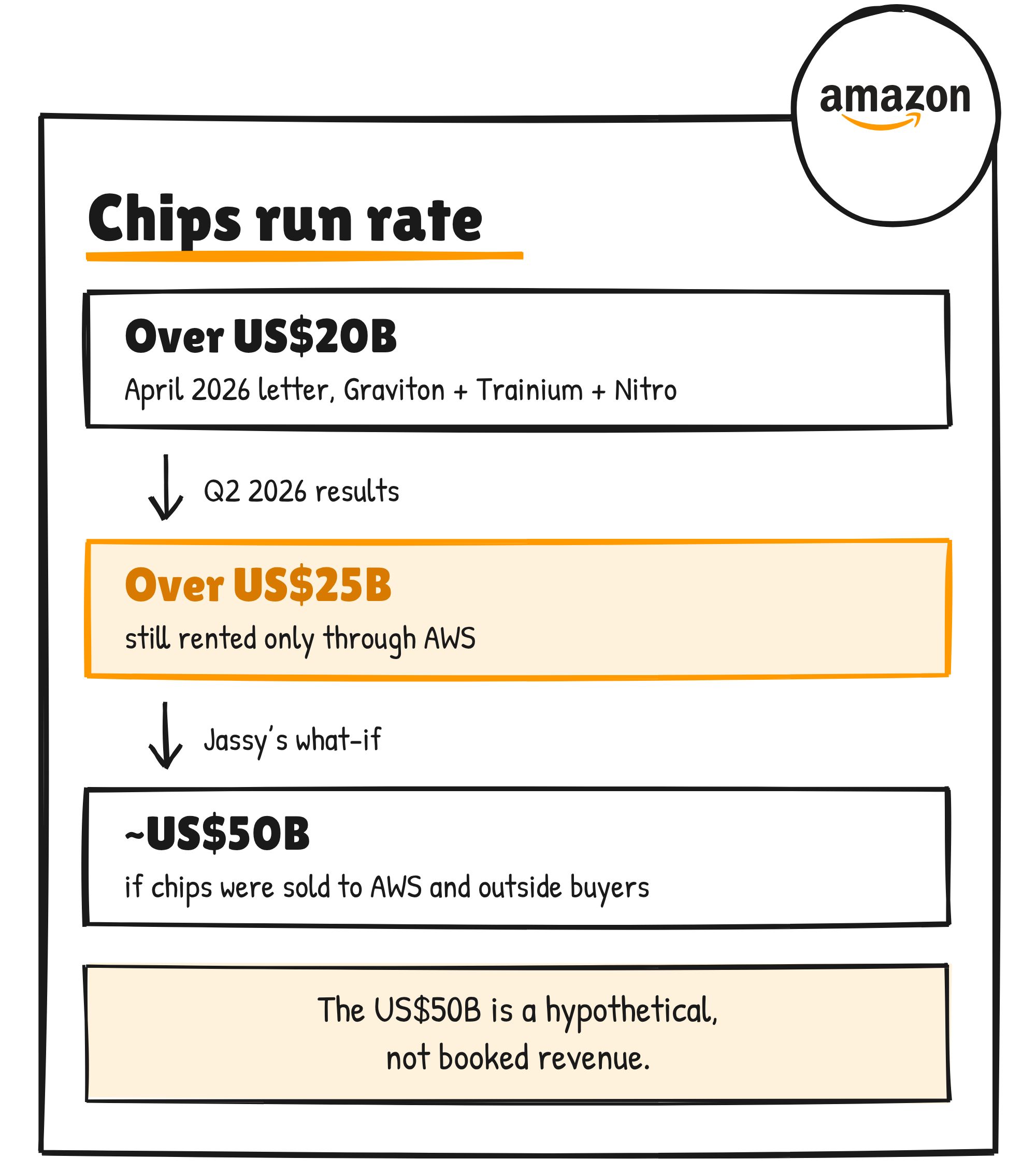
A run rate is the latest period’s revenue stretched over a year. Jassy’s letter, published in April, put the run rate of Amazon’s chips business at over US$20 billion, covering Graviton, Trainium and Nitro and growing at triple-digit percentages a year. The letter adds that the business would run at about US$50 billion if Amazon sold the chips it produced this year to AWS and other third parties. That is a hypothetical; the letter says Amazon currently earns chip revenue only through EC2.
Amazon’s second-quarter results, released in July, put the chips run rate above US$25 billion. They also said Anthropic and OpenAI had each made multi-year, multi-gigawatt commitments to Trainium.
The third-quarter figures, released on 29 October (30 October NZ time), carried no new dollar figure for chips. Jassy said on the call that the business is still growing triple-digit percentages year on year, that revenue commitments for Graviton and Trainium have each risen more than 20 times in a year, and that customers using Amazon’s custom chips saved more than US$2 billion in the quarter.
Trainium goes on sale outside AWS late in 2027
On the same call, Jassy said: “With Trainium demand so strong, customers continue encouraging us to make it available outside of AWS. We intend to do so late in 2027.”
An analyst asked how Amazon will balance outside sales against its own use. Jassy said selling a chip books the revenue as soon as it leaves Amazon’s inventory, while running it in EC2 or in Bedrock, AWS’s AI model service, brings in more total revenue and free cash flow because the chip earns for five to six years. He said Amazon will weigh that balance every year.
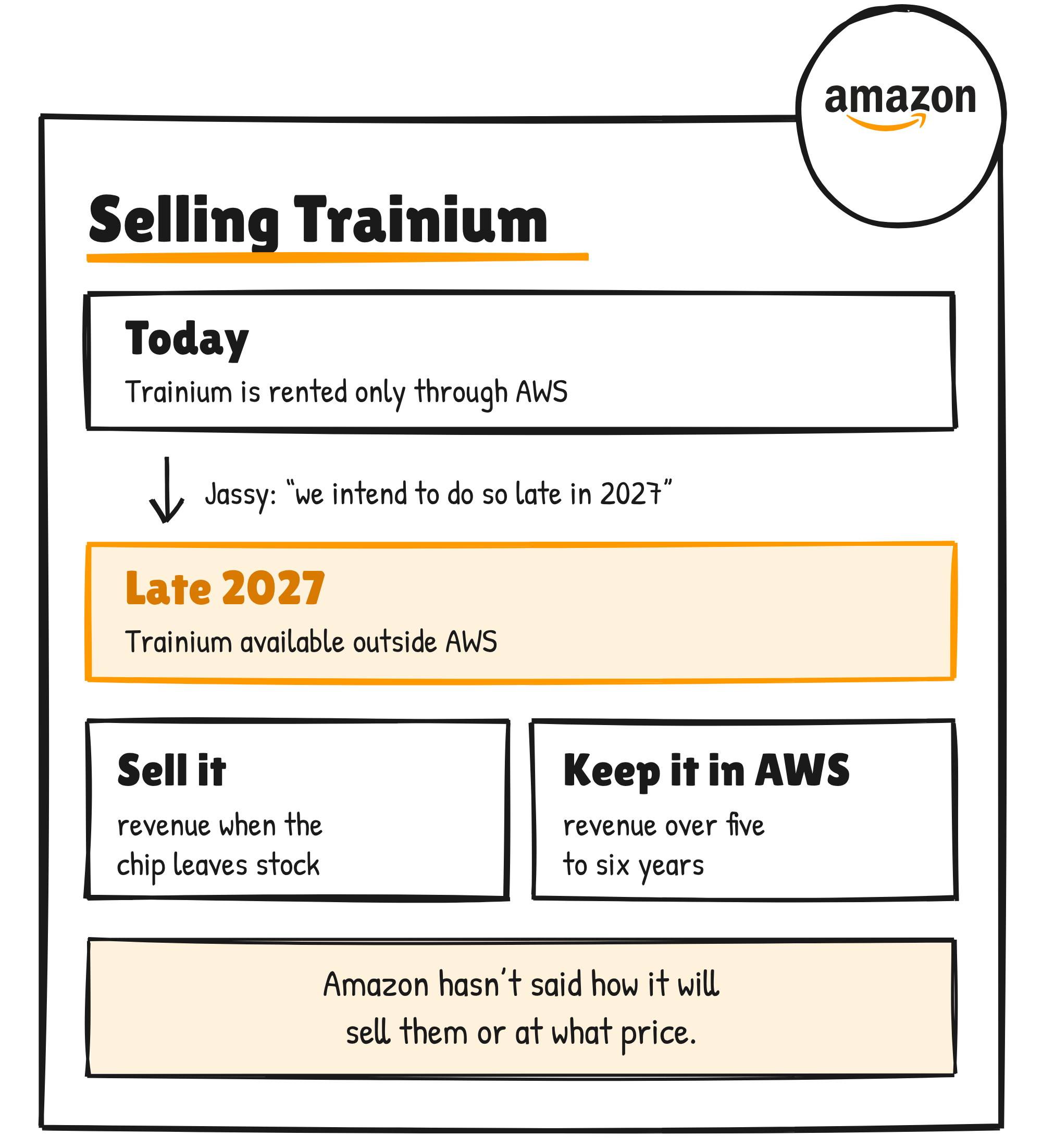
Amazon hasn’t said whether it will sell Trainium as chips, servers or racks, or what it will charge.
Discover more from Sulat AI & Tech News
Subscribe to get the latest posts sent to your email.