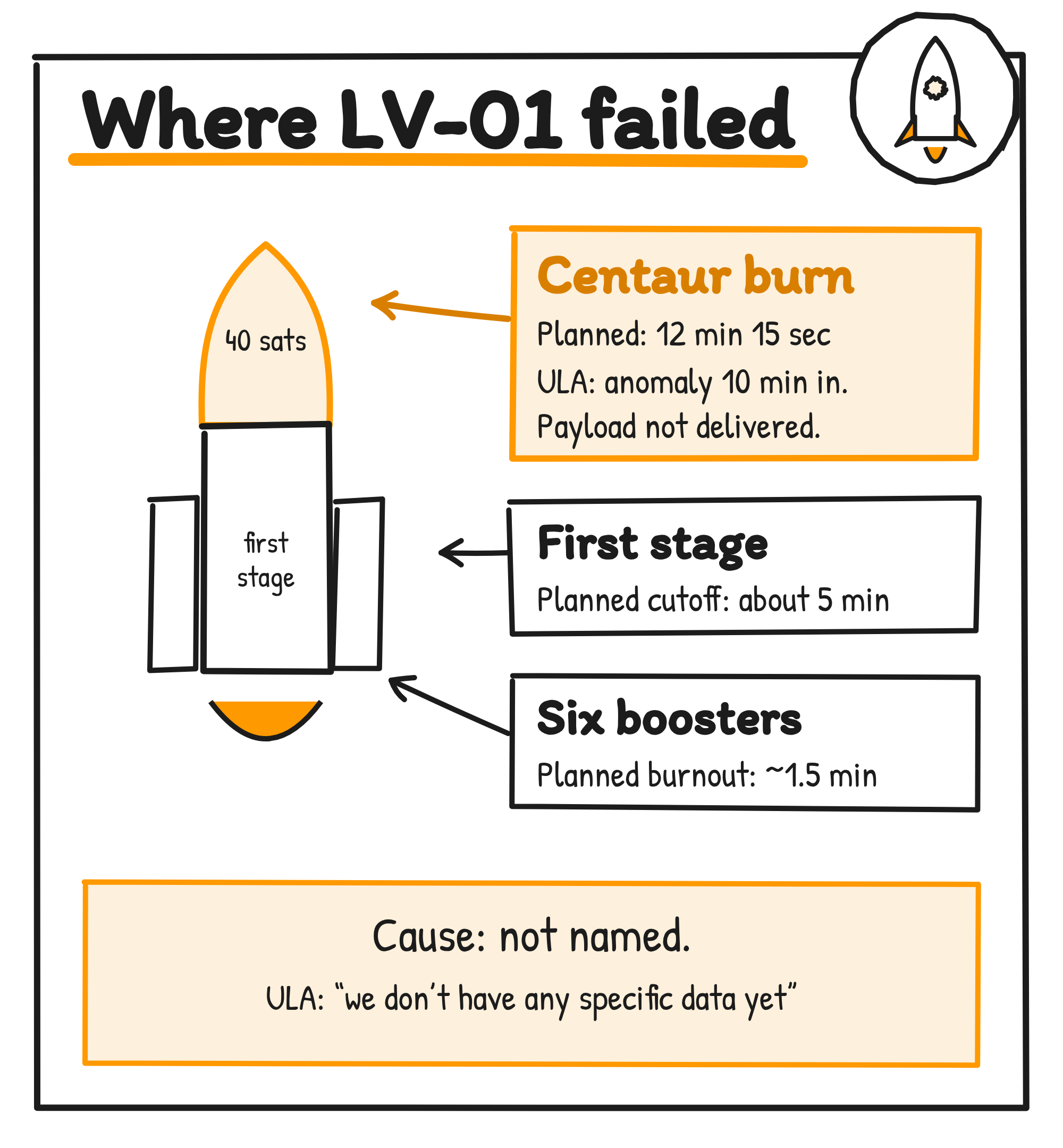
United Launch Alliance’s Vulcan rocket failed about 10 minutes into its flight on Sunday 15 November (US time) and didn’t deliver 40 Amazon Leo satellites to orbit. ULA confirmed the loss in a statement on X. Spaceflight Now reports it’s the first full-mission failure since the company was founded in 2006.
What ULA and Amazon said
ULA’s statement says: “Based on data received by our Launch Director, we confirm that the Vulcan vehicle launched from Space Launch Complex 41 suffered an anomaly 10 minutes into the flight and failed to deliver the Amazon mission to orbit.” It adds: “Since the anomaly just occurred, we don’t have any specific data yet to understand what occurred today.”
ULA said it will work with Amazon and other organisations to find the cause, decide on corrective action and return to flight. It said customers will have visibility into the investigation. ULA hasn’t named a cause, a failed stage or a return-to-flight date.
Amazon Leo replied on X: “There is risk with any launch, and that’s especially true for inaugural missions like LV-01. ULA has been a trusted partner for Amazon, and we believe they’ll learn from this mission and deliver on their long-term plans for Vulcan.”
Where the flight went wrong
The flight was LV-01, the first of 38 Vulcan launches Amazon has bought, and the 40 satellites were the largest batch Leo has put on one rocket. Liftoff came at 12:40 pm EST (1740 UTC), the end of the launch window, after ULA scrubbed the Friday attempt over a power interruption at a gaseous nitrogen plant and called off Saturday’s over a ground-to-rocket network issue, Spaceflight Now reported.
ULA’s pre-launch plan had the six solid boosters burning out about a minute and a half after liftoff. The first stage was due to cut off five minutes in, and the Centaur V upper stage was due to fire for 12 minutes and 15 seconds. CBS News reports that, according to ULA’s update, something went wrong during that Centaur firing, and ULA gave no more detail. Spaceflight Now says the milestones on ULA’s published timeline didn’t match what its tracking cameras and ULA’s telemetry-based animation showed.
A return to flight that ended early
This was Vulcan’s first flight since 12 February, when a solid rocket booster nozzle burned through on the USSF-87 mission for the Space Force. The payloads still reached their planned orbit, and the US government paused its use of the rocket. ULA said its investigation with Northrop Grumman and the Space Force found three credible causes and that it mitigated all of them with changes to the nozzle’s design and how it’s built. Sunday’s flight was also the first for six boosters and for the shorter Centaur V that ULA built for low Earth orbit.
What it means for Amazon Leo
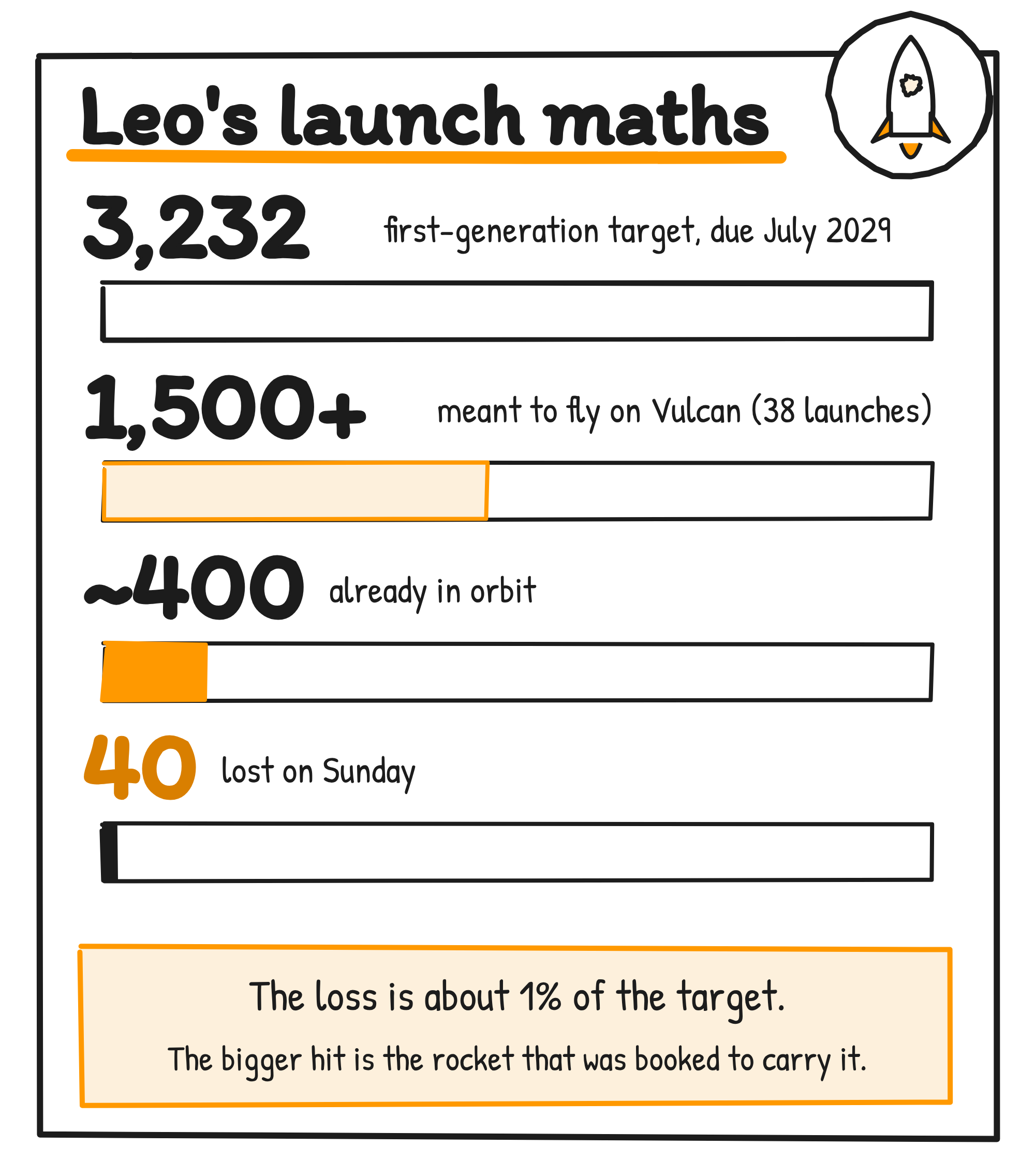
Amazon says it has launched nearly 400 Leo satellites on 14 missions since April 2025, and none have flown since July. The FCC expects the first-generation constellation of 3,232 satellites to be in orbit by July 2029. Amazon says Vulcan was to carry more than 1,500 of them across 38 missions, close to half. It had also said LV-02 would fly within weeks of a successful LV-01.
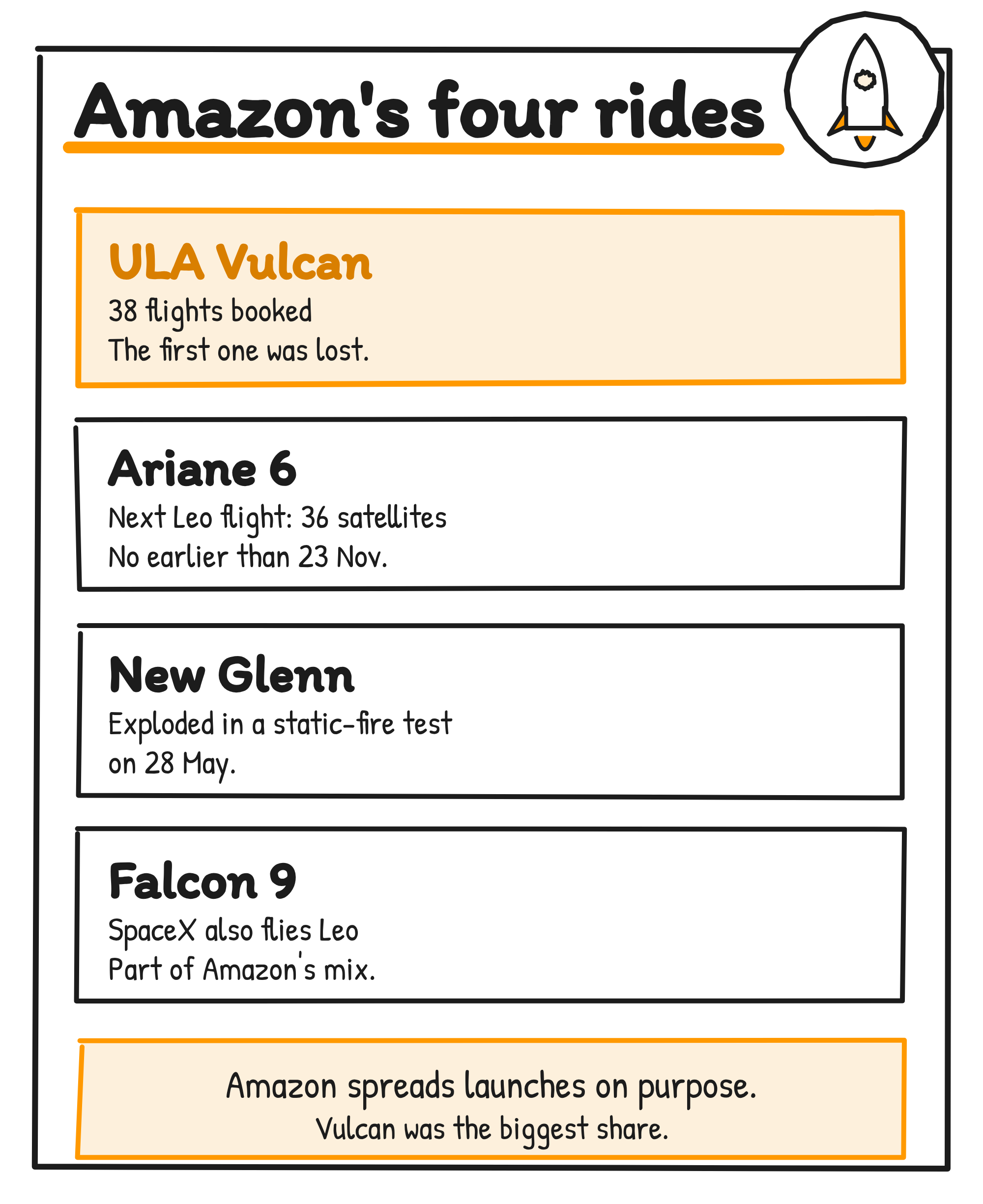
Amazon’s launch mix includes Arianespace, Blue Origin and SpaceX as well as ULA. Arianespace’s next Leo flight is an Ariane 6 with 36 satellites, targeted for no earlier than 23 November. Blue Origin’s New Glenn exploded during a static-fire test on 28 May.
Discover more from Sulat AI & Tech News
Subscribe to get the latest posts sent to your email.