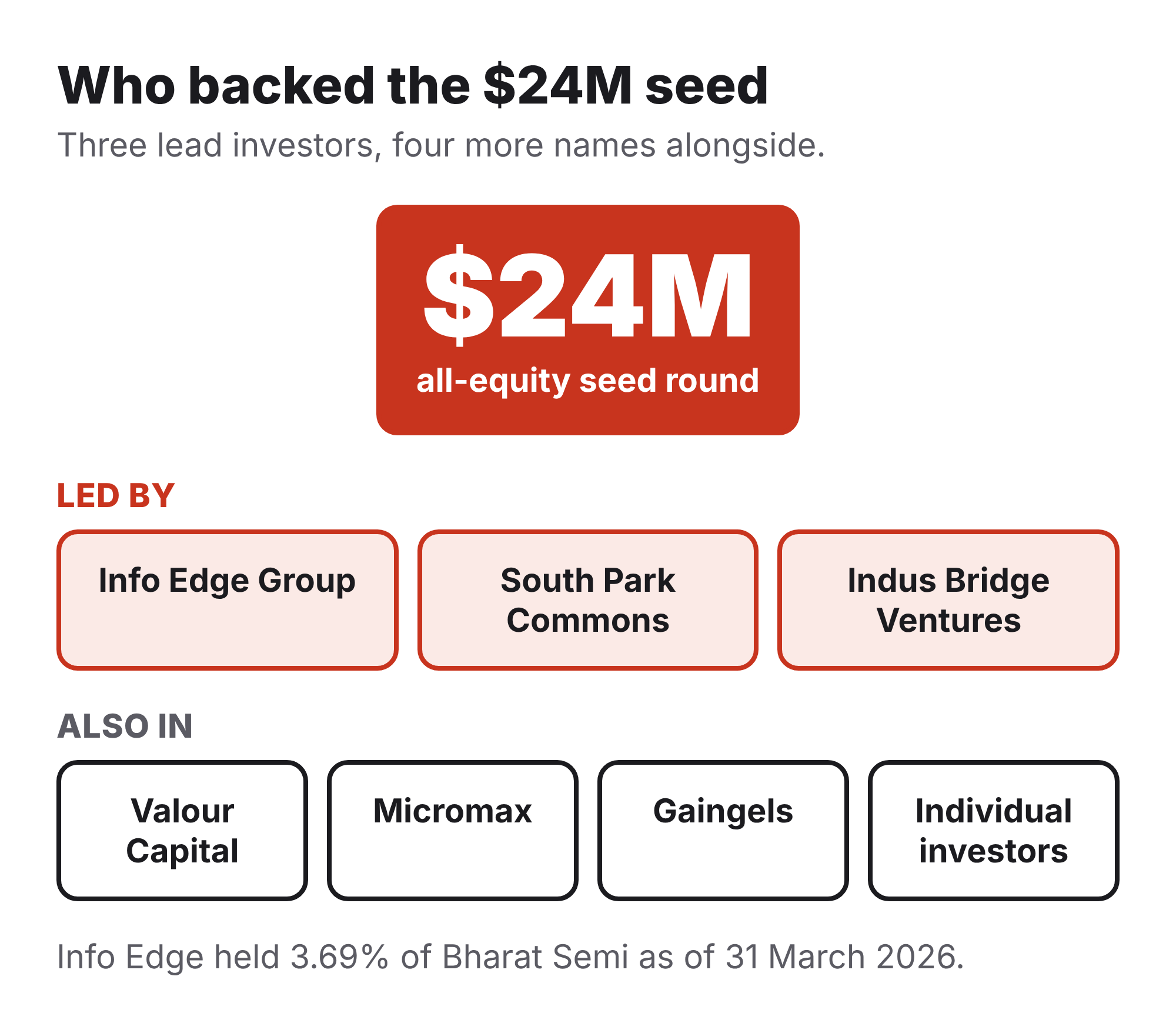
Bharat Semi has $24 million in the bank and not a single chip to sell. That’s where this New Delhi startup stands after an all-equity seed round that Info Edge Group, South Park Commons and Indus Bridge Ventures led, according to TechCrunch. Valour Capital, Micromax, Gaingels and some individual investors joined in.
One chip instead of three
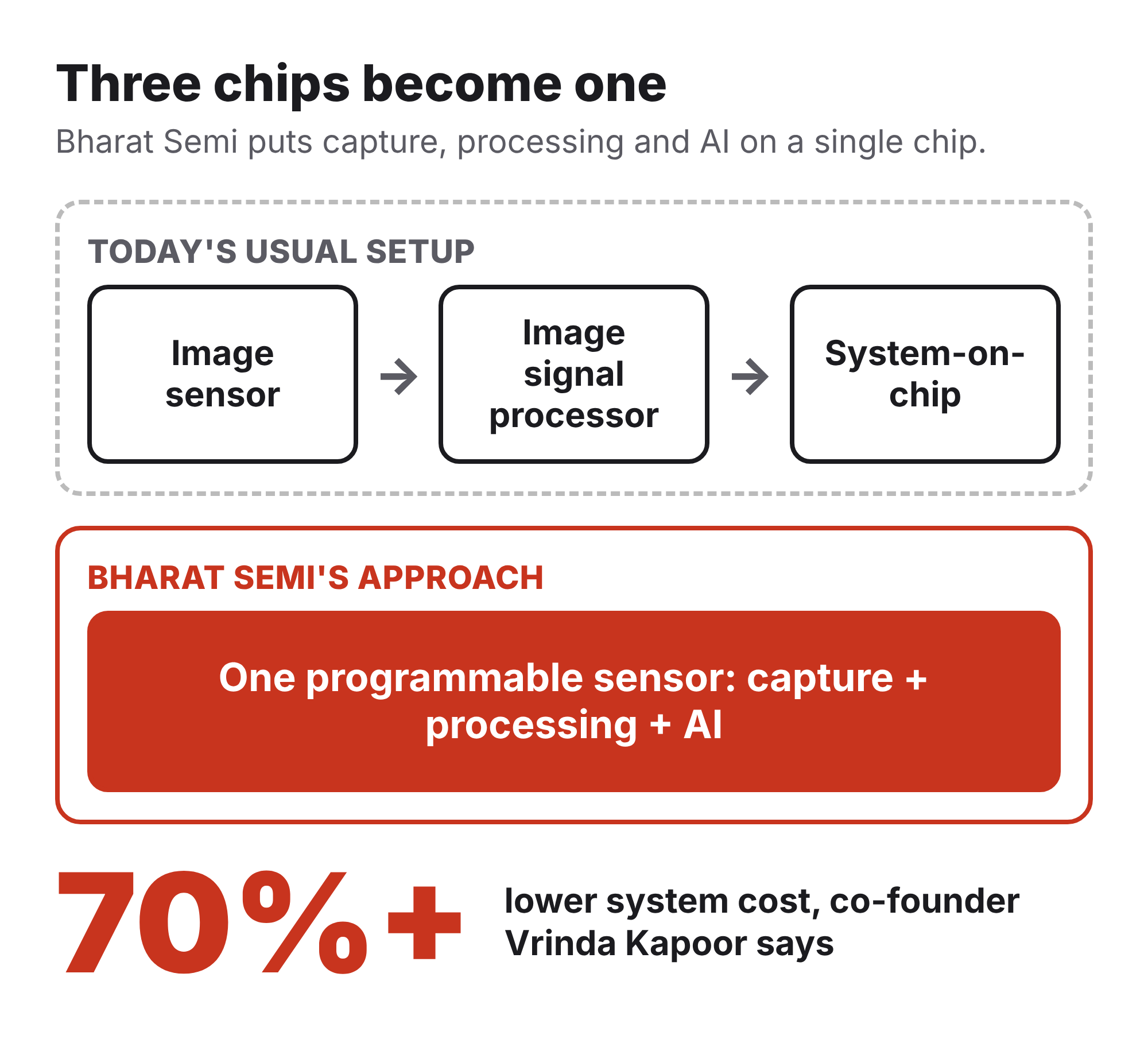
The idea is easiest to see by looking inside a camera module. Normally three separate pieces share the work: an image sensor, an image signal processor and a system-on-chip. Bharat Semi wants a single programmable sensor to do capture, processing and AI together, so video doesn’t get passed from part to part. Co-founder Vrinda Kapoor says system costs drop by at least 70% that way. “Our aim here is to move from sensors to sense-making solutions,” she told TechCrunch.
Kapoor kept her examples vague and named no customers. She mentioned an air conditioner that spots an empty room and eases off, plus a drone that makes sense of what it sees without extra computing hardware elsewhere in the system. Smart homes, industrial automation, surveillance and aerospace are the markets.
Prototypes, two design wins, no revenue
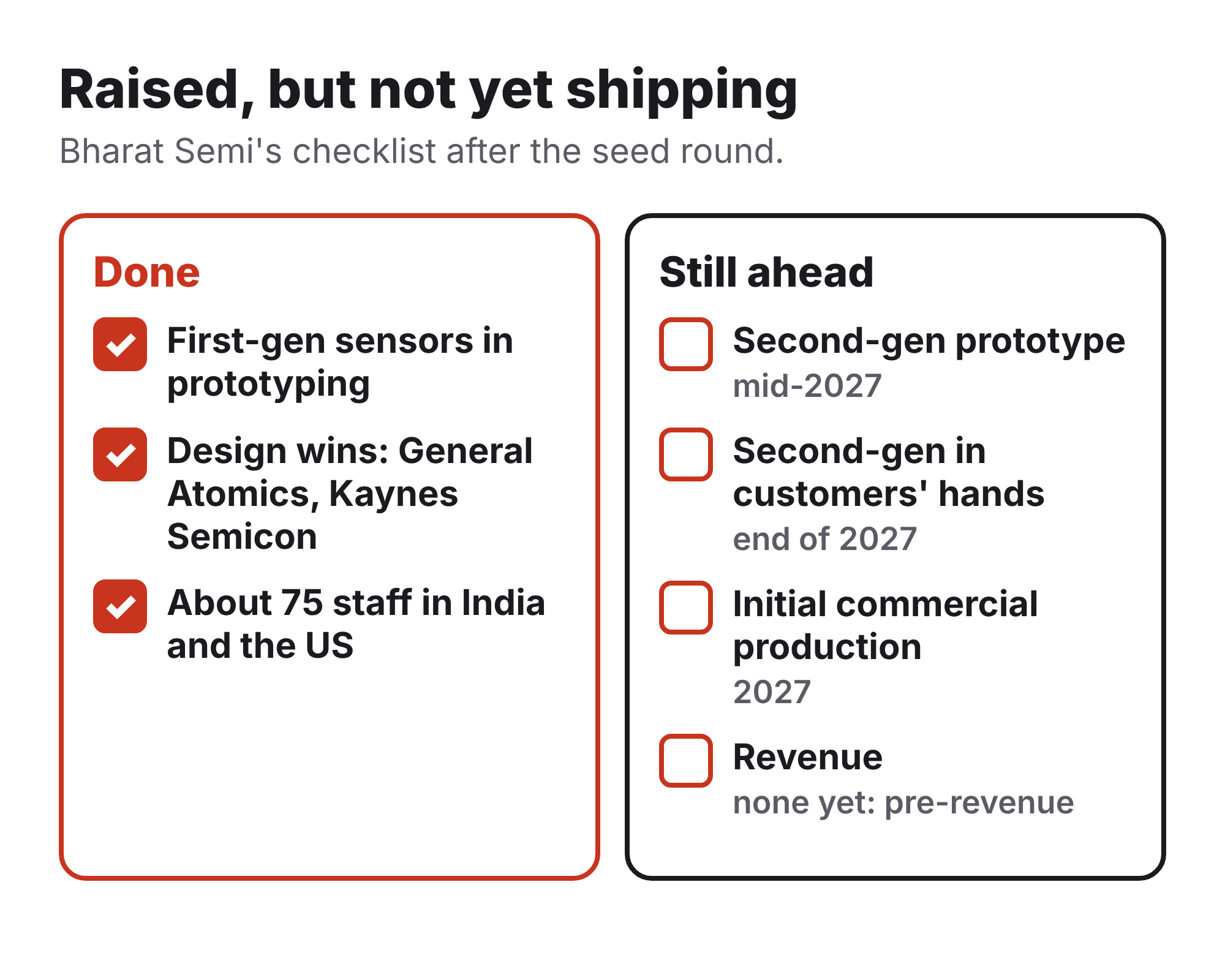
Right now there are prototypes of first-generation sensors, and that’s the lot. Kapoor expects second-generation prototypes, with more advanced AI, around mid-2027 and wants them with customers by the end of that year. The company earns nothing yet. It does say it has design wins with General Atomics, the US defence technology company, and India’s Kaynes Semicon.
Info Edge has been in this one for a while. Its directors’ report shows subsidiary Redstart investing Rs 260.98 million (about Rs 26 crore) during the 2025-26 financial year, and holding 3.69% on 31 March 2026.
About 75 people work there. Ten to 12 sit in Santa Clara, and Kapoor plans to take that to around 20 by mid-2027. Engineers are being hired in Europe as well. The seed money covers hiring, finishing the product and getting it to market.
The fab is separate
Then there’s the fab, which is a different project altogether. Bharat Semi announced plans in 2024 for a fabrication plant in India, with a technology partnership involving the US Space Force. Kapoor says it’s still in development and she’s looking for domestic partners to build and operate it. The seed round won’t pay for it. On the sensor side the company plans to stay fabless, designing chips and software and leaving manufacturing to others.
Kapoor, a South Park Commons fellow who spent earlier years in healthcare technology, co-founded the company in late 2021 with Vinayak Dalmia, the managing director, who worked at McKinsey and in private equity before. Chief technology officer Boyd Fowler held that same title at OmniVision. “It’s a story of can we build a global technology company out of India,” Kapoor said. India has committed billions of dollars to a domestic chip industry and still isn’t a major manufacturing hub.
Discover more from Sulat AI & Tech News
Subscribe to get the latest posts sent to your email.