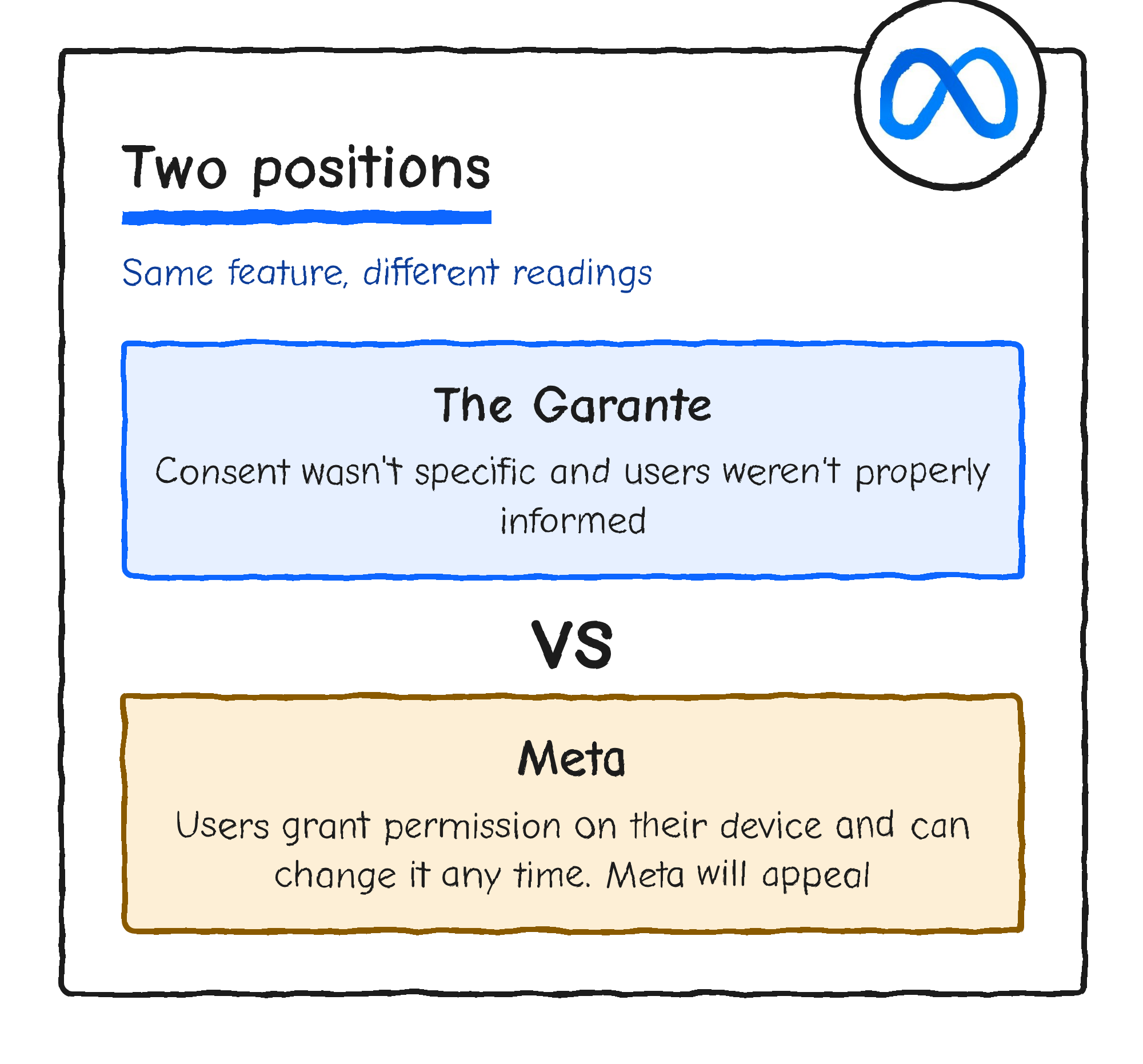
Italy’s data protection authority, the Garante, has fined Meta €805 million (US$887 million) over a Facebook feature that suggests photos from an Android phone’s gallery as post ideas. The Garante’s 14 November announcement says the Facebook app accessed photos, videos and their metadata on Italian users’ phones without specific consent and without properly informing them.
Meta has 60 days to switch the feature off by default, including for people who already granted permission, and to ask for consent through a separate request. A Meta spokesperson told Reuters the company will appeal. Politico reports it’s the largest fine the Garante has issued.
What the Garante says Facebook did
The feature is called “Get suggestions from gallery when browsing Facebook”, and AP reports it has been available since 2023. While someone browses, it shows photos and videos from their phone’s gallery as ideas to post. The Garante opened its investigation in July 2025 after a complaint from the Bolzano Consumer Protection Center, and ran its own technical analysis.
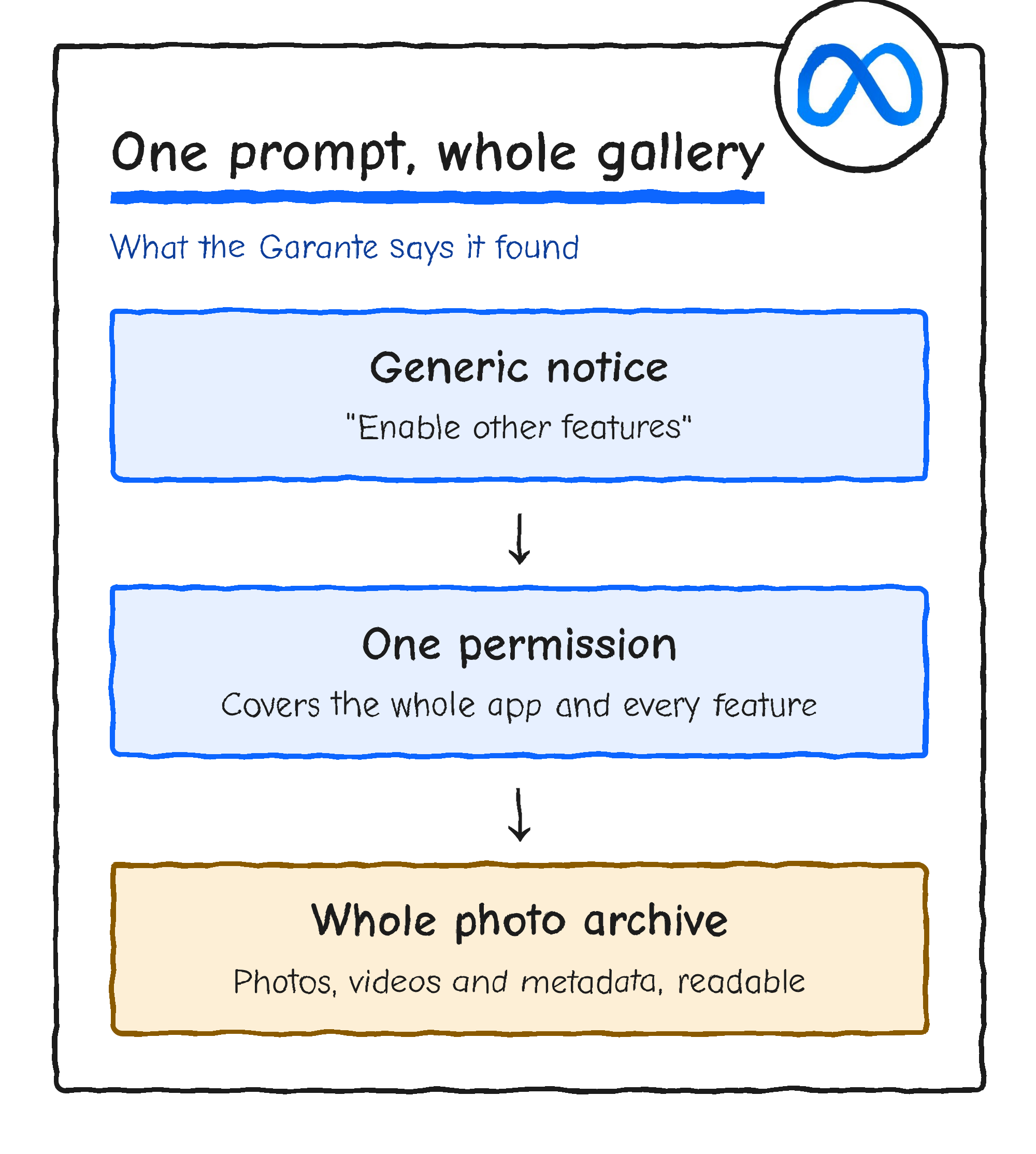
It found that Facebook asked for gallery access with one permission that covers the whole app and several features with different needs. The prompt before it carried a generic notice, “enable other features”, which the Garante says didn’t let users see they were also authorising gallery suggestions. The feature was also on by default. The Garante says a full grant of this kind lets an app read the entire photo archive on the device, usually permanently, and neither the user nor the Garante can verify which information is actually used.
The rule is Article 122 of Italy’s Privacy Code, which implements the EU’s ePrivacy Directive. The Garante says it protects the smartphone as part of a person’s private sphere, so any access to what’s on it needs free and informed consent, whether or not data is transmitted and whether or not anyone is harmed. Meta argued that the Irish data protection authority had jurisdiction instead. The Garante rejected that, saying the ePrivacy rules don’t include the “one-stop-shop” mechanism that sends cross-border cases to a single lead regulator.
What Meta has to do
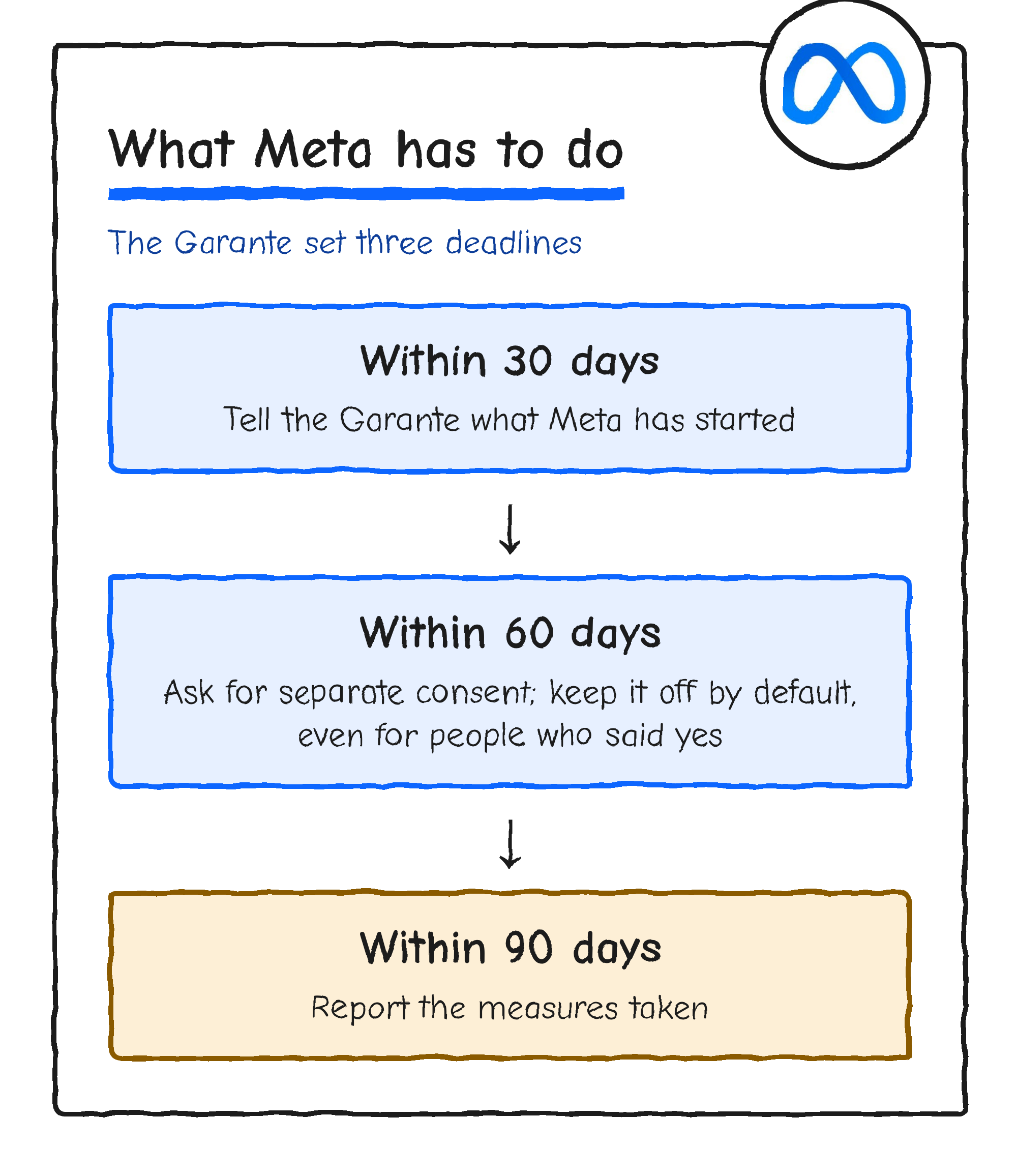
Within 60 days, Meta must ask for consent with a request specific to the feature, explain what it’s for, that it involves gallery access and how to switch it off, and keep it off by default for everyone, including people who already granted permission. If the deadline passes without compliance, the feature can’t be activated for users who haven’t given valid consent. Meta must also tell the Garante within 30 days what it has started and within 90 days what measures it has adopted.
The Garante lists what drove the amount: about 20 million Android users in Italy, a violation that’s still running for people who haven’t updated the app and for those who already granted permission, a 2019 ruling against Meta, and limited cooperation during the investigation. It counted the changes Meta made after the complaint as mitigating, but judged them late and limited to people who update the app. The fine is about 0.47% of Meta’s global revenue.
Meta’s response and what the case doesn’t cover
Reuters reports that the Meta spokesperson said the company strongly disagrees with the decision and called the fine “disproportionate”. “This is a simple feature that helps people share photos and videos on Facebook,” the spokesperson said. “Users must grant permission on their device before the feature can operate, and they can change that permission at any time in their settings.”
The proceeding didn’t cover whether Meta used the content to train artificial intelligence, which the Garante says Meta denies. The Garante has reserved the right to assess separately a newer feature, launched in 2026, that processes gallery content in the cloud.
Meta can appeal the decision. The Garante’s first checkpoint is the 30-day report on what Meta has started.
Discover more from Sulat AI & Tech News
Subscribe to get the latest posts sent to your email.