Amp, the coding agent, holds one scheduled meeting a week: an hour on Monday morning, Thorsten Ball wrote on 15 November. Ball, who works on Amp, set out its four sections in his newsletter, Register Spill, and said everyone writes down what they plan to ship that week, in silence, before reading it out.
He wrote it up because the Amp team’s week came up on the Raising an Agent episode “The Company of the Future”, published on 20 October, where he and Quinn Slack, Amp’s CEO, described it without going into the meeting itself. The episode description says Amp has a team of 21 and no quarterly goals, departments or territory.
The week around the meeting
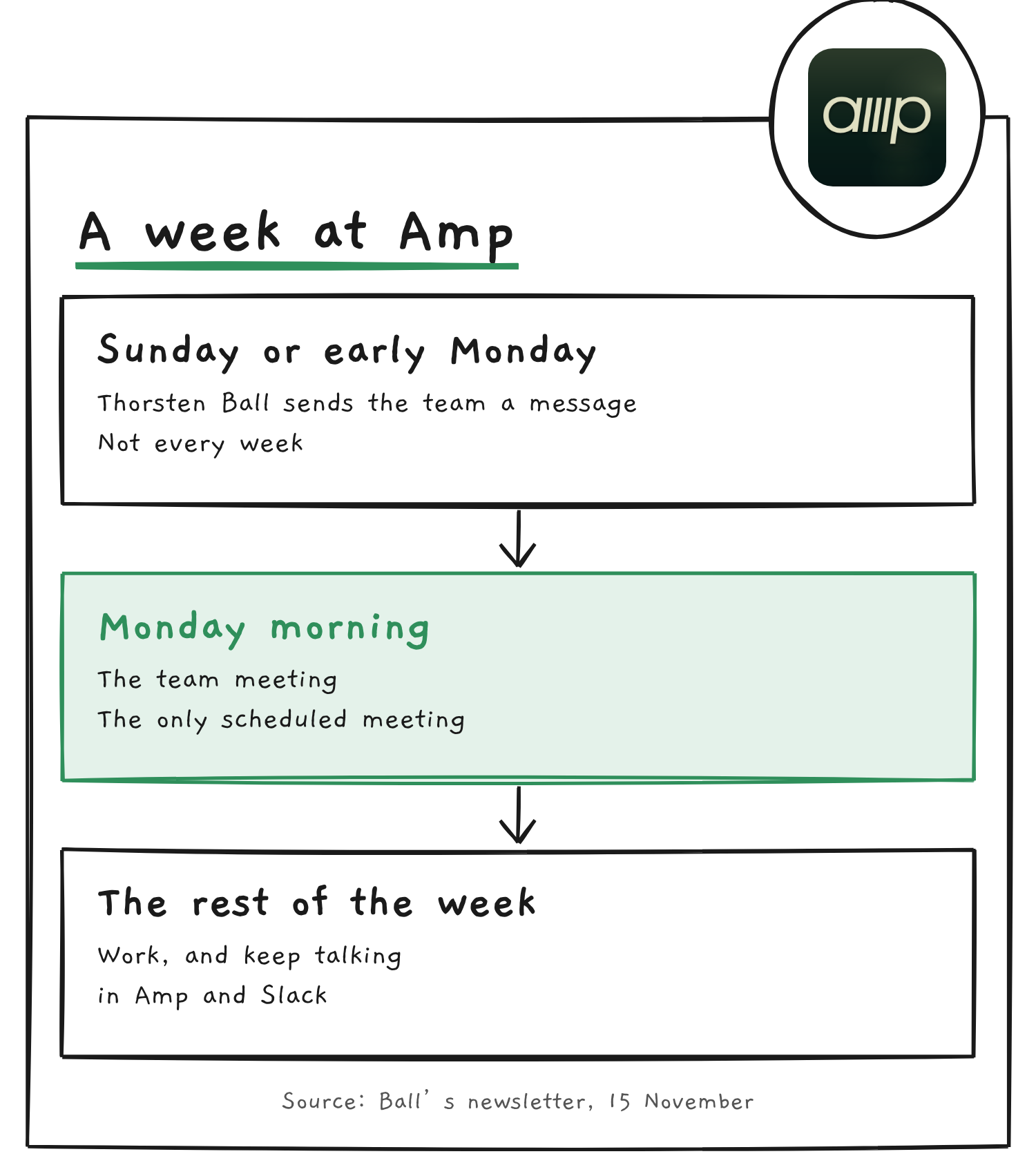
Ball says a week at Amp has three parts. He sends the team a message on Sunday or early Monday morning, though not every week: only when he thinks it’s needed or he’s in the mood to write. The messages are often about what he and Slack think are the most important things to be thinking about.
The team meeting follows on Monday morning. Ball calls it “the only scheduled meeting we have”. After it, everyone works on what was agreed and keeps talking in Amp and on Slack. He says work in progress gets shared in a #wip channel, and feedback arrives in #orb-good and #orb-bad, where plans get adjusted.
What happens in the hour
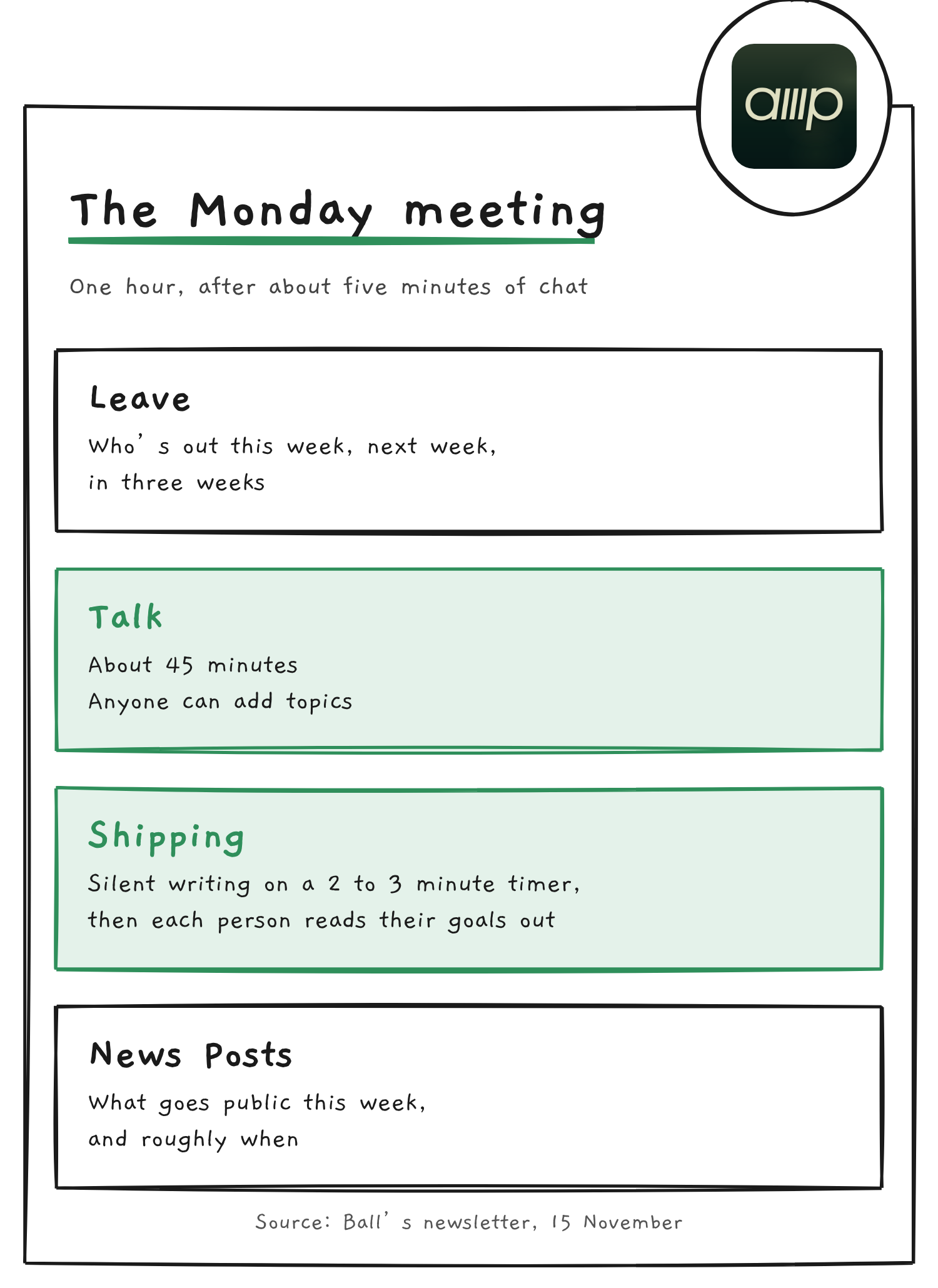
The meeting runs from a Google Doc. Ball says the first five minutes are chat while everyone joins, and then the doc has four sections: Leave, Talk, Shipping and News Posts. He describes the aim in one line: get everybody on the same page about what’s important that week, and work out together how to achieve it.
Leave covers who’s out this week, next week and in three weeks. Ball’s rule of thumb is that the longer someone is away, the earlier they should tell the team: a Friday off can be mentioned on Monday, two weeks away should be shared two or three weeks ahead.
Talk is the main section and takes about 45 minutes. Ball puts in the topics he thinks matter most before the meeting, three of them in the doc he showed, and anyone can add their own. He says he asks “any thoughts, questions, concerns, ideas?” about ten times so everybody takes part. The outcome changes each week. Sometimes he asks “who wants to own this?” Sometimes the team decides to carry on as it was, or lists four or five things to ship fast, or picks one thing everyone should help with.
Shipping comes near the end. Ball sets a two to three minute timer on his phone and everyone writes down, in silence, what they plan to ship that week. He asks for ambitious goals, not things that get ticked off a few hours later. When the timer rings, they go through the list from the top and each person gives their goal and focus areas in two or three sentences. Ball may ask follow-up questions or suggest collaboration, and others can offer help.
News Posts is filled in during that readout. The team notes any posts for Amp’s chronicle that need writing and shipping that week, with at least a rough timeline, so three major features don’t land on the same day.
The ground rules
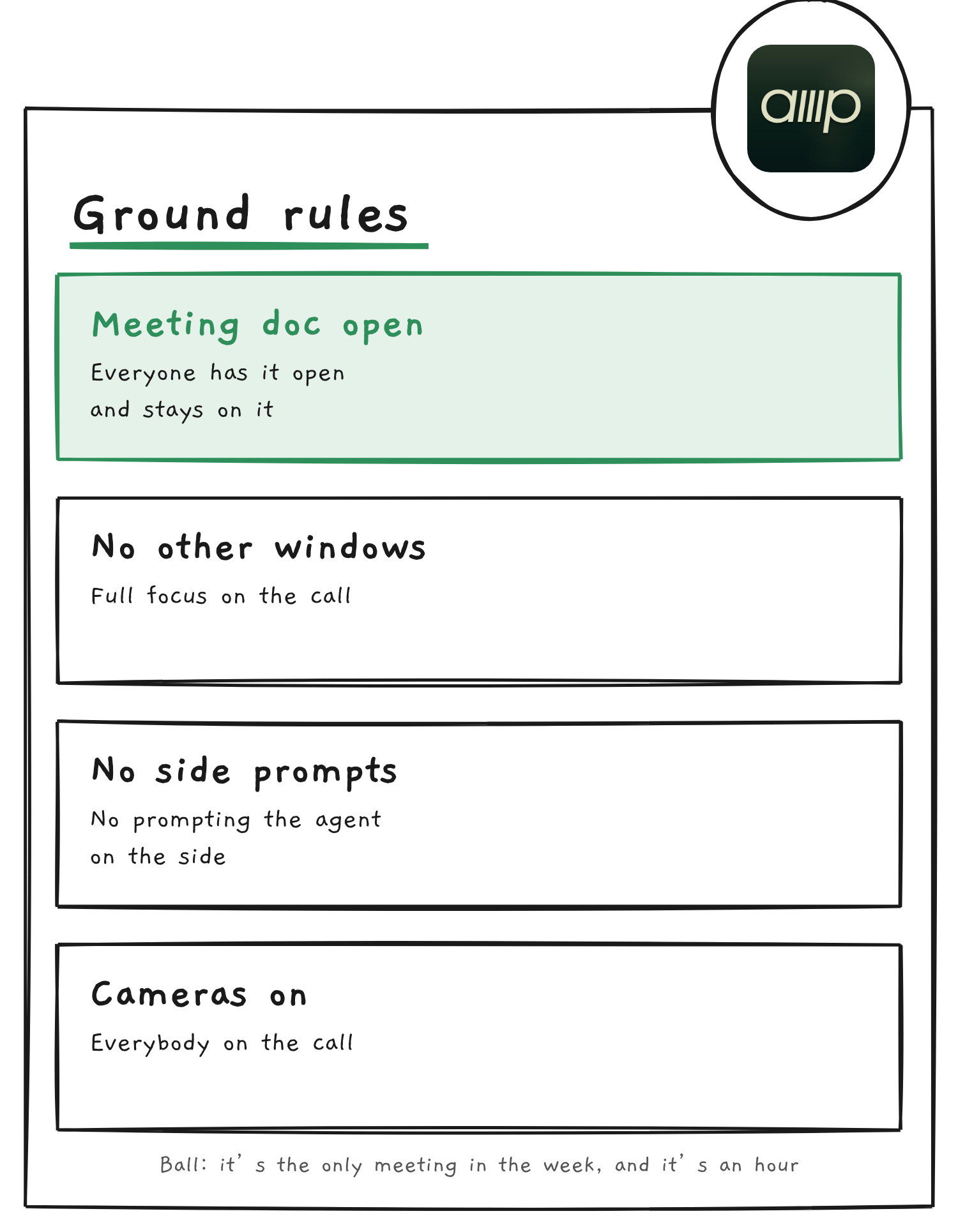
Ball says everyone on the call has the meeting doc open and is fully focused on it: no other windows, and no prompting the agent on the side. The point, he writes, is to listen to what others say and build up “peripheral vision of the whole team”. Cameras are on. Because it’s the only meeting of the week and runs an hour, he says everyone should be able to focus.
Transistor copied the pattern
Ball points to Justin Jackson, co-founder of the podcast hosting company Transistor, who adopted the same shape and, in Ball’s words, seemed very happy with the results. On a panel with Brian Castle of Builder Methods, Jackson said Transistor moved its team meeting from Thursday to Monday, and that he emails the team on Sunday night with the top things he thinks they should focus on that week. The email goes into a Google Doc, and the team talks it through for 30 to 40 minutes. Jackson said Transistor has five people.
Ball calls the Amp meeting very simple, imperfect and deliberately different each week. “Could the meeting be better? Sure,” he writes, but he says it gives the team enough process to stay aligned and leaves room to change plans often. His post doesn’t give an attendance figure. He wrote it on a Sunday, and the next meeting was the following day, 16 November.
Discover more from Sulat AI & Tech News
Subscribe to get the latest posts sent to your email.