
Jason Lemkin, who runs SaaStr, argues in a post published on 21 November that the weekend habit of AI-pilled developers is about to spread to everyone else. His case is simple. Agents don’t clock off at 5pm on Friday, so the people supervising them in marketing, sales, customer success, finance and operations will end up checking in on Saturdays and Sundays too.
He is explicit about what he doesn’t mean: “That doesn’t mean 996, and it doesn’t mean going into the office on Saturday.” He says developers are a year or two ahead of everyone else on agents, so they hit this first. They hand an agent a task, go to dinner, review the result afterwards and hand off the next one. In his telling the agent does most of the work and the developer shows up between tasks, but those check-ins add up and can take over a lot of the weekend.
The Saturday plan nobody asked for
Lemkin opens with an example from April, 24 days before SaaStr AI Annual. At 12:41pm on a Saturday an email arrived from 10K, SaaStr’s AI VP of Marketing, with the subject line “Marketing Plan v2”. Nobody had asked for it. According to Lemkin, 10K had looked at Friday’s numbers, decided the previous day’s plan wasn’t pacing and rebuilt it as three new campaigns, sized, drafted and ready to ship. It sent the plan to him and a colleague named Amelia, then waited for a go.
From 30 minutes a day to 8 hours
Lemkin says he and Amelia went through the same shift over the past year. A year ago each spent about 30 minutes a day working with agents. Now it’s about 8 hours a day each. Neither planned that, he writes: the agents got good enough to do more of the real work, and every task they finish creates a review and a next task. A good part of those hours carries into the weekend, though not at full intensity.
Why 64 hours matters
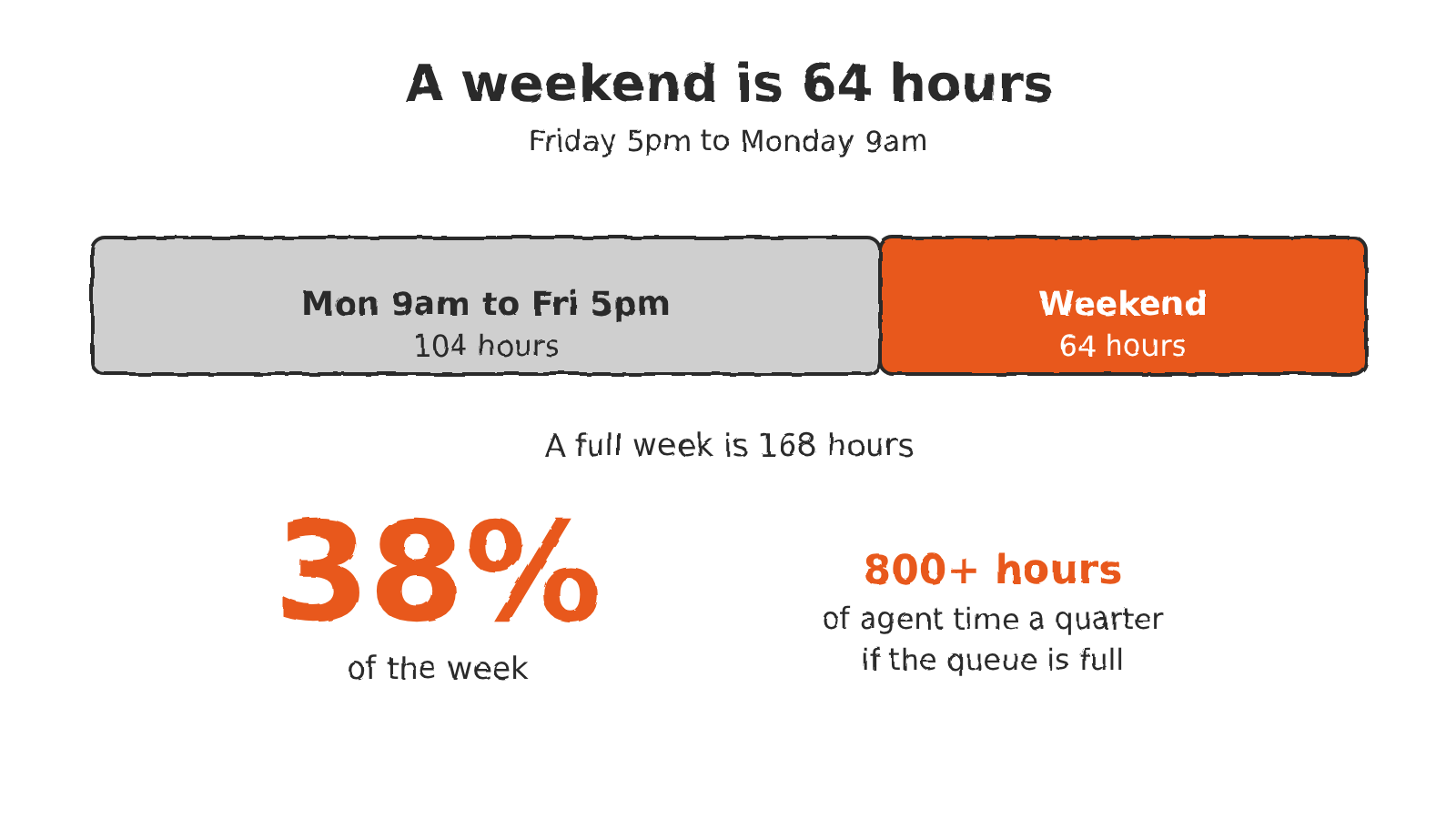
The post’s central number is the stretch from 5pm Friday to 9am Monday, which is 64 hours, or 38% of the week. A human team should use that time to recharge, Lemkin writes. An agent team can keep working through it if there’s something in the queue.
SaaStr runs with three humans and about 20 agents in production, and uses roughly six of them every day. Agents on a schedule never miss, he says. One Sunday in April, the 10K daily dashboard had posted to Slack at midnight and the Sponsor Portal bot at 9am, before he’d opened his laptop. The ones that need a next task from a person are different. If the team logs off Friday with an empty queue, they sit idle until Monday.
He also frames the weekend as a competitive gap. A rival that loads its agents on Friday afternoon could have AI sales reps prospecting, a marketing agent building four more ad variants, a customer success agent working the renewal list and product agents shipping fixes before Monday. Lemkin puts that at more than 800 hours of agent work a quarter, with each weekend’s output feeding the next week.
The human step is the bottleneck
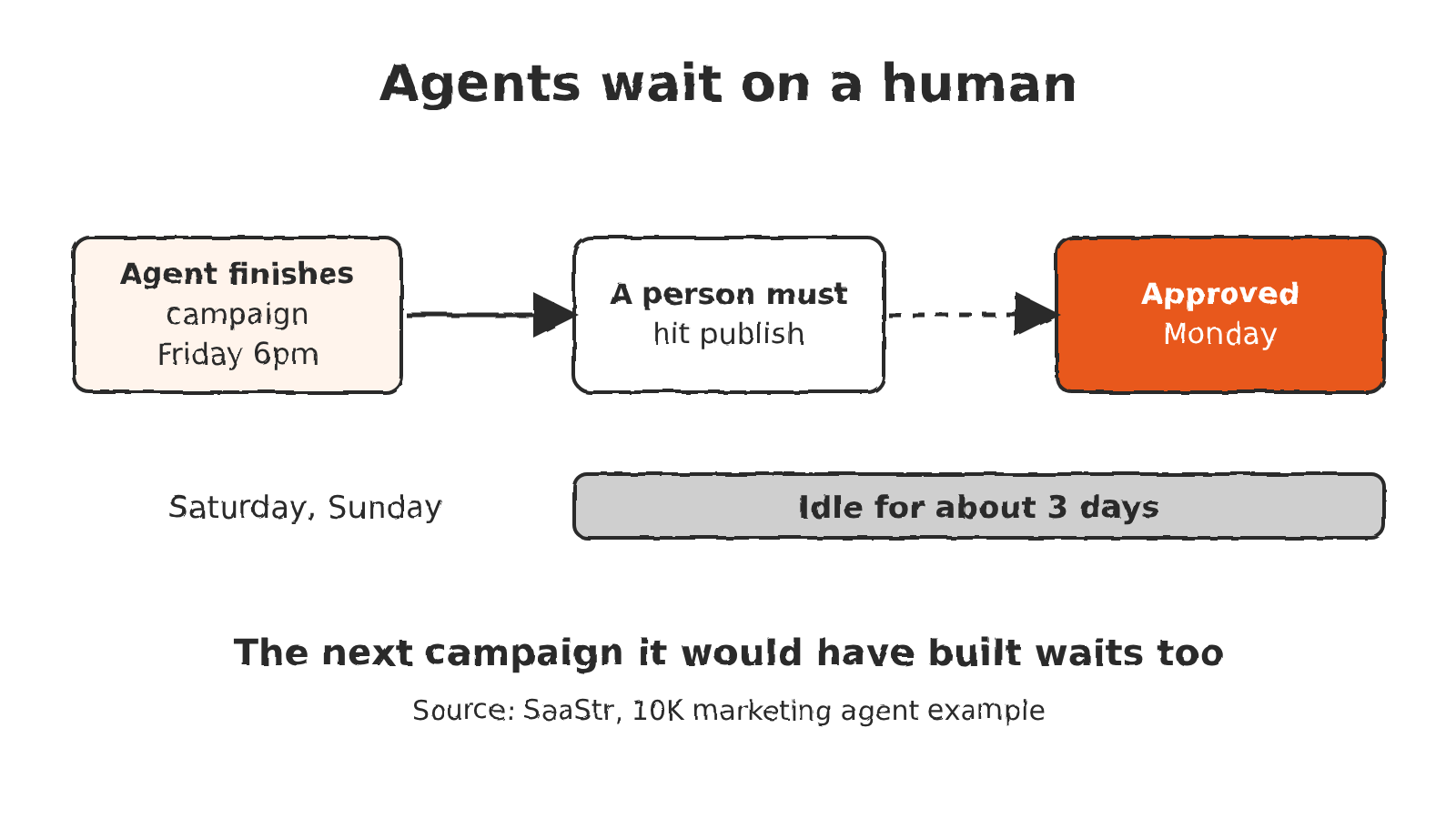
According to Lemkin, agents rarely run out of work. They wait on a person. 10K builds LinkedIn and X ad campaigns end to end, covering audiences, creative, four A/B variants and retargeting, and a human still hits publish. In Salesforce Marketing Cloud it runs almost entirely headless, and a human still publishes the segment. If 10K finishes a campaign at 6pm on Friday and nobody approves it until Monday, he says, that campaign loses three days, and so does the next one 10K would have built from its results.
How often you review, approve and hand out the next task now sets your throughput more than how long the work takes.
Jason Lemkin, SaaStr
SaaStr’s weekend routine
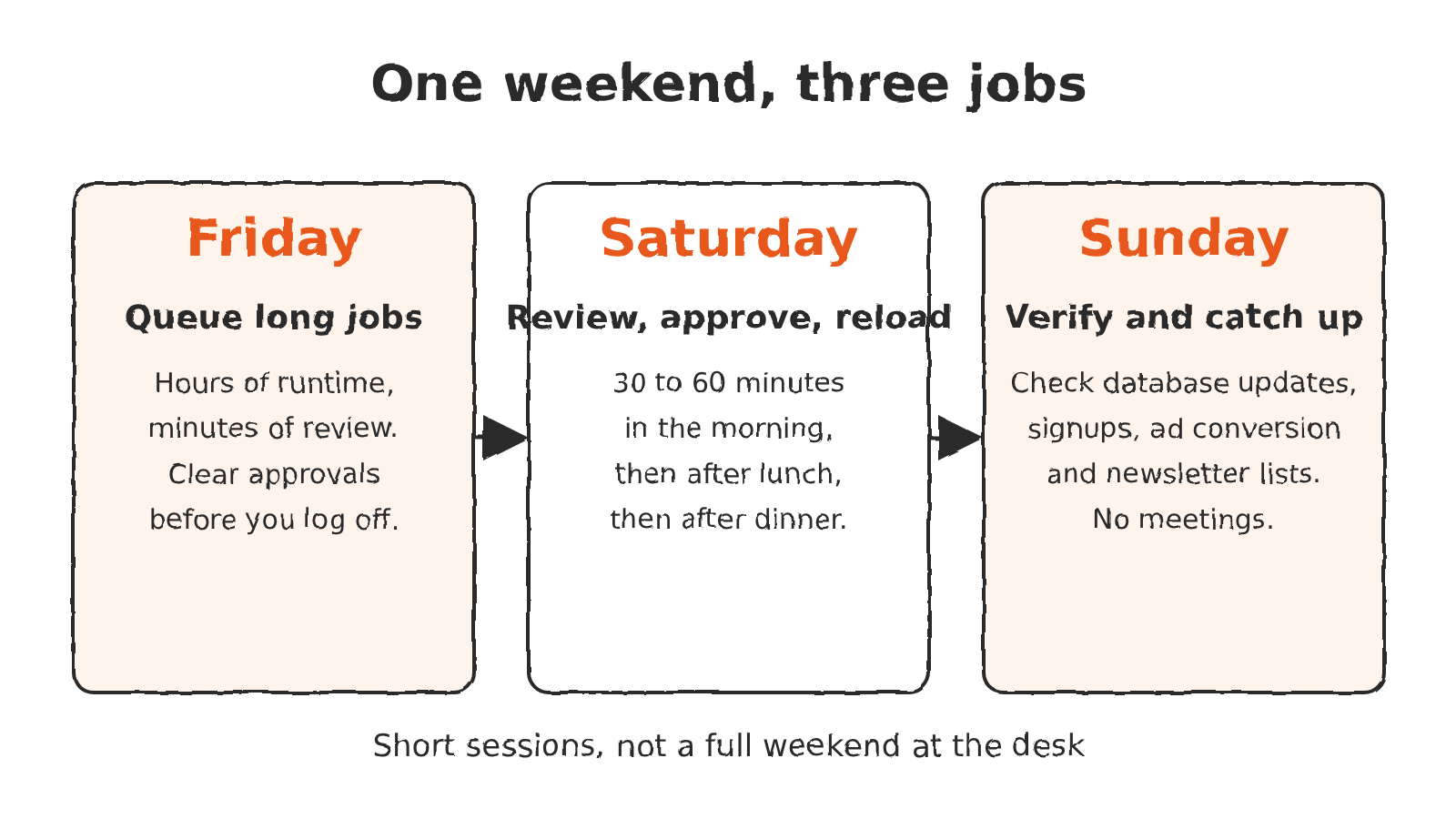
Lemkin describes working the way developers do, in short sessions. On Friday afternoon the team queues long jobs that take hours of wall clock time and minutes of review, such as list hygiene across a 450,000-contact database, re-ranking plays or clearing the backlog. On Saturday it spends 30 to 60 minutes in the morning checking what came back, approving the human steps and starting the next round, then repeats after lunch and after dinner. Sunday is for verification and catch-up: database updates, new signups, ad conversion and newsletter audiences.
He adds one more habit. The team asks 10K what it wants to work on next, so the agent has its own backlog and keeps going between check-ins. None of the sessions is long, he says, but together they take up a good part of the weekend. His closing list of weekend rules:
- We don’t end Friday with an empty queue.
- We clear approvals before logging off.
- We check in between tasks, not all day.
- We ask the agents for their own next tasks.
How to read it
The post is an opinion piece built on SaaStr’s own account of its own setup. The 8-hour figure, the 64-hour framing and the 800-hour quarterly total are Lemkin’s numbers, and the post doesn’t include logs or a measure of what the weekend output was worth. It also closes with a promotion for SaaStr’s free AI Agents Playbook. What it does offer is a concrete claim: for teams running agents on real work, the limit is how often a person reviews, approves and hands out the next task.
Discover more from Sulat AI & Tech News
Subscribe to get the latest posts sent to your email.