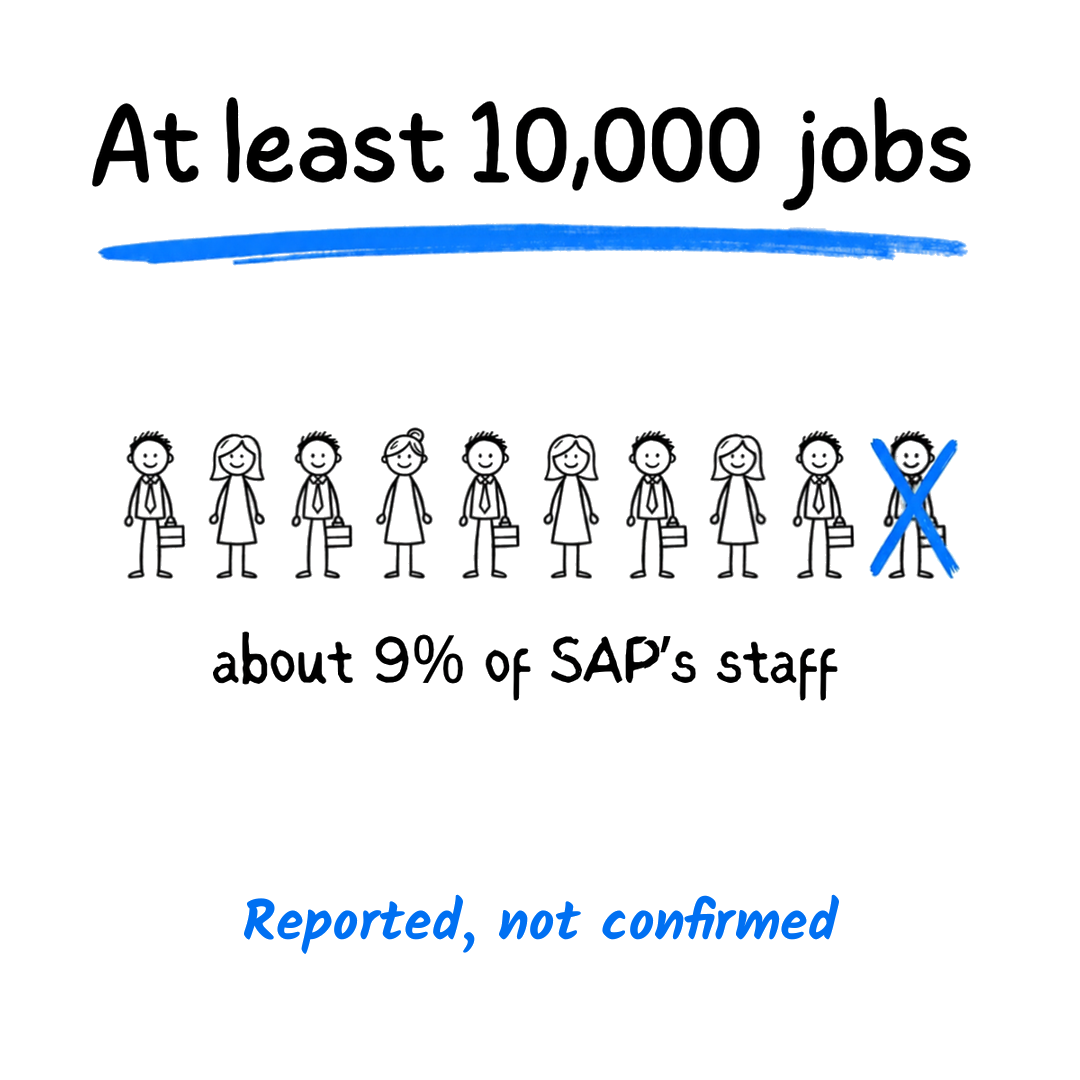
Bloomberg reports that SAP is preparing a plan to eliminate at least 10,000 positions as it rebuilds its software business around AI. The people behind the report asked not to be named, and SAP hasn’t confirmed any cuts. Reuters said it couldn’t independently verify the story.
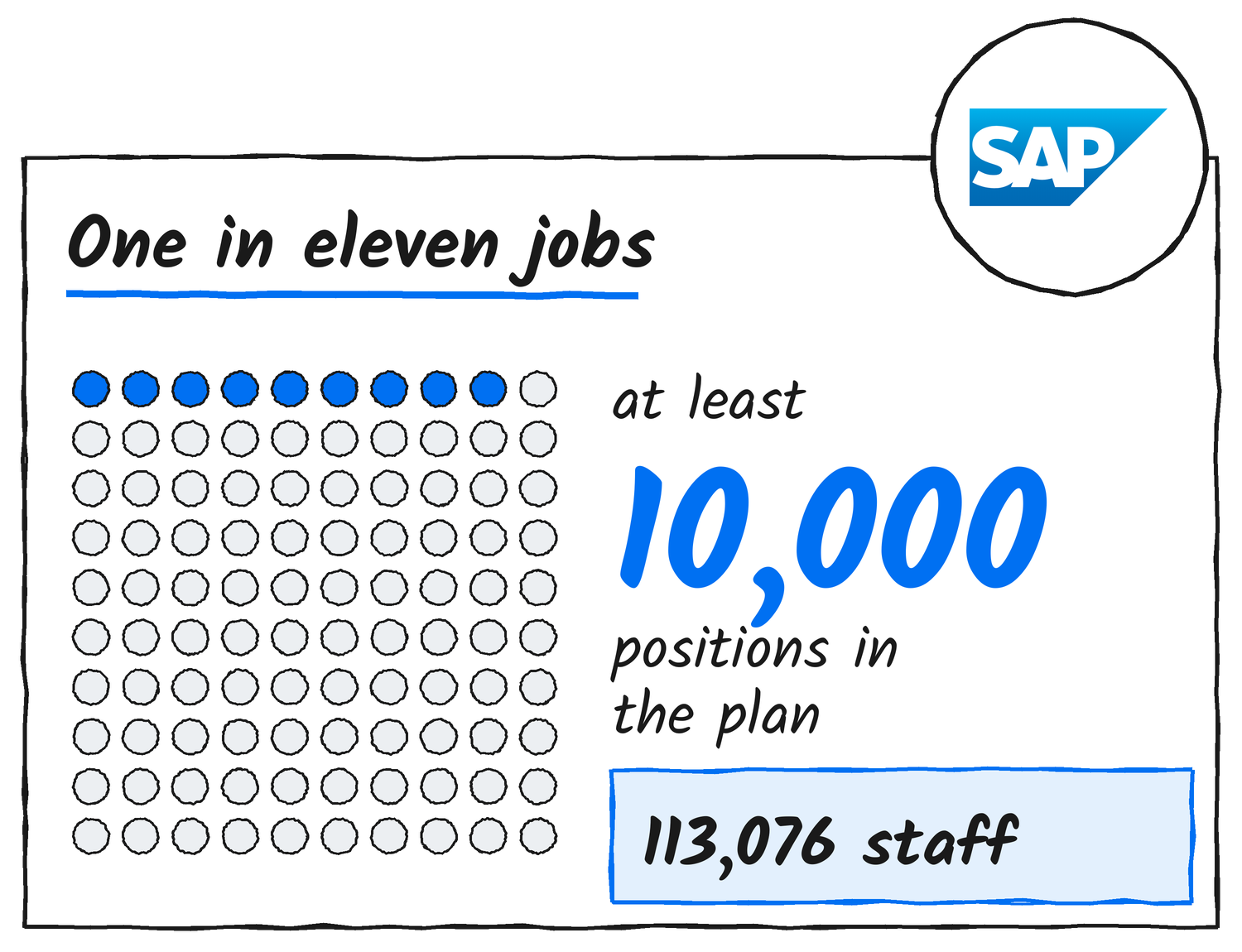
The plan would hit at least 9% of SAP’s workforce. SAP’s own quarterly statement puts staff at 113,076 full-time equivalents on 30 September, so 9% works out to about 10,200 people. Bloomberg’s sources say the final number isn’t set and could change after talks with labour representatives.
10,000+
positions in the reported plan
9%+
of the global workforce
113,076
staff at 30 September
€3.1bn
cost of the 2024 round
What Bloomberg’s sources describe
Every department has been asked to find areas to cut, with product and engineering, and sales, the main focus. The people also said SAP’s leadership will keep redesigning how it builds and sells products, and that CEO Christian Klein wants AI tools built into its applications after earlier AI products ran into problems.
What SAP has said
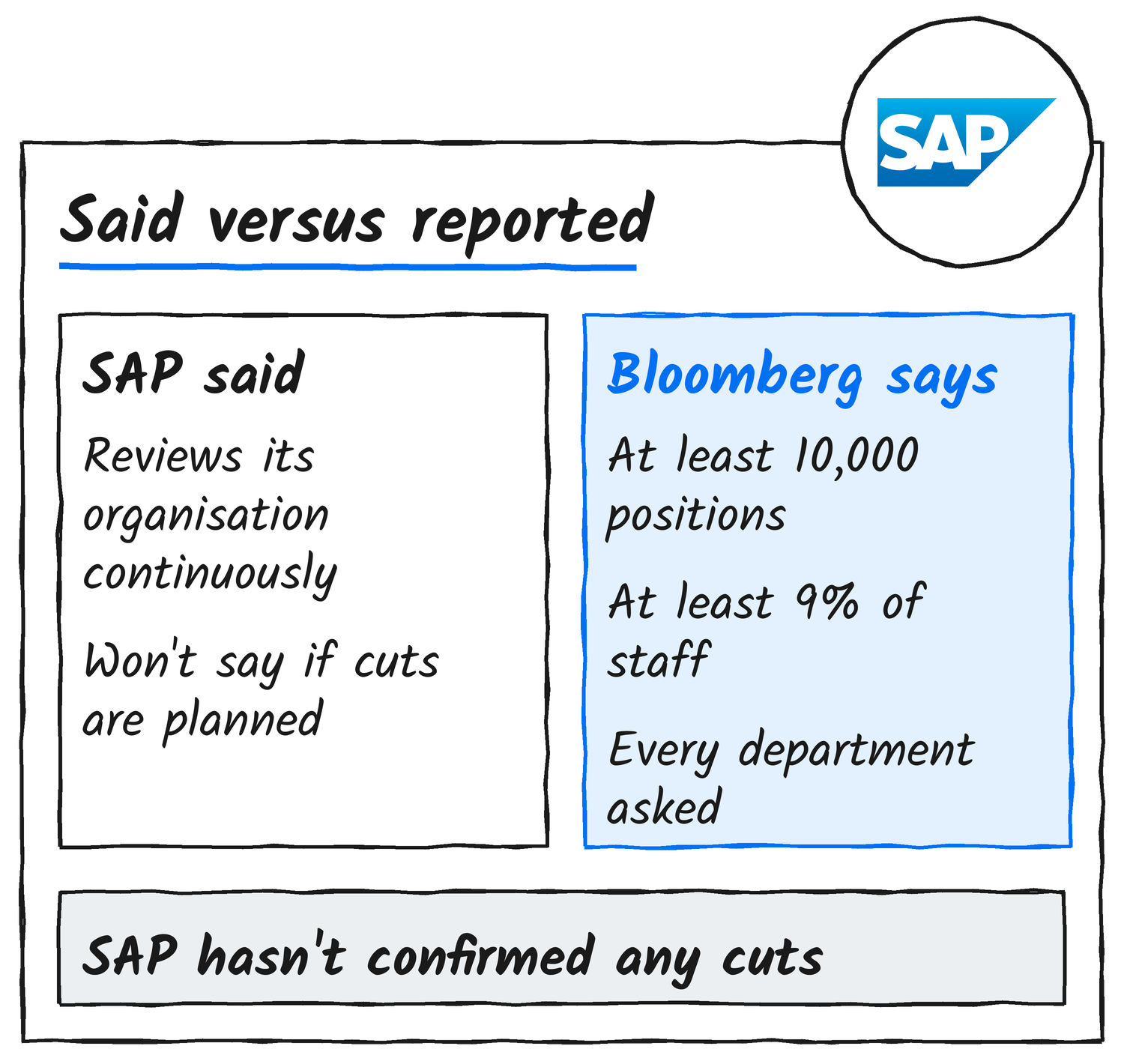
Asked about the report, SAP gave Bloomberg a general statement and declined to say whether it plans any cuts.
SAP continuously reviews its organization to ensure it remains aligned with its strategy and customer needs.
SAP statement to Bloomberg, 26 November
Two things need keeping apart. SAP’s statement is on the record. The 10,000 figure, the 9% and the department-by-department hunt for savings come from Bloomberg’s sources, and no SAP executive has repeated them.
A growing company with a cost target
SAP reported its third quarter on 21 October. Total revenue was €10.27 billion, up 13%, cloud revenue was €6.67 billion, up 26%, and the current cloud backlog reached €24.1 billion, up 28%. Non-IFRS operating profit rose 18% to €3.03 billion. It was the first quarter in which SAP’s revenue passed €10 billion.
The cost side is where a plan like this fits. For 2027 SAP told investors it expects non-IFRS operating expenses to grow at 80% to 90% of the rate of revenue growth. Its results presentation cites an efficiency run rate of more than €2 billion by the end of 2028 and productivity gains above 20% across central functions. SAP’s 2026 guidance puts restructuring charges at €0 to €20 million. The 2024 programme cost about €3.1 billion, so the current guidance carries nothing like it.
How SAP got here in 2026
- 2 July: the executive board emailed staff that new hiring would focus “exclusively” on “selected profiles only, mainly core AI roles”. Internal travel unrelated to AI was paused and supplier spending squeezed. Bloomberg saw the memo, and SAP confirmed it to CIO.
- The same week: Klein took direct responsibility for most of SAP’s AI development teams. In March he had handed sales, delivery and support to a new Customer Value Group under executive board member Thomas Saueressig.
- 1 October: the works council of SAP SE agreed an employment guarantee through 2028, Handelsblatt reported in an account carried by boerse-global. Staff whose roles are cut are offered other jobs in the group at the same salary, and a comparable deal for the German sales unit was still being negotiated.
- 17 November: SAP said Saueressig is leaving and will stay until the end of March. Bloomberg says two of the six board members will be gone by then, the other being product chief Muhammad Alam, whose contract ends in March.
- Last week: chief financial officer Dominik Asam told a Morgan Stanley conference that headcount had “increased a little bit over the course of the year”, and that he “would be really surprised” if that didn’t reverse.
Klein gave a different message to The New York Times in July: “I don’t expect to operate with a smaller work force, but with a very, very different work force.” The 2024 round ended with headcount roughly flat because SAP hired into new roles. This year SAP has limited hiring to core AI roles, so the same trick has less room to work.
What happened last time
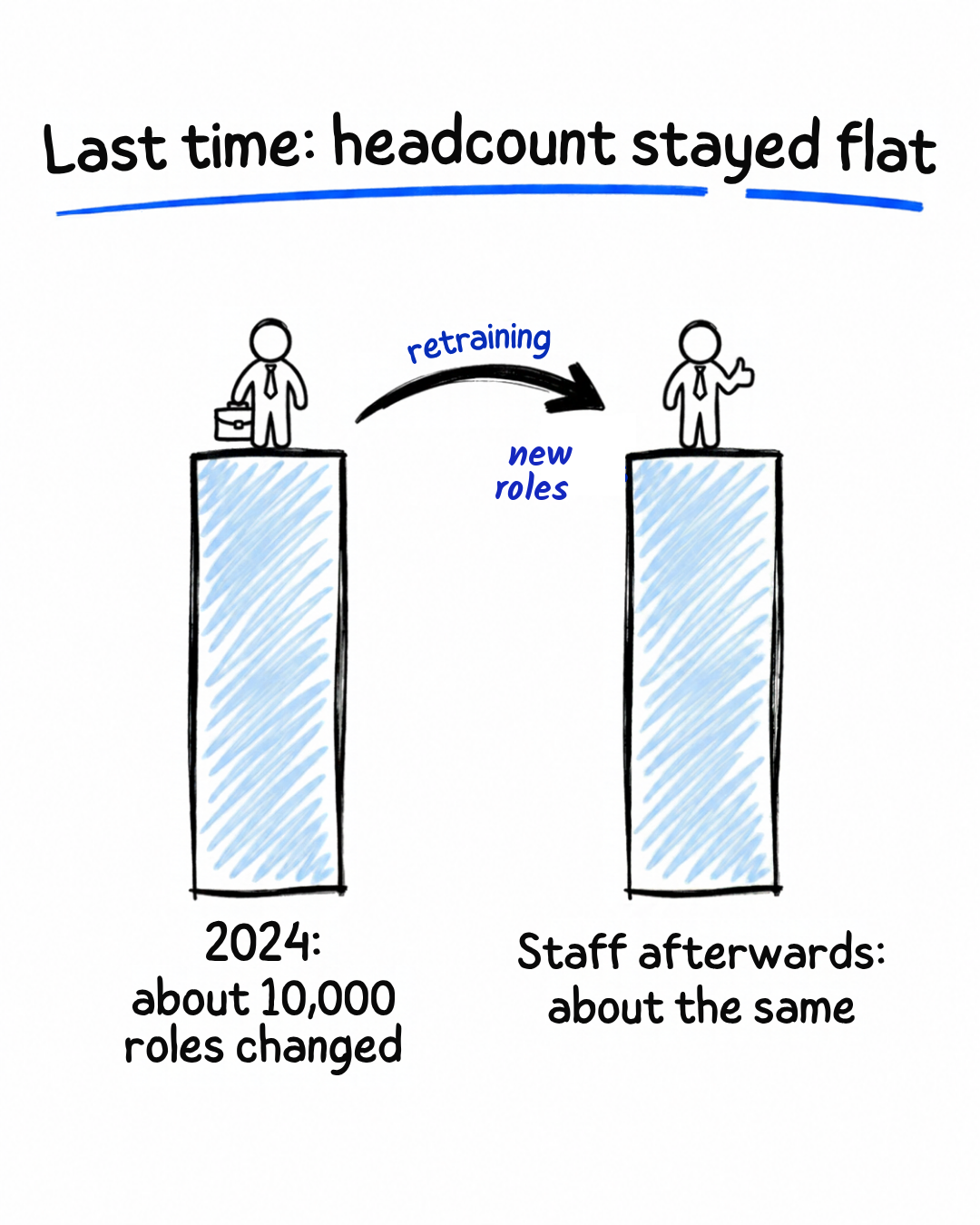
SAP announced its previous restructuring in January 2024: about 8,000 positions and a €2 billion budget, and its shares jumped 7% to a record that day, Reuters reported. In July 2024 it raised the count to between 9,000 and 10,000. Most of those roles were handled through voluntary leave and internal retraining, and SAP said it expected to finish the year with about the same headcount it started with. SAP ended 2025 with 111,397 employees against 109,973 a year earlier, after hiring 10,241 people externally and losing 8,993 to departures, Calcalist reported from its annual report.
After that round SAP moved to smaller annual trims. Klein told dpa they could be 1% or 2% of jobs in a year, heise reported, as Startup Fortune relays. On 113,076 staff, 2% is about 2,300 jobs. The reported plan is more than four times that.
How it compares
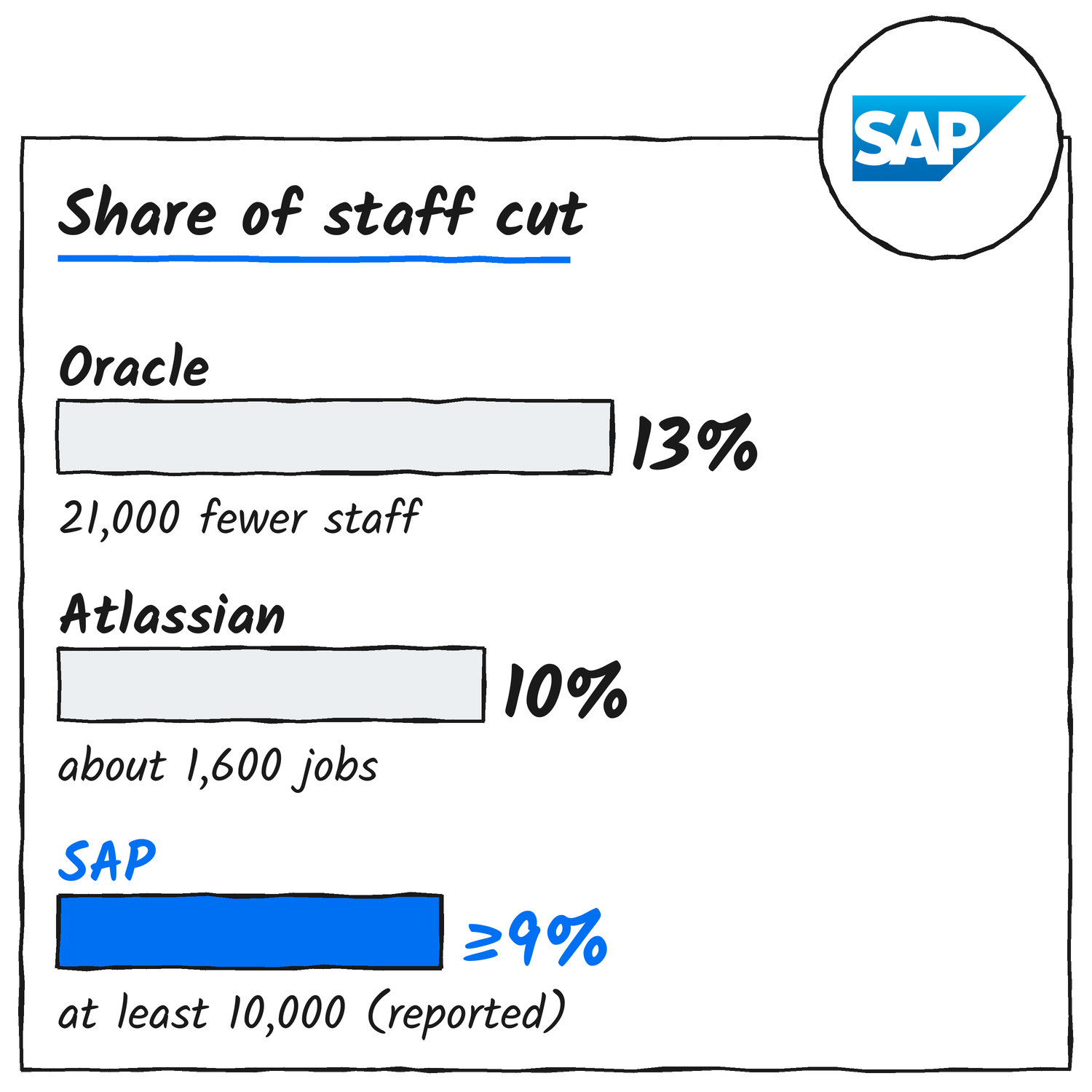
Software and tech companies have been cutting through 2026 while reporting growth. The table lines SAP up against four of them.
| Company | What happened | Share of staff | What the company said |
|---|---|---|---|
| Oracle | 21,000 fewer staff over 12 months, per its June filing | 13% | Its filing says AI adoption “resulted, and may continue to result, in reductions to our workforce” |
| Atlassian | About 1,600 jobs, announced 11 March | About 10% | CEO Mike Cannon-Brookes: “Our approach is not ‘AI replaces people.'” |
| Block | About 4,000 jobs, late February | From over 10,000 staff to under 6,000 | Jack Dorsey said smaller, flatter teams and its AI tools change “what it means to build and run a company” |
| Intel | Headcount 81,100 at 26 September, from 88,400 a year earlier | 8.3% fewer | Covered in my Intel piece |
| SAP | At least 10,000 positions, reported | At least 9% | Hasn’t confirmed any cuts |
Challenger, Gray & Christmas counted 121,401 US job cuts attributed to AI between January and October, about 20% of announced cuts, according to figures relayed by Tech Layoffs Tracker. The count follows the reasons employers gave in their announcements. It doesn’t measure how many jobs AI took, and only 1,265 of those cuts came in October.
What comes next
SAP usually announces restructurings with its full-year results in late January, The Next Web reports. Before then the labour talks decide how large the cut gets and how it’s carried out. The German guarantees limit forced exits at SAP SE, and Calcalist reports a separate dispute in Israel, where SAP has about 1,000 staff and a collective agreement the labour ministry kept valid until March 2027. The January results are the first point at which SAP can confirm a number.
Discover more from Sulat AI & Tech News
Subscribe to get the latest posts sent to your email.