Google announced on 8 December that passkeys are available in Chrome Stable M108 on Windows 11, macOS and Android. The release follows October’s Canary preview.
Illustration: Sulat. Logo: Chrome.
Sites must support passkeys before users can sign in with them. Google says Android credentials sync through Google Password Manager. Desktop users can instead authenticate with a nearby Android phone or iPhone; that exchange does not copy the phone’s passkey to the computer.
A different sign-in mechanism
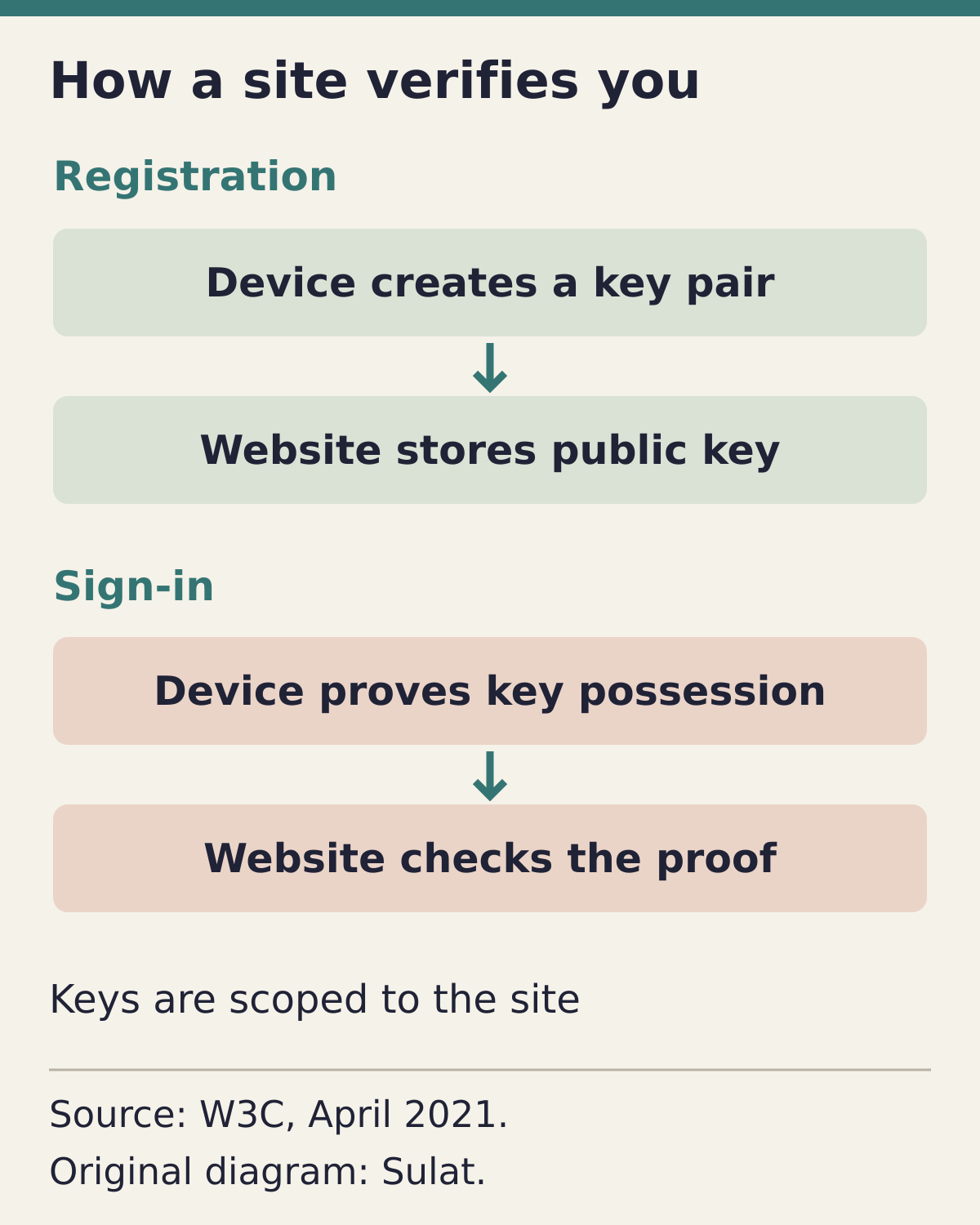
The WebAuthn standard uses a key pair scoped to a particular website. Registration gives the service a public key. Later sign-ins provide cryptographic proof that the user controls the corresponding private key, which the service checks against that public key. The website does not receive a reusable password.
In May’s joint commitment, Apple, Google and Microsoft backed expanded FIDO support for credentials available across devices and for using a phone to sign in on a nearby computer. FIDO described device unlocking, including a fingerprint, face check or PIN, as the familiar user action behind the new approach.
FIDO presents this as phishing-resistant authentication. That is a claim about the sign-in method, not a guarantee that every interaction with a website is safe.
Adoption still matters
Google says Chrome support on iOS and Chrome OS remains in development. Passwords will continue during the transition.
Discover more from Sulat AI & Tech News
Subscribe to get the latest posts sent to your email.