The Council of the European Union gave the AI Act final approval on 21 May 2024, setting a common framework for regulating artificial intelligence across the single market. Publication and a phased introduction of its obligations will follow.
The legislation ties requirements to risk. It bans specified practices, including social scoring, and imposes tougher conditions on high-risk systems. General-purpose AI models face separate duties, with stronger requirements for models considered to pose systemic risks.
The framework includes enforcement bodies, financial penalties and regulatory sandboxes for testing.
A staged start
Following signature and publication, the regulation will enter into force 20 days after appearing in the Official Journal. Article 113 of the approved text sets the main timetable from that point:
- Six months: general provisions and prohibited practices.
- Twelve months: general-purpose AI provisions and parts of the governance and enforcement framework.
- Twenty-four months: the general application date.
- Thirty-six months: certain high-risk duties for AI linked to regulated products.
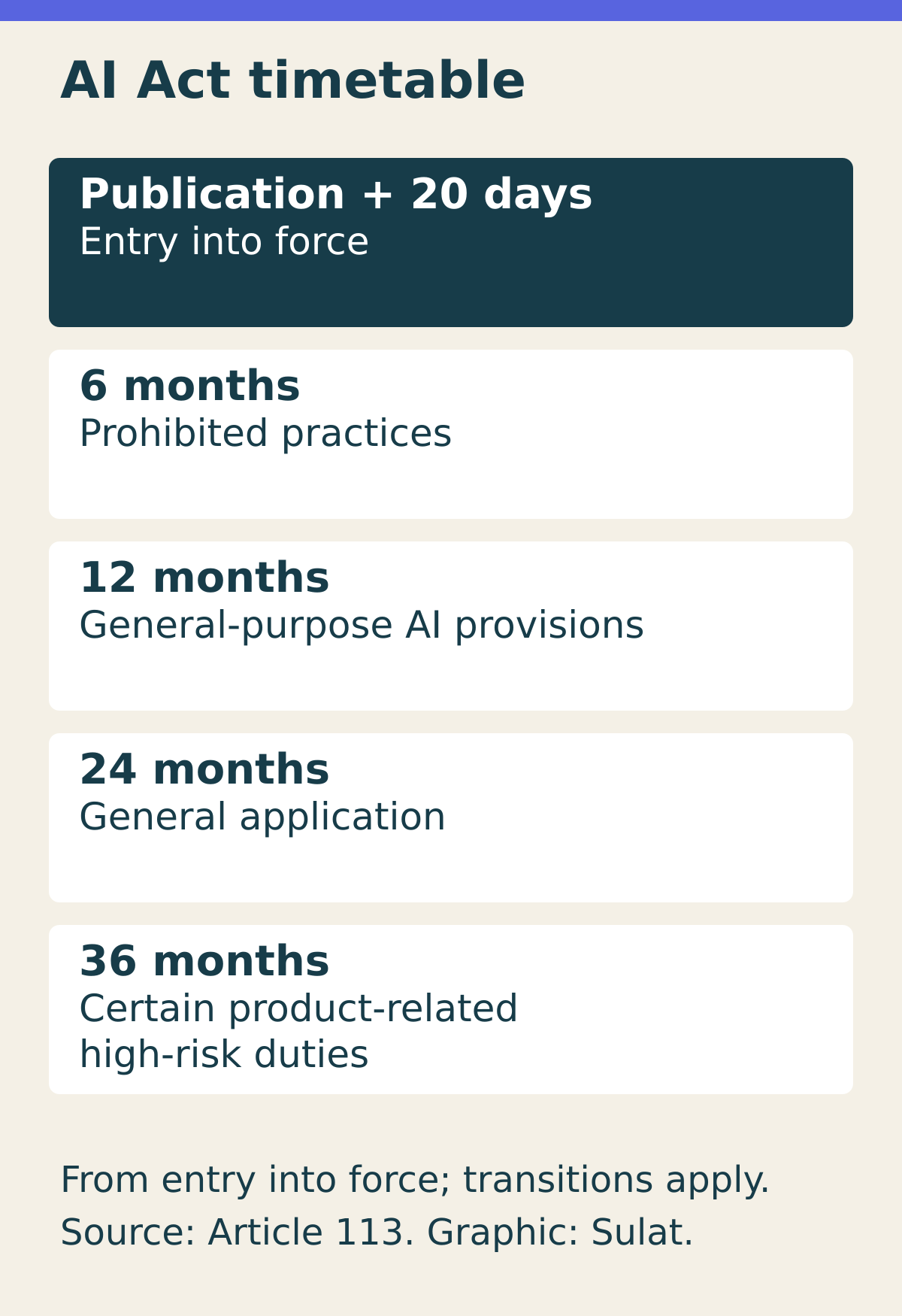
Transitional provisions also apply, so these milestones are not a single compliance deadline for every system.
The text requires general-purpose model providers to publish training-content summaries and maintain an EU copyright-compliance policy. Qualifying open-source models can be exempt from some documentation duties; that exemption excludes models posing systemic risks.
Illustration: Sulat. Logo: Council of the European Union.
Discover more from Sulat AI & Tech News
Subscribe to get the latest posts sent to your email.