Cloudflare has added Google DeepMind’s EmbeddingGemma 2 to Workers AI, its service for running AI models on Cloudflare’s network, Cloudflare says in a changelog post dated 12 November. It costs US$0.0017 per million input tokens and puts text, images, video and audio into one shared 768-number vector space.
An embedding is a list of numbers that stands for what a piece of content means, so software can find similar items by comparing lists instead of matching words. Search and retrieval systems use embeddings to answer a query with the closest documents, products or clips. Google released EmbeddingGemma 2 on 6 October 2026 under the Apache 2.0 licence, and Cloudflare’s copy runs as @cf/google/embeddinggemma-2.
What it embeds
Cloudflare says one text query can search a mixed collection of products, documents and media. Its example embeds a product listing as a single vector built from a text description and a photo, then scores it against the query “waterproof shoes for trail running”. The model page also shows video and audio inputs, alone or combined with text.
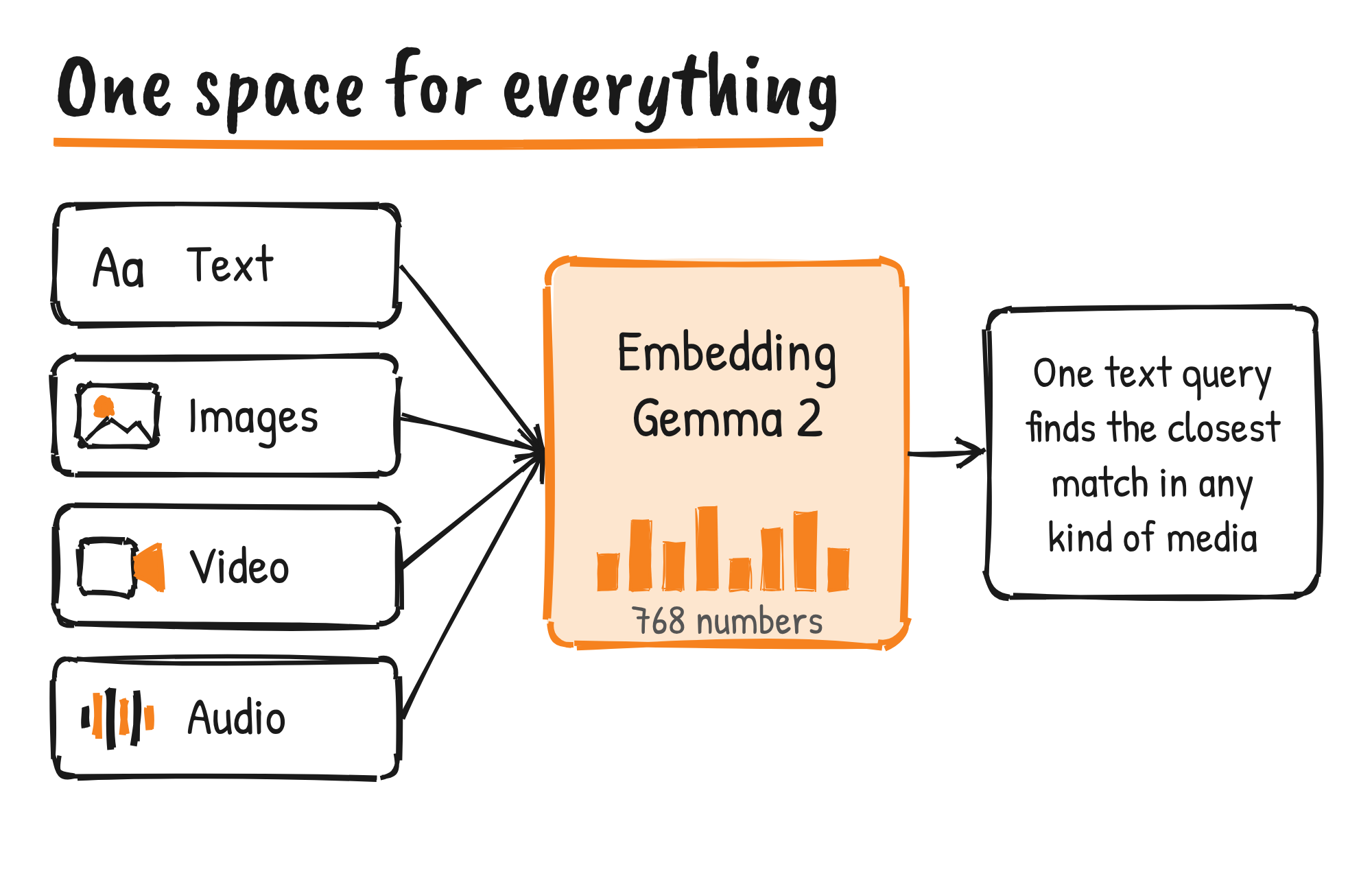
Cloudflare also lists support for more than 100 languages and code. The first EmbeddingGemma handled text only. Google’s model card puts the new model at 78.68 on MTEB (Code), a code-retrieval benchmark, against 68.76 for the first version.
Text queries and documents take short instruction prefixes. In Cloudflare’s example, a query starts with task: search result | query: and a document starts with title: ... | text:. Cloudflare says prefixes like these tune the vectors for search, classification, clustering or similarity.
const response = await env.AI.run("@cf/google/embeddinggemma-2", {
  input: [
    "task: search result | query: waterproof shoes for trail running",
    "title: Trail Runner X | text: Waterproof running shoes with a breathable mesh upper.",
  ],
});
// response.data[i].embedding is a 768-dimensional vector| Model ID | @cf/google/embeddinggemma-2 |
|---|---|
| Inputs | Text (including code), images, video, audio, or a mix |
| Vector sizes | 768 (default), 512, 256, 128 |
| Context window | 8,192 tokens, shared by everything in one input |
| Languages | More than 100 |
| Data retention | Zero |
| Price | US$0.0017 per million input tokens |
Limits and vector sizes
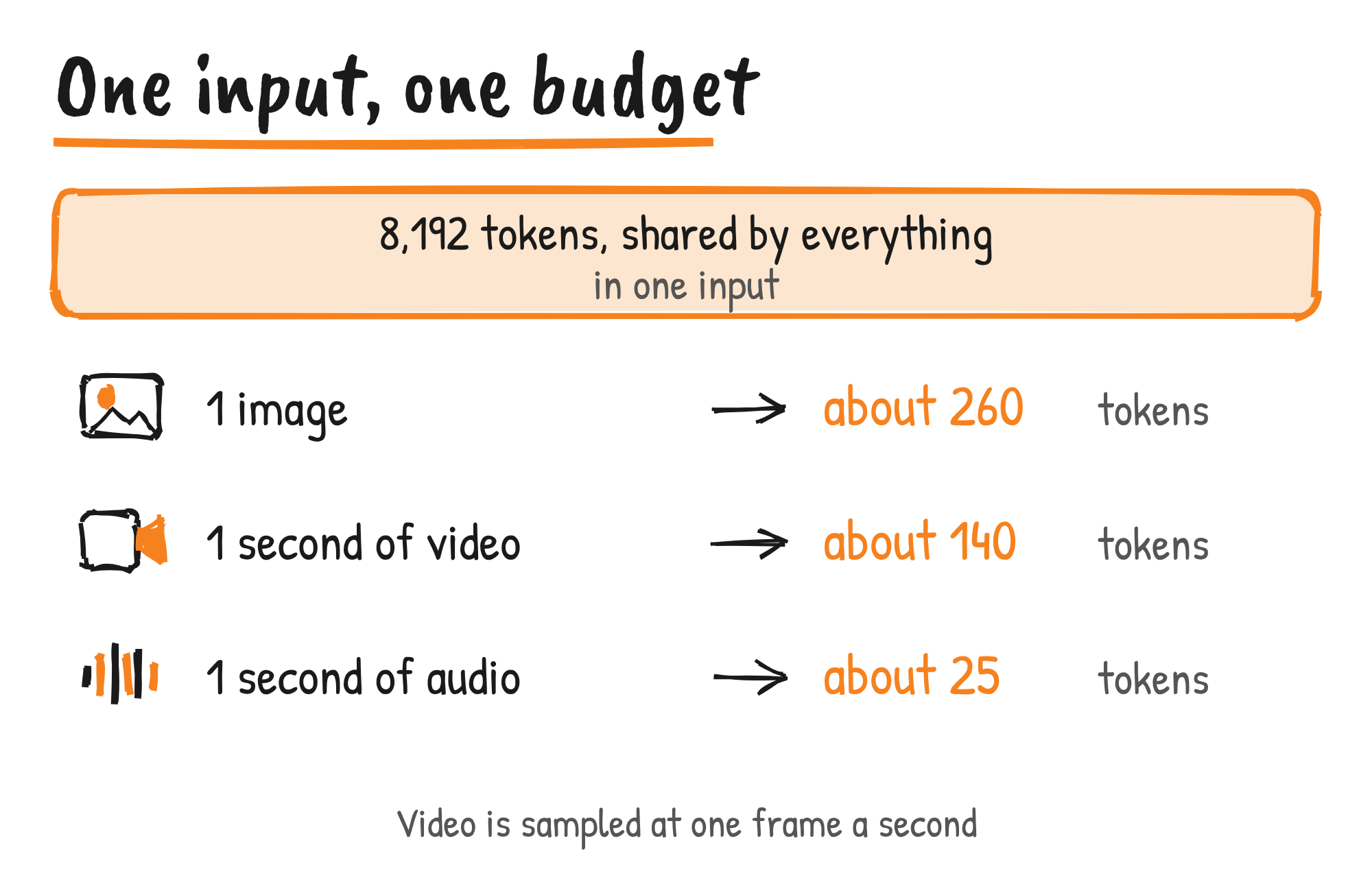
Everything in one input shares an 8,192-token window, which Google says is four times the first model’s. Cloudflare counts an image as about 260 tokens, video as about 140 tokens per sampled frame at one frame a second, and audio as about 25 tokens a second. Google says that window fits up to 5.5 minutes of audio or 29 images.
Media has to be sent as base64 data URIs, because Cloudflare doesn’t accept remote URLs. Cloudflare recommends mono 16 kHz audio. Plain text goes in an input array, while mixed content goes in messages, where each conversation produces one embedding.
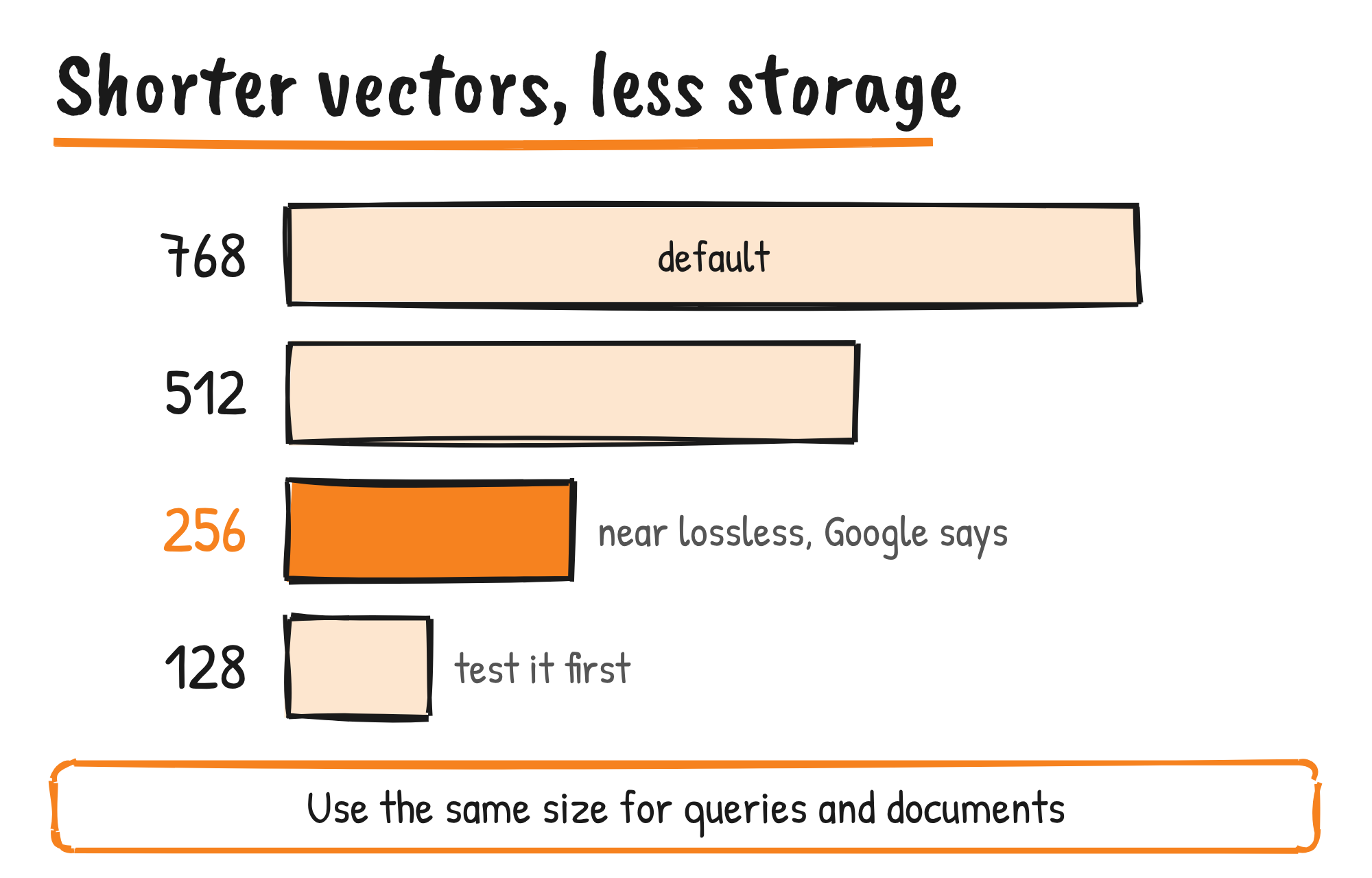
The dimensions setting returns 128, 256 or 512 numbers instead of the default 768. Cloudflare says that cuts storage at a small cost to quality, and that queries and documents must use the same size. Google’s model card says quality is close to lossless down to 256, and that 128 degrades multimodal quality substantially and should be validated against your own workload.
What it costs
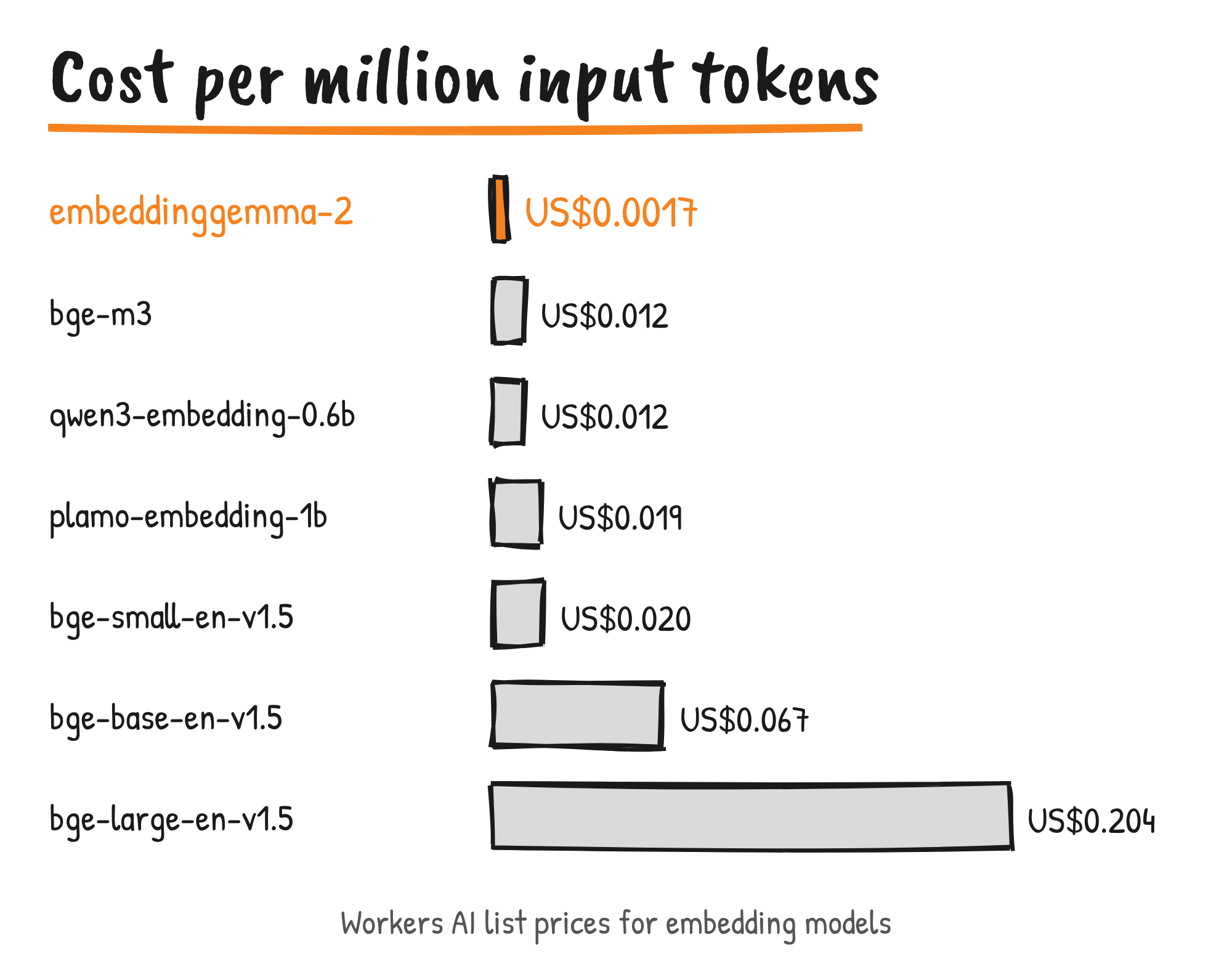
Cloudflare’s pricing page lists EmbeddingGemma 2 at US$0.0017 per million input tokens, or 154 neurons, the unit Workers AI bills in at US$0.011 per 1,000. Workers Free and Workers Paid both include 10,000 neurons a day at no charge, which works out to about 65 million input tokens a day at that rate.
On the same list, the next cheapest embedding models are bge-m3 and Qwen3 Embedding 0.6B at US$0.012 per million tokens, about seven times as much. bge-large-en-v1.5 is US$0.204.
What the pages don’t show
Neither Cloudflare’s changelog nor its model page includes benchmark results, so the quality figures here are Google’s, measured on its full-precision checkpoint. Google publishes the weights on Hugging Face, and its model card is the place to check how the model scores on each type of media.
Discover more from Sulat AI & Tech News
Subscribe to get the latest posts sent to your email.