OpenSEO has released /reverse-engineer-seo, an agent skill that takes the name of any website and returns a playbook for how that site earns its Google traffic. In its launch post on 11 November, OpenSEO says its Wise teardown found one page template ranking for 151,315 searches, and that the full teardown cost under US$0.30.
The skill is listed on SEO.party, a community marketplace for OpenSEO skills, under the every-app account. It runs in Claude Code, Codex and Cursor, carries an MIT licence, and needs the OpenSEO MCP server connected. MCP, the Model Context Protocol, is the standard AI tools use to call outside services. SEO.party labels it a community skill that passed automated checks but hasn’t been reviewed by a person, and tells users to read its SKILL.md before installing.
gh skill install every-app/seo-party-skills reverse-engineer-seo --pin ce87df4c8d5100625d75d871f65feb739b1f3b54 --agent claude-codeWhat the skill does
According to the skill’s SKILL.md, the agent first sizes the site, pulling estimated monthly organic traffic, ranking keywords and referring domains. It then takes the site’s top 100 keywords by traffic and splits them into brand and non-brand searches, noting the patterns that repeat, such as “[currency] to [currency]”.
Next it lists the non-brand keywords the site ranks for in Google’s top 20 and groups them by URL and by section, meaning a subdomain or the first folder that names a page type. For up to five sections it measures how many keywords each one holds. It also counts the searches where the site appears as a cited source in Google’s AI Overview, and opens the top page of the three biggest sections to see whether a page is written by hand or is one template filled from data.
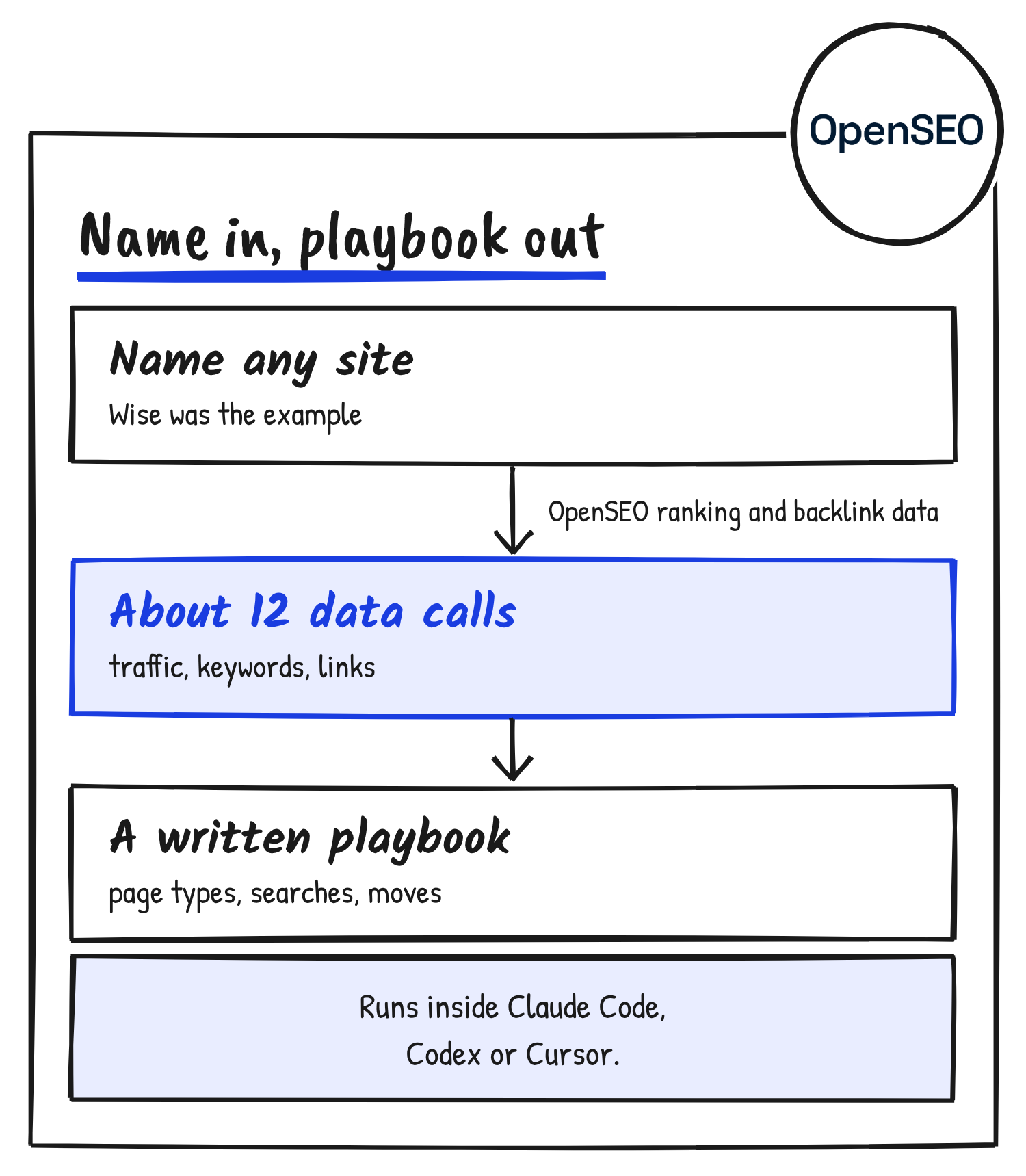
The last data step looks at links. The skill pulls the 50 strongest linking domains, one link per domain, and groups the pages they point to. A page type other than the homepage that keeps attracting strong links counts as a link magnet; the skill’s examples are articles cited for one figure, a free tool and a yearly report.
The report comes back in a fixed order: a three-line playbook, a scorecard, the sections that drive traffic, the top pages, the search patterns, the link magnets, and three to five moves to copy, each with a first page to build. The skill then offers to save the related keywords to OpenSEO, tagged reverse-engineer-seo, and asks before it does.
What a run costs
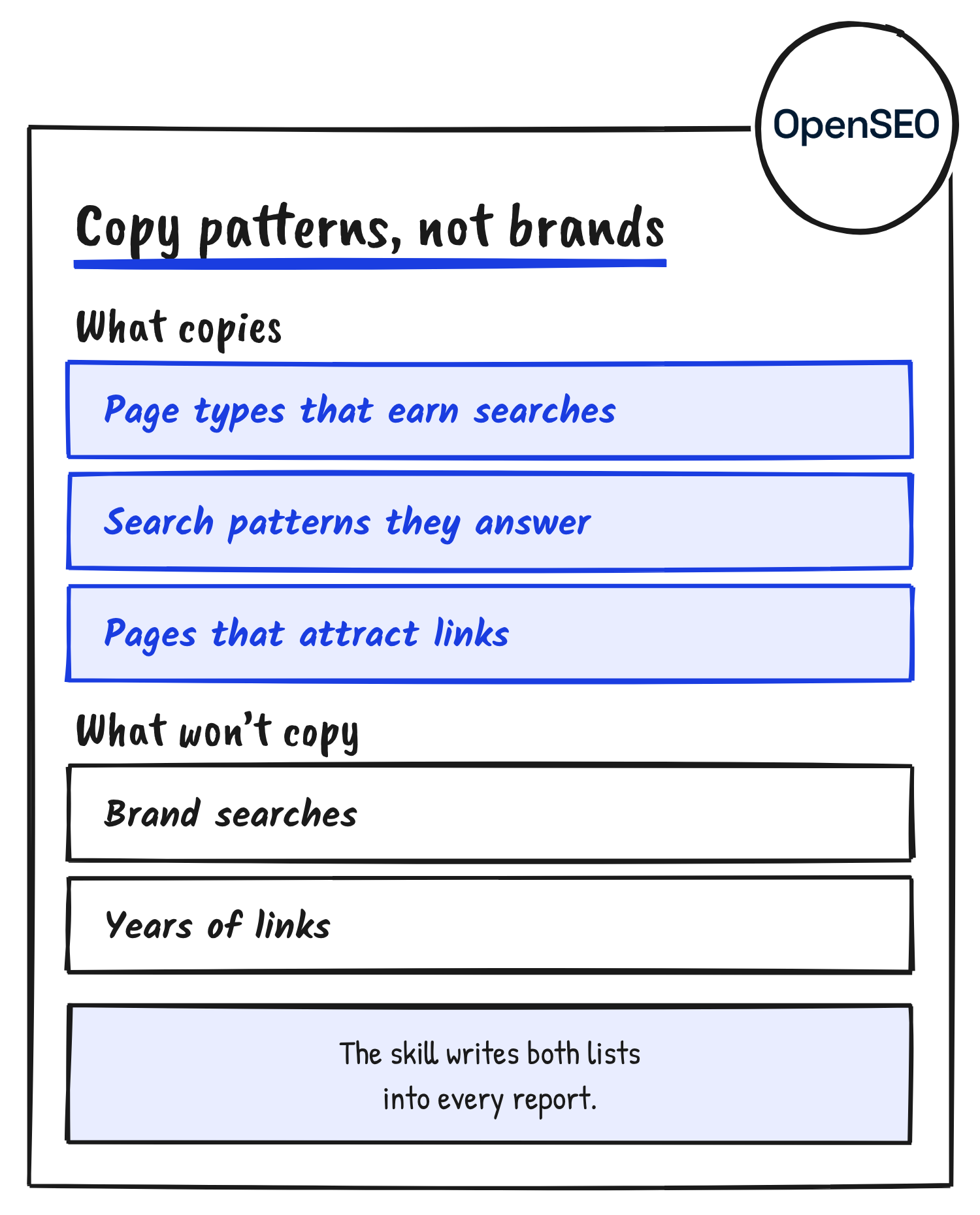
The skill page puts a run at about 12 OpenSEO calls and 250 to 300 credits, and tells the agent to warn the user before studying more than three sites at once. OpenSEO’s llms.txt file says 1,000 credits equal US$1, which makes a run roughly 25 to 30 cents. That conversion is arithmetic from those two OpenSEO pages, and it sits under the sub-US$0.30 figure in the launch post.
Hosted OpenSEO costs US$10 a month with US$10 of usage included, and new accounts get US$0.50 of trial credits with no card. OpenSEO says its data comes from DataForSEO and that the hosted service adds 28% to what each data request costs. Self-hosting has no subscription; the user pays DataForSEO directly.
How to read the numbers
The skill labels traffic and rankings as estimates for a single market. Its section shares are shares of ranking keywords, not of visits, and its search volumes are 12-month averages, so it checks a keyword’s monthly figures for a one-month spike before quoting it. If OpenSEO isn’t connected, the skill tells the user and stops instead of estimating.
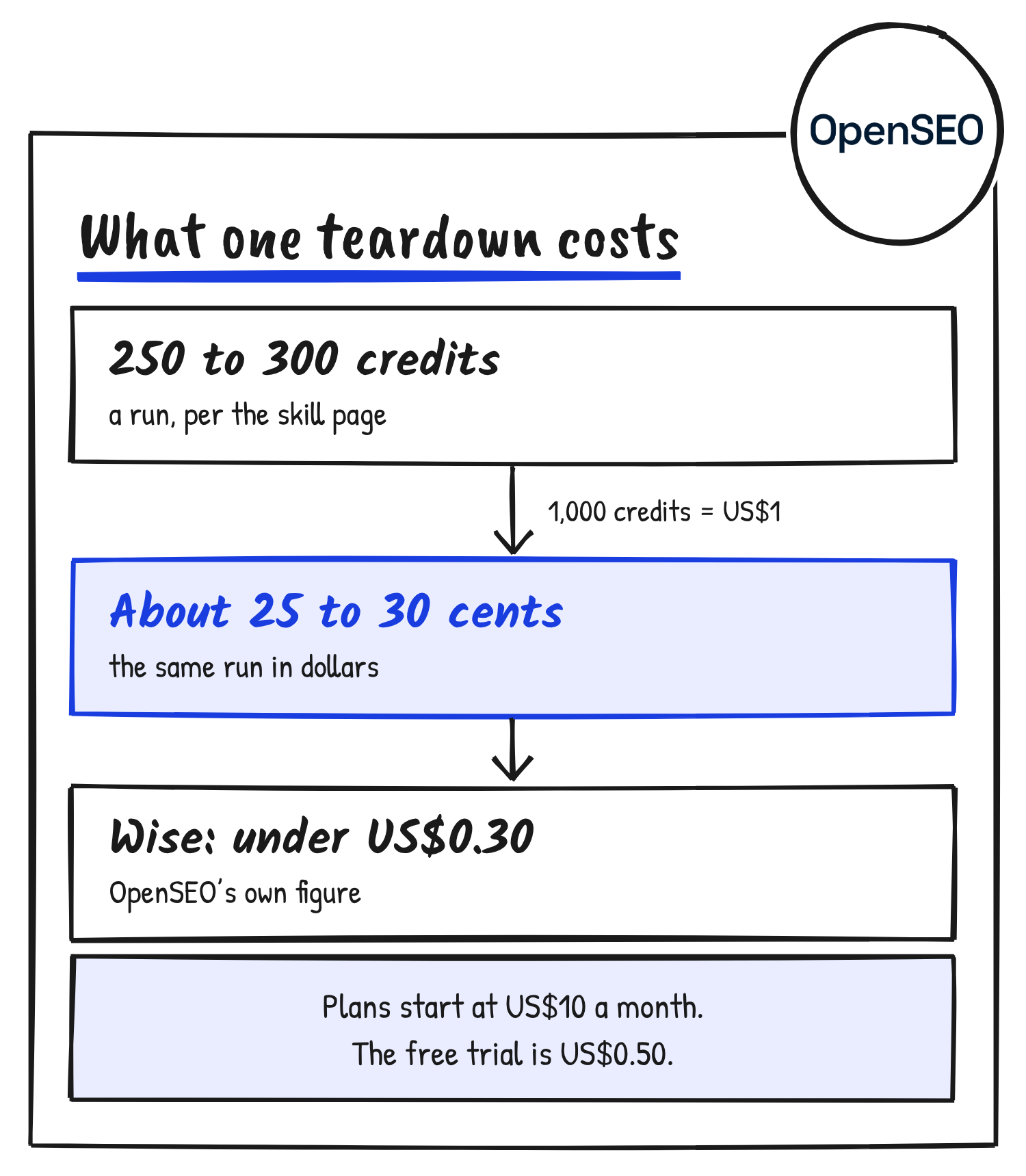
The Wise figures, 151,315 searches and a cost under US$0.30, come from OpenSEO’s launch post. The skill page doesn’t list them. Every report closes with a “What won’t copy” section covering what comes from a site’s brand or age, which the skill names as brand searches and years of links.
Discover more from Sulat AI & Tech News
Subscribe to get the latest posts sent to your email.