Up to 200,000 people in the US can now put health questions to a medical AI inside an Apple research app. Apple launched the Apple Health AI Usage Study on 15 November, and the AI comes from OpenEvidence, a platform doctors already use, according to Apple’s Newsroom post.
The aim, as Apple tells it, is to learn what makes people trust health AI, how good the answers are, whether people understand them, and what they go on to do about their health. Apple says the results will feed into how it designs these tools, and how the rest of the industry does.
What you do in the app
You ask a question and get an answer that links back to peer-reviewed papers. The questions can be everyday ones, or about complex medical information, which the app is meant to put in plain language. If you want, you can also share HealthKit data (resting heart rate, activity, sleep, lab results) so the answers fit you better. That part is optional, and Apple wants to see whether it makes answers more relevant and easier to follow.
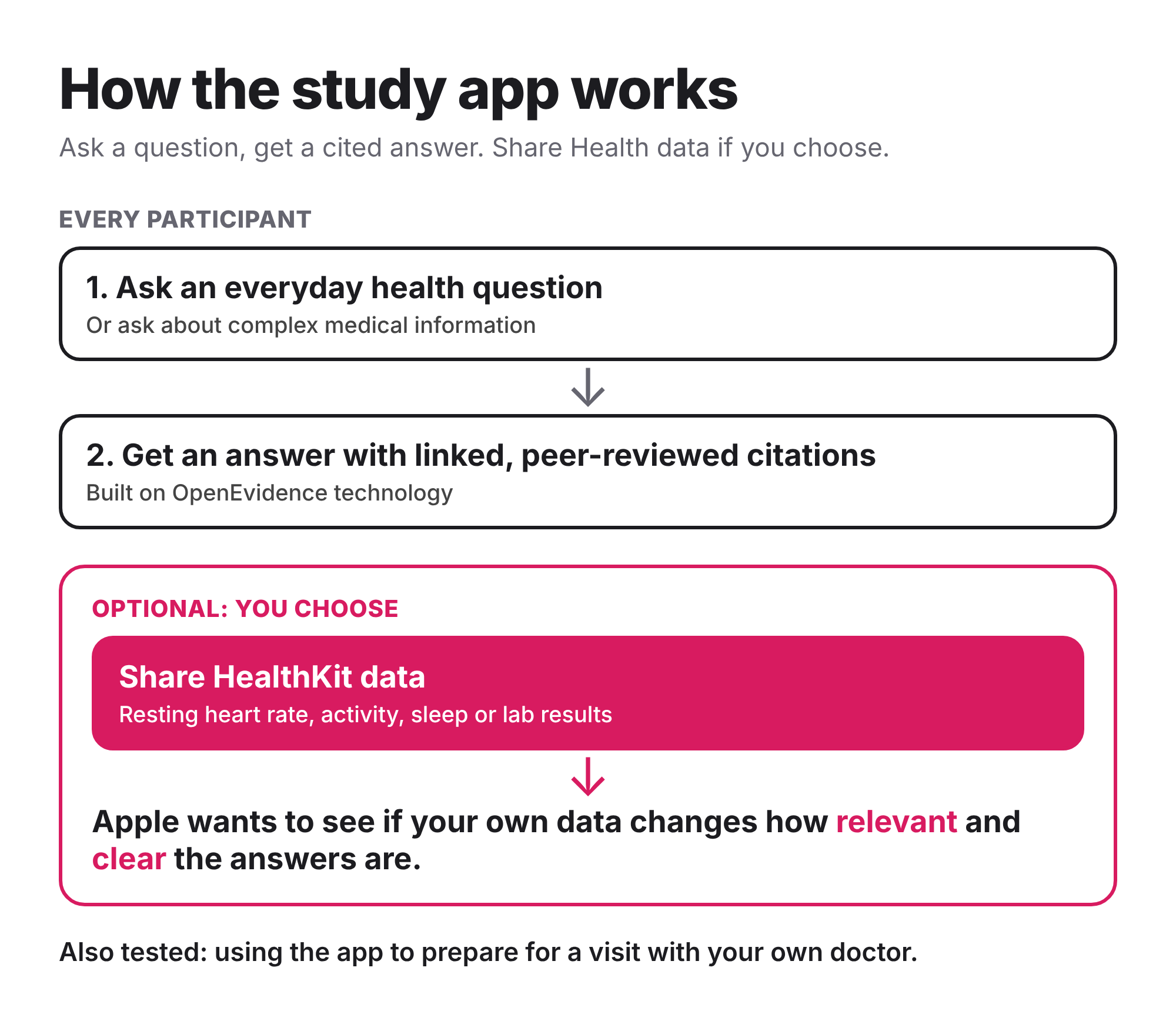
The App Store listing adds a few uses: understanding symptoms or conditions, preparing for a medical visit, building an exercise or meal plan. Apple’s release says the study will also test whether the app helps people get ready for appointments with their own doctors. Neither the app nor the study gives medical advice, diagnosis or treatment, the listing says, and Apple’s release repeats that in a footnote.
OpenEvidence started with clinicians
OpenEvidence started as a tool for clinicians. Its own iOS listing says it’s free for verified US clinicians and asks for a national provider number at sign-up. Becker’s Hospital Review reports that a JAMA study published on 15 October counted 271 million queries from 952,008 US clinicians between January 2024 and June 2026. Apple describes it as a clinical AI platform and says its answers draw on sources such as The New England Journal of Medicine, JAMA and Nature. The study app runs on that technology but needs no provider number, so any eligible iPhone owner can try it.
What happens to your data
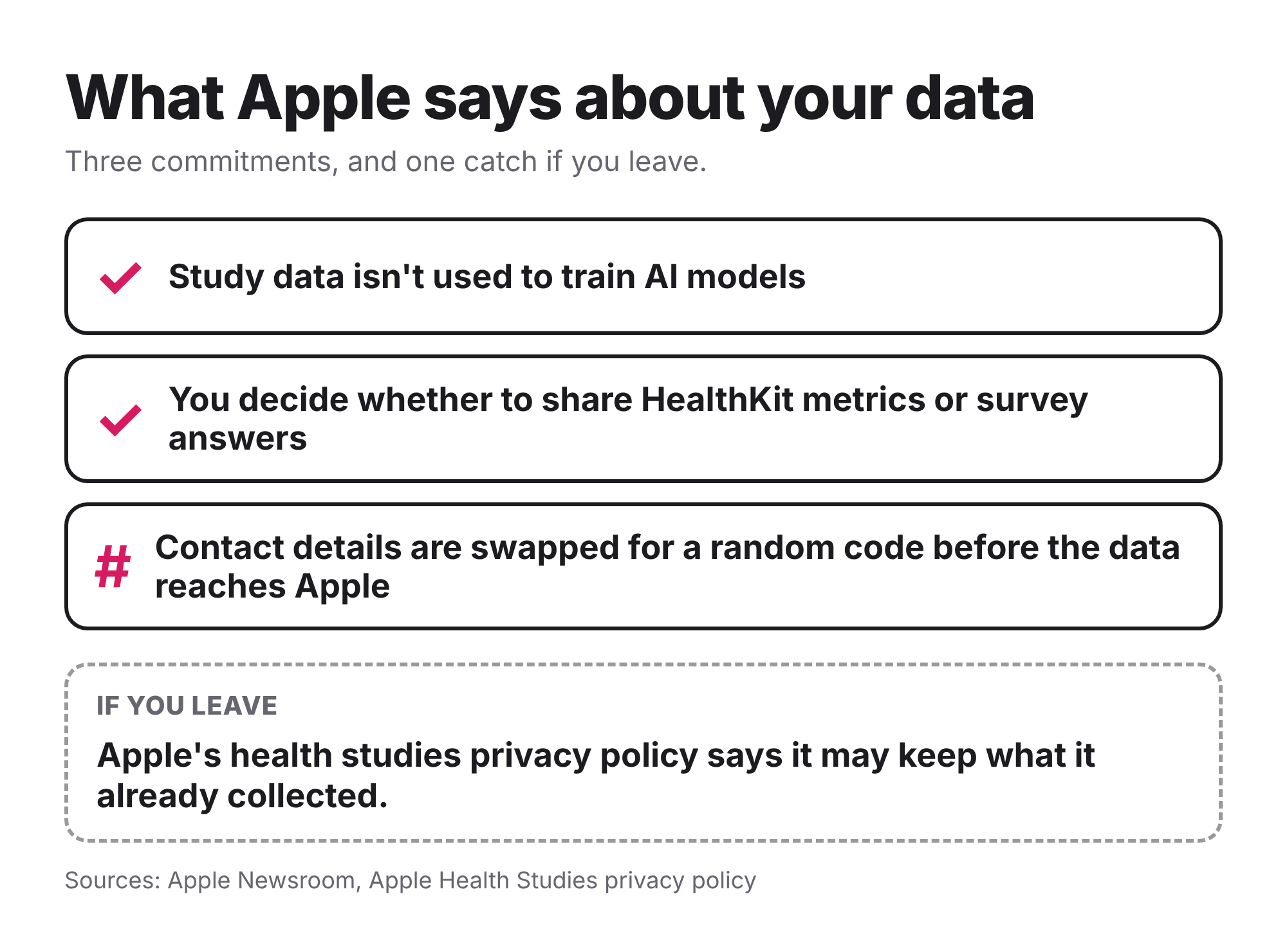
On privacy, Apple says study data won’t be used to train AI models and that you choose whether to share HealthKit metrics or survey answers. The app also has safety guardrails, which Apple says are there to catch certain worrying questions and point people to a provider or other help.
The privacy policy linked from the App Store listing goes further. Contact details are split off and swapped for a random code before anything reaches Apple’s systems, and the coded data can be used to develop health-related products. Leave the study and Apple may keep what it has already collected. Each study’s own terms sit in the consent form inside the app.
What the announcement leaves out
A few things aren’t in the announcement. It names no principal investigator, university partner or ethics board, and there’s no trial registration number. I searched ClinicalTrials.gov under Apple’s name and found nothing for this study; the Brigham and Women’s Apple Health Study (NCT06958523) is a different project. There’s no start or end date either, no timeline for results and nothing on what OpenEvidence itself gets to see about participants.
Robert Wachter, chair of medicine at UCSF, is quoted in the release on why patients and clinicians should draw on versions of the same trustworthy tools. The release doesn’t say what he does for the study.
Who can join
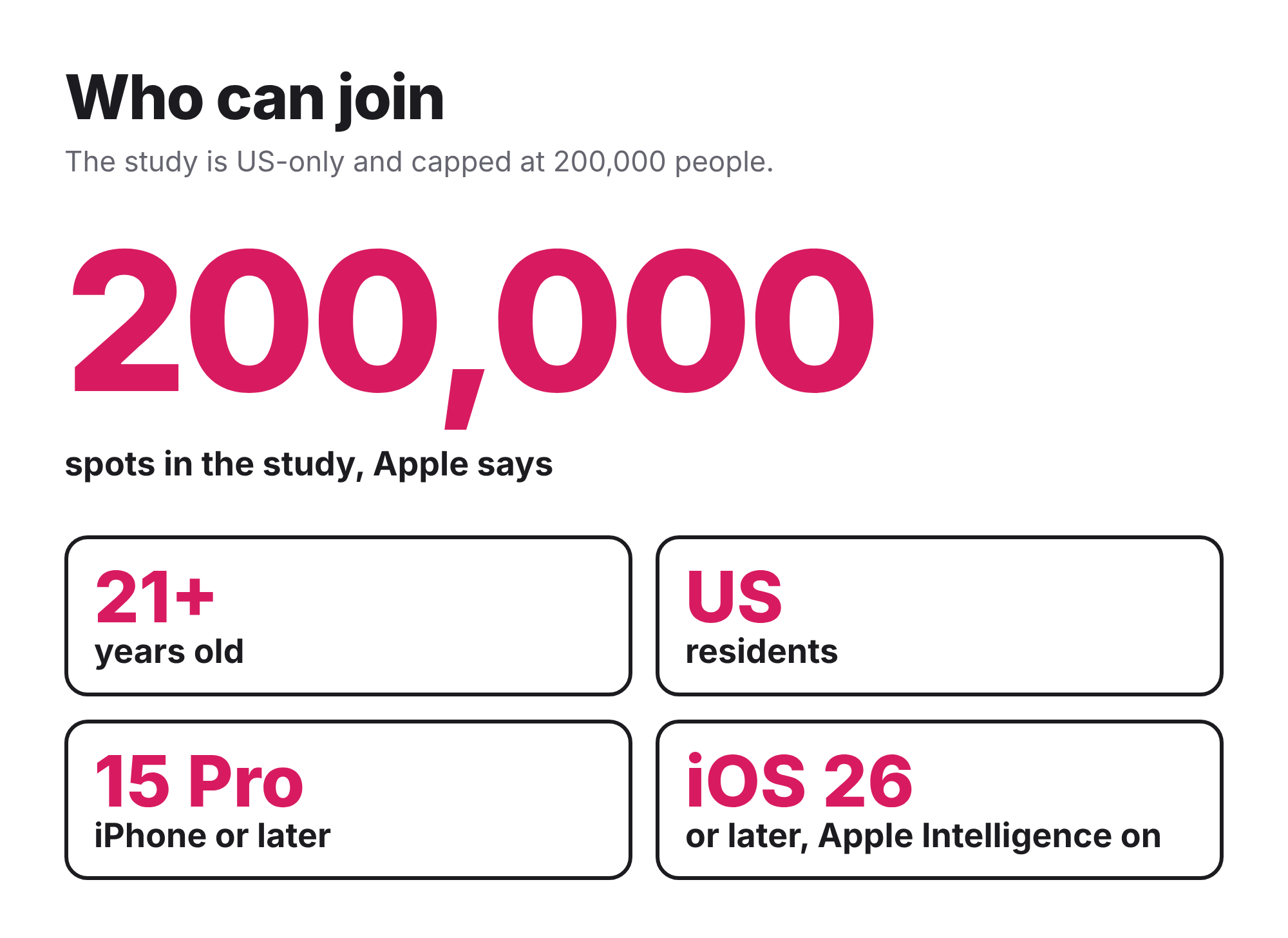
Joining takes an Apple Intelligence-enabled iPhone 15 Pro or later on iOS 26 or later, and you must be 21 or older and in the US. The Apple Health AI Study App is a free download.
Discover more from Sulat AI & Tech News
Subscribe to get the latest posts sent to your email.