design.how, the free design-systems site run by Arlan Marat, now lists make-font, an agent skill that builds a font from typefaces you like. You send screenshots or font files, and it hands back a font fitted to their measurements, with web files and a font book, according to the skill’s page.
design.how says the skill installs for Claude Code, Cursor, Codex and any agent that reads Agent Skills. It’s one of seven on the Skills page, alongside design-system-boss, build-design-system, migrate-design-system, token-mapping, ui-review and component-docs. The install command and the .zip are free after an email signup, the page says.
How it builds the font
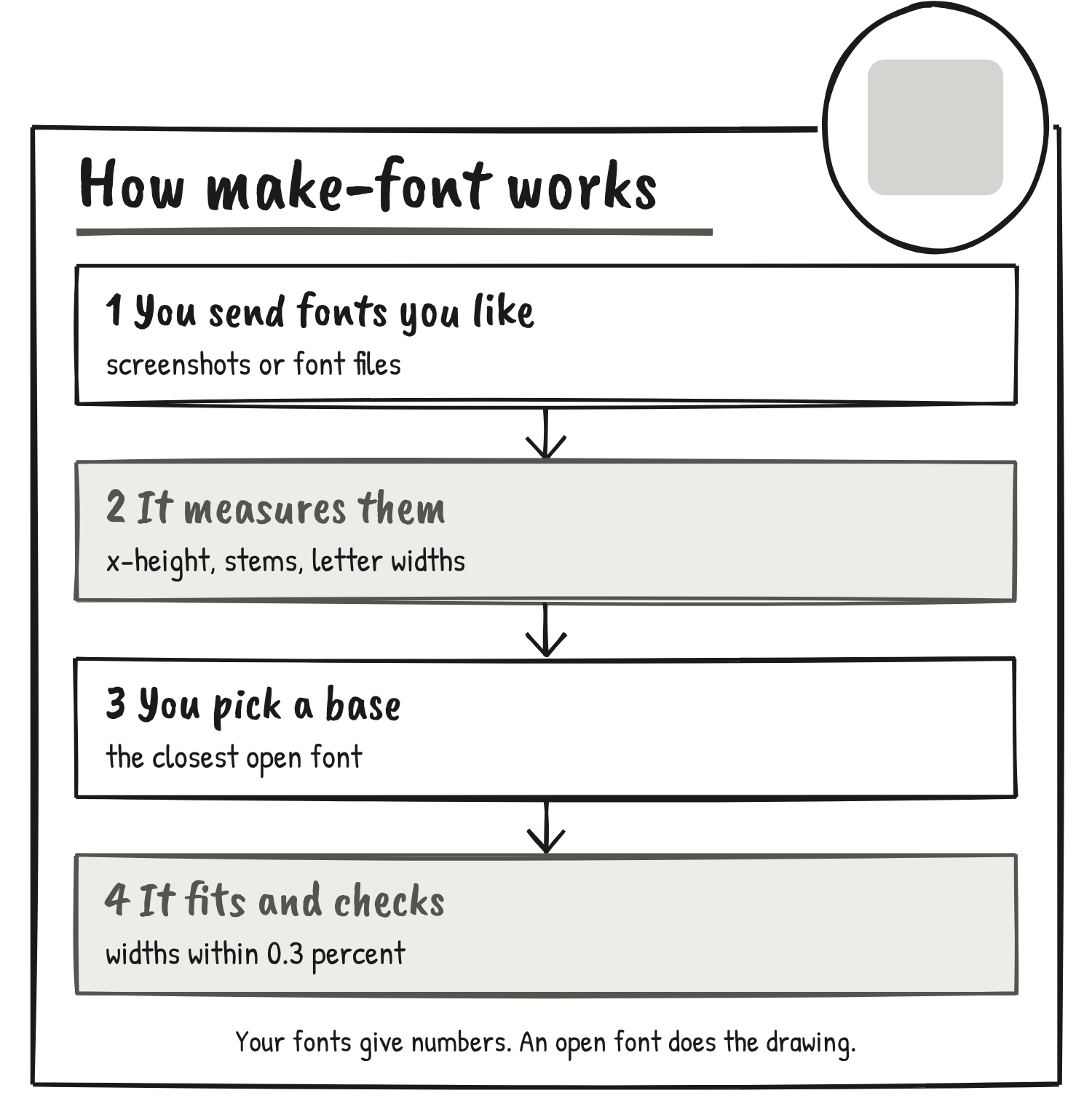
The skill’s own files, which design.how publishes for download, have it ask once for the fonts you like (two to four is plenty), what the font is for, which scripts and weights it needs, and a new family name. It then measures each reference: x-height, cap height, stem thickness, contrast, bars, serifs, and the average width and spacing of each letter class. Readings from screenshots carry a confidence rating.
Next it ranks open-licence families from the Google Fonts catalogue by how close they sit to those numbers, shows the closest few, and waits for you to pick a base. A variable font is a single file with adjustable axes such as weight and width, and the skill solves those axes until each letter class’s average width is within 0.3 percent of the target, without stretching any glyph more than 3 percent. It then sets the spacing and opens any letter pairs that collide, such as q and j.
What you get back
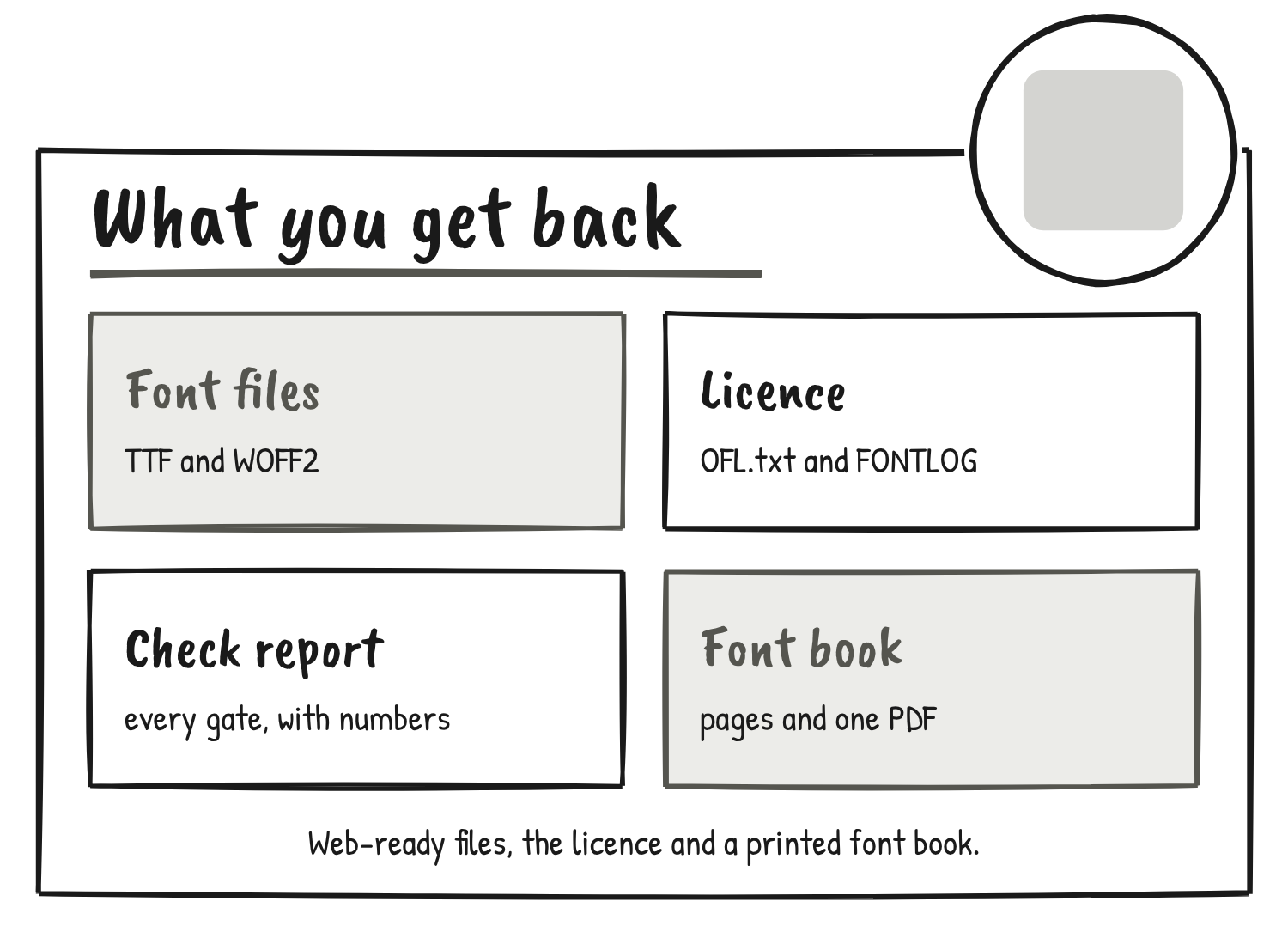
The output is TTF and WOFF2 files for each weight, a CSS file, OFL.txt, FONTLOG.txt and a README, a check report that lists every gate with its number, and a font book as page images and one PDF. The checks cover metrics, widths, kerning, character coverage, provenance, file validity and licence. The skill’s hand-off names the base font, its licence and what still differs from your references.
Running it needs Python 3.9 or newer with the fonttools, brotli, uharfbuzz, numpy and pillow packages, plus Node 18 or newer with Playwright to render the PDF, the skill’s instructions say.
Licence and limits
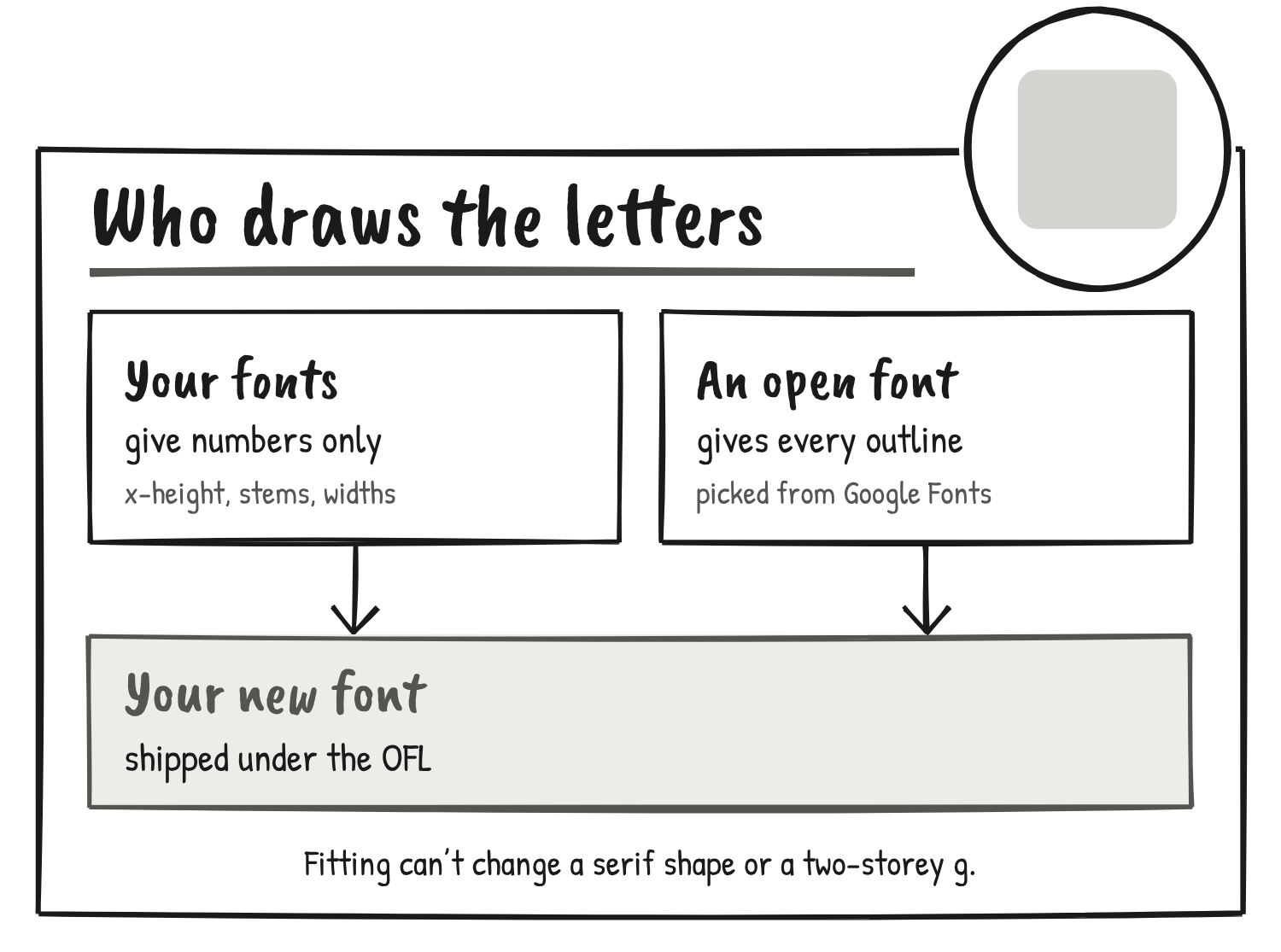
design.how says make-font matches measurements and never copies outlines. Every outline in the result comes from the open base font, and the skill’s instructions tell it to refuse requests to clone, trace, convert or rename a commercial font. The font ships under the SIL Open Font License (OFL) with a new family name, and the base font’s name or any Reserved Font Name can’t be reused. The skill’s licensing notes add that OFL fonts can’t be sold on their own, though they can be bundled or embedded in a larger work.
The same files say fitting changes widths, weight and spacing only. It can’t change a terminal, a serif’s shape, a two-storey g into a one-storey g, or the angle of stress, so the result keeps the look of the base font you pick.
The skill page and the install steps are at design.how/skills/make-font and design.how/skills.
Discover more from Sulat AI & Tech News
Subscribe to get the latest posts sent to your email.