Perplexity CEO Aravind Srinivas says the in-house database that replaced AWS DynamoDB in Perplexity’s search stack is “saving us like several tens of millions of dollars a year”, on the Newcomer podcast. The episode went up on 13 November.
Srinivas said Perplexity “completely replaced” its use of DynamoDB, “which is where we hosted our entire trillion web page index”, and built the new database “from scratch using our own coding agents”. He raised it as an example of using agents to cut infrastructure costs. The database is CobbleDB, which Perplexity described in an engineering post on 14 September.
Three figures for one project
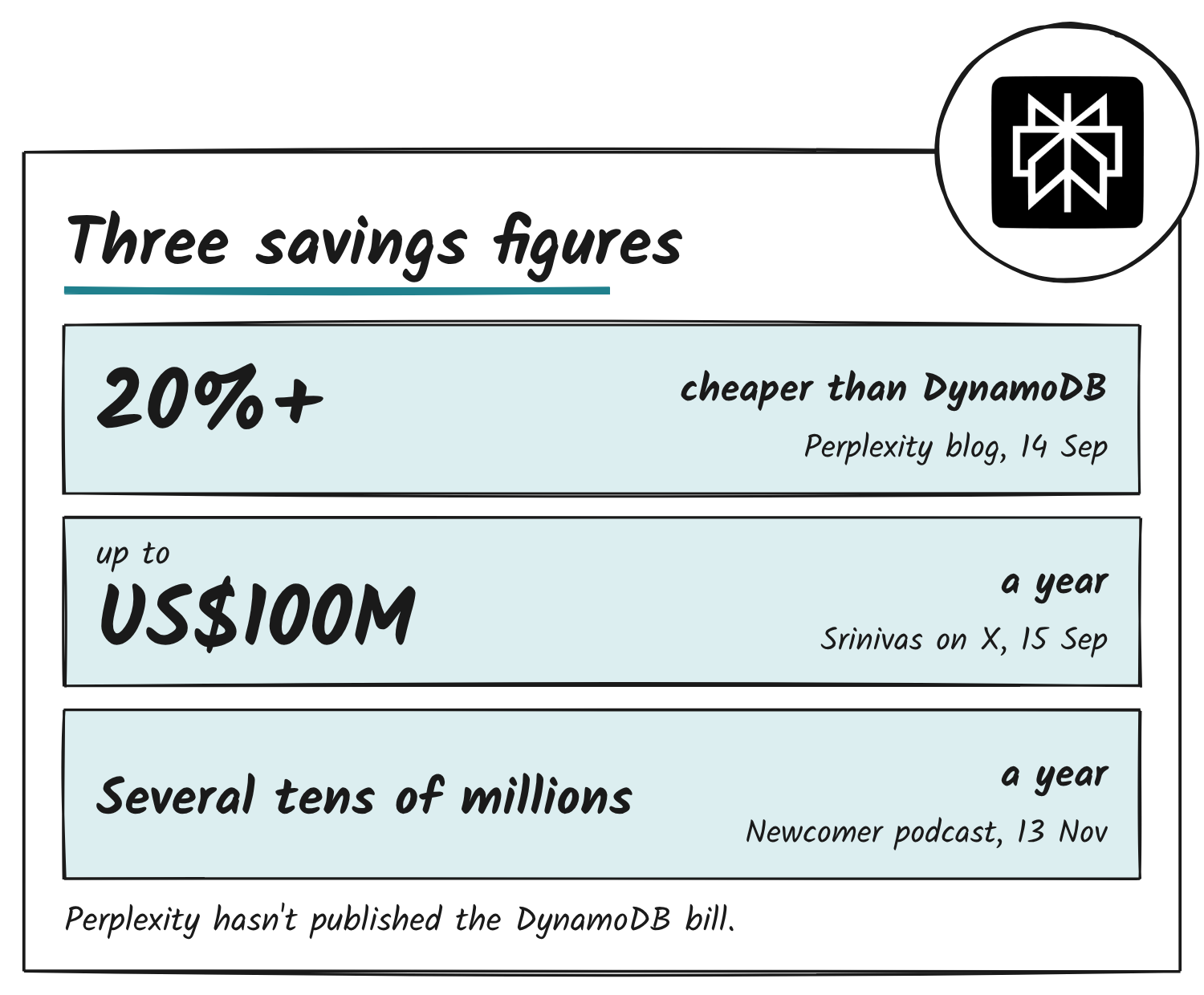
The podcast figure is the third Perplexity has attached to CobbleDB. The engineering post gave a percentage, Srinivas’s X post gave a ceiling in dollars, and the podcast gave a range. None of them comes with a published DynamoDB bill.
| Date | Where | Figure | What it rests on |
|---|---|---|---|
| 14 Sep 2026 | Perplexity engineering post | At least 20% cheaper than DynamoDB | An internal cost model of storage, write and read capacity at every commitment tier |
| 15 Sep 2026 | Srinivas on X | “up to a hundred million dollars yearly” | No breakdown in the post |
| 13 Nov 2026 | Newcomer podcast | “several tens of millions of dollars a year” | No breakdown in the interview |
The engineering post puts no dollar amount on the saving. It says the real savings are “likely even higher” than 20%, because the estimate leaves out expected backup savings from compression.
What the engineering post describes
CobbleDB is a distributed key-value store, a database that hands back a stored record when you give it a key. Its keys are hashed page URLs. Its values are each page’s processed passages plus a vector embedding for each passage, the numerical representation used to match it to a query. The post says the core is roughly 40,000 lines of Rust, built in two months by two engineers and hundreds of coding agents.
Before the move, a prepared-pages table in DynamoDB held the passages and embeddings for query-time reads, with full page content and metadata stored separately. Perplexity says DynamoDB charged for every byte read or written, and that a single Search API request fetches 100 to 120 pages at about 50 KB each. The post doesn’t give a page count for the index.
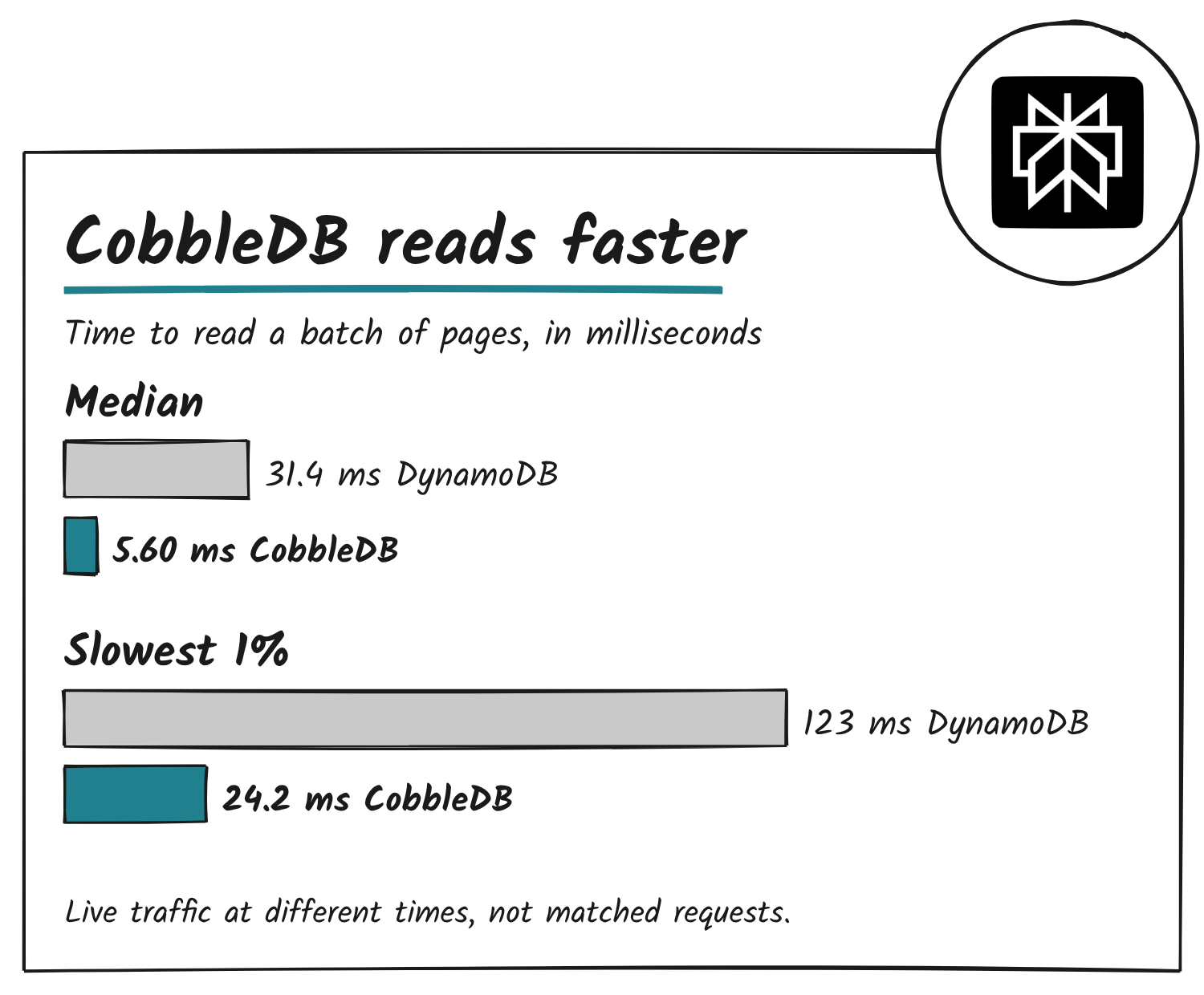
Median batch-read latency fell from 31.4 ms to 5.60 ms, and the slowest 1% of reads fell from 123 ms to 24.2 ms. Perplexity says both sets of numbers come from live traffic at about 200,000 requests per second, measured at different times, so they aren’t matched requests.
Where the agents fit
The post says the agents reviewed code and infrastructure changes, prepared fixes, tests and monitoring changes, tracked CI and review gates, and watched rollouts and backup and restore exercises. Engineers set the architecture, reviewed consequential changes and authorised production operations, and Perplexity says it kept production actions “explicitly human-owned”.
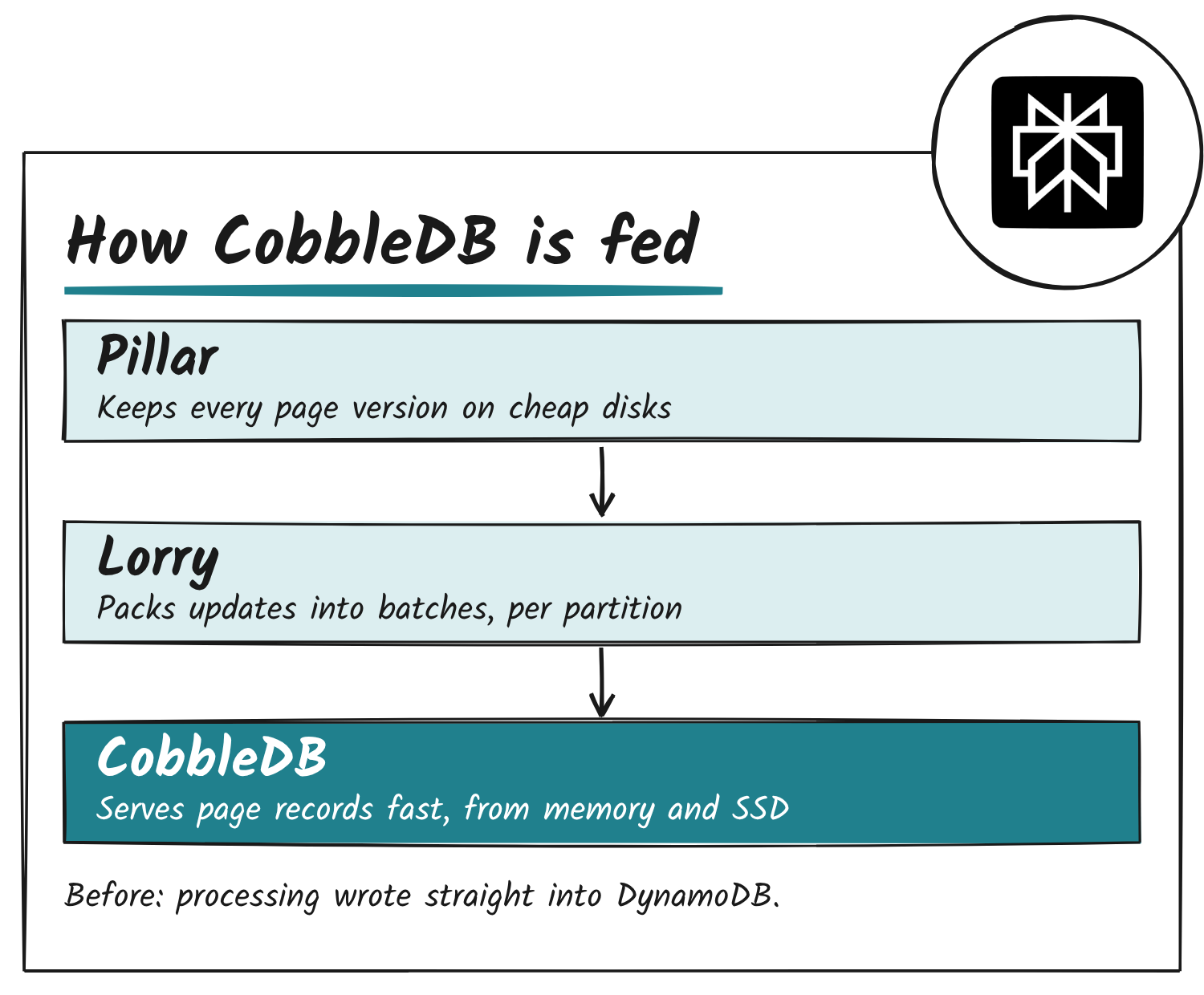
Two other pieces of software sit around CobbleDB. Pillar keeps versioned page state on cheap disks, and Lorry packs updates into batches. CobbleDB, which runs on faster NVMe storage, ingests those batches and serves the pages Perplexity wants in search results.
Perplexity says it plans to open-source CobbleDB “soon”. It hasn’t given a date.
Discover more from Sulat AI & Tech News
Subscribe to get the latest posts sent to your email.