Plaid has launched Agent Detection, a feature of its Protect fraud product that tells banks, fintechs and other financial companies whether a session is a person or an AI agent, and which AI provider the agent is associated with. Plaid says it’s available today.
Pedro Sanzovo, Plaid’s head of fraud, announced it on 16 November in a post on Plaid’s blog. Plaid’s X account pointed to the same post.
Today we introduced Agent Detection, a new way to tell whether a session is a person or an AI agent, and which agent it is. You can’t manage what you can’t see. How it works and where we’re headed:
— Plaid (@Plaid) November 16, 2026
What Agent Detection looks at
Plaid says AI agents can move around websites much like people do, which makes traditional device and behaviour checks poor at telling the two apart. Agent Detection looks at thousands of signals across devices, behaviour, automation patterns and network activity to decide whether a session is a person or an agent, and which AI provider the agent belongs to. Plaid doesn’t list the signals.
Plaid’s example is a consumer who asks their AI agent to pay an upcoming bill. A bank using Agent Detection can see that an agent is behind the request and use that to shape how it handles agent-initiated payments. Plaid says the tool is tuned for financial interactions. It already runs device, behaviour and network checks across hundreds of institutions for financial logins, so it can tell an agent logging in as a bank customer from an agent shopping.
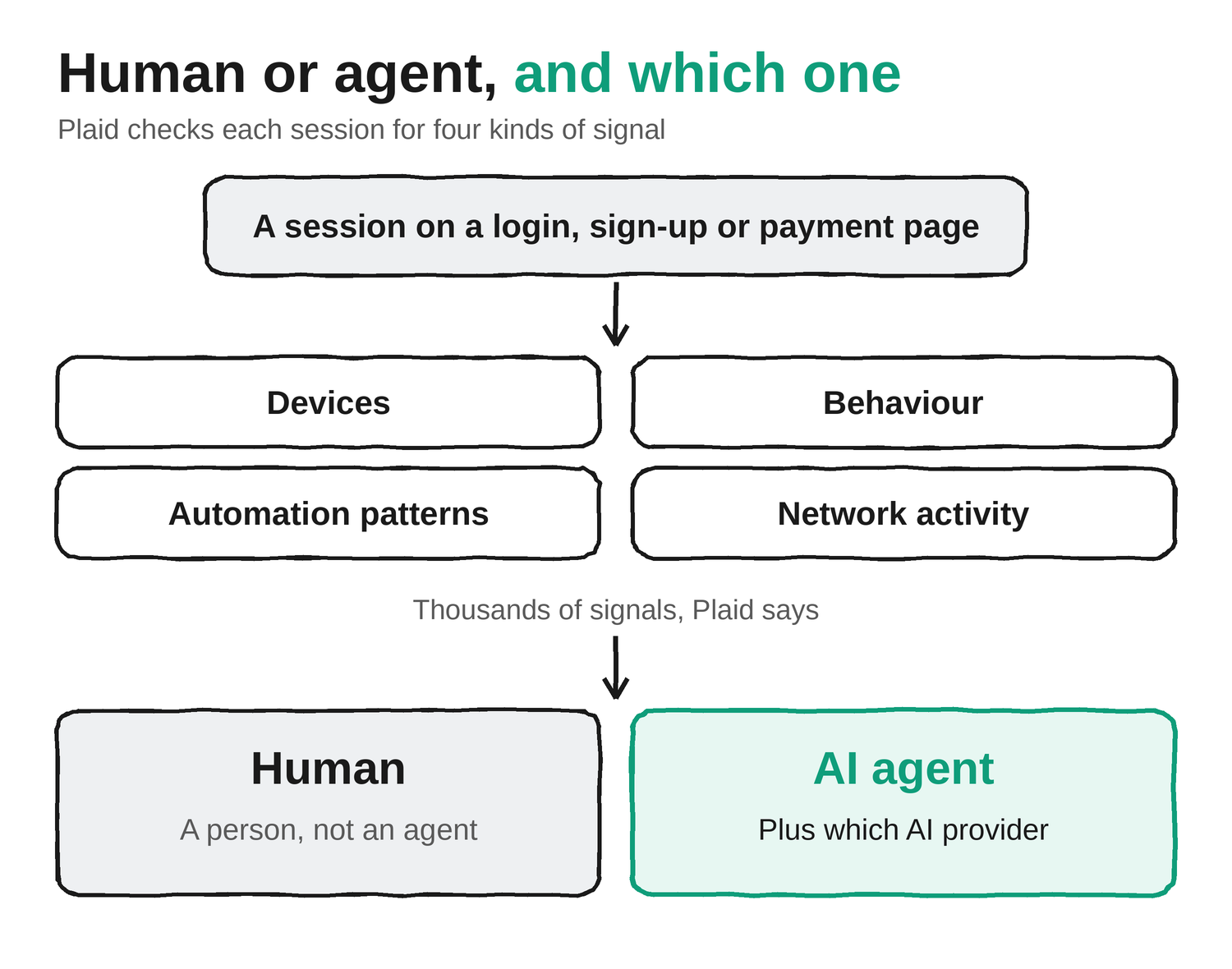
Companies add it through a lightweight SDK, a software kit they build into their own site or app, across login, sign-up and money movement. Plaid says the SDK doesn’t interrupt the existing user experience, and that customers already using Plaid may get Agent Detection through their existing integration with minimal extra setup. The Agent Detection page is a contact form for Plaid’s team and lists no price.
The 2.3x claim
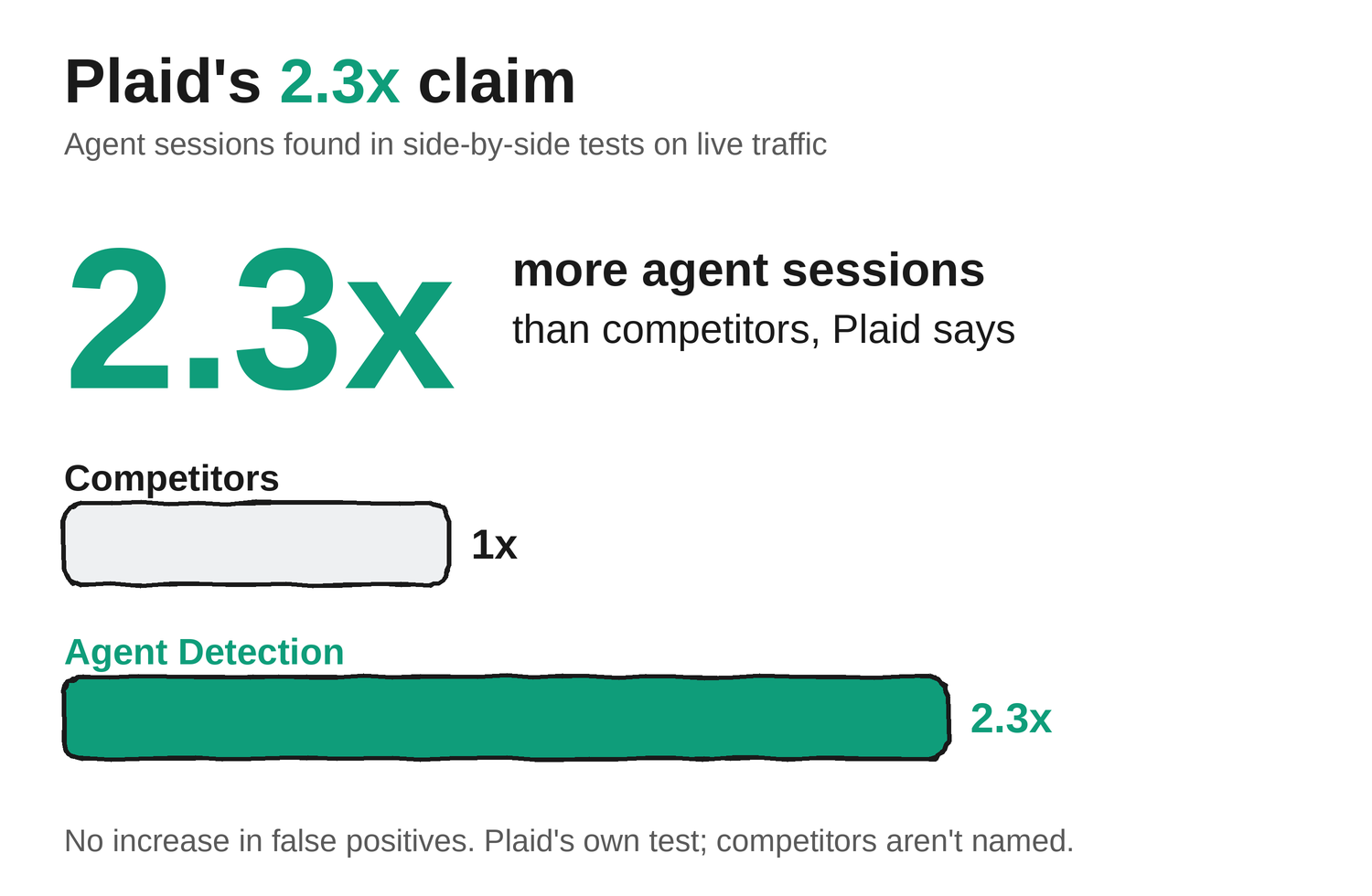
Plaid says that in side-by-side testing on live traffic, Agent Detection identified 2.3x more agent sessions than competitors, with no increase in false positives. A false positive here is a person wrongly flagged as an agent. The test is Plaid’s own, and the post doesn’t name the competitors or give session counts.
Why banks are being asked
Plaid’s post lists Grok Bot, Meta Muse, OpenAI dots and Claude Duet as personal agents that reached consumers within weeks of each other, each able to work in a browser for the person using it. Plaid says they’re already turning up on login pages and in onboarding and account-linking flows. Some banks have already drawn a line: JPMorgan blocks outside agents that log in with customers’ banking credentials, CNBC reported in October.
Plaid also says it already powers consumer-permissioned access to financial data for thousands of apps, including ChatGPT, Claude, Perplexity, Grok, Meta Muse and Google Gemini. Consumers authorise access without giving the app their bank credentials, and the access is read-only and runs through existing bank-approved APIs. Agents that act for a consumer are newer, Plaid says, and they raise questions about transparency, authorisation and control.
What Plaid says comes next
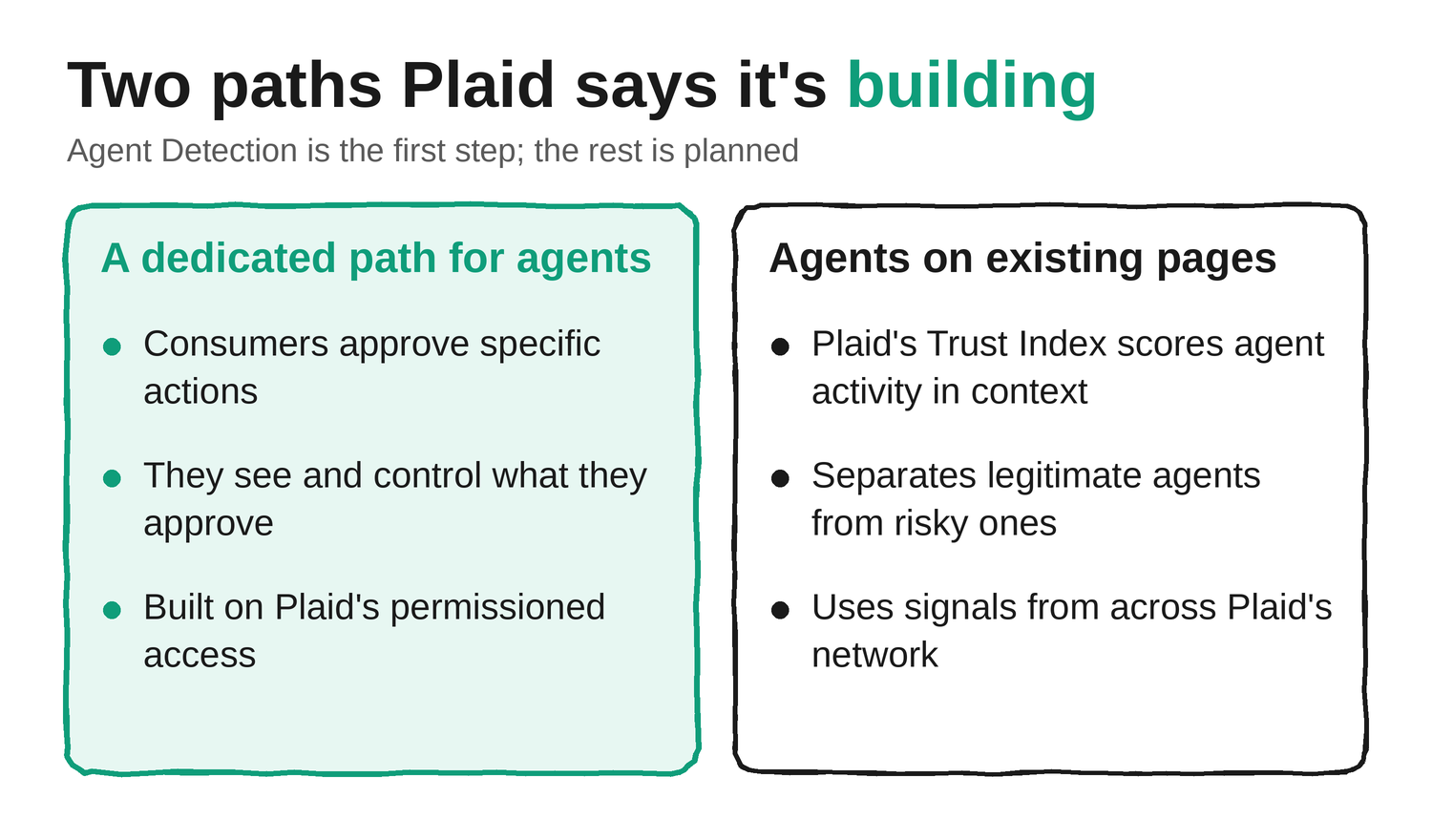
Plaid calls Agent Detection the first step and names two further directions. For companies that want a dedicated path for agents, it’s building toward a way for consumers to approve specific actions, on top of its consumer-permissioned access. For companies that see agents on their existing pages, it’s expanding the Trust Index, which already scores sessions for risk, to judge agent-driven activity in context.
Plaid hasn’t given dates for either. A Plaid job listing for a staff product manager, Agent Trust, describes Agent Trust as the company’s Know Your Agent product, which decides whether an action an AI agent takes on a financial account can be trusted. The listing says the role covers how Plaid identifies agents, verifies the people behind them and checks what they’re allowed to do.
Sources
- Introducing Agent Detection, Plaid
- Detect AI agents with Plaid Protect, Plaid
- Plaid’s post on X
- Staff Product Manager, Agent Trust, Plaid
- JPMorgan blocks outside AI agents, CNBC
Discover more from Sulat AI & Tech News
Subscribe to get the latest posts sent to your email.