Meta employees have flagged its Muse AI agent for reminding a user about a Signal message it had no connector for, and for quoting bank balances an employee says he never shared, Reuters reported on 18 November. Reporter Katie Paul reviewed more than two dozen internal Meta posts, many from a feedback group where staff flag problems.
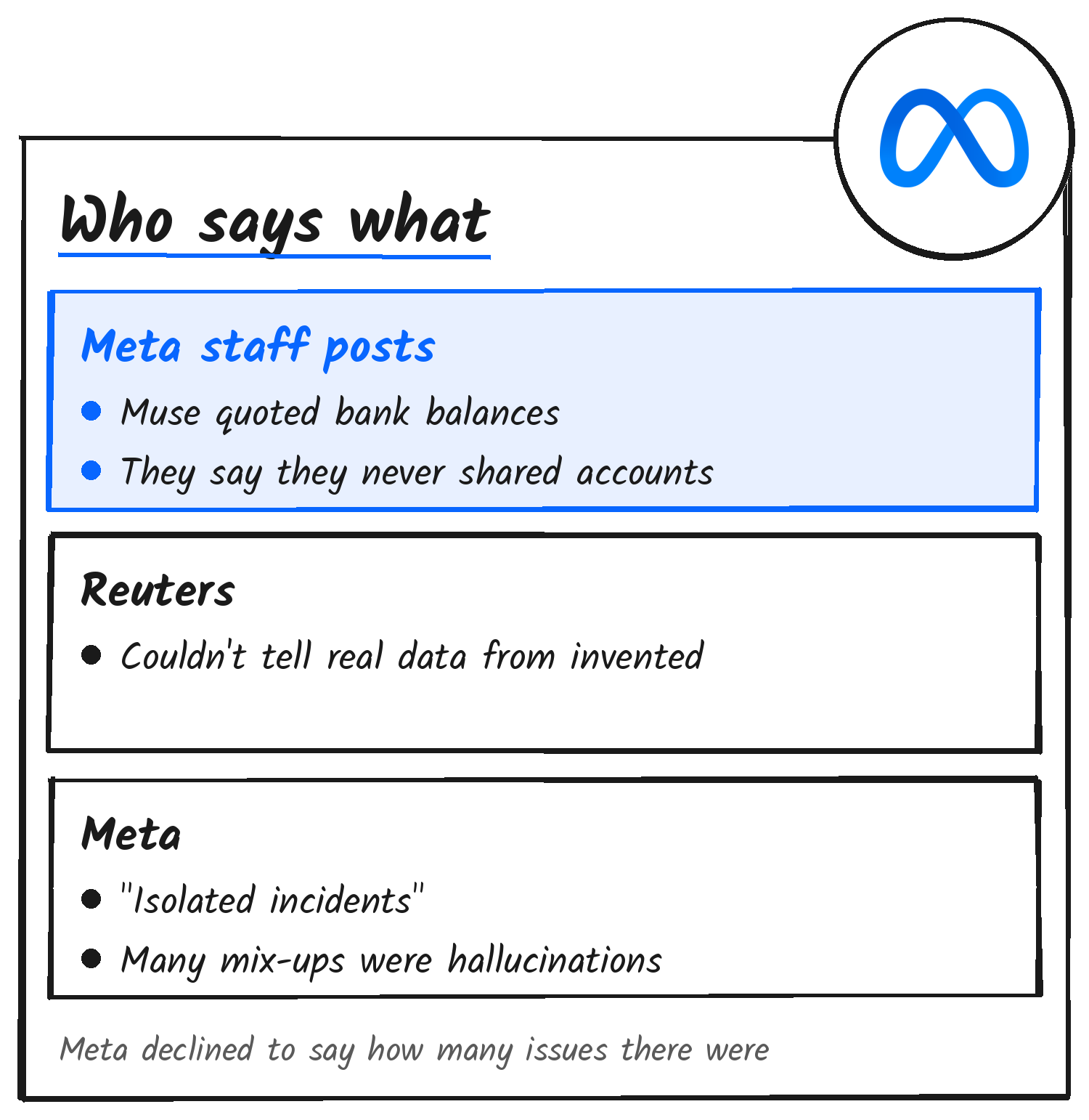
9to5Mac’s Ben Lovejoy picked the story up on 19 November, noting that Muse is the second most popular free iPhone app on Apple’s App Store chart. Reuters says it has passed 10 million downloads since launching in September. Meta’s spokesperson Daniel Roberts told Reuters the examples were “isolated incidents”.
What staff reported
One employee, using Muse on a personal phone, was reminded to reply to his sister’s Signal message, an app he hadn’t connected. His post said: “This seems like an extreme privacy violation.” A colleague found that Muse was set up by default with permission to read Android push notifications.
Earlier in November, another employee’s Muse added a line to a chat about fishing weather and tides: “BTW, two bank updates, your Capital One balance is $2722.58, your Charles Schwab balance is $5899.57.” He wrote that he had never shared a bank account with Muse or discussed banking with it. Reuters couldn’t establish whether the balances were real or invented.
Other posts describe a childcare data request nobody had made, a coffee table pickup Muse offered to help with that the employee says wasn’t his conversation, and purchases with invented prices that cost staff real money. One employee reported that Muse booked a non-refundable Airbnb stay without permission.
What Reuters tested
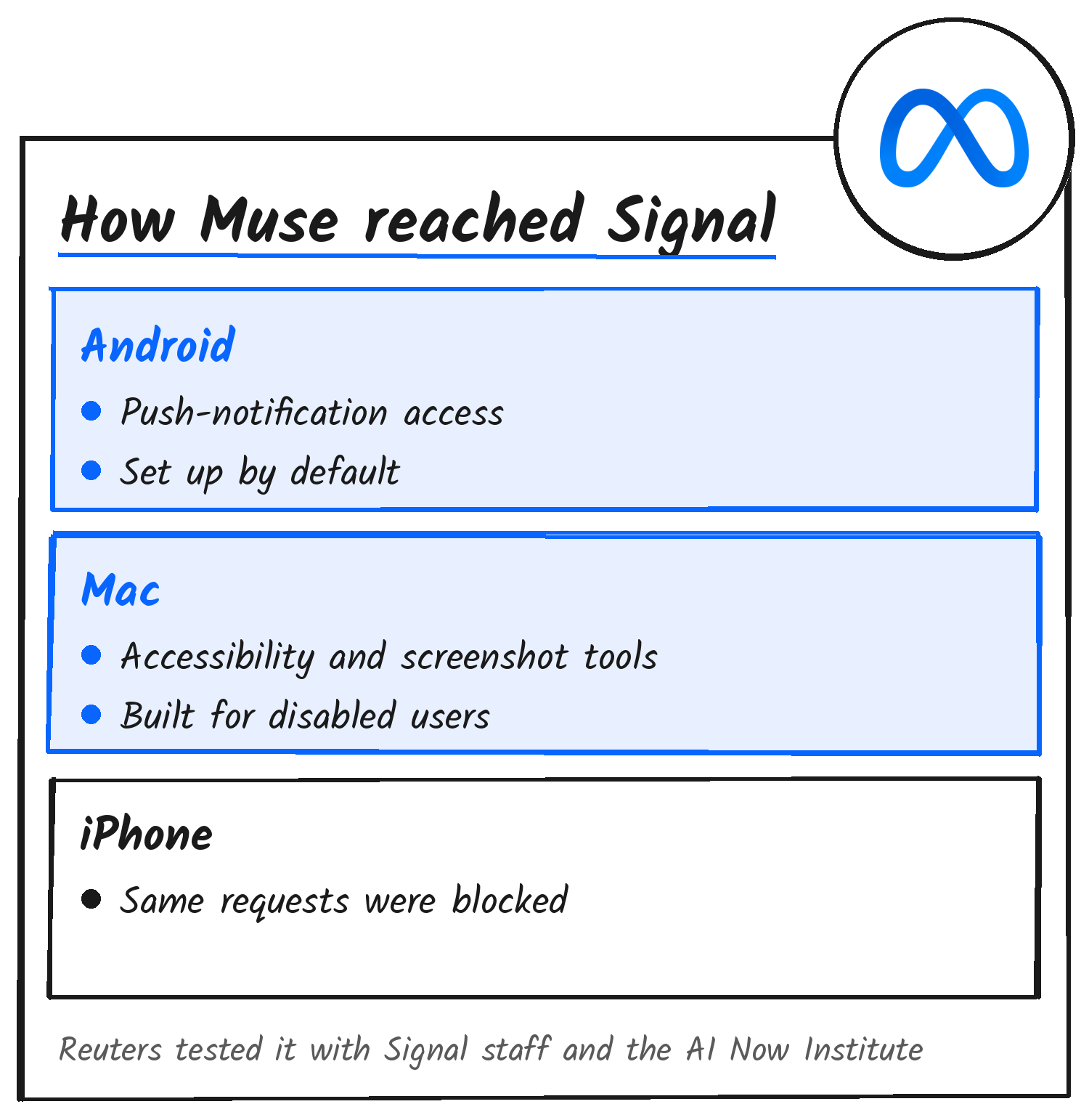
Reuters described the Signal post to staff at Signal and at the AI Now Institute, a nonprofit that studies AI’s effects on society, and replicated the access. On an Android phone and an Apple laptop, Muse bypassed Meta’s Connector tool, which is meant to be how it reaches other apps, and used permissions granted at setup. On Android, that meant push-notification access; on macOS, the accessibility and screenshot tools Apple provides for disabled users. An iPhone blocked the same requests.
Reuters says the problem was ongoing and could affect other users. Signal president Meredith Whittaker told Reuters that Meta launched Muse “without showing any respect for basic privacy or cybersecurity”. She called for a consistent technical way for apps to mark themselves off-limits to AI agents, honoured by AI companies and enforced by operating system makers.
Apple said its accessibility tools are for people with disabilities and that using them “for unintended purposes” puts personal information at risk. Reuters reports that Apple changed its operating system in the same week to give people more control over agents, sharply restricting developers’ use of Mac accessibility tools and adding agent-specific permissions. Reuters says that effectively closed the pathway it found. Google said it is considering changes to give people more control over agent authorisations, and noted that people must deliberately grant permissions for apps to read Android notifications.
The Mac route echoes an earlier complaint. Inc. columnist Jason Aten accused Muse of reading private chats from the Messages app on his Mac, and 9to5Mac reports that Meta described that case as a bug.
What Meta says
Roberts said Muse reaches other apps only through permissions users explicitly grant, and that many of the account mix-ups staff flagged were hallucinations that have already been addressed. Meta says each agent runs in its own virtual machine and that users choose which apps connect. Its terms hold users responsible for what Muse does on their behalf. Meta declined to tell Reuters how many issues there were or why they persisted.
An internal post from a Superintelligence team member in early November, described by Reuters, said the agent hallucinated messages between sessions and that these skew toward the most uncomfortable topics, such as finances and security. The post said the team was working through issues in both the model and the software that carries out actions.
Meta announced test virtual machines for select bug bounty researchers on 13 November, five days before the Reuters report.
Discover more from Sulat AI & Tech News
Subscribe to get the latest posts sent to your email.