OpenAI has made GPT-Live-1.1, its full-duplex voice model, available in the API. OpenAI Developers announced it on 19 November (20 November in New Zealand). The model listens while it speaks, and its ID is gpt-live-1.1 on the v1/live/sessions endpoint.
In its post, OpenAI says the model speaks with more natural and consistent accents across languages and completes tasks more reliably. The model page adds that it transcribes speech more accurately than GPT-Live-1. The same model has powered voice in ChatGPT Plus and Pro since 15 October.
GPT-Live-1.1 is now available in the API.
— OpenAI Developers (@OpenAIDevs) November 19, 2026
It speaks with more natural and consistent accents across languages, supports lower idle costs with a new standby option, and completes tasks even more reliably.
The post also introduces standby, a new setting for stretches of silence. It works on both GPT-Live-1 and GPT-Live-1.1.
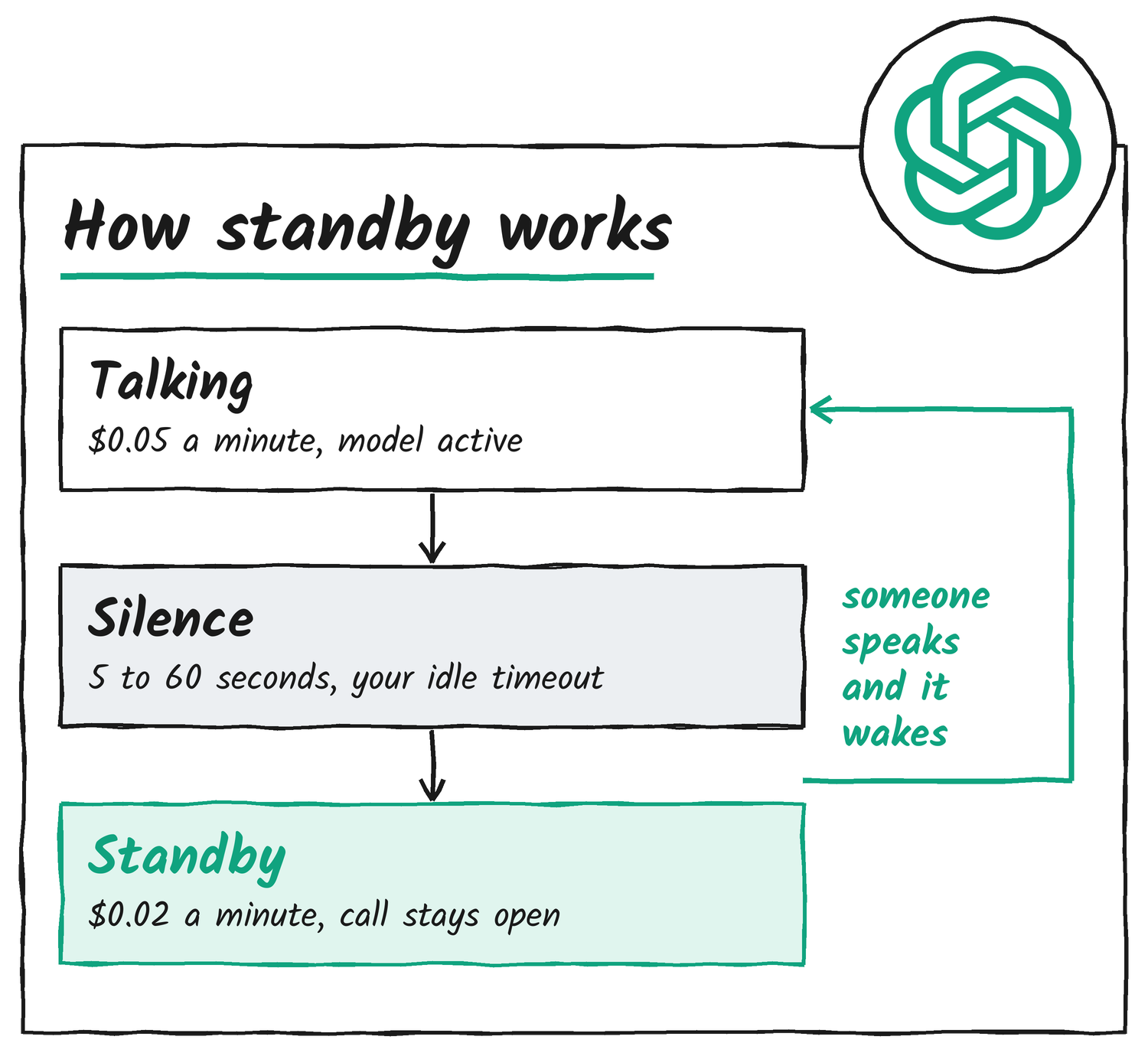
How standby works
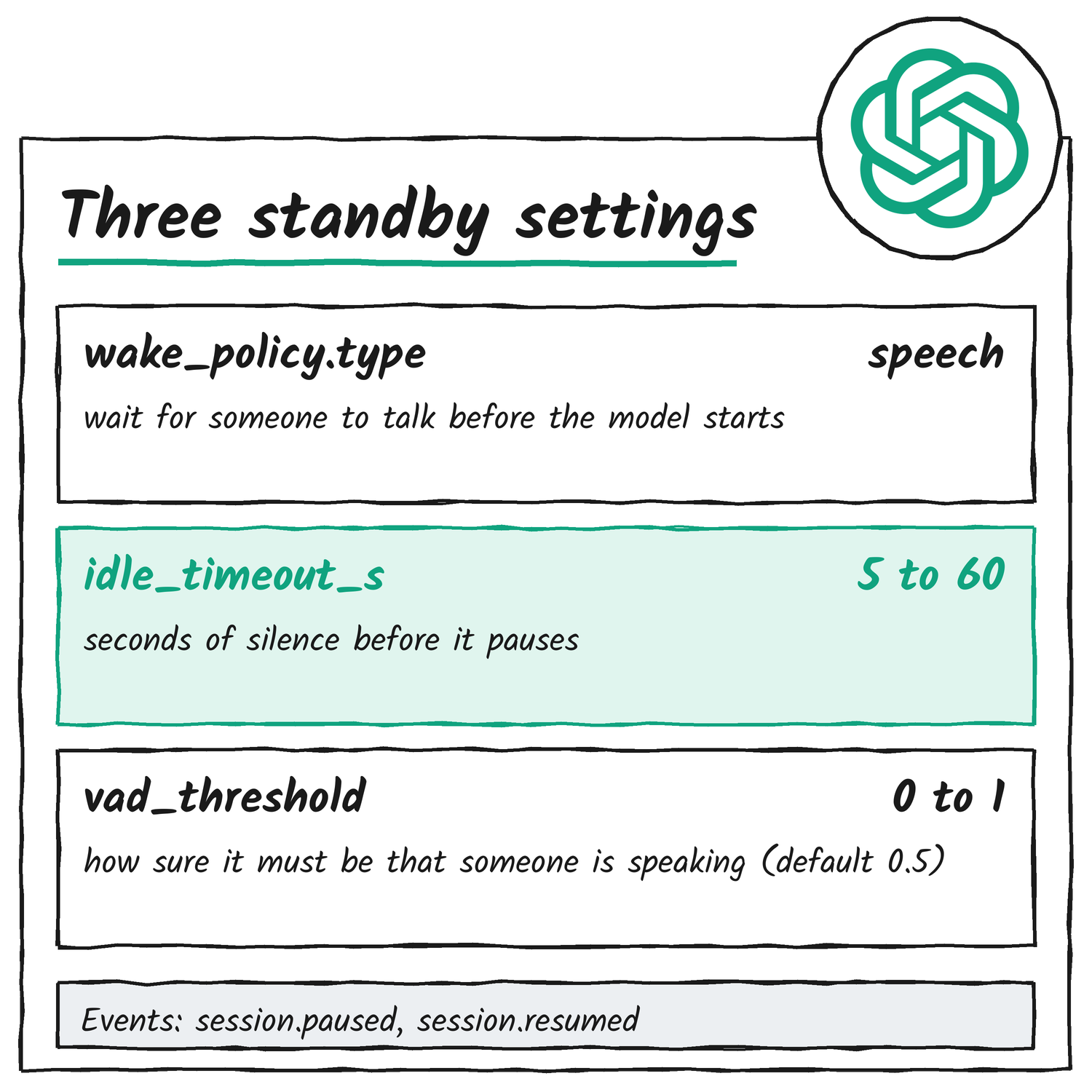
Standby applies to WebRTC sessions. You set wake_policy.type to speech and idle_timeout_s to a whole number from 5 to 60. Once that many seconds pass without an input or output transcript, the model pauses. The connection and session ID stay the same, and when someone speaks, the session resumes with the conversation history restored, OpenAI’s guide says.
Your app can listen for session.paused and session.resumed events on the sideband. A vad_threshold from 0 to 1, defaulting to 0.5, sets how strong the evidence of speech must be before the model wakes. The guide says to keep the microphone track active while the session is on standby.
What it saves
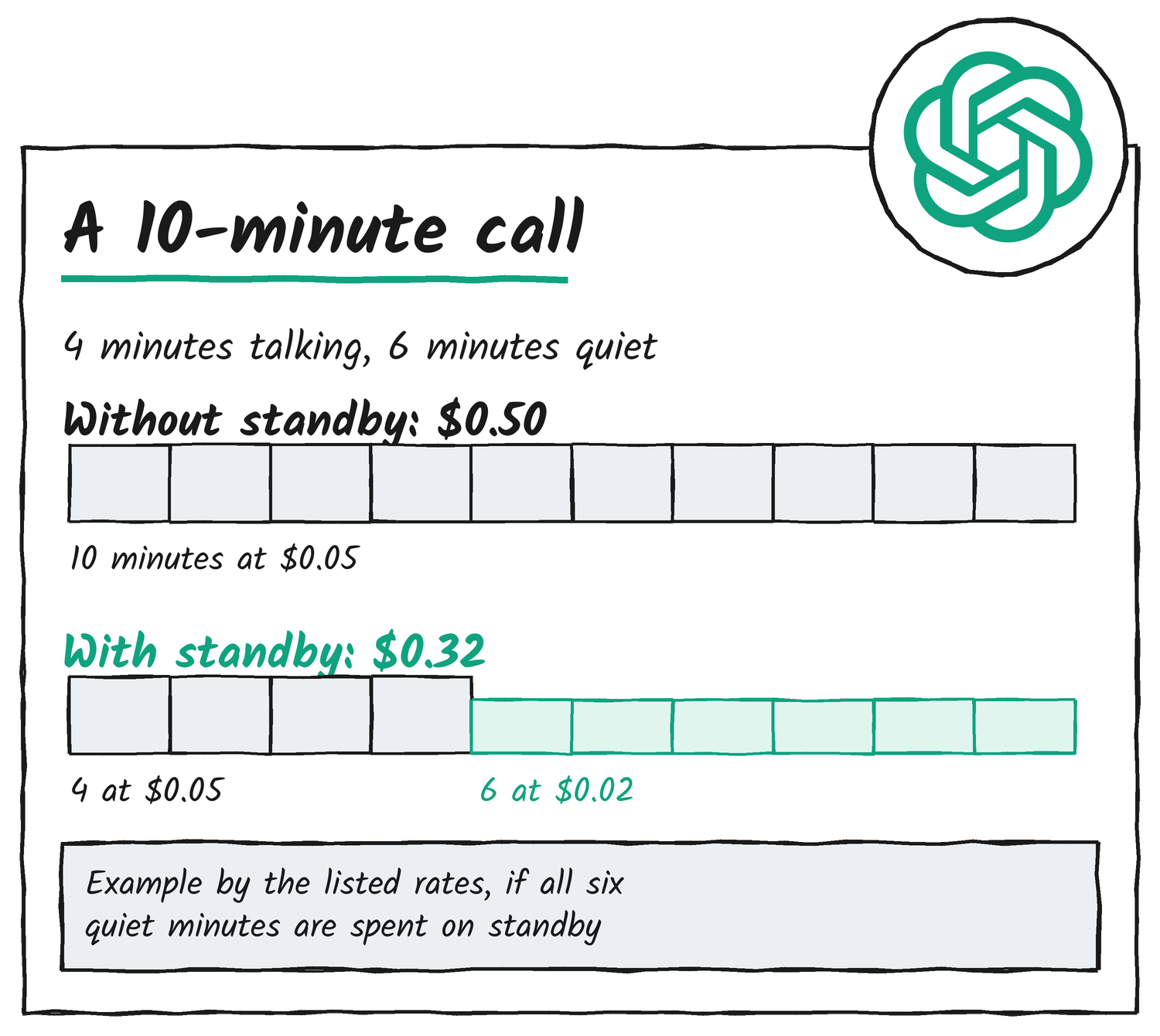
Standby time is billed at $0.02 a minute, against the standard $0.05. By those rates, a 10-minute call with four minutes of talking and six of silence costs $0.32 instead of $0.50, if all six quiet minutes sit on standby.
Voice sessions bill per second. Creating a WebRTC session charges 15 seconds up front, which OpenAI credits against the session’s duration once it’s running. Backend model and tool usage is billed separately. For gaps long enough that your app can disconnect, the guide suggests closing the session and starting a new one when the user returns.
Where it fits
GPT-Live handles the conversation and hands reasoning and tool use to a backend. With Responses delegation, OpenAI runs the backend model. With client delegation, you connect your own model, agent harness or service, per OpenAI’s getting-started guide. OpenAI’s post says GPT-Live-1.1 can reliably catch details such as letters and numbers, follow instructions, and delegate complex workflows to the backend model of your choice without breaking the flow of conversation.
GPT-Live-1 became generally available in the API on 10 September at $0.05 a minute, and outbound SIP calling reached the Live API on 2 November, per OpenAI’s developer changelog.
Disclosure: I’m an OpenAI, Firecrawl and Devin ambassador.
Discover more from Sulat AI & Tech News
Subscribe to get the latest posts sent to your email.