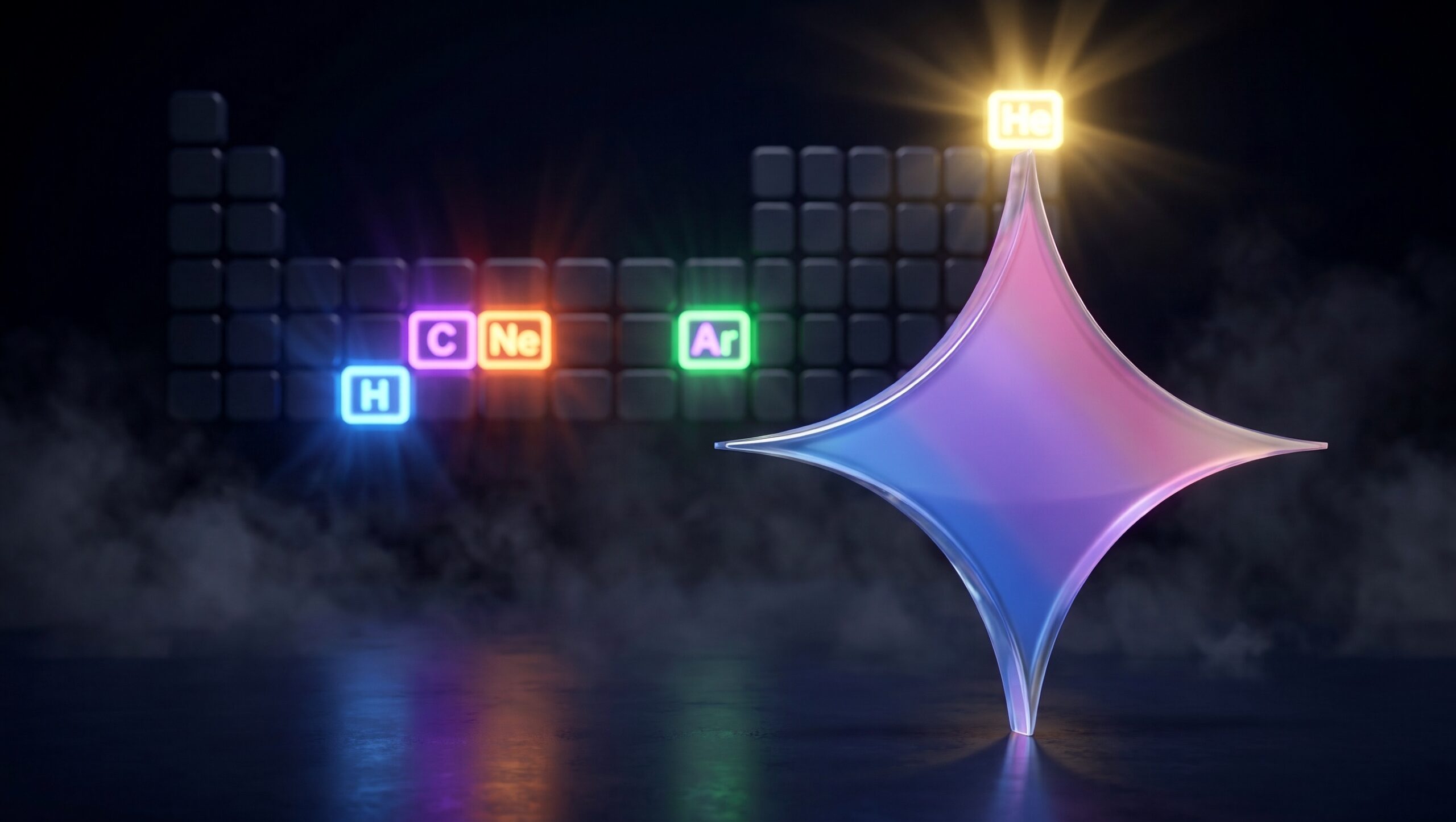
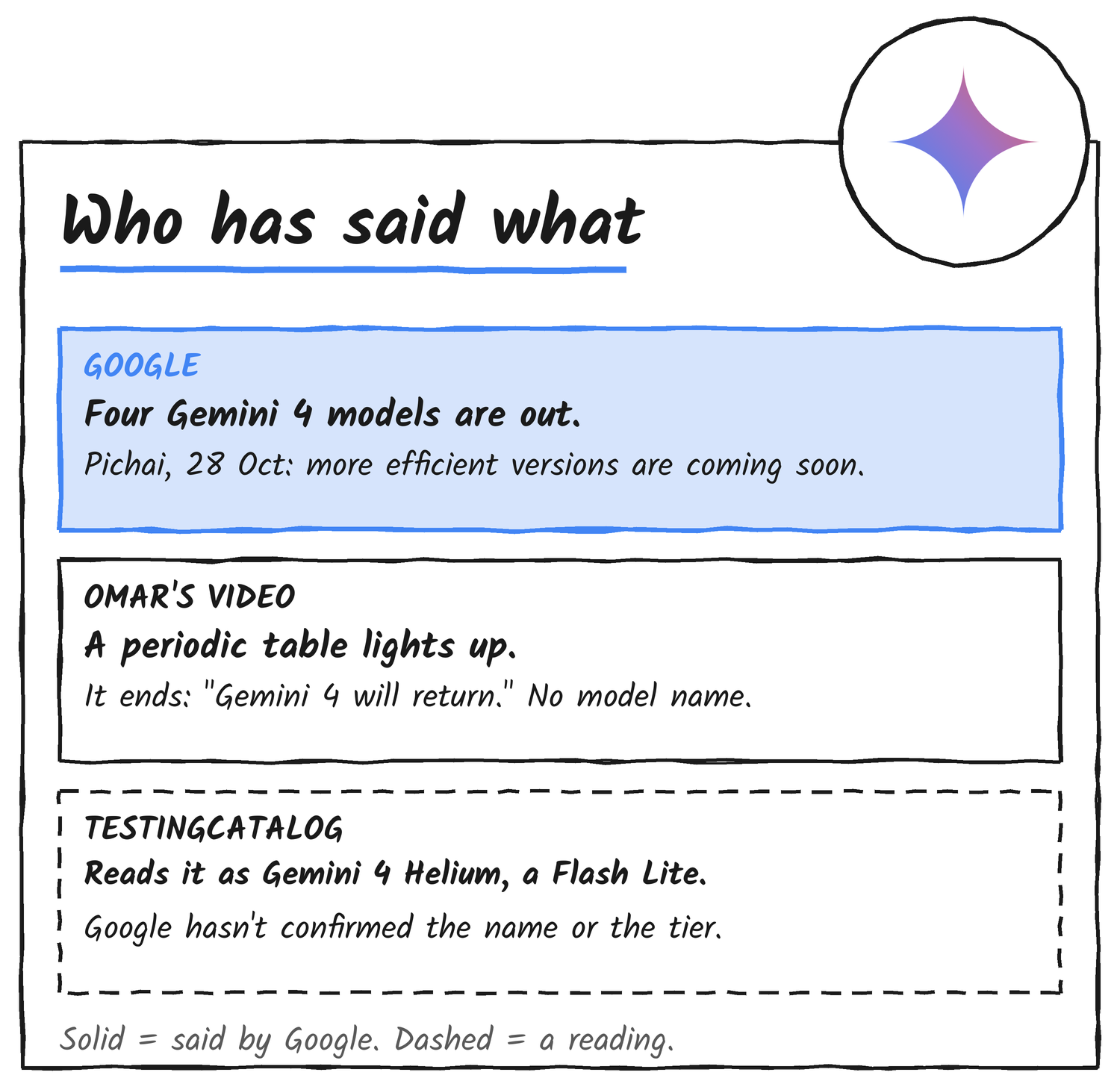
Omar Sanseviero of Google AI Studio posted a 10-second video on X at 7:51am UTC on 19 November, which was 8:51pm in New Zealand. A periodic table lights up element by element, and the clip ends on a short line saying Gemini 4 is returning. It names no model. TestingCatalog, a site that tracks unreleased AI features, replied with its own reading: Gemini 4 Helium, a Flash-Lite model, is next. The name and the tier are TestingCatalog’s. Google hasn’t named a model, a tier, a price or a date.
What the video shows
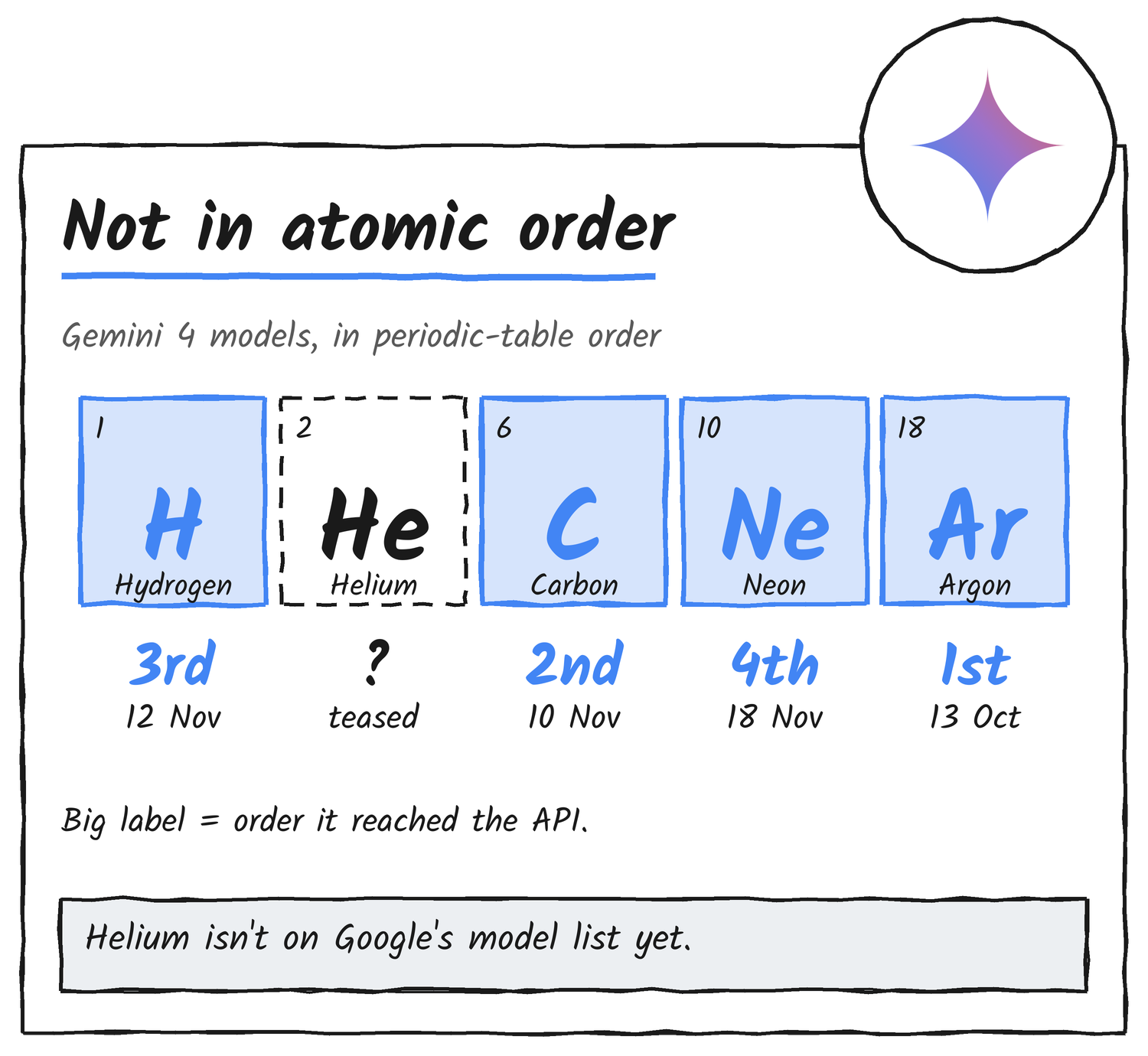
Hydrogen, carbon, neon and argon light up first. Those are the four elements Google has already used as Gemini 4 model names. Helium glows gold a few seconds later, and by the last frames most of the table is lit.
Twelve minutes earlier, at 7:39am UTC, Sanseviero had posted that Google shipped a periodic table model picker in AI Studio because people asked for it. The screenshot shows a grid headed “The periodic table of Gemini 4” with a count of four released. Hydrogen, carbon, neon and argon are lit. Helium isn’t.
Google didn’t ship them in atomic order
Google’s Gemini API release notes put the four models in the API on these dates. Atomic order would have run hydrogen, carbon, neon, argon. Google went argon first.
| Gemini 4 model | In the API |
|---|---|
| Argon | 13 October |
| Carbon | 10 November |
| Hydrogen | 12 November |
| Neon | 18 November |
Where the Helium name comes from
TestingCatalog replied 73 minutes after the video, at 9:04am UTC, with its reading that Gemini 4 Helium, a Flash-Lite, is next. It added a wish that the models were sorted by atomic weight so people could tell which is which. Its only evidence for the name is the open Flash-Lite slot. Sanseviero’s own post carries no model name.
The Flash-Lite gap
The only forward guidance on record comes from chief executive Sundar Pichai on the 28 October earnings call. He said more models were coming soon, including more efficient versions built for speed and cost. Google has released Hydrogen and Neon since.
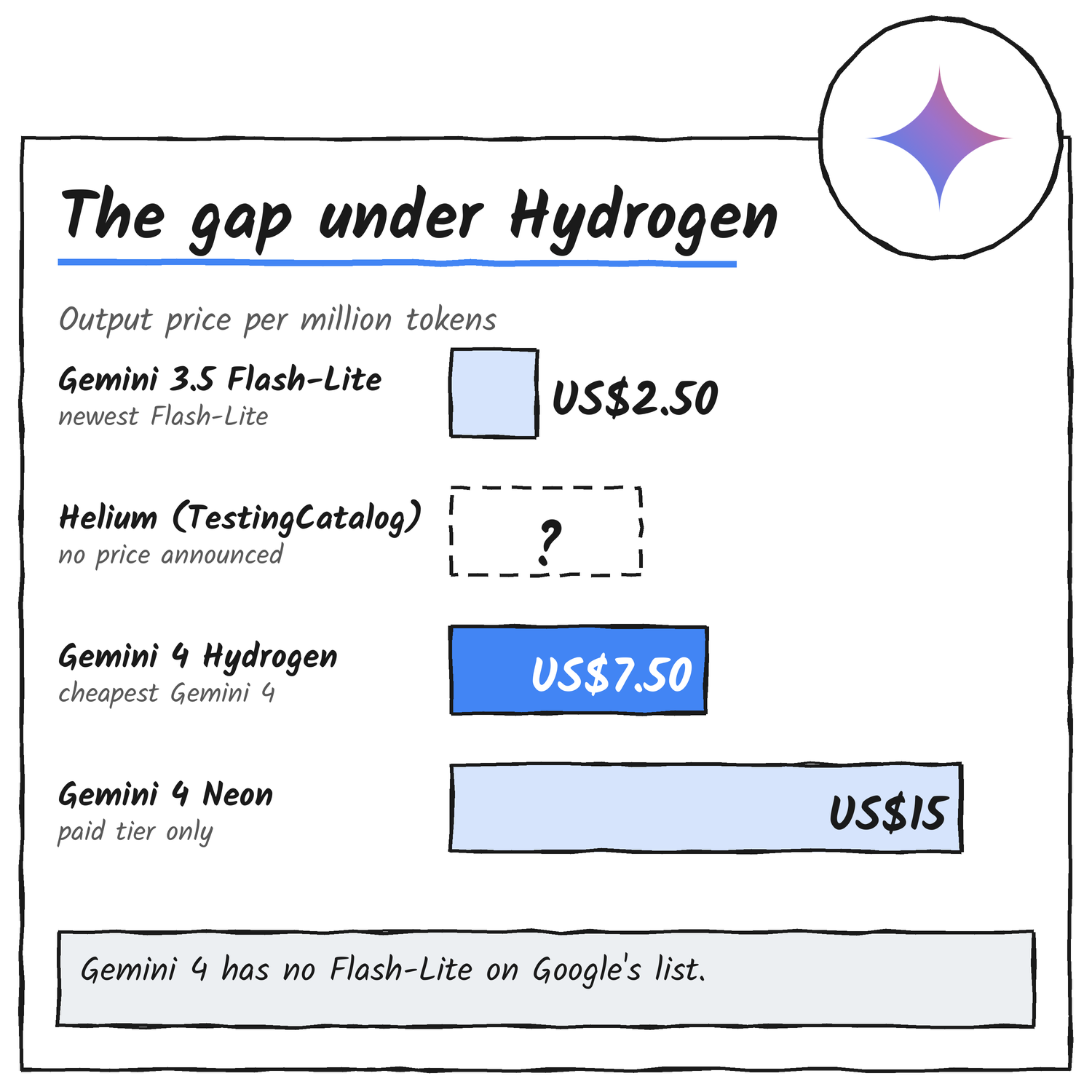
Hydrogen is the cheapest Gemini 4 model, at US$1.50 per million input tokens and US$7.50 per million output tokens, with a free tier. Google’s pricing page still points new projects needing a cheap model to Hydrogen or Gemini 3.5 Flash-Lite, which costs US$0.30 and US$2.50. Gemini 4 has no Flash-Lite model, and that empty slot is what TestingCatalog says Helium fills.
What’s still unconfirmed
Google’s AI Studio model list and release notes, checked on 22 November NZ time, show no Helium and no Gemini 4 Flash-Lite. Google hasn’t announced a next Gemini 4 model, its name, its price or its date. Until it does, Helium is a guess from outside the company, even if the table and Pichai’s comment make a cheaper model a fair bet.
Discover more from Sulat AI & Tech News
Subscribe to get the latest posts sent to your email.