

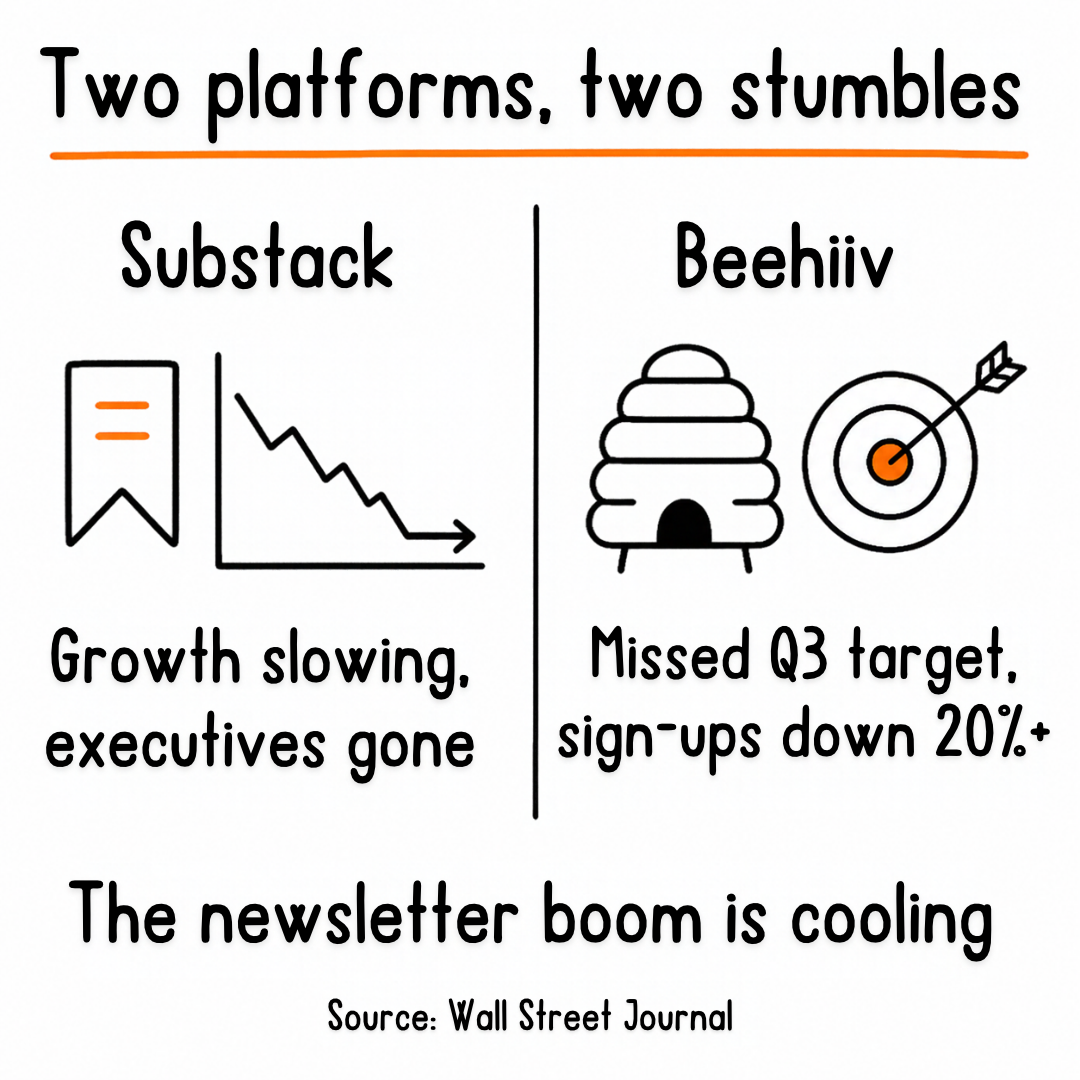
The Wall Street Journal reports that the newsletter boom is losing steam. Revenue growth at Substack, the largest paid newsletter platform, is slowing as it tries to build an advertising business, and the company lost executives during 2026, including its CFO and its product lead. Beehiiv, the challenger, missed its third-quarter revenue target, and an investor note seen by the Journal says its sign-ups fell more than 20%.
The Journal’s story is paywalled. I’ve worked from its published summary and from coverage that relays it, so the departures and the sign-up figure below are the paper’s reporting. I couldn’t read the names of the executives who left, so I haven’t listed them. Everything else comes from the companies, Reuters and trade coverage, linked as I go.
5 million+
Paid subscriptions Substack says it has across its network
US$1.1 billion
Substack’s valuation in its last funding round, against US$225 million for Beehiiv
20%+
Fall in Beehiiv sign-ups, per an investor note cited by the Journal
What the Journal reports
- Substack’s growth: revenue growth is slowing as the company tries to build its ad business.
- Substack’s people: the CFO, the product lead and others left in 2026, and the Journal says the company is losing top talent.
- Beehiiv’s quarter: it missed its third-quarter revenue target, and the investor note puts sign-ups down more than 20%.
- The rivals: Beehiiv and Patreon are recruiting writers from Substack, and Patreon offers some of them multiyear compensation guarantees.
- What comes next: in a summary of the report, Substack is testing advertising, Beehiiv is expanding into podcasts and Beehiiv expects revenue to keep growing and projects breaking even by late 2027.
Substack: the incumbent turns to ads
Substack launched in 2017 and takes 10% of each paid subscription payment. It says it has more than 5 million paid subscriptions, a count of subscriptions rather than people, since one reader can pay for several publications. The 5 million figure dates from March 2025 and it’s still the number Substack leads with.
In July 2025 it raised US$100 million at a US$1.1 billion valuation, led by BOND and The Chernin Group, up from US$650 million in 2021. Reuters Breakingviews, working from a revenue estimate of about US$45 million, put that valuation at roughly 24 times revenue.
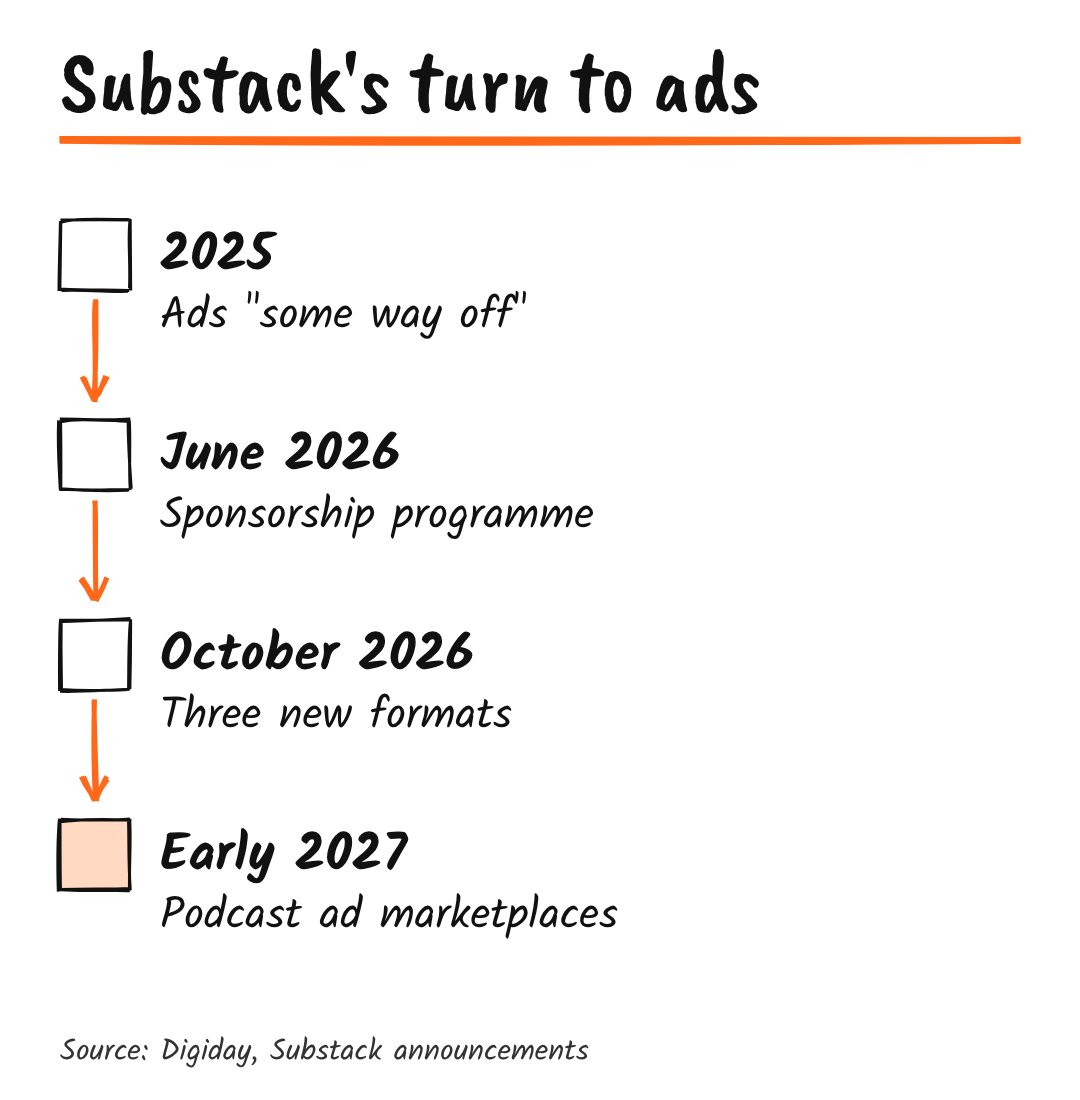
The ad push is new. In March 2025 co-founder Hamish McKenzie told Digiday that advertising was “some way off in the distant future”. In June 2026 Substack launched a native sponsorship programme with Creator Kits for publishers. In October it added formats such as The Upgrade, where a brand pays for a month of paid access for a publication’s free subscribers, and The Unlock, where a brand sponsors a paywalled post so anyone can read it. It has also opened early access to dynamic ad insertion for podcasts and plans third-party sponsorship marketplaces for early 2027.
Digiday spotted a job listing for a product manager of payments whose scope includes “advertising-related monetization over time”. McKenzie told Digiday the role is mainly about subscriptions and payments, that “subscriptions remain at the heart of Substack’s business model”, and that the company may explore other monetisation as the business evolves.
Writers have been leaving, too. Patreon lured Anne Helen Petersen, Lyz Lenz and Virginia Sole-Smith in late 2025, Nieman Lab reported, and Adweek reported that Patreon offered some Substack writers revenue guarantees. The Verge reported in May that writers were leaving over what it called the Substack tax, citing control, pricing and the app’s growing social features.
Beehiiv: the challenger that missed
Beehiiv was founded in 2021 by Morning Brew alumni, and CEO Tyler Denk is a co-founder. It takes no cut of paid subscriptions and charges a monthly plan by list size, with a free tier up to 2,500 subscribers. It has raised about US$49.7 million from backers including NEA and Lightspeed and was last valued at US$225 million, according to Reuters.
In January Denk told Reuters that Beehiiv expected to nearly double revenue to US$50 million in 2026, had more than two and a half years of runway and wouldn’t be profitable until about 2027. The company said roughly one in seven new writers was arriving from Substack. A large part of the plan was advertising: Beehiiv’s ad network has run since 2022, and in October Denk told The Media Leader the company had more than US$35 million in annual run rate, with advertising about a third of it, across 13,000 publications that had opted in.
That’s the plan the Journal says fell short in the third quarter. Beehiiv has also been widening beyond newsletters. Semafor reported its push into podcasting in March, as Substack and Patreon moved on the same ground.
How the platforms compare
| Platform | Cut of paid subscriptions | Entry cost | What sets it apart |
|---|---|---|---|
| Substack | 10% | Free to publish | Reader app and network, sponsorships |
| Beehiiv | 0%, plus card fees | Free to 2,500 subscribers, then plans from US$49 a month billed yearly | Ad network, podcasts, website builder |
| Ghost | 0%, plus card fees | Open source, self-host free or pay for hosting | Non-profit foundation that publishes its revenue live |
| Kit | 3.5% plus 30 cents on sales | Free to 10,000 subscribers | Email automation for creators who sell products |
| Patreon | 10% on the standard plan | No plan fee | Membership platform that has recruited Substack writers |
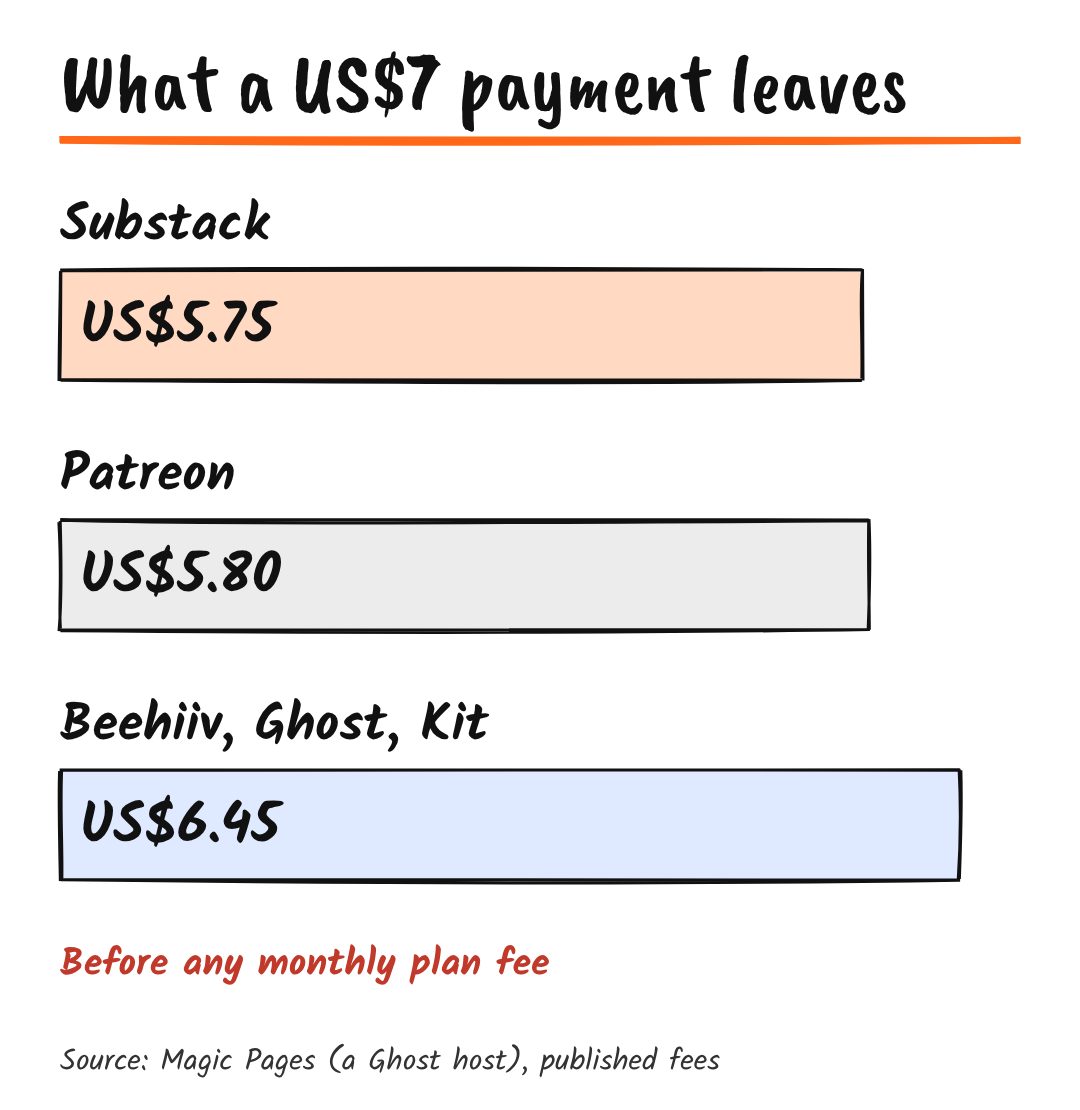
Magic Pages, which hosts Ghost sites and says it has a stake in the comparison, worked out what a writer keeps from a US$7 monthly payment after card processing and before any monthly plan fee. The 10% cut is why Substack and Patreon sit lower.
The wider market
Patreon was valued at US$4 billion when it last raised in 2021, works with more than 300,000 creators and says it has paid out more than US$10 billion, according to The Ankler’s interview with CEO Jack Conte. Conte has been open about recruiting Substack’s top writers.
Ghost is the small, open-source option. It runs as a non-profit foundation and shows its financials on a public dashboard, where annual recurring revenue sits around US$11 million. Kit, formerly ConvertKit, serves creators who sell products and courses more than paid newsletters.
Few readers pay, on any platform. Beehiiv’s own data puts the median paid conversion rate across its publications at 0.62%, about six paying readers per thousand subscribers, and the median price at US$10 a month. Reuters quoted Scalable’s Jasmine Enberg in January saying brands were holding creator marketing to higher measurement standards and that AI had lowered the barrier to entry and increased competition. The Journal’s summary adds that AI is changing how readers find and consume newsletters.
What to watch
- Substack’s podcast ad marketplaces are due in early 2027, the first test of whether ads can replace the growth it’s losing.
- Beehiiv’s break-even date. Denk said 2027 in January, and the Journal’s summary says late 2027.
- Whether Patreon’s guarantees keep pulling large writers off Substack, or only the biggest names.