The Council of the European Union agreed its negotiating position on the proposed AI Act on 6 December 2022. Talks with the European Parliament could begin once Parliament adopted its own position. The decision did not enact the regulation or impose immediate new obligations.
The Council narrowed the proposed AI definition to machine-learning and logic- or knowledge-based systems. It also addressed general-purpose AI used in high-risk systems: an implementing act, following consultation and an impact assessment, would specify how certain requirements applied.
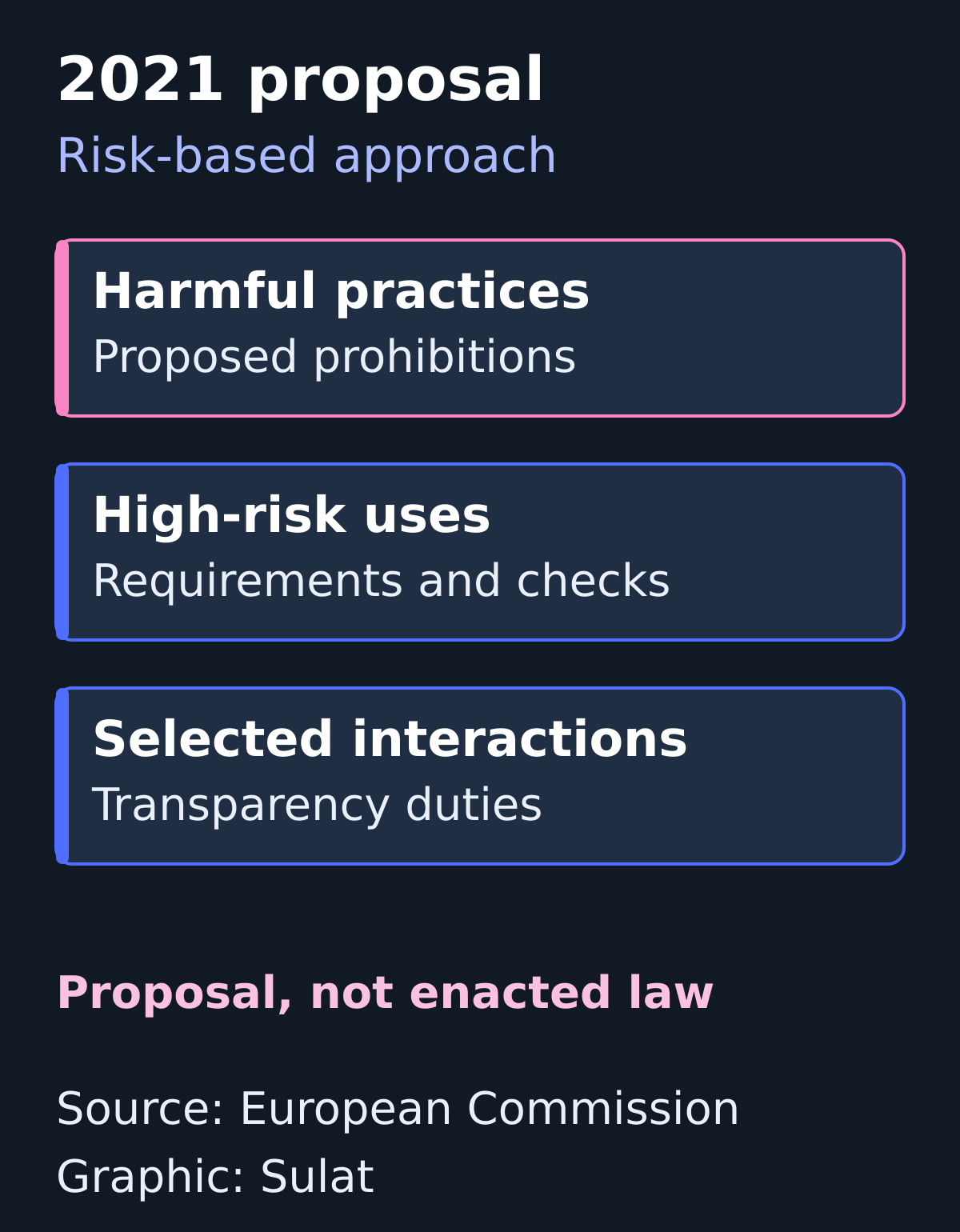
The Commission’s April 2021 proposal established the starting point: a risk-based framework across sectors, rather than a rulebook for one product. It proposed prohibitions on particular harmful practices, requirements for high-risk systems and transparency duties for selected uses such as chatbots and manipulated media. Its stated aim was a common market framework that protected rights without fragmenting national rules.
The Council also proposed extending the social-scoring ban to private actors and protecting people vulnerable because of their social or economic situation. These provisions remained part of a negotiation. Businesses could use the Council text to understand governments’ priorities, but the final rules were still unsettled.
Original Sulat visuals. Council of the European Union identity. Independent reporting; no endorsement.
Sources: Council announcement · Original proposal
Discover more from Sulat AI & Tech News
Subscribe to get the latest posts sent to your email.