Microsoft unveiled AI-powered Bing and Edge on 7 February. Bing’s limited desktop preview offers sample queries and a waitlist; wider access and a mobile preview are planned.
Sulat illustration; Microsoft symbol.
The announcement describes a next-generation OpenAI model adapted for search, combined with Microsoft’s Prometheus techniques. Bing adds conversational follow-ups and linked sources.
For the new Edge experience, Microsoft describes summarising a financial report, comparing company figures and drafting a post. Users can request changes to its tone, format and length. Access remains part of the preview rollout.
Search already had language models
Microsoft’s March 2021 account of semantic search explains how Bing’s language models match queries with documents by meaning, rather than keyword overlap alone. Related capabilities select useful passages and highlight answers within existing text.
That account describes a practical engineering problem: large models are expensive to run for online searches. Microsoft uses distillation to transfer learned behaviour into smaller models, reducing the resources needed to serve them. It reported moving Bing from BERT-based technology in 2019 to UniLMv2 in 2020.
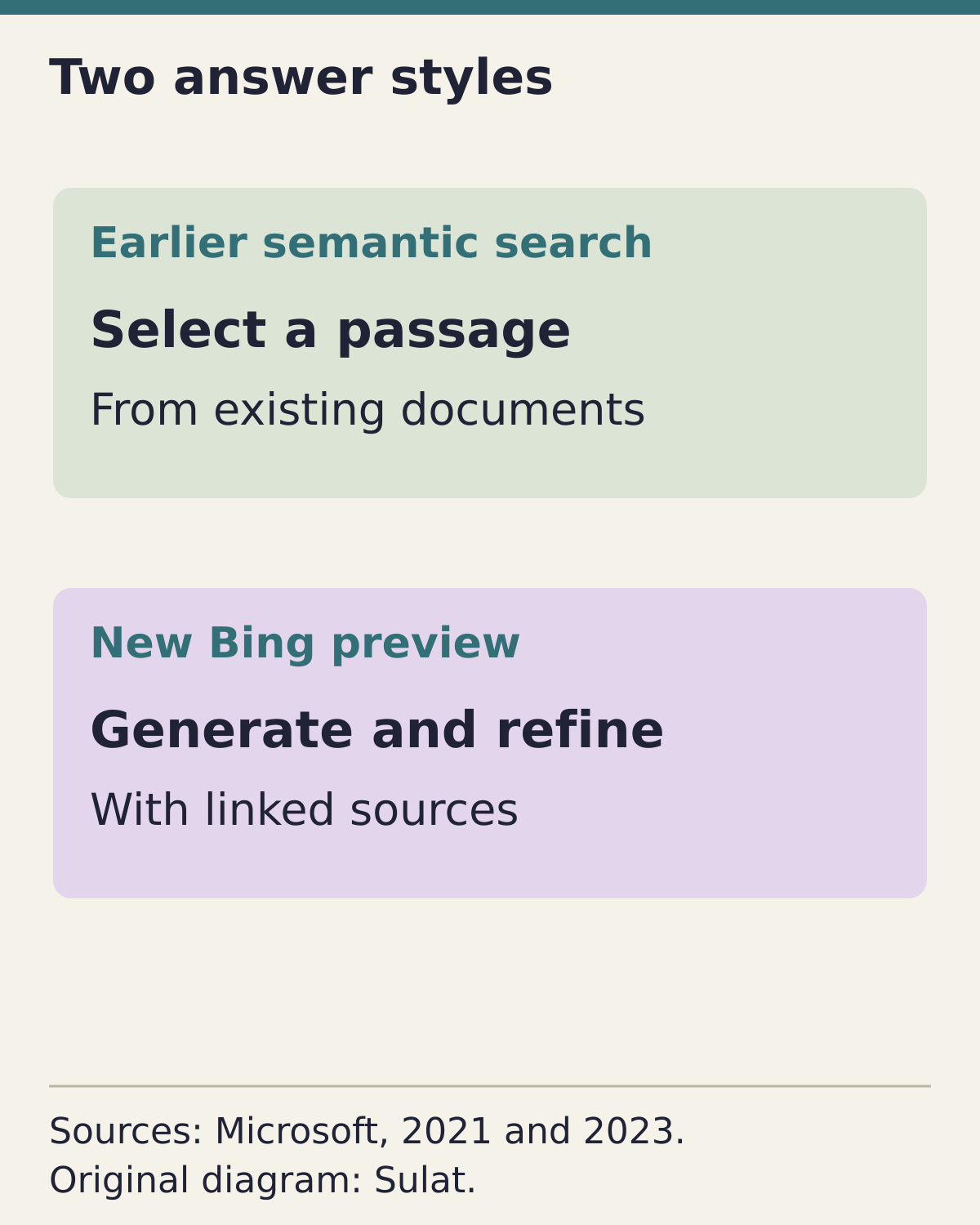
This earlier research explains semantic ranking and extraction. It is background to the announcement, not a published architecture for the new conversational system.
Discover more from Sulat AI & Tech News
Subscribe to get the latest posts sent to your email.