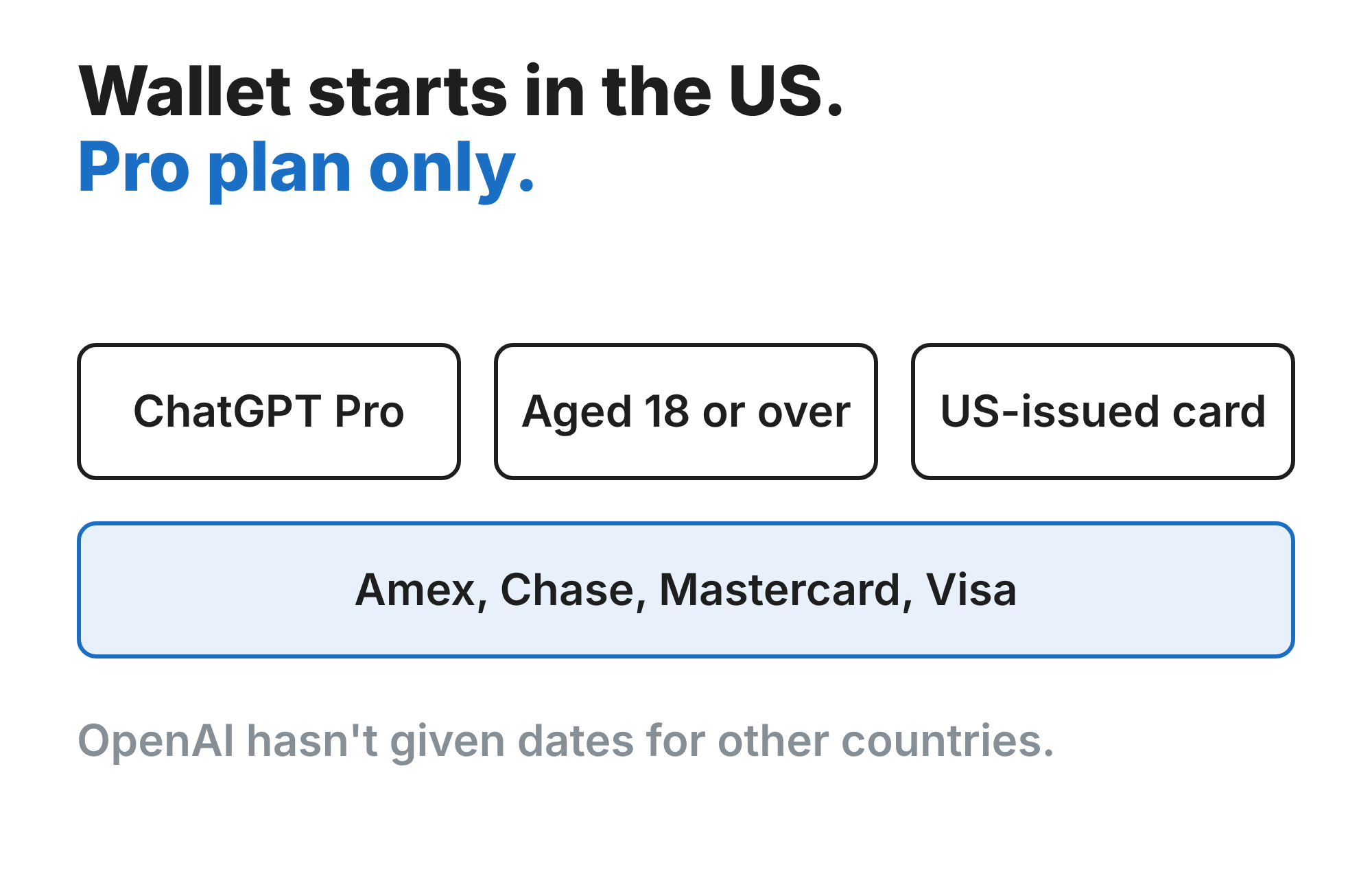
OpenAI has launched ChatGPT Wallet, which lets dots, its personal agents, pay at checkout with a stand-in for your card, according to its announcement dated 13 November 2026. It’s limited to ChatGPT Pro subscribers aged 18 or over in the US with eligible US-issued cards, so it isn’t available in New Zealand.
OpenAI built Wallet with American Express, Mastercard and Visa. Its help page also lists Chase cards, and a Chase cardholder has to be the primary holder, not an authorised user. Virtual cards can’t be added at launch. Bloomberg reports the launch follows OpenAI winding down its Instant Checkout feature earlier this year.
How a purchase works
You add a card once, through a secure form, and your bank may ask you to verify it. When your dot reaches checkout, you review the items, the total and the selected card, then approve with a security check such as Face ID or a fingerprint scan. OpenAI says each approval creates a record of what you authorised.
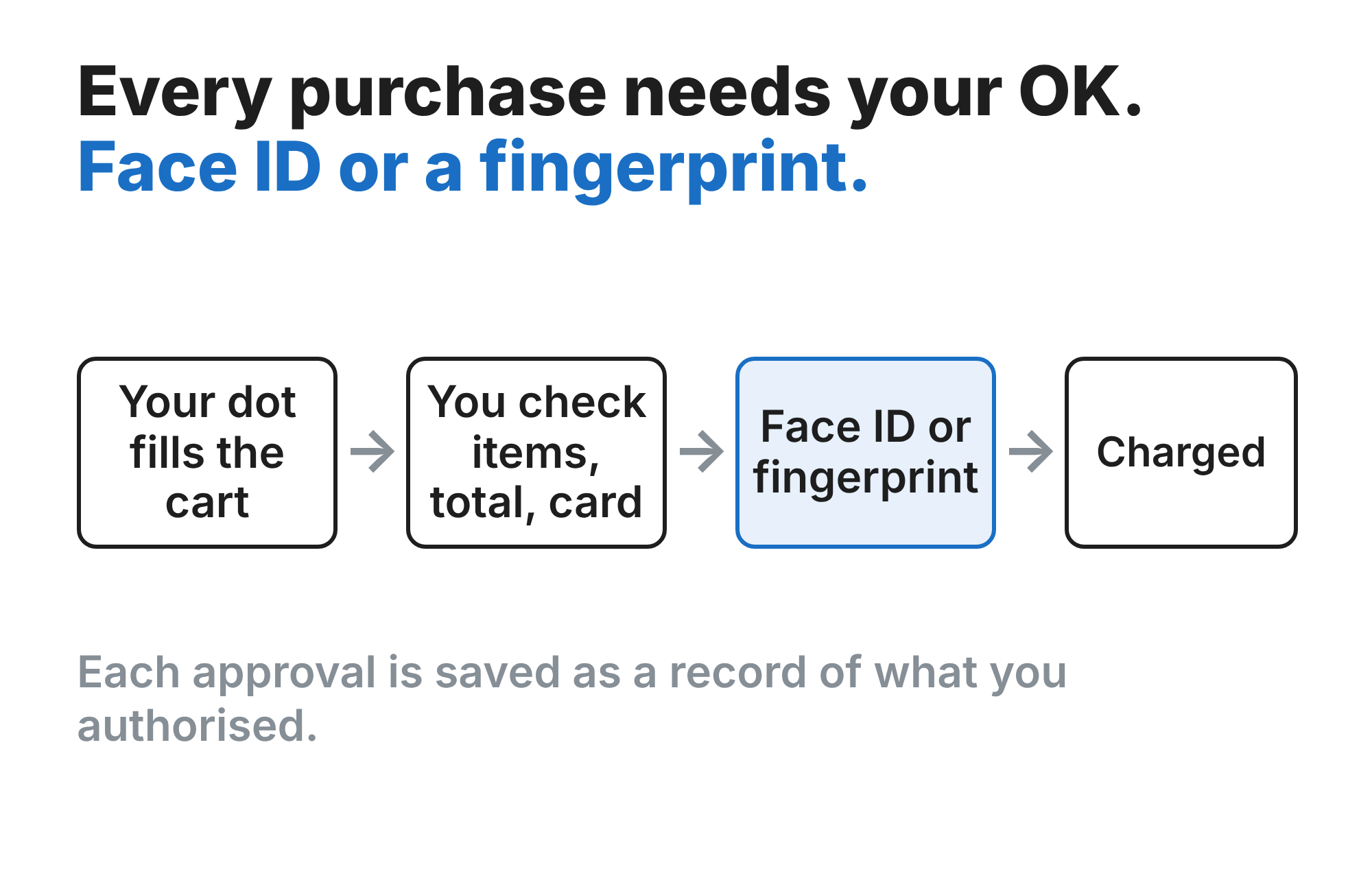
OpenAI’s Wallet terms say the approval screen shows the merchant, the items and quantity, the total including known taxes, fees and shipping, the card, and whether the purchase creates a recurring charge, deposit or authorisation hold. If a material detail changes before the order is submitted, Wallet asks you to approve again. The terms also warn that AI systems can make mistakes and tell you to check the details before you approve.
The help page says “Ready to check out” means your approval is complete. It doesn’t confirm the shop has placed the order, so you check for a merchant confirmation before trying again.
What the shop and the agent see
After you approve, the payment network issues a payment token, a substitute for your card with its own number, security code and expiry date. The charge goes to the card you picked, and OpenAI says neither the business nor the agent gets your actual card details. The number entered at checkout can differ from the one printed on your card.
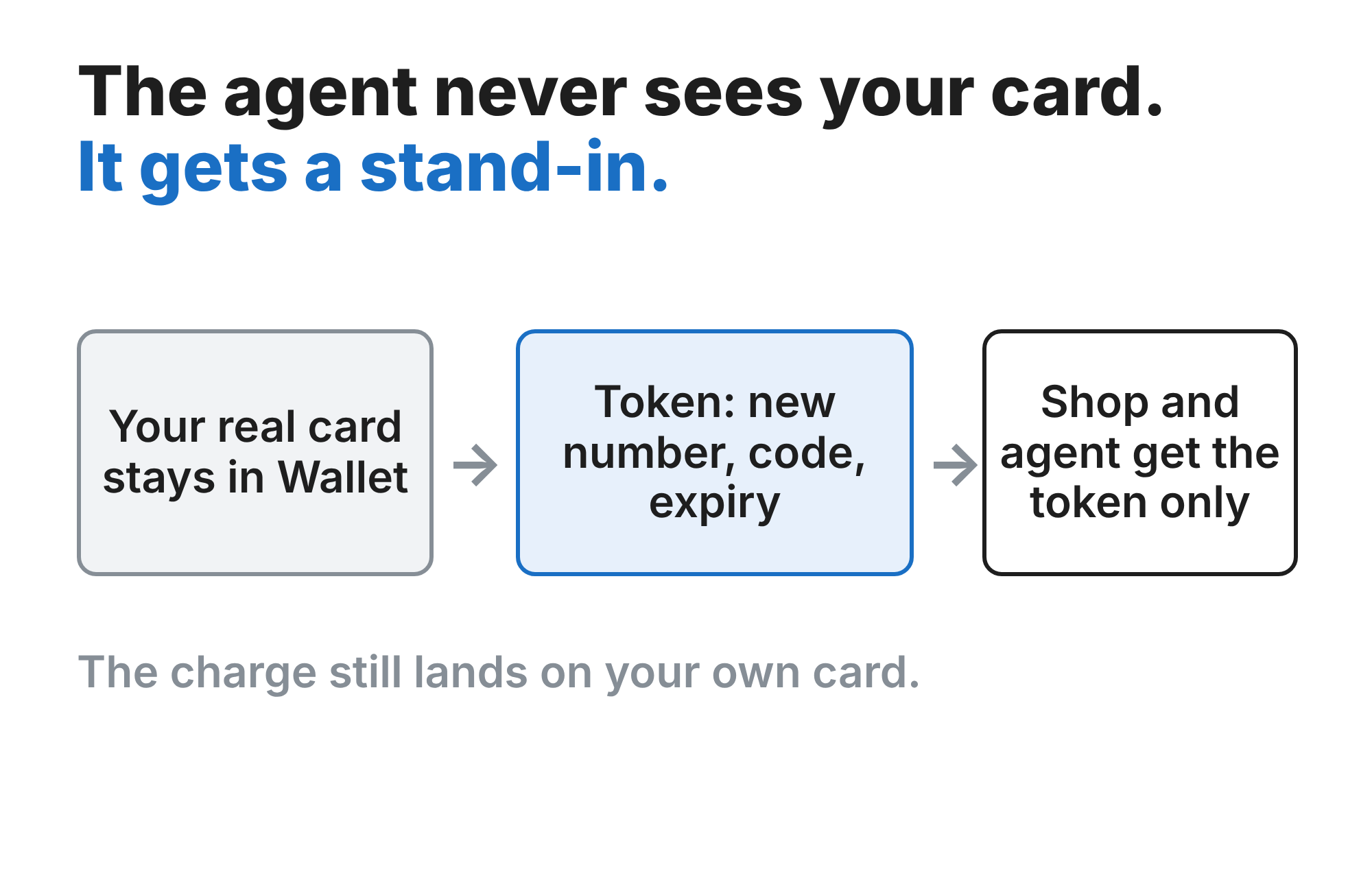
Your issuer still decides whether to authorise the payment, and the shop decides whether to accept the order. OpenAI says you keep your card’s rewards and protections for eligible disputes, such as a defective item. The shop stays the seller: returns, refunds and cancellations go through it, and an unrecognised charge goes to your card issuer. Wallet doesn’t create a bank account or a stored balance, and the cards in it are separate from the one that pays for your ChatGPT subscription.
Who can use it
Wallet works only in conversations with a dot, so you set a dot up first. It isn’t available in Chat, Work or standalone Codex threads. You need a device that supports biometric approval, and the terms require you to live in the US, hold a US billing address for the card and use Wallet in the US. OpenAI hasn’t given a date for other plans or other countries.
What shops need to do
OpenAI’s merchant guide says Wallet works with existing checkout pages and payment forms, with no Wallet-specific integration. Shops get a network token instead of the full card number, and can use the Payment Account Reference to link it to the underlying account. Subscriptions work if the checkout already supports recurring billing and the customer consents. A shop can’t save or reuse the credential for a separate purchase.
The risk is that fraud systems tuned to spot bots flag a legitimate agent purchase. OpenAI says ChatGPT’s cloud browser can trip them by accident, so it’s rolling out user signals in the Forwarded HTTP header. It lists seven parameters it may include: asn, for, ip-country, ip-prefix, locale, tz and user-agent. The signals a site receives vary during the rollout.
OpenAI says it’s working with fraud-prevention firms Forter, Riskified, Sardine and Signifyd, and payment providers Adyen, Checkout.com and Stripe, so their systems recognise these purchases. Its Commerce Partner Playbook also tells sites to configure their CDN or firewall to recognise signed requests using Web Bot Auth, and says sites can add WebMCP tools or build a plugin so agents can check availability and manage carts.
OpenAI says agentic commerce is in its early days and that some sites may block Wallet purchases without meaning to. Its help page says Wallet may not complete checkout at every store. It also says it expects users to hand purchases fully to their agent over time, pre-approving them within spending limits, categories or time periods, but it hasn’t announced a date. At launch, every purchase needs your approval.
Discover more from Sulat AI & Tech News
Subscribe to get the latest posts sent to your email.