Harrison Chase, co-founder and chief executive of LangChain, published an article on X on 14 November arguing that an AI agent’s goal should be scoped so that humans can give feedback on its work as easily as possible. He wrote it with Mihir Garimella and Anshul Gupta, the co-founders of Actively AI, which builds agents for sales teams and supplies the case study.
The piece is titled “Goal Engineering: How to Design Goals”. In a post on X, Chase said agents are moving towards working on goals, so those goals need to be designed correctly.
as agents move towards working on goals, it becomes important to design those goals correctly wrote with @mgarimella on some lessons learned at actively!
— Harrison Chase (@hwchase17) November 14, 2026
Chase opens with Hone, whose launch he says gives a glimpse of agents that take on open-ended goals. Hone announced Engines on 8 October, alongside a US$60 million seed round led by Benchmark and Index. Hone describes an Engine as AI that’s assigned an outcome, such as improving customer retention, instead of a task. Chase says a key part of Hone’s setup is defining metrics for the agent to optimise.
Why feedback sets the scope
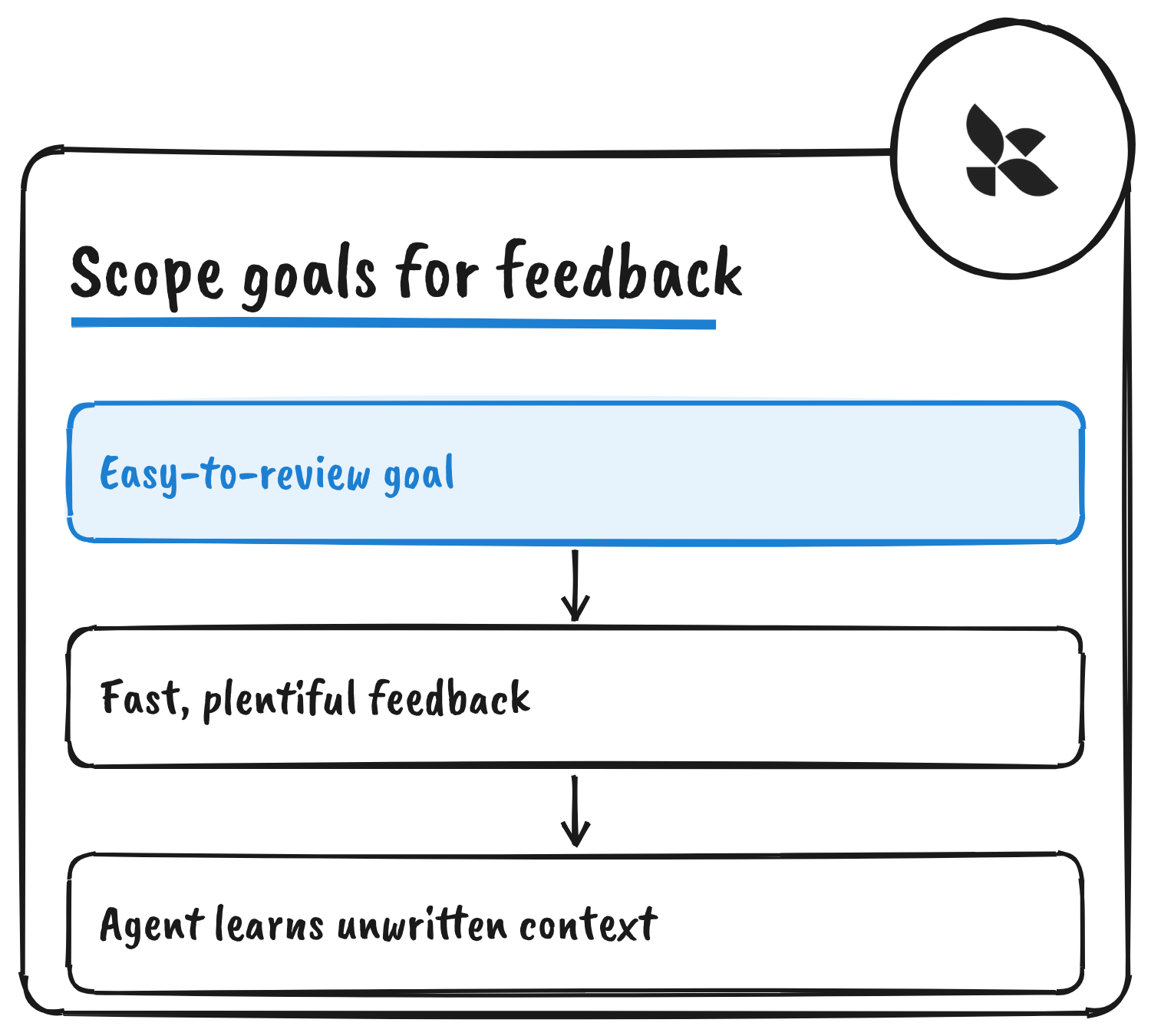
Chase says agents mostly fail because they lack the right context. Some of it, such as access to documents or APIs, is easy to supply. The hardest context to give an agent, he says, is what isn’t written down anywhere, and that has to arrive as feedback from a human expert.
His example is an agent set to improve a company’s ads. The owner has views on what sounds and looks good and on how provocative the brand can be, and Chase writes that an agent that can’t get feedback on those views “quickly becomes useless”.
From that he draws two rules. Scope the agent so its work is easy to give plenty of high-quality feedback on, and invest in the interface for reviewing that work. Chase writes: “The bottleneck for agents performing is often them learning from feedback.”
How Actively changed its agents
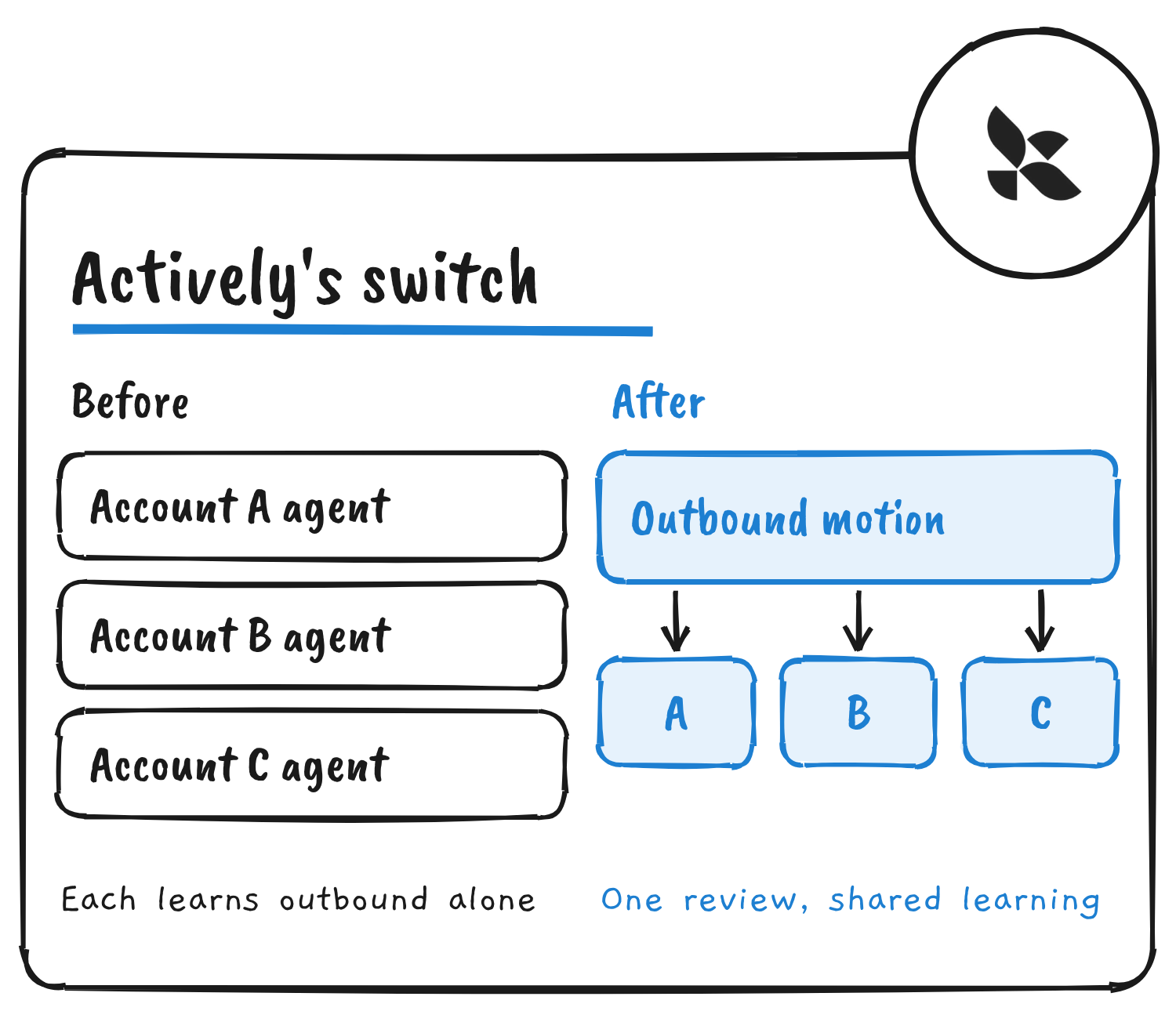
Actively’s first goal-oriented design gave each account, meaning a prospective customer a sales team wants to sell to, its own agent. The agent’s goal was to move that account forward, and it produced actions for sales reps to approve. Chase says two problems showed up. Reps switched between many agents with only a few items to review on each at a time, and what one agent learned about outbounding, replying or how aggressive to be didn’t pass to the others.
The second version, which Chase says is built on Deep Agents, LangChain’s open-source agent harness (a ready-made agent that developers extend), uses agents called “motions”. A motion is one job to be done, such as outbounding or early-stage deal progression, and it works across many accounts. A rep reviews a motion’s similar tasks together, and Chase says feedback on one task transfers to the rest of the motion.
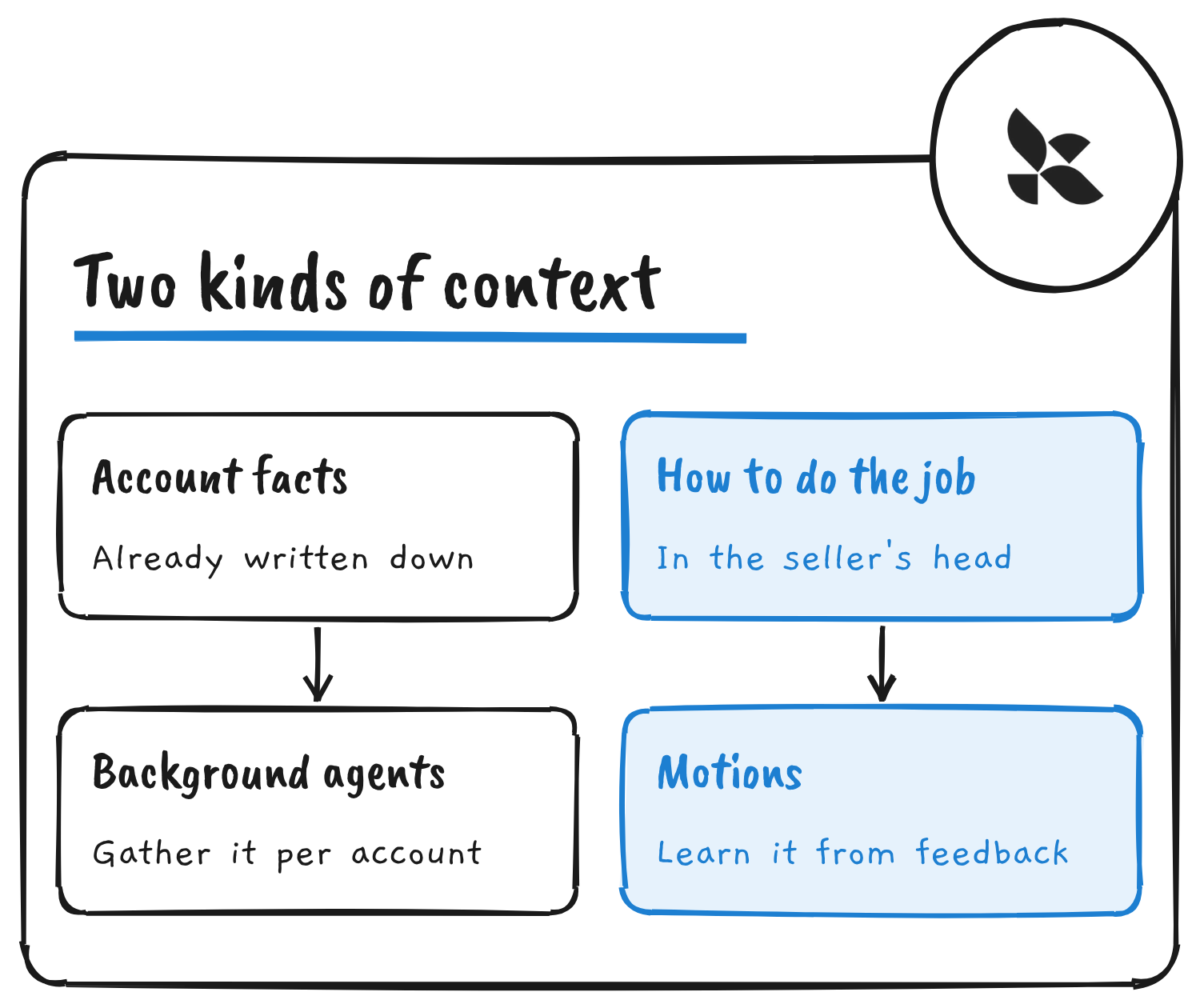
Account context still matters, Chase writes, but it’s mostly written down and objective. Actively runs context-gathering agents in the background to assemble it for each account, and motions pull that context in as needed. The knowledge about how to do the job sits in the seller’s head, so motions get it as feedback.
Actively raised a US$45 million Series B in April, co-led by TCV and First Harmonic, according to its Business Wire release. Its homepage still describes the product as Per-Account Agents, and Chase’s article gives no results comparing motions with the earlier design.
What Chase expects next
Chase writes that agents will advance to the point where people give them a goal and they go out and work to optimise it. Reviewing that work takes people a lot of time, he says, but it’s how agents learn a domain, so an agent’s goals should be aligned with what’s easiest for humans to review. His closing line: “Prompt engineering and context engineering will disappear, but goal engineering will remain.”
The article follows LangChain’s US$300 million Series C, announced on 13 November, US time. LangChain has a release event on Friday 20 November for new LangSmith capabilities.
Discover more from Sulat AI & Tech News
Subscribe to get the latest posts sent to your email.