Bitly says bad actors took over old, inactive short links on 15 November and used them to send people to content unrelated to the posts carrying them. One of them was a Burger King tweet from 2011 whose restaurant-locator link began opening Wikipedia’s list of Nazi concentration camps, Ransomnews reports.
Bitly posted its statement on X at 19:13 UTC on 15 November, which was 8:13am on 16 November in New Zealand. It said it has suspended the accounts involved and is disabling the affected links.
Earlier today, we identified an issue that allowed bad actors to repurpose certain old, inactive links to redirect people to content unrelated to the original posts. We have suspended the accounts involved and are disabling the affected links. Our Trust and Safety team is working to address the issue and strengthen protections against similar misuse in the future.
— Bitly (@Bitly) November 15, 2026
What happened to Burger King’s link
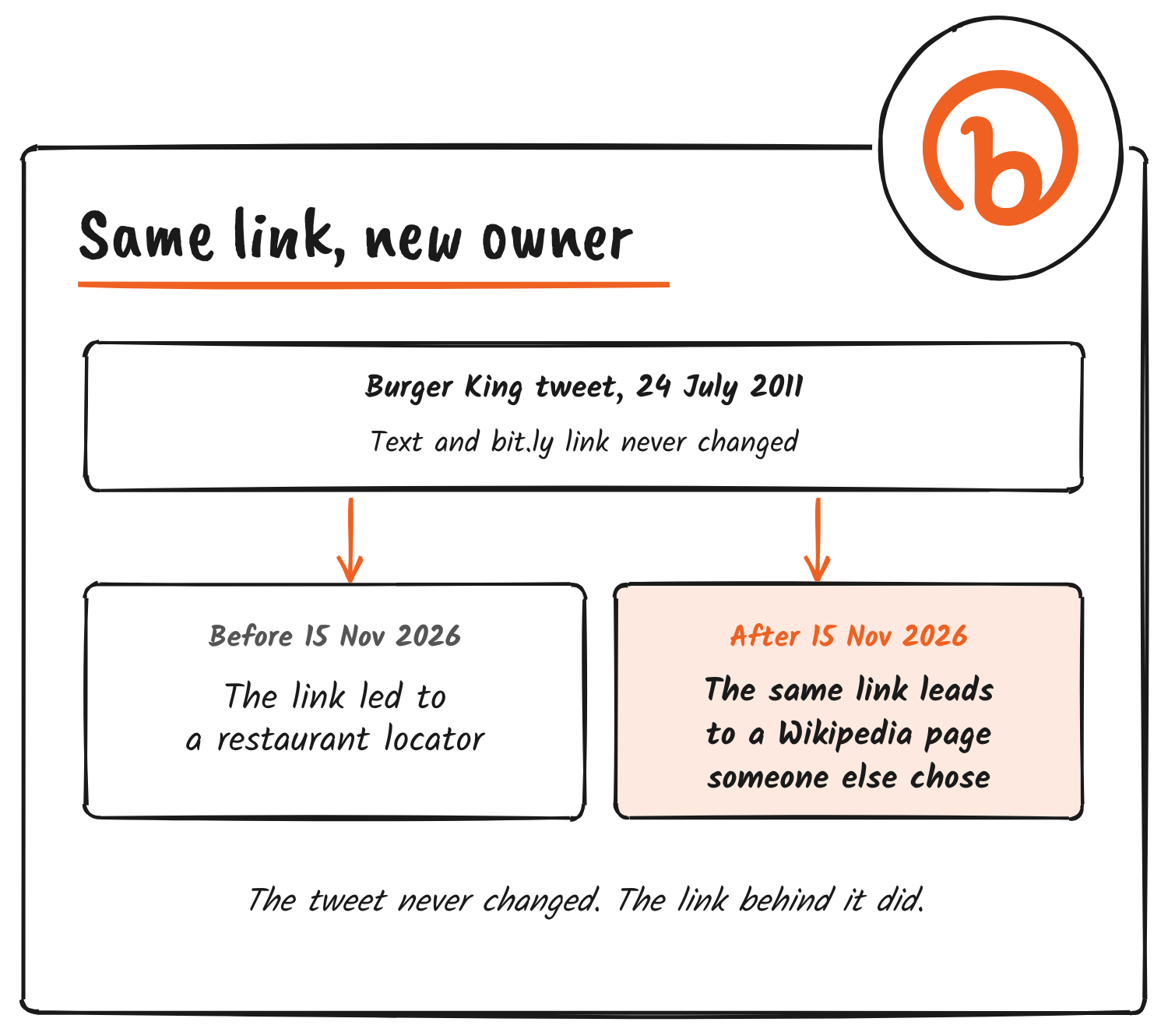
Nobody posted from Burger King’s account. The chain tweeted the link on 24 July 2011 to promote a restaurant locator, Ransomnews reports. Bitly’s information page for that link gave a creation date of 15 November 2026, 05:32 UTC, and a Wikipedia destination. Ransomnews notes that a 2011 link can only carry a 2026 creation date if the same ending was issued a second time.
A Burger King spokesperson told CNN the company has “no part in the links being redirected” and is “working quickly to correct and delete posts that have been altered.” CNN reports that a second Burger King post now links to a Wikipedia page on Adolf Hitler. The link’s information page now returns an HTTP 410 error, and Ransomnews says Bitly’s “Link Deactivated” page had replaced the redirect by 19:22 UTC on 15 November.
McDonald’s, Trump and the others
McDonald’s was hit 18 minutes earlier, Ransomnews reports. The link in a 7 June 2011 McDonald’s tweet was created again at 05:14 UTC and pointed at Wikipedia’s article on the September 11 attacks. CNN reports that McDonald’s Indonesia account has a 2013 post about a jingle that now links to an unrelated YouTube video, and that McDonald’s hadn’t responded to its request for comment.
CNN says Donald Trump’s account was hit hardest, with at least a dozen posts redirected. It also lists old posts from Bill Gates, Justin Trudeau, Mike Pence, the FBI and the Department of Defense. CNN’s reporting covers posts from 2009 to 2014.
How an old link gets claimed
Bitly’s help pages say bit.ly links keep working after an account is deleted and that their back-halves, the part after the slash, “cannot be re-used.” Another help page says Bitly deletes accounts that have been inactive for three years. Ransomnews found creation dates that don’t fit: endings printed in tweets from 2009 to 2012 belong to links created between 2023 and this month. Bitly hasn’t said how the links were claimed or how many were taken.
It isn’t the first time. Disruptionist reported in February 2025 that memecoin promoters took over Bitly links in old Donald Trump and Melania Trump posts and pointed them at token listings. Its report says a bug let people claim a custom back-half after the original link or account was deleted or deactivated, and that Bitly fixed it and killed the hijacked links.
What Ransomnews counted in Trump’s tweets
Ransomnews checked every Bitly link in Donald Trump’s tweets from 2009 to 2013 in a public archive, 97 in all, against Bitly’s information pages on 15 November. Forty are still the original. Another 49 were created again later but lead to pages that fit the tweets, and 48 of those were made in a 17-minute run on 26 May 2023. Seven lead somewhere else, and Bitly blocks one as malicious or spam.
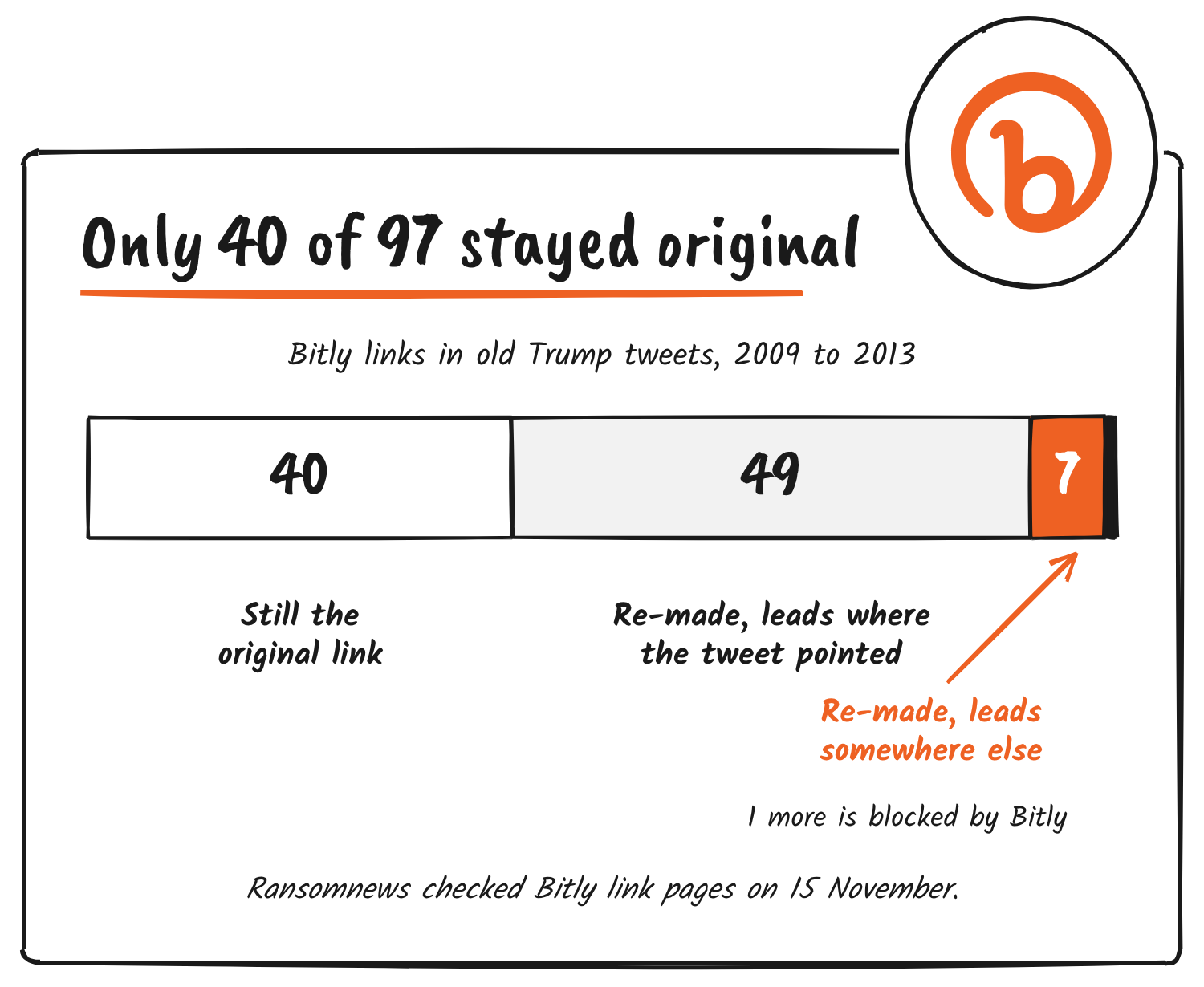
Two of the seven point at domains that copy the names of crypto services, Ransomnews reports. The count covers one account and one link shortener. By 19:22 UTC, Ransomnews says, none of the seven redirected any more.
How to check your own links
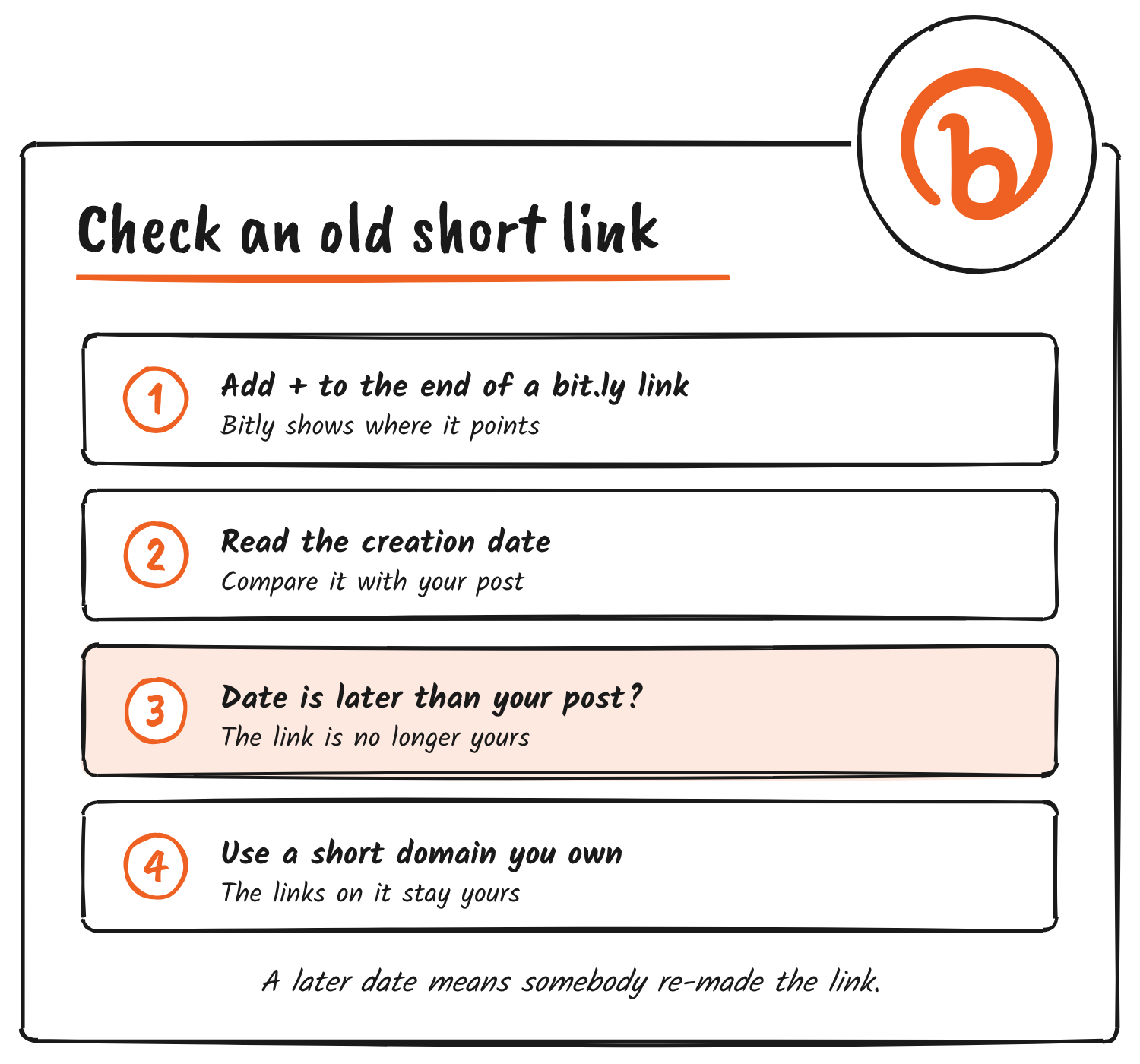
Ransomnews’s method works on any bit.ly link. Add a plus sign to the end of the address and Bitly’s information page shows the destination and the creation date. A creation date later than the post or document carrying the link means the link isn’t the original. Bitly’s page for a disabled link no longer shows that date.
For organisations, Ransomnews recommends listing the short links in old posts, emails and PDFs, checking each one, deleting posts whose links were replaced, and using a short domain you own for new links.
Bitly said its Trust and Safety team is working to address the issue and strengthen protections against similar misuse. It hasn’t said how many links were taken.
Discover more from Sulat AI & Tech News
Subscribe to get the latest posts sent to your email.