Ubuntu Pro subscribers can now install security fixes that an AI system wrote and Canonical hasn’t finished testing. They sit in a new opt-in repository called the Edge archive, which Canonical announced on 12 November, the first day of Ubuntu Summit 26.10. The patches come from Surge, a pipeline of cooperating AI agents the company built to deal with known vulnerabilities.
Pierre Guillemin, Canonical’s VP of Excellence Engineering, introduced Edge in the second keynote, and The Register has him putting numbers on the flood of reports: October produced nearly as many CVEs, the numbered public records of security holes, as the whole of 2025. Canonical’s own post says its security team has already shipped twice last year’s number of fixes. Careful human review and long soak testing, which means running an update for a while to see what breaks, still take longer than some customers can wait while their systems sit exposed. That gap is what Edge is for.
How Surge builds a patch
Surge isn’t one chatbot but a relay, and the announcement names six hand-offs. An intake agent first checks whether Ubuntu even ships the affected package. Another pulls the upstream fix. Several competing models then each rewrite that fix for the older release Ubuntu actually carries, which is what a backport is, and a separate panel of judge models votes on the candidates. Split votes and low confidence scores go to a human security engineer. Whatever survives is built and tested like any other Ubuntu package.
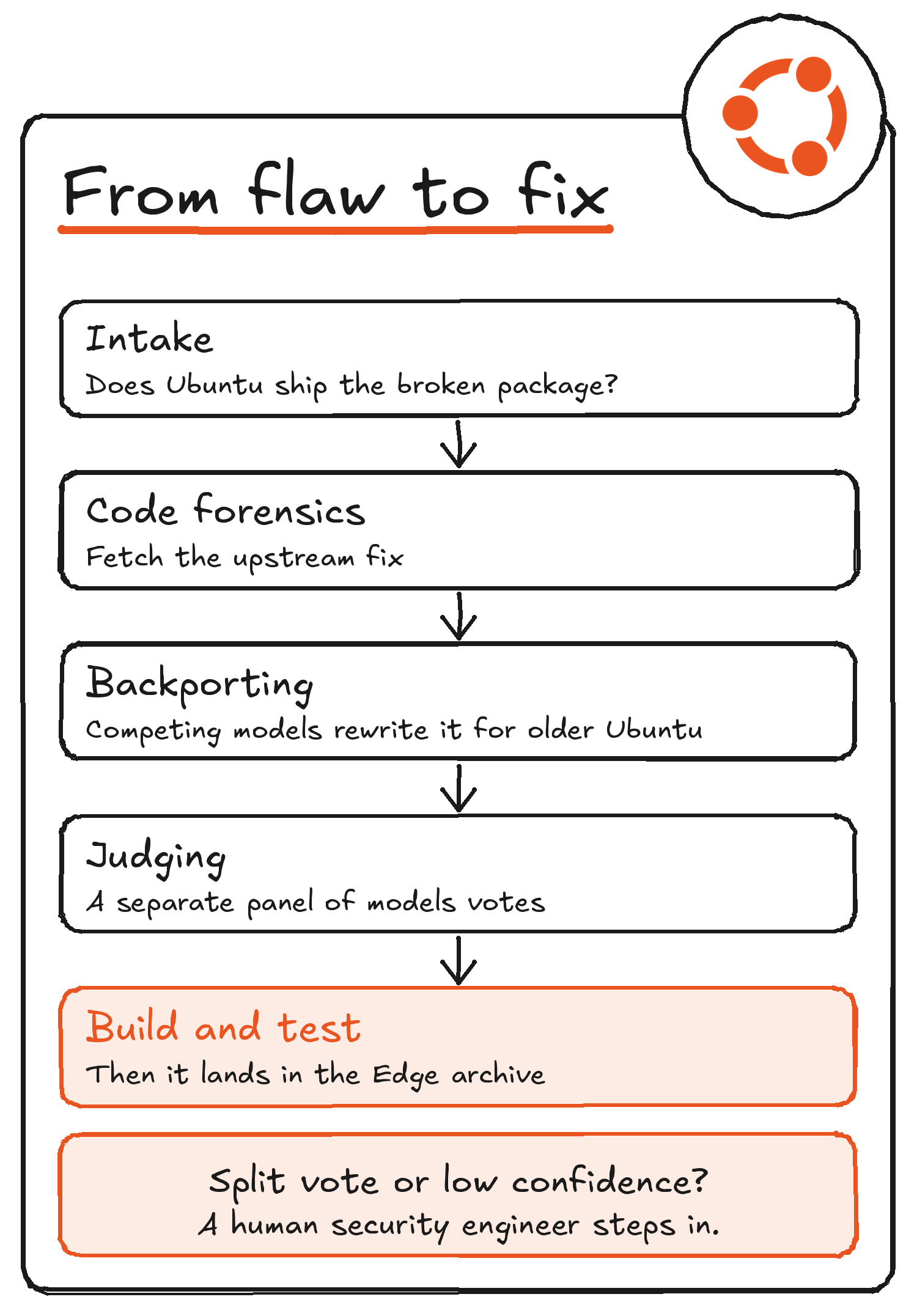
The kernel is outside all this. Canonical says it needs different handling and has moved it to a two-week update cycle instead. Surge also focuses on the backlog of known flaws. Fresh ones still go through the usual embargo with upstream developers, and Canonical says it upholds coordinated disclosure.
What stays human-validated
None of it changes the normal update channel, which Canonical says stays human-validated, and Surge’s fixes won’t reach stable releases automatically. A fix in Edge still has to pass qualification before it reaches the standard archive or, for Pro customers, the ESM archive. What Edge sells is early access: take the fix now and qualify it yourself, or wait for Canonical to finish.
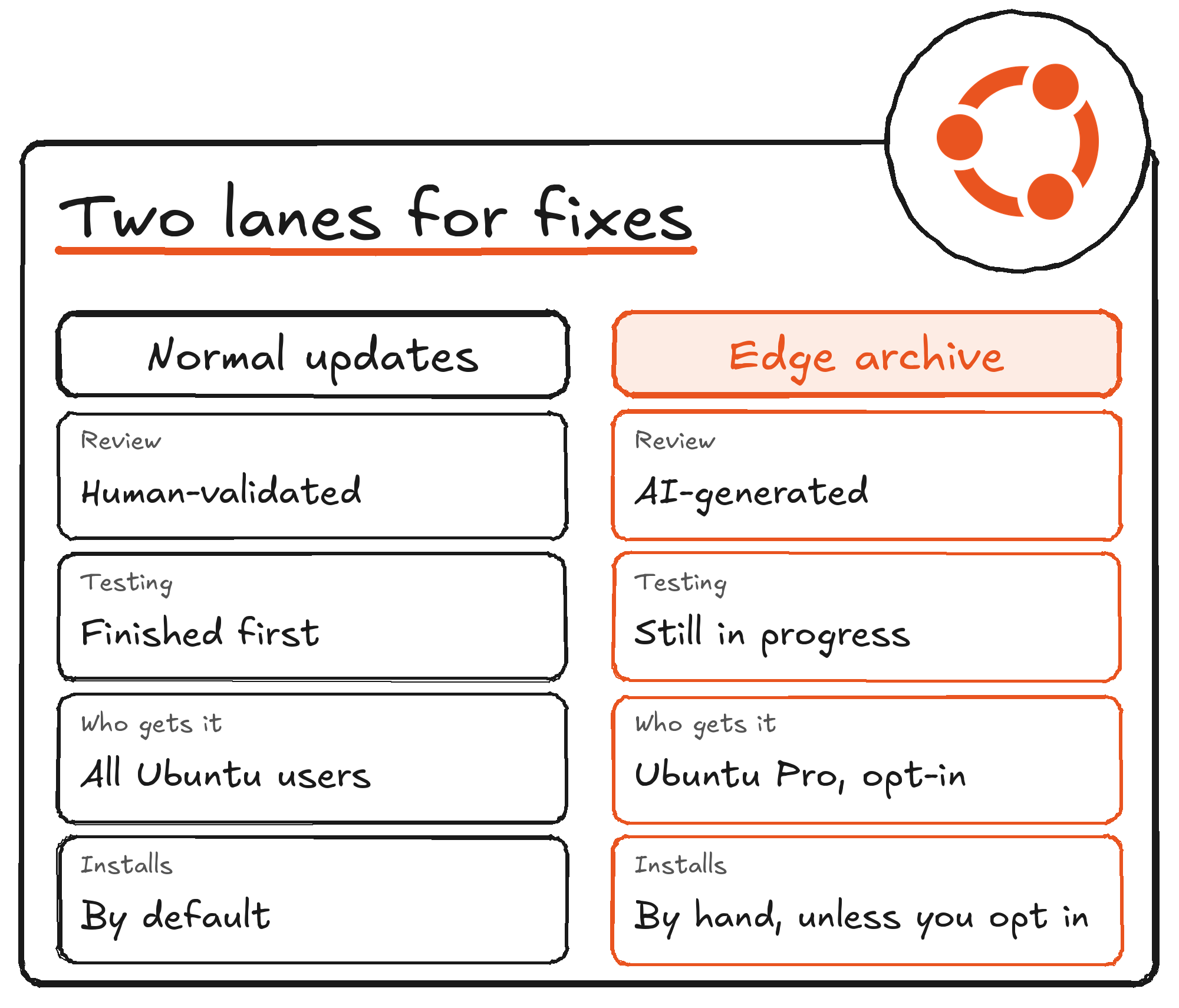
Canonical says it has reached a high level of confidence in Surge. The announcement doesn’t name the models Surge runs or give a measure of that confidence.
How to turn it on
To get in, you need Ubuntu Pro with ESM Infra or ESM Apps turned on, running an LTS release from 18.04 up to 26.04. Interim releases such as 26.10 are out. Pro is free for personal use on up to five machines. Installing the pro-edge package and running its enable script, as Canonical’s how-to describes, adds Edge as another apt source.
sudo apt install pro-edge
sudo pro-enable-edge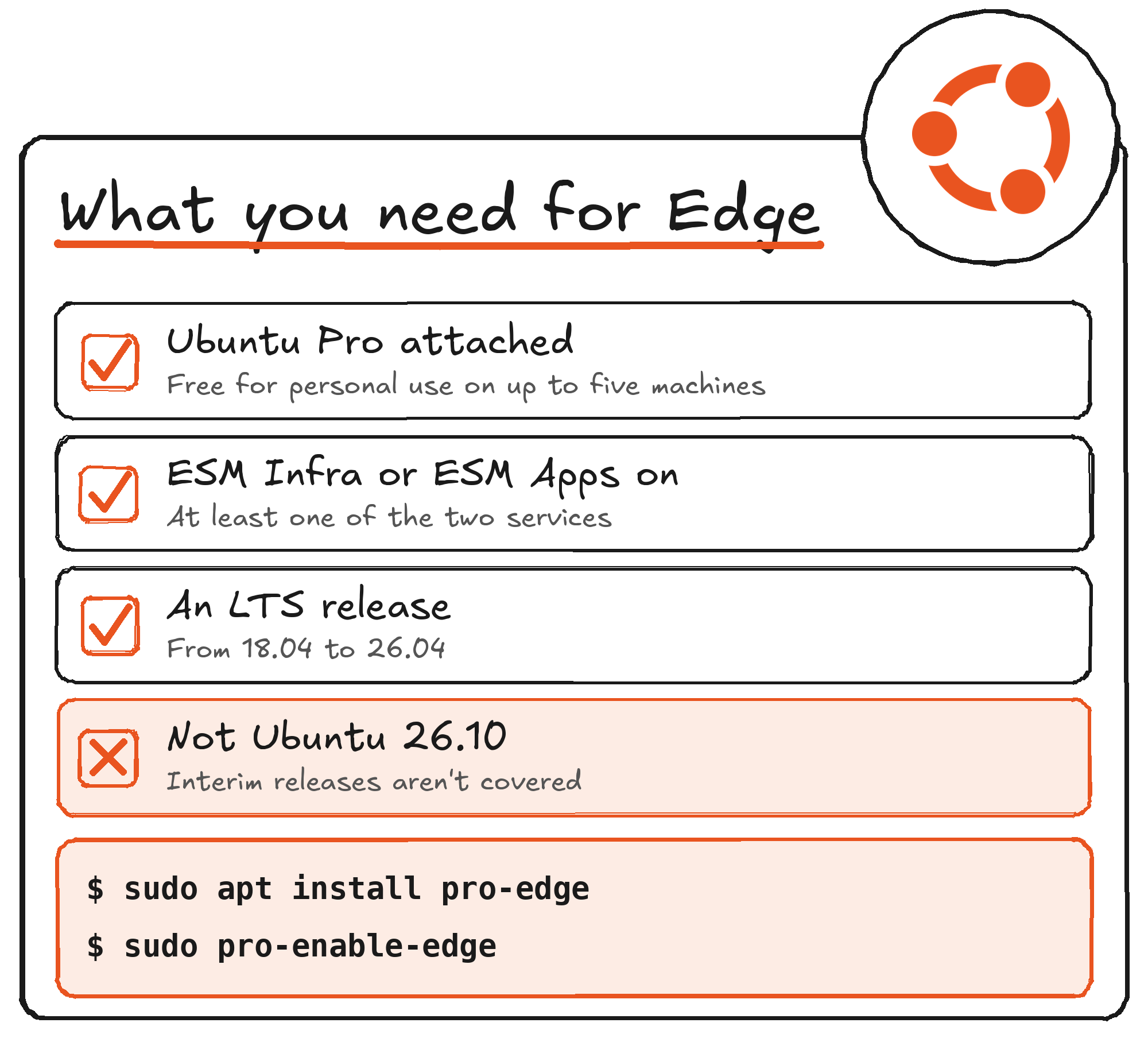
Edge ranks below the main archives, so nothing installs until you name the package and version. The automatic flag removes that safeguard, because unattended-upgrades will then take Edge packages without asking.
sudo pro-enable-edge --automatic-updatesComputingForGeeks ran Edge on two releases and found a snag: the how-to’s list command returned nothing in manual mode, since apt ranks Edge builds at priority 490, under the archive’s 500. It listed installed packages that have an Edge version instead. The site also noticed that an Edge build of python3-jwt names its maintainer as Unknown Maintainer, which it reads as a sign that no person signed off the upload.
The Register adds a footnote from Canonical’s past. The company last used the Edge name in 2013, for a crowdfunding campaign for an Ubuntu phone that didn’t raise enough money.
Bugs go to the Ubuntu Edge archive project on Launchpad. The how-to doesn’t say when interim releases will get Edge.
Featured illustration: Sulat, featuring the Ubuntu logo. Ubuntu and Canonical are registered trademarks of Canonical Ltd.
Discover more from Sulat AI & Tech News
Subscribe to get the latest posts sent to your email.