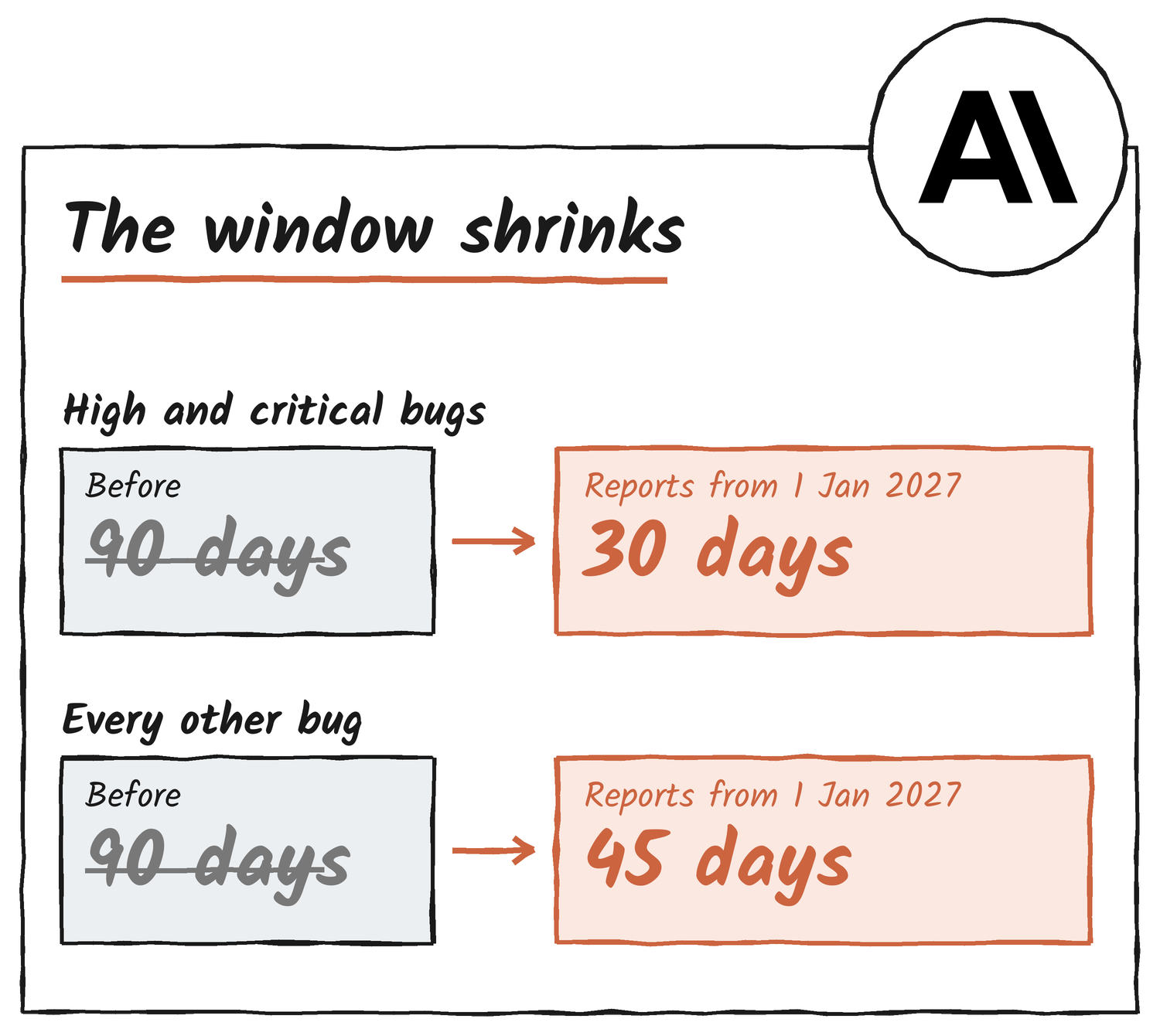
Anthropic is cutting the disclosure deadline in its coordinated vulnerability disclosure (CVD) policy from 90 days to 30 for high- and critical-severity bugs, and to 45 days for everything else. The company’s Frontier Red Team announced it in a post dated 16 November, and the new deadlines apply to bugs reported to vendors and maintainers on or after 1 January 2027.
Chris Rohlf, a security engineer on Anthropic’s Frontier Red Team, announced the change on X. In coordinated disclosure, the finder tells the software’s maker privately and publishes the details once a deadline passes. Rohlf says Anthropic is making the change to “keep pace with the rapid improvement of AI driven vulnerability discovery capabilities”.
Anthropic is making some important changes to our Coordinated Vulnerability Disclosure policy in order to keep pace with the rapid improvement of AI driven vulnerability discovery capabilities.
— chrisrohlf (@chrisrohlf) November 16, 2026
Starting in January we are moving to a 30-day timeline for Critical and High vulnerabilities, and 45 days for everything else. See the post linked below for more details.
We know that this change may put more pressure on OSS maintainers and vendors. Given this change some important aspects of our policy are worth calling out here:
* We will continue to agree to a sustainable pace with maintainers and vendors before sending a large volume of findings.
* We will always include a patch or mitigation with each finding where possible.
* We will work with vendors and OSS maintainers on a timeline for issues that can’t be fixed quickly.
* A reminder that issues reported with no human triage, such as those from OSS-Scanner are not subject to this policy. See our FAQ for more details.
We know that we cannot just patch our way to better security. Securing all of the code in the world requires a combination of language modernization, redesign, rewriting, hardening, reducing attack surface, and yes, finding and fixing vulnerabilities. But we must move at a faster pace together in order to make progress.
anthropic.com/research/coord…
What changes on 1 January
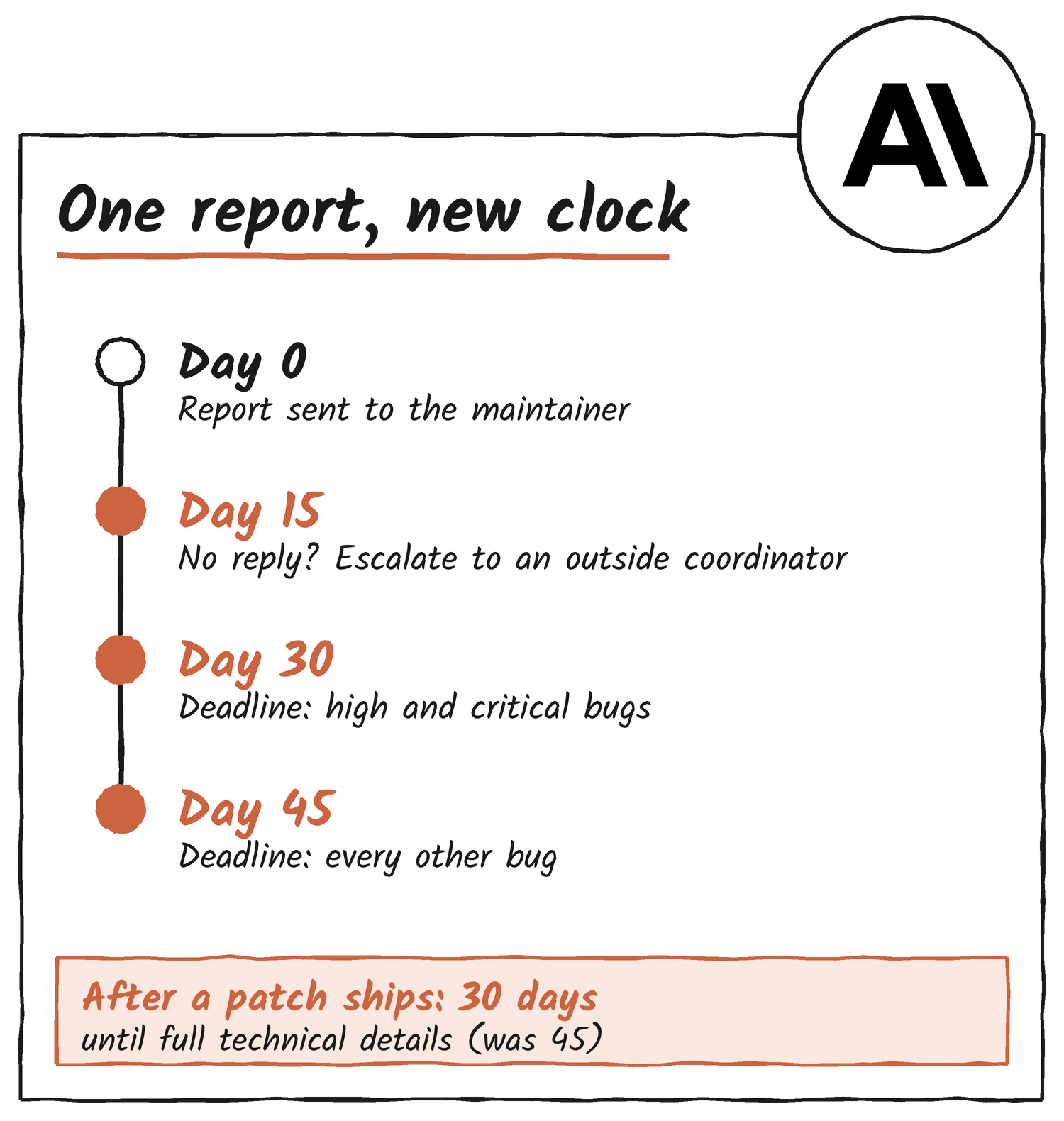
Anthropic’s post lists two more changes alongside the shorter deadlines. If a maintainer doesn’t answer the first report, Anthropic will now aim to escalate to an external vulnerability coordinator after 15 days instead of 30. After a patch ships, it will wait 30 days instead of 45 before sharing full technical details. Reports already in progress on 1 January keep their existing deadlines.
| Item | Before | From 1 January 2027 |
|---|---|---|
| Deadline, high and critical bugs | 90 days | 30 days |
| Deadline, all other bugs | 90 days | 45 days |
| Escalate if the maintainer is silent | 30 days | 15 days |
| Wait after a patch before full details | 45 days | 30 days |
| Bug under active exploitation | 7 days | 7 days |
Some bugs are already past the old deadline. Anthropic says it reported high- and critical-severity vulnerabilities more than 90 days ago that haven’t been disclosed yet, and it’s telling those maintainers they get 30 more days. After that, the post says, Anthropic will publish the reports on its CVD dashboard in line with the updated policy, starting 1 January 2027.
Why Anthropic shortened it
Anthropic says disclosure norms, its own included, were written before AI could find vulnerabilities. They assumed fixes moved at human speed and that nobody else would independently rediscover the same bug. The post says neither holds now: models can help develop fixes, and a bug one model finds is “increasingly likely to be found by another”. Anthropic says it’s seeing a higher rate of rediscovery, and that a 90-day window made sense when a bug could be expected to stay private for months.
The volume is large. In its 8 October post launching OSS Scanner, Anthropic said it had found more than 29,000 candidate vulnerabilities over six months and manually reviewed about 6,000 of them. Google’s Project Zero made a similar move on 13 November, replacing its 90+30 policy with a fixed deadline that drops from 90 days to 30 by January 2028, and it also pointed to large language models.
What maintainers get
Anthropic’s post acknowledges that shorter timelines “may put more pressure on software maintainers”. It says it will keep including actionable guidance with each report, along with a patch or mitigation where possible, and will keep agreeing a sustainable pace with maintainers before sending a large volume of findings to one project. Flaws in hard-to-deploy software, such as critical infrastructure, and flaws that need a change to a specification or RFC can’t always be fixed in 30 or 45 days. For those, Anthropic says it will work with the vendor on a remediation timeline.
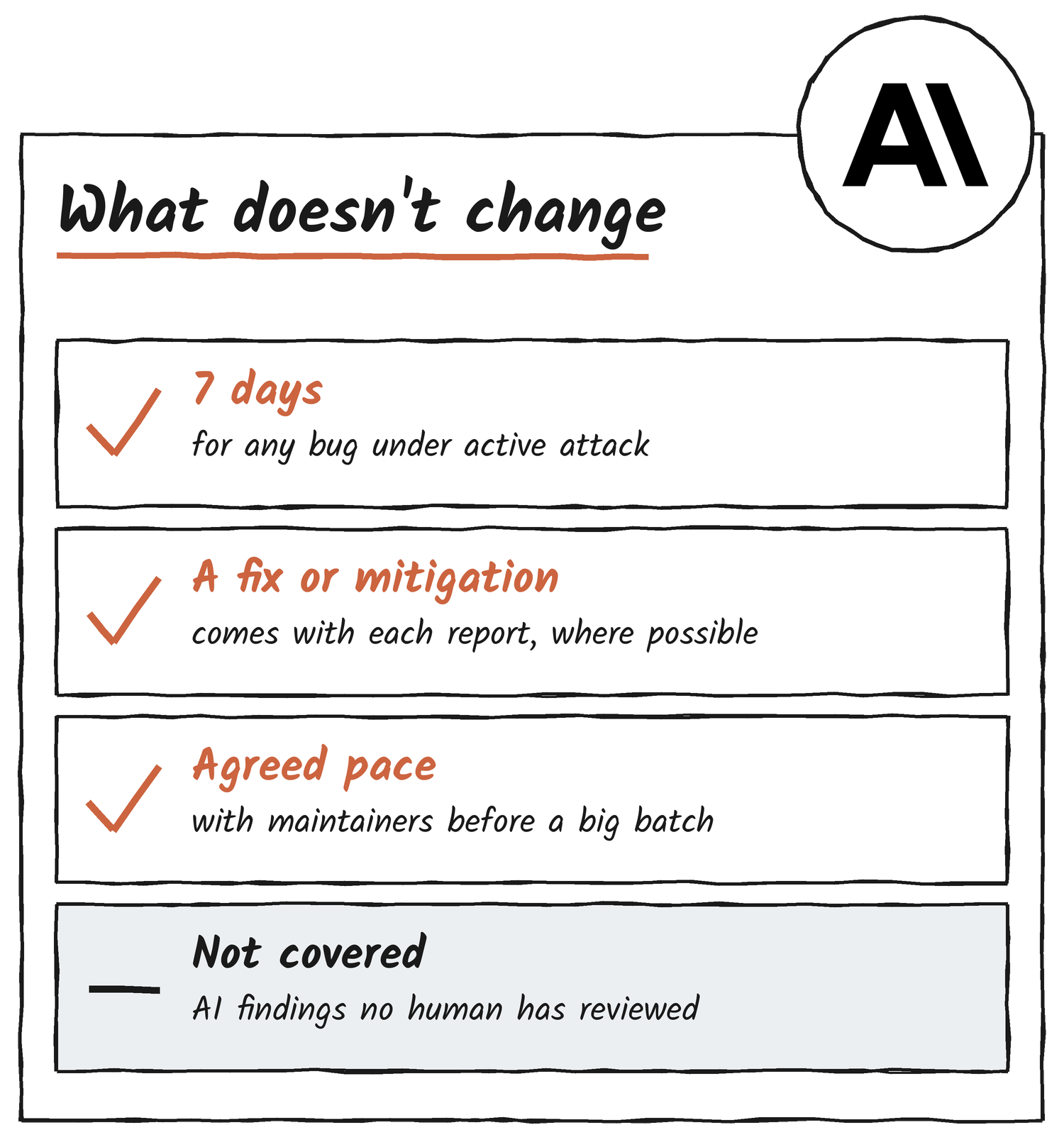
The seven-day window for any vulnerability under active exploitation stays as it is. The update also doesn’t apply to AI-discovered findings that haven’t had human review, such as those found by OSS Scanner, a point Rohlf repeats in his post.
Anthropic points maintainers to three programs. Maintainers of critical open-source projects can apply to OSS Scanner, a no-cost service that periodically scans their code with Anthropic’s strongest models and sends them findings directly. Eligible maintainers and contributors can apply to the Claude for Open Source Program for six months of Claude Ultra at no cost. Security professionals, including open-source maintainers, can apply to the Cyber Verification Program, which tailors Claude’s safeguards for legitimate defensive work.
Anthropic’s disclosure policy page still shows the 90-day default and a “Last updated Mar 6, 2026” line. The new deadlines start applying to reports sent from 1 January 2027.
Sources
- Updating our coordinated vulnerability disclosure policy timelines, Anthropic
- Chris Rohlf’s post on X
- Coordinated vulnerability disclosure for Claude-discovered vulnerabilities, Anthropic
- Launching an opt-in vulnerability-finding service for open-source software, Anthropic
- Project Zero’s disclosure policy post, Google
Discover more from Sulat AI & Tech News
Subscribe to get the latest posts sent to your email.