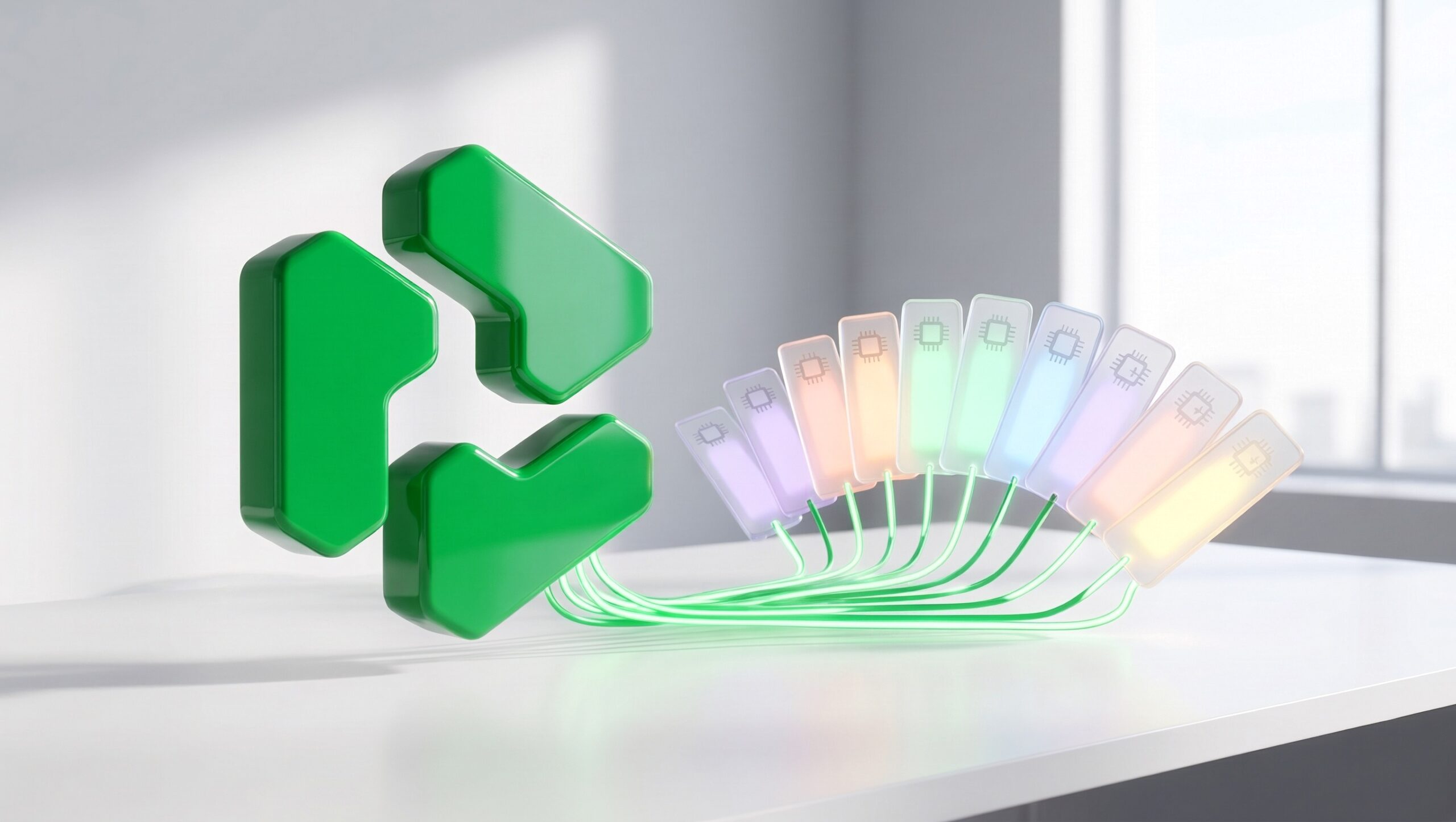
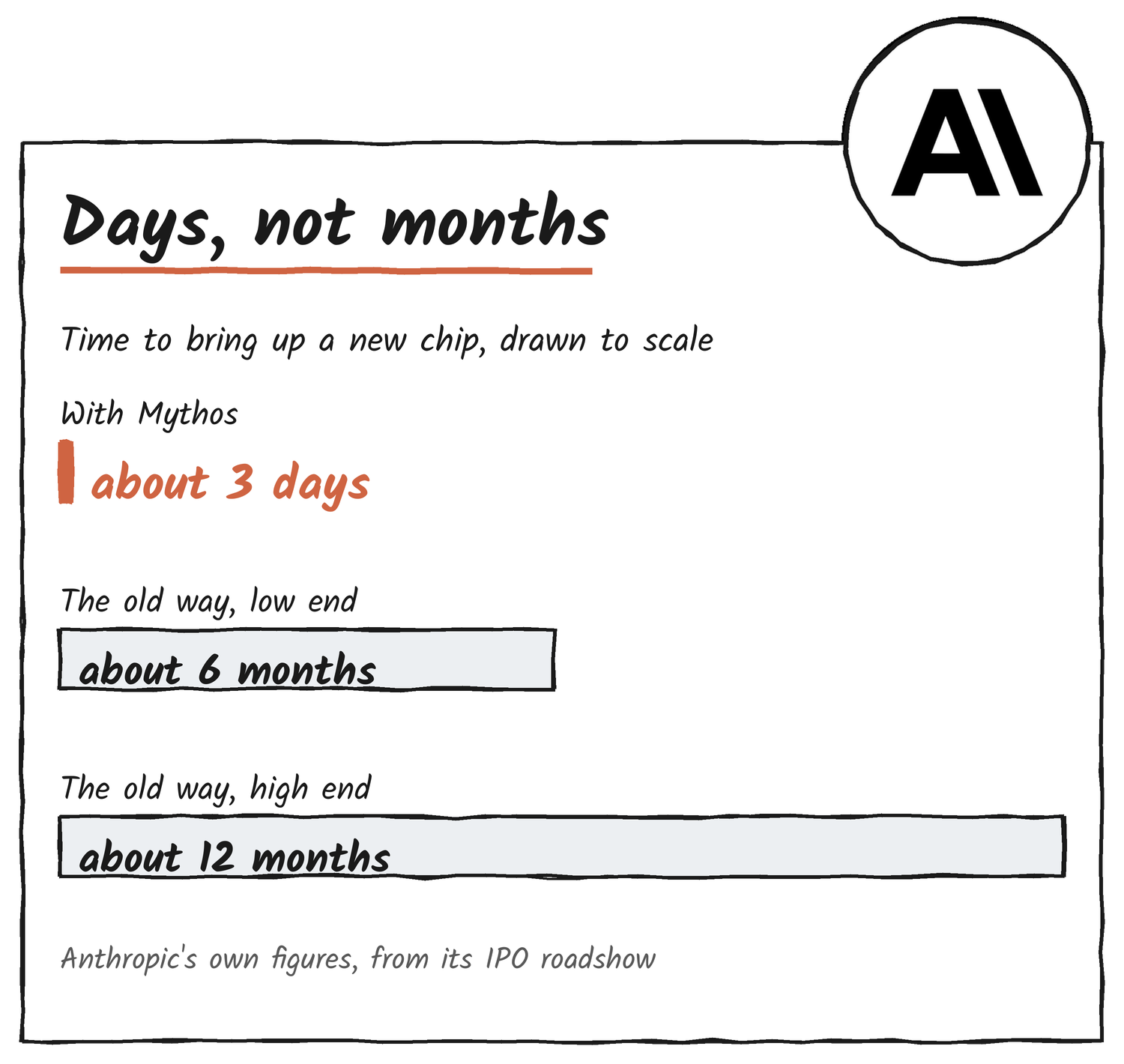
Anthropic told investors that Claude Mythos Preview got Claude running on AMD GPUs in about three days, with “basically no human intervention”, for work the company says used to take six to 12 months. Tom Brown, Anthropic’s co-founder and chief compute officer, made the claim in the “Approach to compute” chapter of the roadshow video on the company’s IPO site, and Tom’s Hardware reported it on 16 November.
Brown says Anthropic started working with AMD GPUs for the first time this year. Anthropic published no transcript of the video, so this one is from a transcript Simon Willison extracted:
In the past, bringing on a new chip platform took dozens of engineers months of work. This time, we had Mythos try it out. It got Claude running on AMD in just three days, with basically no human intervention. Claude ported or wrote almost 100% of the kernels.
Tom Brown, Anthropic
Kernels are the small, heavily tuned programs that do a model’s maths on one specific chip, and every chip family needs its own set.
What the three days covers
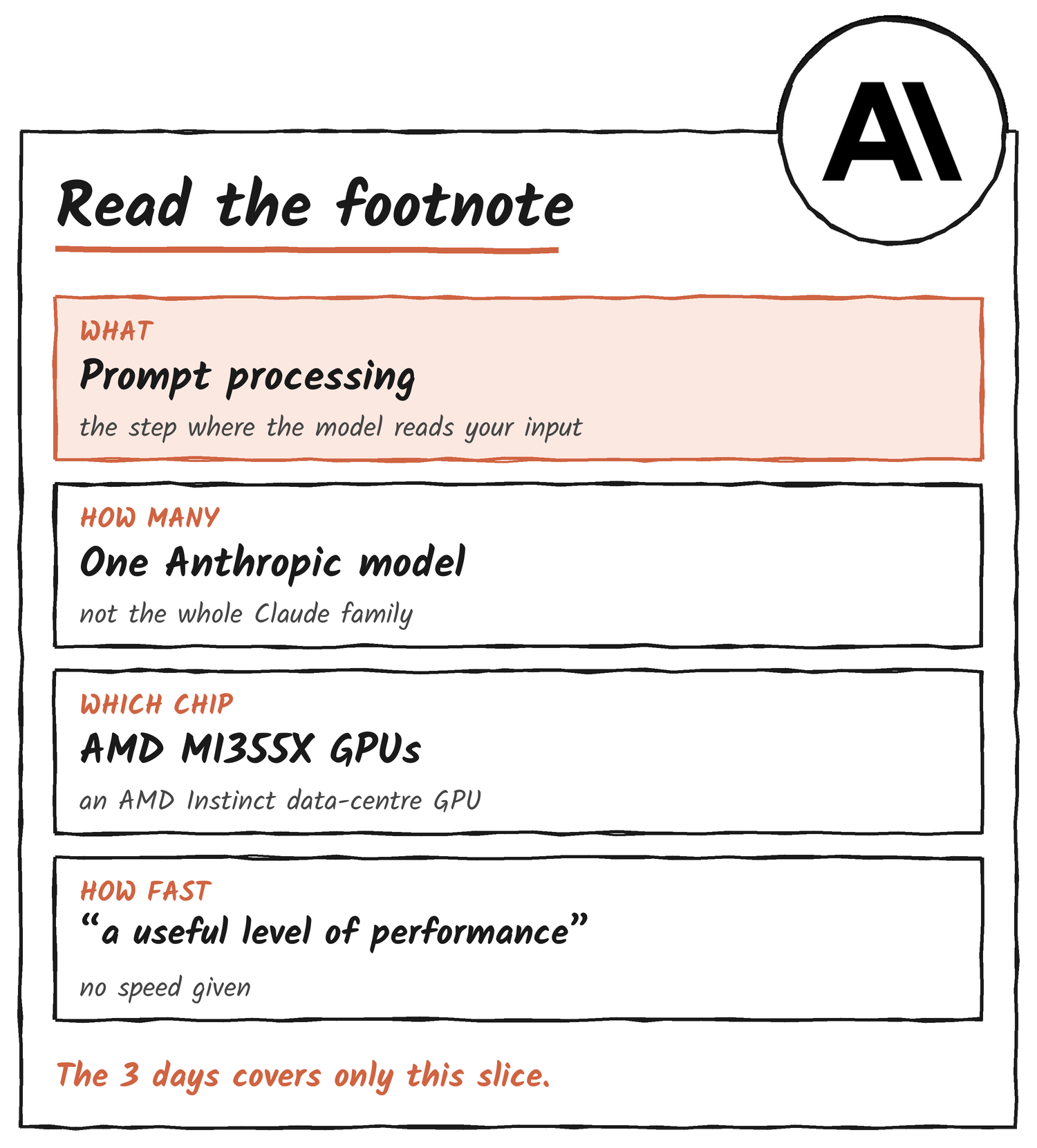
A footnote under the chart narrows the claim. According to Mad Robot’s write-up of the video, it says the three days is “the approximate time for Claude Mythos Preview to bring up prompt processing for one Anthropic model on AMD MI355X GPUs at a useful level of performance”. Prompt processing is the step where a model reads its input before it writes a reply. The footnote doesn’t mention training, and Anthropic gives no speed for the result, according to Cellcog’s breakdown of the video. The six to 12 months, the footnote adds, is based on Anthropic’s historical experience bringing up new accelerators with traditional engineering approaches. Both numbers are Anthropic’s own. The Decoder notes the figures haven’t been independently verified.
What the prospectus says
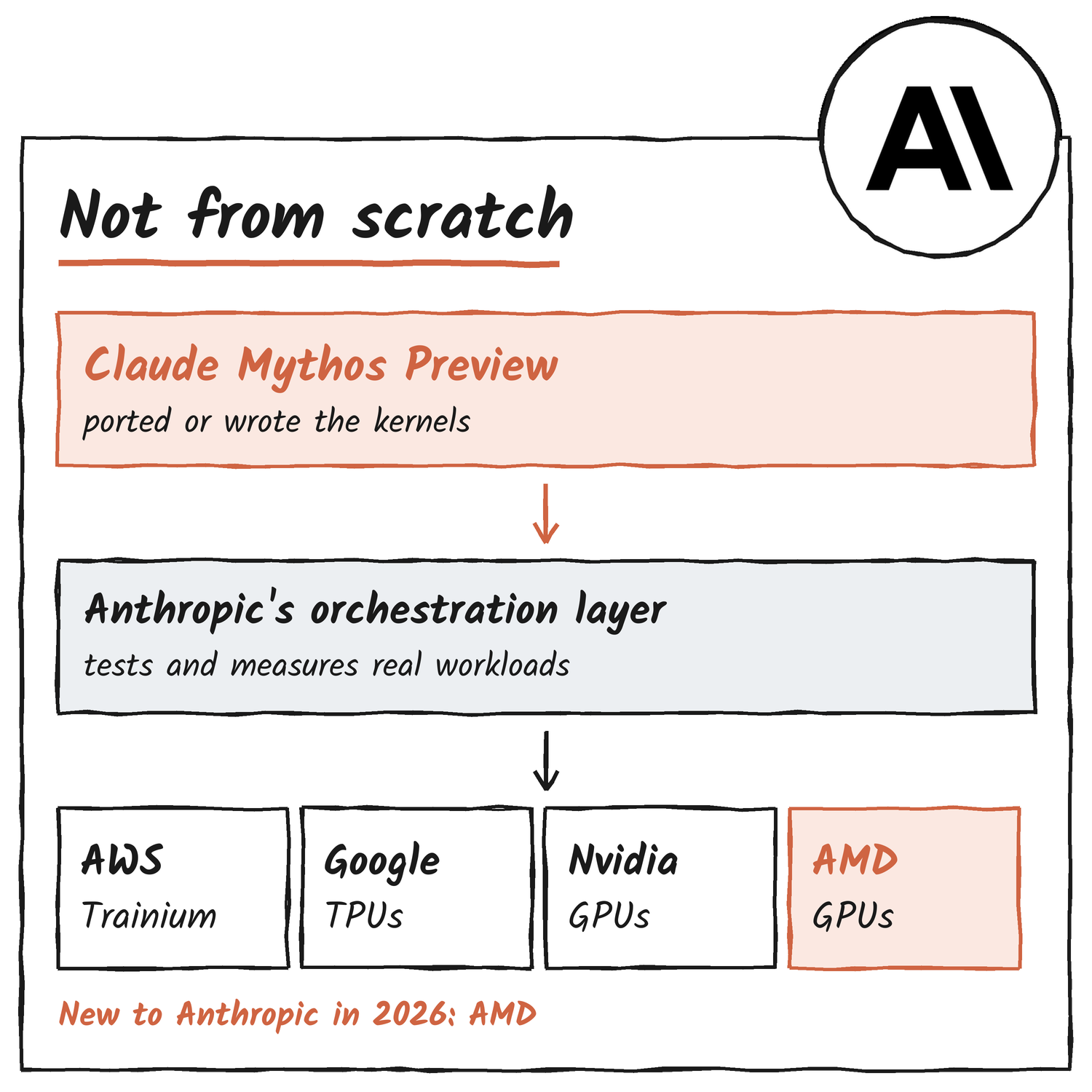
Anthropic’s prospectus, dated 10 November, makes the same point without a number of days. It says the company can now bring new chip platforms into production more quickly by using Claude, and that this speed relies on the foundation it has already built across multiple chip families, including a proprietary orchestration layer that tests and measures performance against its actual workloads. Mythos didn’t start from zero.
The prospectus says Anthropic trains and serves Claude natively on four chip families: AWS Trainium, Google TPUs, NVIDIA GPUs and AMD GPUs. In July 2026 it signed a hardware supply agreement with AMD for Helios rack-scale systems featuring MI450 GPUs. AMD committed to buy up to $5.0 billion of Anthropic’s Class N common stock as GPU delivery and deployment milestones are met, and Anthropic expects the first of those milestones in 2027.
Why it feeds the CUDA debate
Nvidia’s CUDA software has long made it hard to move AI workloads to other chips. AMD’s equivalent is ROCm, and AMD has argued for more than a year that AI can write the translation code. Chip Dispatch reports that AMD’s Anush Elangovan told EE Times in April that Claude beats AMD’s HIPify converter because it has web search built in, and that AMD’s Vamsi Boppana said in July that some AI-generated kernels were better than the most manually tuned versions. What’s new this week is the source. Until now those claims came from AMD or its events, and this one comes from Anthropic in front of its own investors.
Nvidia’s Jensen Huang pushed back in April, telling Dwarkesh Patel that Nvidia uses a ton of AI to create its own kernels and calling Anthropic a unique instance, not a trend, Chip Dispatch reports. SemiAnalysis added a catch in July: each agent needs GPUs to test its code against, and the firm found AMD constantly short of the GPUs it needs for that work.
What comes next
Anthropic expects to price its IPO on 18 November US Eastern time and begin trading on Nasdaq as ANT on 19 November. The next test is the MI450 chips. Chip Dispatch reports the first Helios racks are expected in the first half of 2027, a new generation on which the three-day bring-up would have to be repeated.
Sources
- Anthropic’s Initial Public Offering, Anthropic
- Prospectus, Anthropic
- Anthropic says Claude Mythos slashed software work to onboard AMD GPUs, Tom’s Hardware
- Anthropic’s IPO roadshow video, Simon Willison
- Anthropic says its Mythos AI got Claude running on AMD chips in three days, Mad Robot
- Anthropic Roadshow Video: The AMD and Disease Claims, CellCog
- Anthropic says AI is eroding Nvidia’s CUDA lead, The Decoder
- Anthropic tells IPO investors Claude Mythos cut AMD MI355X onboarding to three days, Chip Dispatch
Discover more from Sulat AI & Tech News
Subscribe to get the latest posts sent to your email.