Not every coding task needs a frontier model, Baseten says, and it has published a guide on how to find out which ones don’t. Its advice: run open models against about 30 of your own merged pull requests, not generic benchmarks. Baseten sells hosting for open models through its Model APIs and Dedicated Inference.
Alex Ker, Chloe Florit and Rachel Rapp wrote the guide. Its page carries a 21 October 2026 date, and Baseten pushed it on X on 16 November with four bullet points: pick a pilot team and workload, measure quality on your own merged PRs, track cache-adjusted cost per successful task, and keep your harness while using a map from today’s models to open alternatives.
Not every coding task needs a frontier model. Open models meet the quality bar for much of that work at a fraction of the cost.
— Baseten (@baseten) 16 November 2026
We put together a guide on how to evaluate open models for coding agents, covering:
– Choosing a pilot team and workload
– Measuring quality on your own merged PRs
– Tracking cache-adjusted cost per successful task
– Maximizing ease of use: keep your harness + get a map from current models to open alternatives
Read it here: baseten.co/resources/guid…
What the guide recommends
Coding agents have become one of the fastest-growing costs in engineering, Baseten says, yet most teams still run a frontier model on every task. The guide targets engineering leaders, platform teams and anyone who owns AI coding spend.
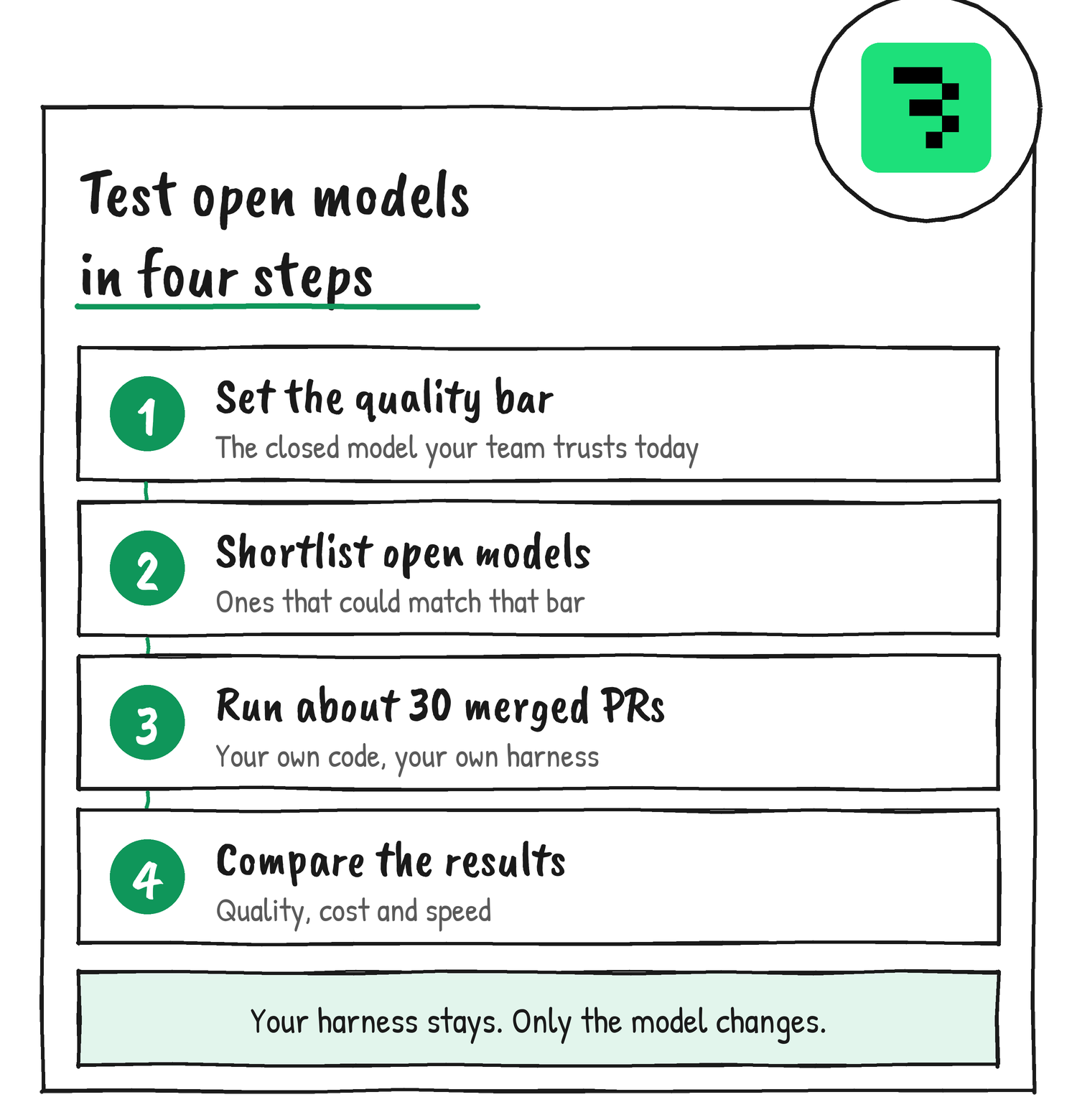
Step one is a quality bar, set with the closed model your team already trusts. Step two is a shortlist of open models that could match it. After that you benchmark them on those 30 or so merged PRs and scope a pilot that collects evidence on quality, cost and speed.
Keep your tools, change the model
Baseten tells teams not to switch tools. Keep the harness you have, the guide says. That’s the agent software wrapped around the model, whether it’s Claude Code, Codex, Cursor, OpenCode or something built in-house. With only the model changing, results are easier to measure and engineers are easier to win over, Baseten says. It made the same point on 15 October, when it added Meta’s Muse Spark Open: Baseten’s Model APIs use an OpenAI-compatible endpoint, so a coding agent can point at the model without any change to the harness.
Cost per successful task
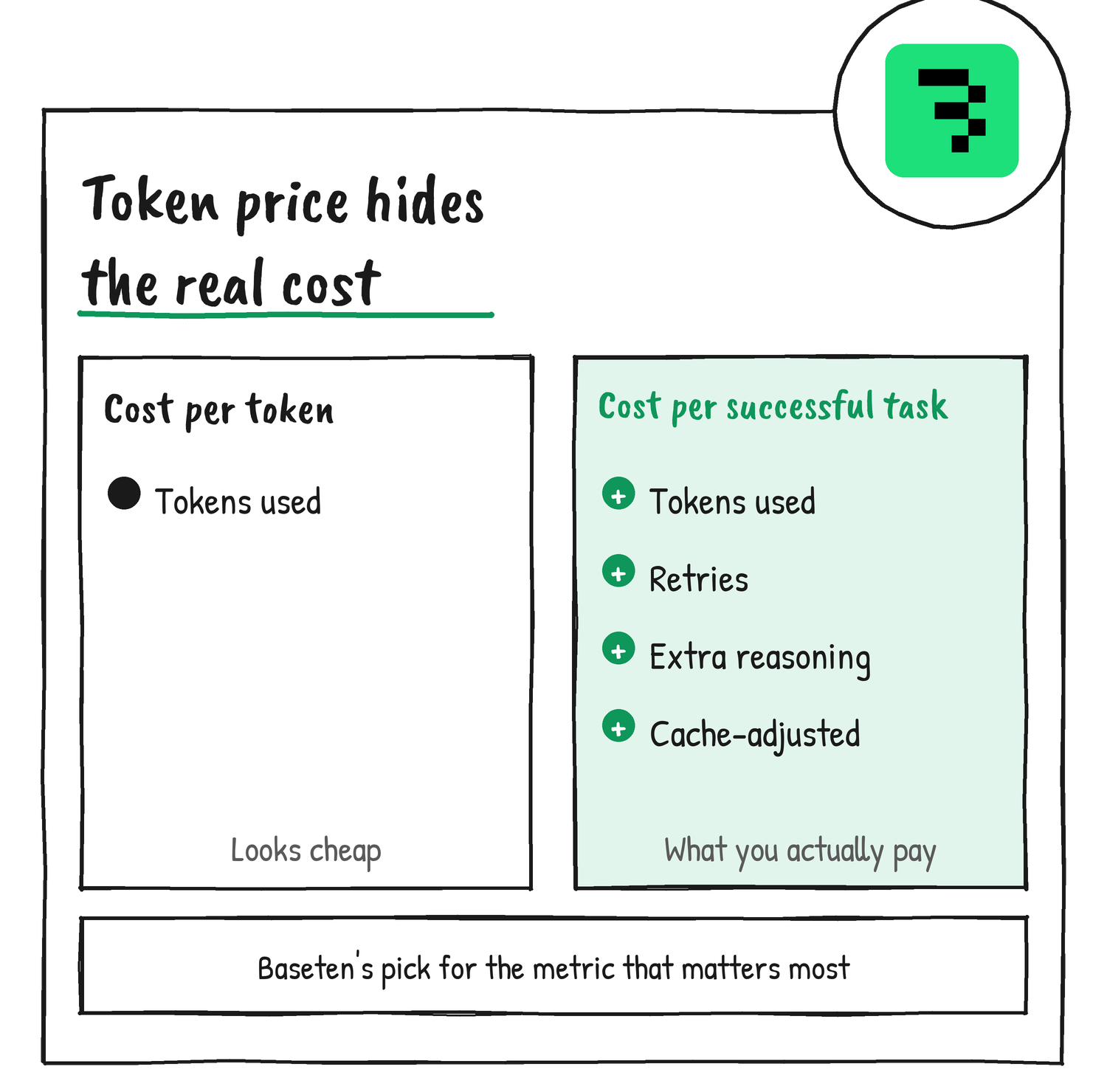
Baseten names cache-adjusted cost per successful task as the metric that matters most. Cost per token hides the retries and extra reasoning that some models need, it says.
Open models don’t replace closed ones
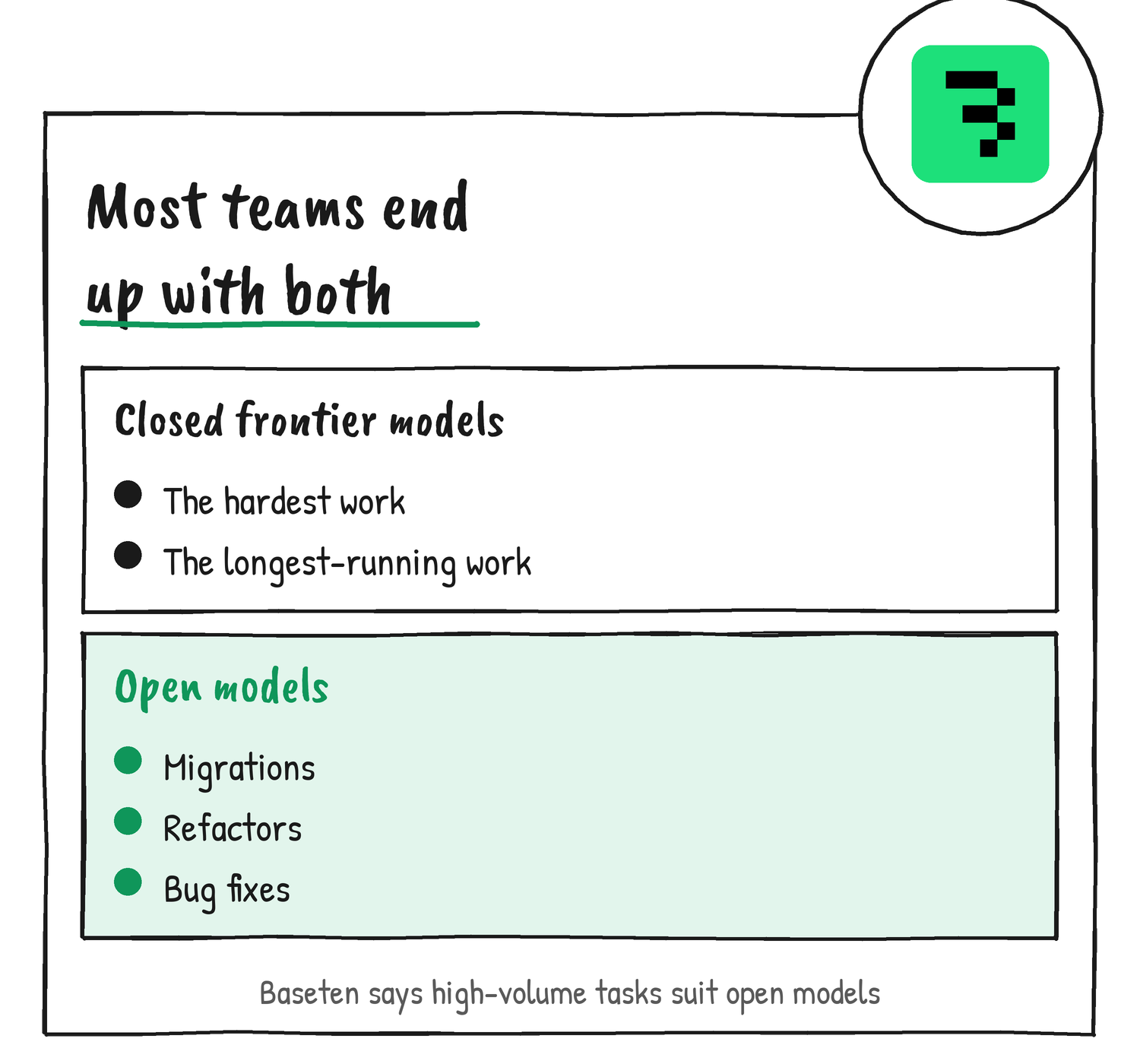
The guide isn’t arguing for dropping closed models. Most teams end up with a mixed fleet, Baseten says: frontier closed models on the hardest, longest-running work, open models on high-volume jobs like migrations, refactors and bug fixes.
The full guide sits behind a Download now button. What’s public is a summary and a short FAQ, with no benchmark scores, model names or prices. Baseten’s guide page also carries a banner for a 28 October webinar on the framework, hosted by Alex Ker with Molly Elfers, a Baseten solutions architect.
Sources
- Baseten on X, 16 November 2026
- Guide to Evaluating Open Models for Coding Agents, Baseten
- How to Evaluate Open Models for Your Coding Agents, Baseten webinar
- Muse Spark Open, an open-weight model for coding agents, Baseten
Discover more from Sulat AI & Tech News
Subscribe to get the latest posts sent to your email.