Google began rolling out 66 regional voices in the Gemini app for Android and iOS on 16 November, including Geordie, Scouse and Brummie options for UK users. The voices are the regional dialects Google promised at I/O in May, and Engadget, 9to5Google and the Press Association all reported the launch the same day.
Neel Joshi, Google’s director of product management for Gemini Live, said the company tuned each option for “subtle, natural rhythms and everyday clarity”, according to the Press Association. He described the response to the I/O preview as “overwhelming”.
What’s in the 66
9to5Google lists seven locales: US English, UK English, Indian English, Hindi, Brazilian Portuguese, Indonesian and Korean. For the UK, Google offers more than 10 English options, among them Geordie, Scouse, Brummie, Scottish, Welsh, Northern Irish, Modern RP and Multicultural London English. Engadget notes that Geordie, Scouse and Brummie belong to Tyneside, Merseyside and Birmingham.
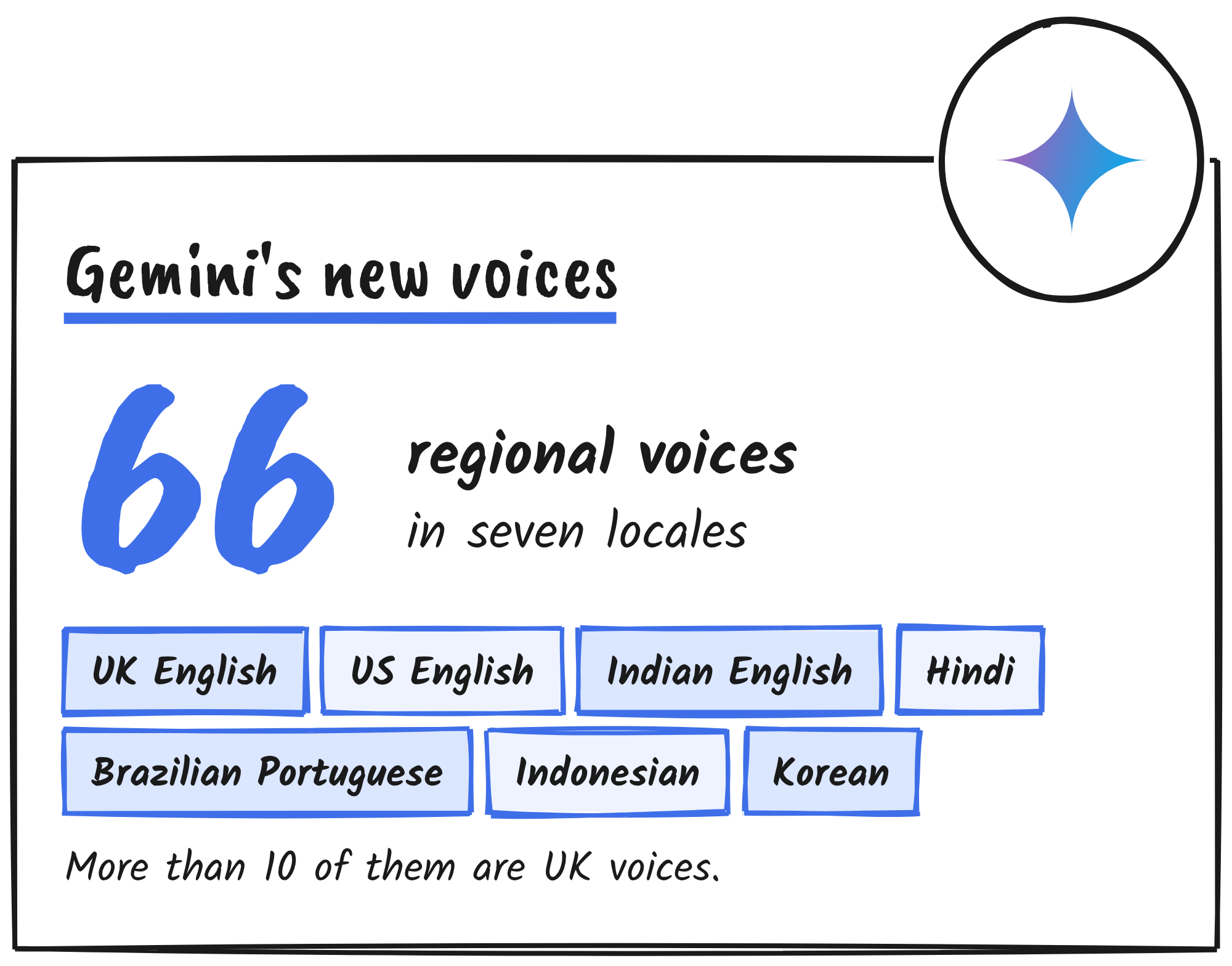
Reports of the launch don’t name the voices in the other six locales or say how the 66 split between locales.
How to pick one
Gemini’s Help page puts the voice setting in the mobile app. Open the menu, tap your profile picture, then Settings and Gemini’s Voice, tap a name to hear it, and tap Confirm. 9to5Google and the Press Association add a second route, the three-dot menu inside Gemini Live.
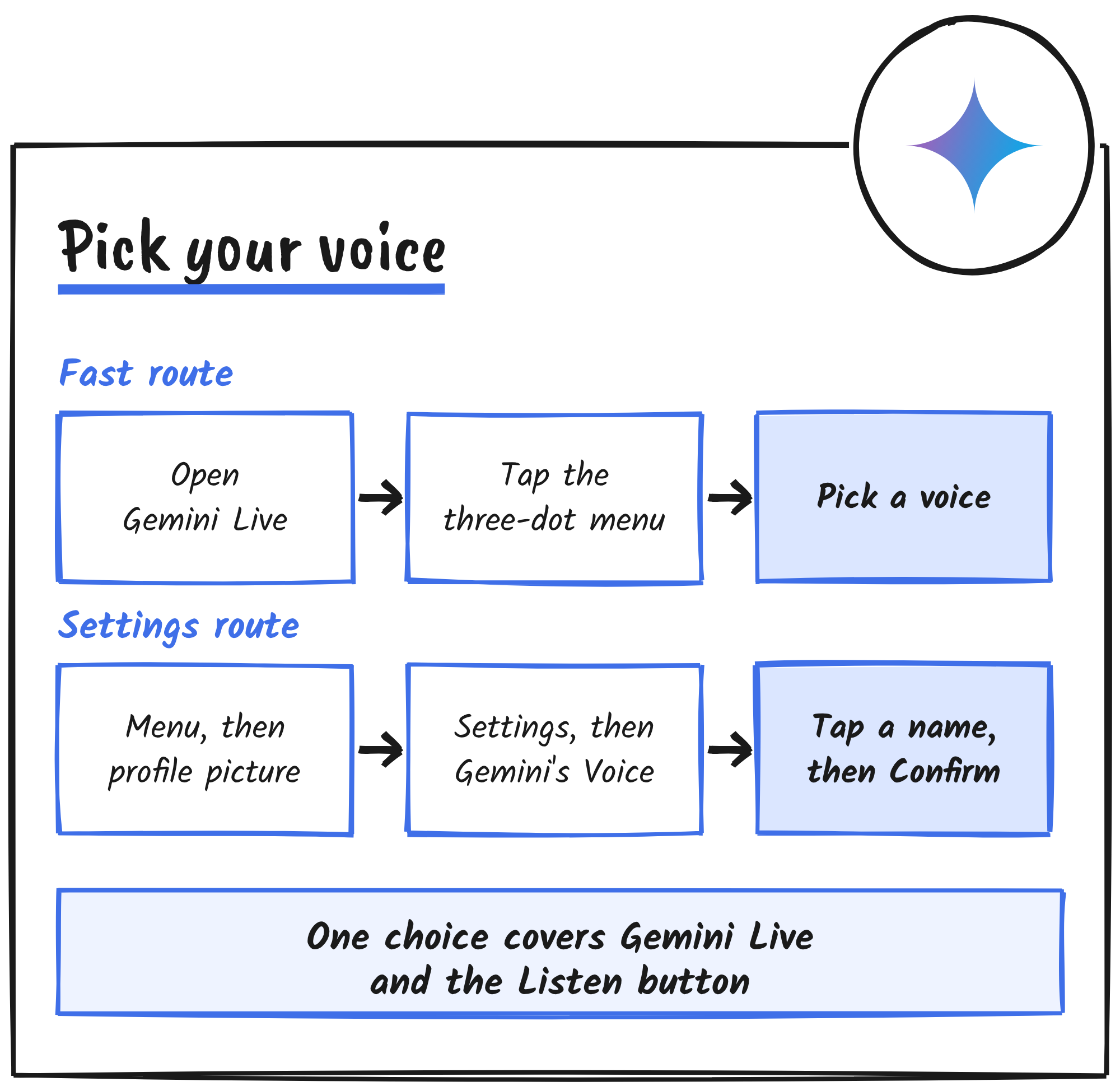
Google’s page says the choice applies to every Gemini Apps feature that speaks, including Gemini Live and the Listen button next to a response. It also says the number of voices varies by language, and that the option isn’t available in some languages.
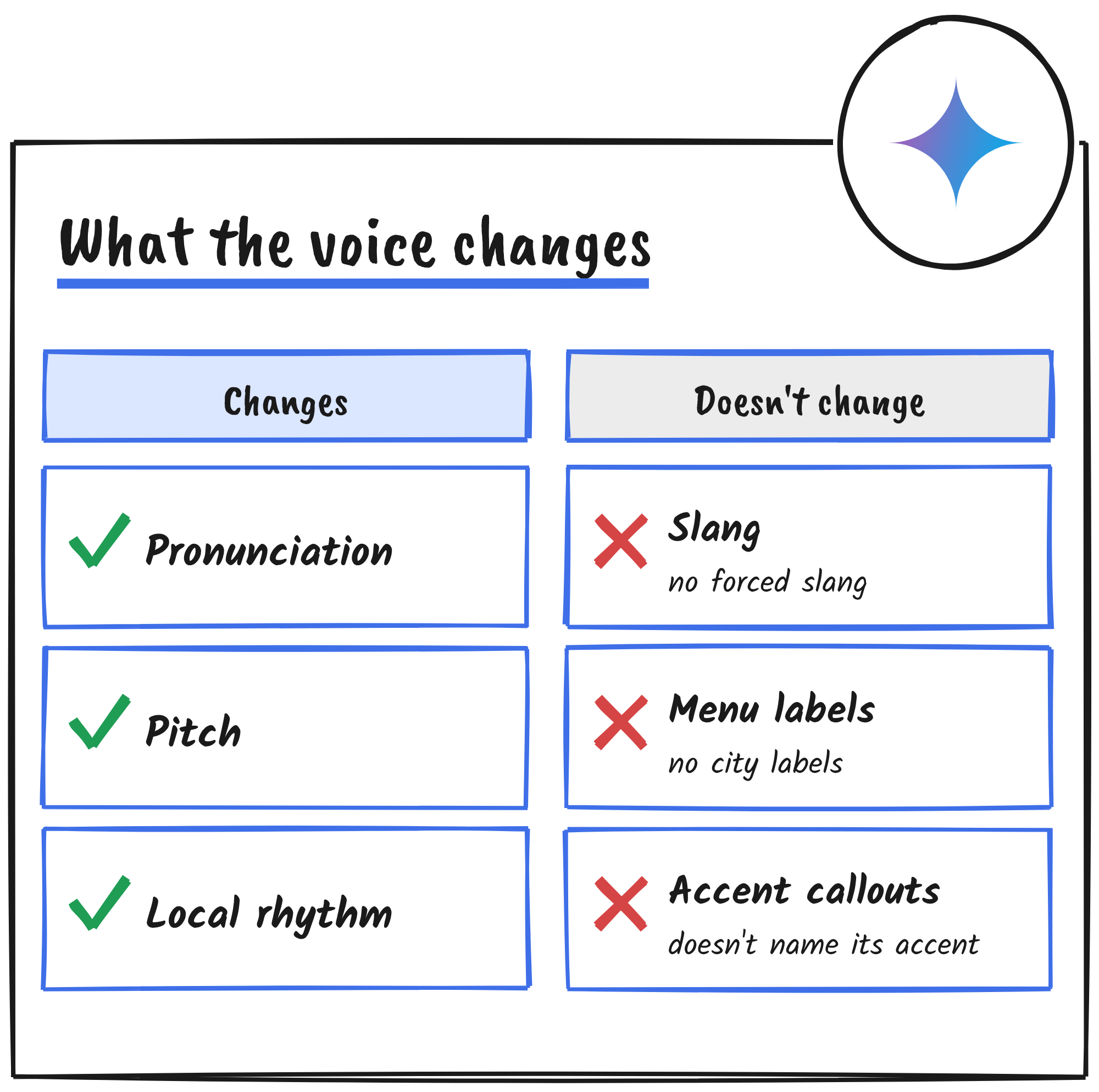
The menu doesn’t label voices by city or region, 9to5Google reports, and Gemini isn’t programmed to say which accent it’s using if you ask. Google suggests asking about local food, culture or sport, such as where to find ingredients for a Scouse stew, to bring out the “warmth and rhythm” of each voice.
What the voices change, and what they don’t
Google says the voices are tuned for pronunciation, pitch and everyday local rhythm, and that it worked with native speakers so they sound like “authentic” local speech rather than exaggerated stereotypes. Gemini won’t fill its replies with forced street slang, 9to5Google reports.
GB News describes Gemini as one that “will respond in the same accent” as the person speaking to it. That isn’t what Google’s Help page describes: you choose a voice by tapping its name. Nothing in Google’s page or the other reports says Gemini detects a user’s accent.
Six months from preview to launch
Josh Woodward, Google’s VP for Labs, the Gemini app and AI Studio, said in the 19 May I/O post that Google would “soon” start offering regional dialects. Google’s 20 May roundup of 100 I/O announcements said they would roll out “in the coming weeks”. They arrived on 16 November. Before the launch, 9to5Google’s 27 May list of new Gemini Live voices labelled one of its eight, Capella, as a British accent.
The Press Association’s report pairs the launch with a warning from Abertay University researchers last year that scammers could use tailored AI dialects to “appear more human and deceive people”. Dr Neil Kirk, a psychologist and lecturer who led the study, said: “This is a serious concern because AI-augmented voices could be used in scams like phishing or fraud, especially when they convincingly imitate regional accents and dialects.” The report presents the study as a general warning about AI voice technology, not a finding about Gemini.
Discover more from Sulat AI & Tech News
Subscribe to get the latest posts sent to your email.