Cambridge Dictionary has named “human” its 2026 Word of the Year, announcing the pick on its dictionary blog on 18 November. The dictionary says the adjective now also marks something as created by or typical of people rather than AI.
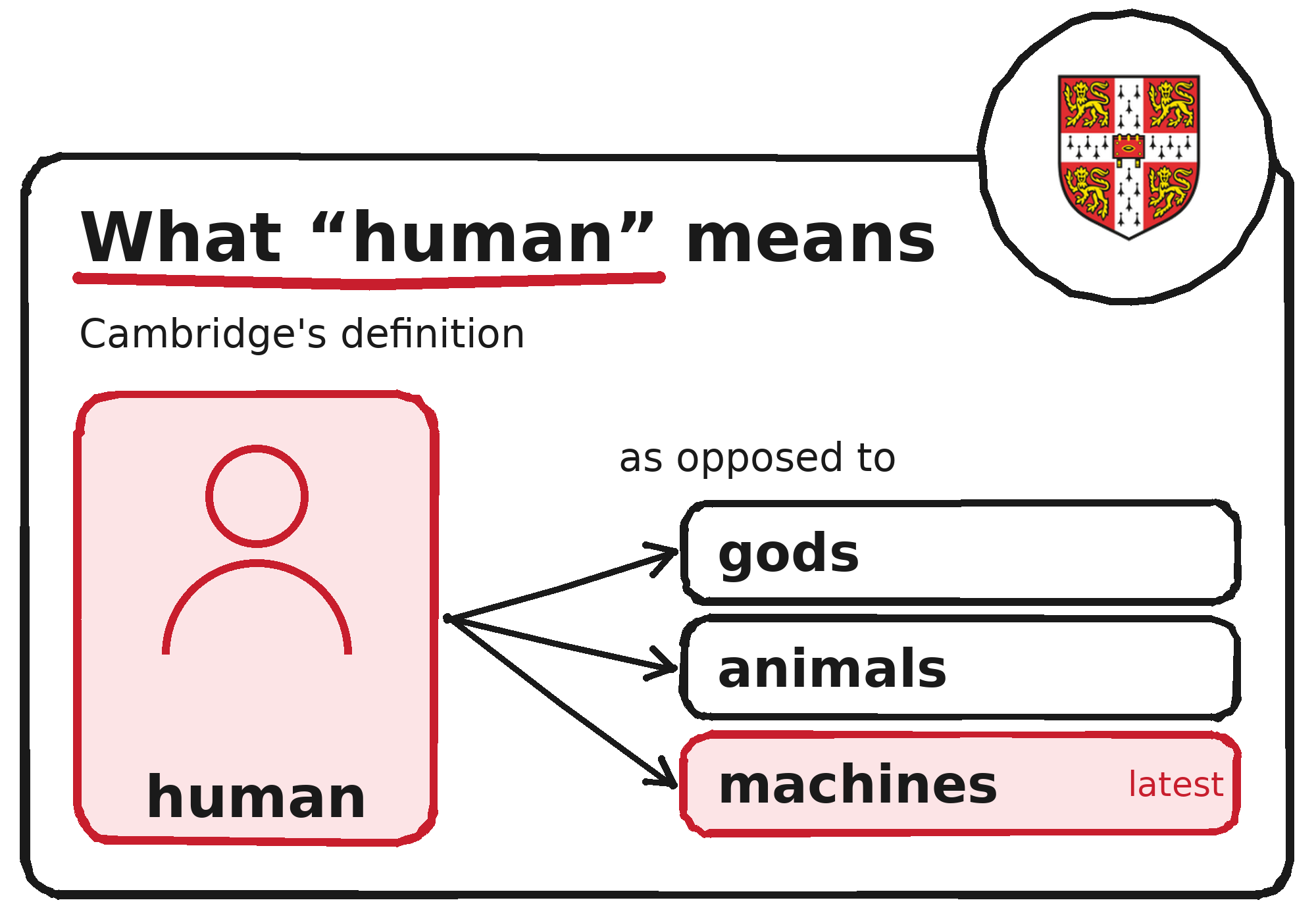
Cambridge’s dictionary entry defines the adjective as “having the qualities, faults, and feelings that people have, as opposed to gods, animals, or machines”. AP reports the word has been in use since the 1450s.
What Cambridge says has changed
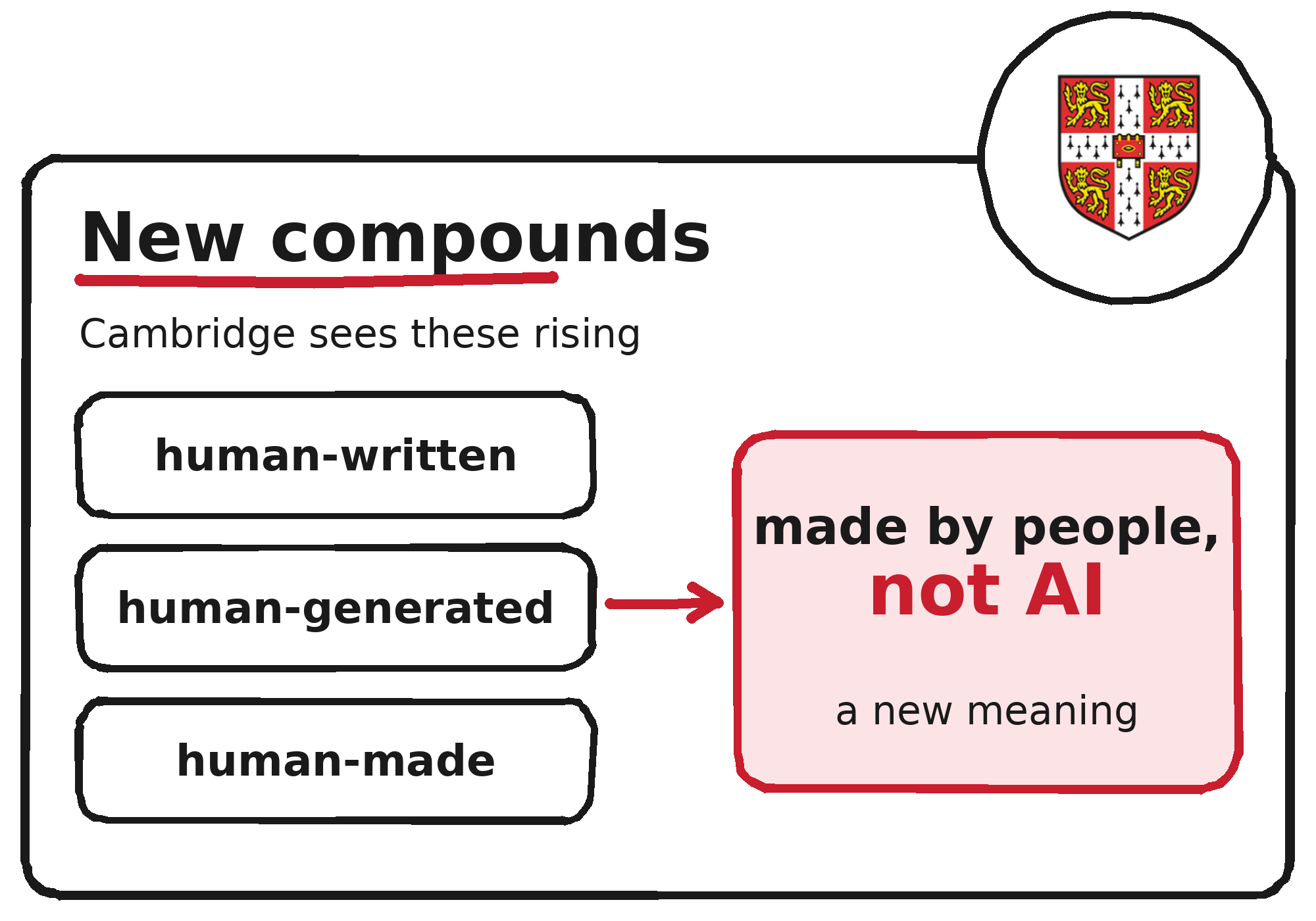
Cambridge says the adjective has long set people apart from animals and gods and, more recently, machines. It’s now increasingly seen in compounds such as human-written, human-generated and human-made, which Cambridge says denote that something is created by or typical of people as opposed to AI.
“In a marketplace saturated with AI content, humans have started to become a premium that is code for intention, care, judgment, and the imperfections that make something feel real,” Cambridge says, according to Rappler, which quotes the announcement.
Colin McIntosh of Cambridge Dictionary says the pick rests on its analysis of language data, internet trends and search habits. “Artificial intelligence has been a growing presence in society for years now, but this year it seemed to be everywhere,” he says. “In many areas of life this has led to a re-evaluation of what it means to be human, as a counterbalance to AI.”
What else Cambridge cited
Per CNN, Cambridge cited public interventions by AI pioneer and Nobel laureate Geoffrey Hinton, who said: “We’re creating alien beings. I’m willing to be selfish and choose humans.” It also highlighted AI deepfakes that can simulate humans, and the response from celebrities such as Matthew McConaughey and Taylor Swift, who CNN says have trademarked images of themselves and clips of their voices.
The other contenders
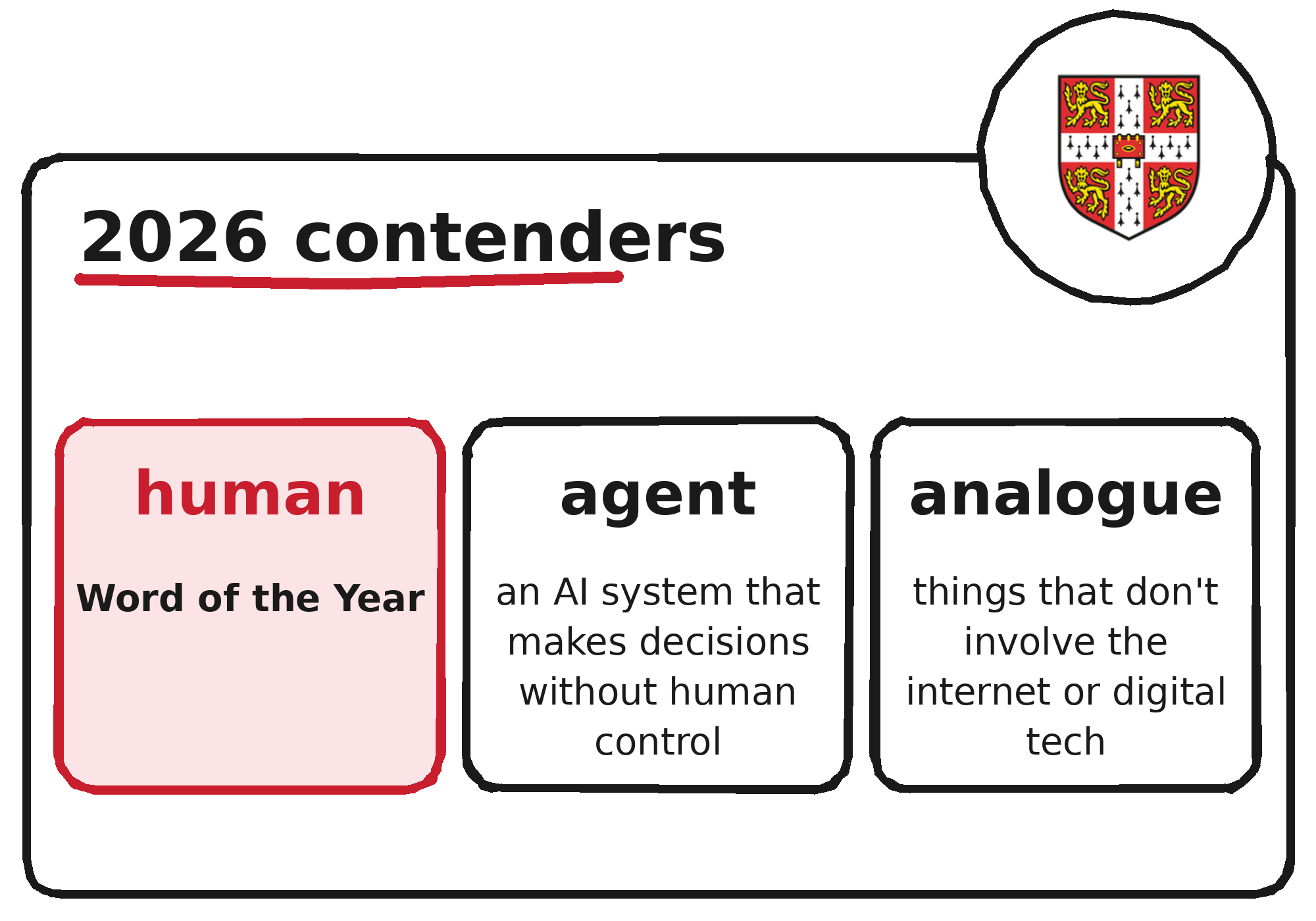
AP reports that “agent”, an AI system that can make decisions and operate without human control, and “analogue”, for experiences or objects that don’t involve the internet or digital technology, were also contenders for 2026.
AI has featured in Cambridge’s picks before. AP notes it chose “hallucinate” in 2023, a reference to AI’s tendency to fabricate information, and the New York Times reports last year’s pick was “parasocial”.
Cambridge also announced new dictionary entries this year, CNN reports, including “air jail”, a dog-training method that involves holding an animal off the ground; “aura farming”, doing things to show a personality people admire; and “looksmaxxing”, making yourself as physically attractive as possible.
Discover more from Sulat AI & Tech News
Subscribe to get the latest posts sent to your email.