Microsoft has introduced MAI Licensed Weights, a programme that lets organisations customise its MAI models and run them in their own Azure environments. Microsoft AI announced it on 17 November in the US, which was 18 November in New Zealand, and says it’s coming soon through Microsoft’s Frontier Company engagements. The weights are the numbers a model learns in training.
Microsoft AI framed it on X as something customers asked for. The Information reports that Microsoft unveiled a suite of new AI models at Ignite and will license their weights so customers can customise them.
We’ve heard again and again that enterprises don’t want to pour all their valuable IP, data and tacit knowledge into someone else’s model. They want control of their own weights.
— Microsoft AI (@MicrosoftAI) November 17, 2026
What customers get
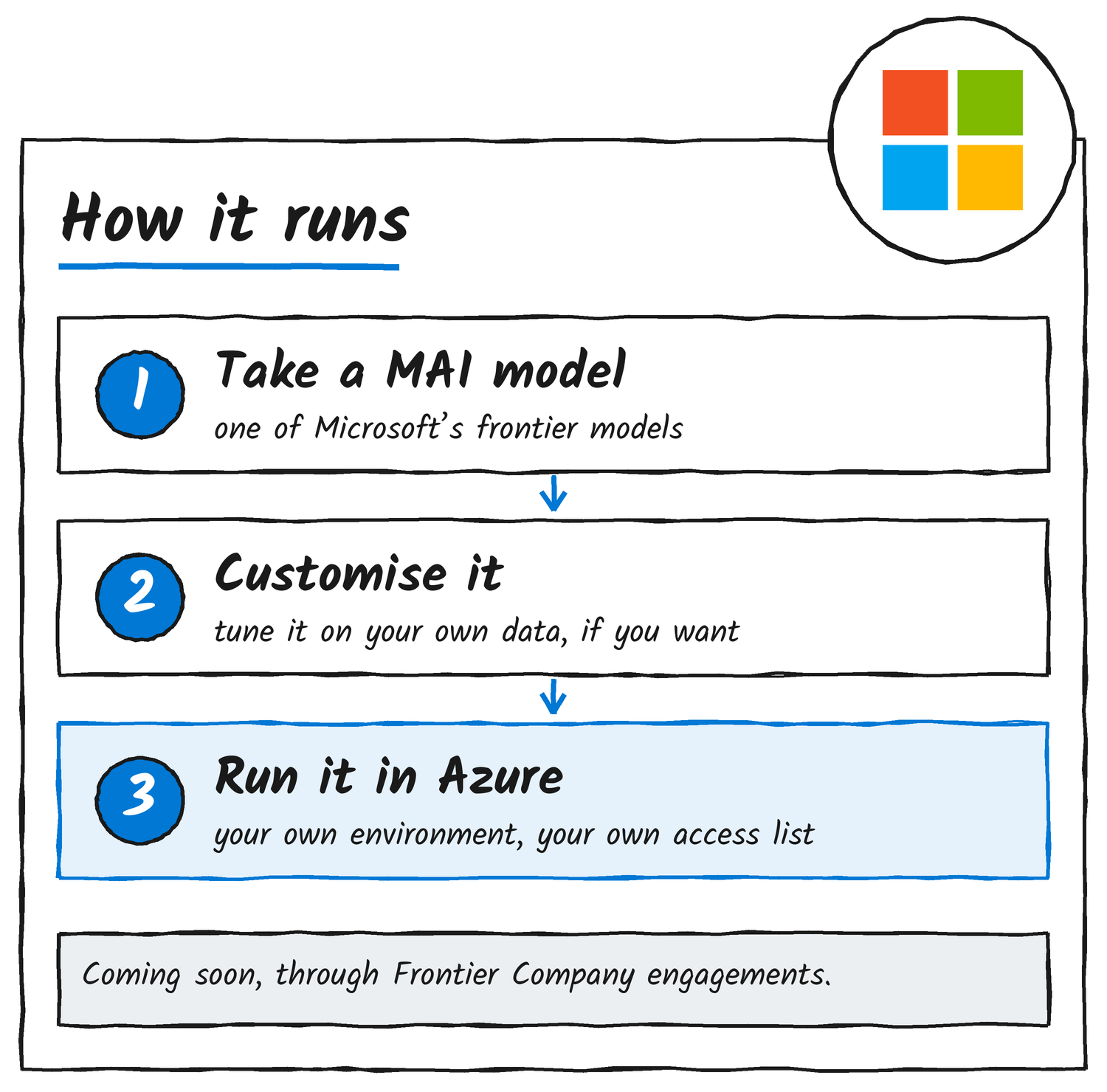
Microsoft says a customer’s data and adaptations remain theirs, and that Microsoft uses them to train its own models only with the customer’s express agreement. Customers also control how the models are deployed, who can access them and when they’re upgraded, which Microsoft says lets them move at their own pace.
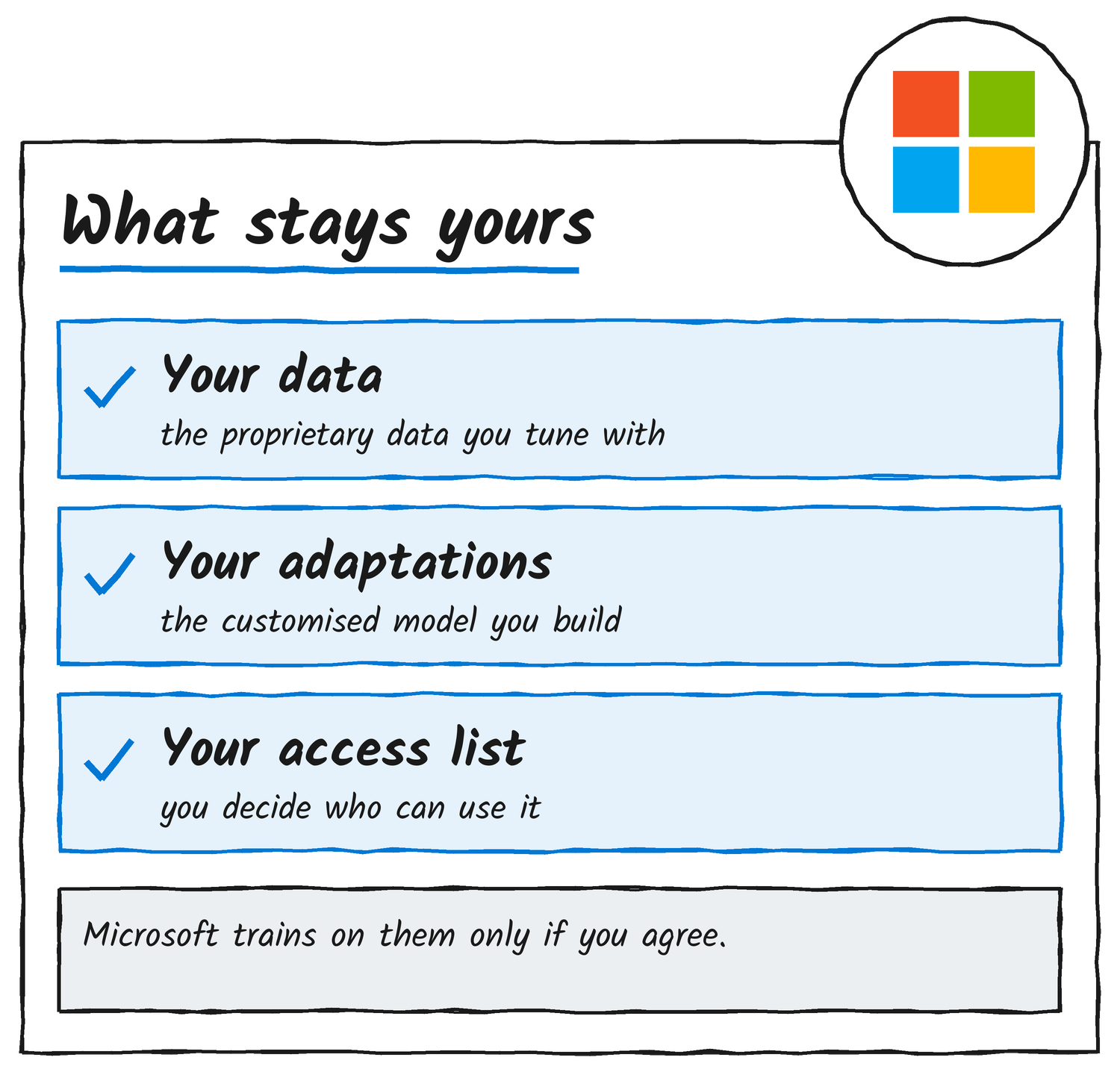
Microsoft’s Ignite post describes three steps: take a frontier MAI model, customise it on your own data if you want to, and run it in your own Azure environment. Axios reports that the weights have to be deployed within Azure. Microsoft’s Ignite blog says its trusted customers will get access to the weights, and Microsoft AI’s post says that happens through Frontier Company engagements.
What Microsoft says customers have done
Microsoft cites three customers, all tuning its Code 2 or Code 2 Flash coding models, which it released the same day. AT&T customised both on 5G network operations analytics. Microsoft says the customised model beat GPT-6.1 Sol on standard tasks at one-fiftieth of the cost, and reached frontier-level performance on harder ones at a significantly lower cost.
Woven by Toyota fine-tuned Code 2 Flash on historical MISRA coding-standard fixes. Microsoft says it produced ready-to-merge fixes in 44% of the cases where Woven’s existing frontier models needed a human, at less than a tenth of the cost. Alaska Airlines tuned Code 2 Flash to classify aircraft maintenance reports, and Microsoft says accuracy rose from 81.2% to 91.1%. Qualified employees keep responsibility for final decisions, Microsoft adds.
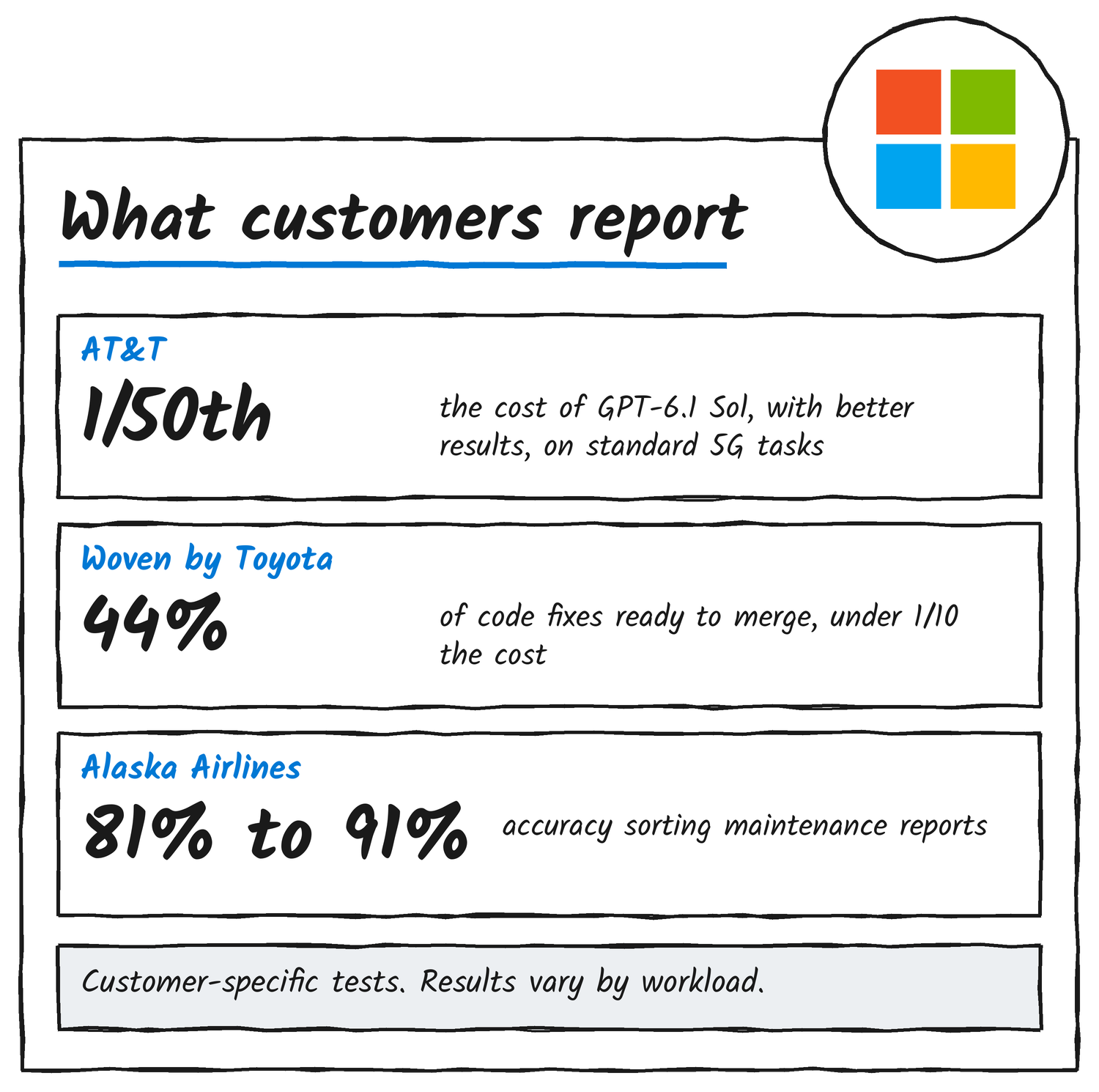
Microsoft’s footnote says the results come from customer-specific evaluations of models adapted for particular tasks, and that performance and cost advantages vary by workload, model configuration and evaluation method. The post doesn’t list the test sets or the dollar costs behind the fractions.
Microsoft hasn’t listed which MAI models the programme covers, what the licence costs or when it starts beyond “coming soon”. Companies that want access are told to contact their Microsoft account team.
Discover more from Sulat AI & Tech News
Subscribe to get the latest posts sent to your email.