ANZ New Zealand, ASB, BNZ and Westpac NZ have joined BioCatch Trust New Zealand, a network that tells the sending bank in real time when the account a customer is paying looks suspicious, BioCatch says. The sending bank can then suspend or investigate the payment before any money is transferred.
BioCatch, which sells behavioural-biometrics fraud detection to banks, announced the network in Auckland on 18 November, and RNZ’s Susan Edmunds reported the launch. The network needs “several months” to get running, and the release gives no go-live date.
How the network works
Trust looks at the account receiving the money, not the customer sending it. BioCatch says the network combines behavioural and fraud risk signals with “selected payment and account data elements”. BioCatch’s wider platform collects more than 3,000 anonymised data points per session, such as keystroke and mouse activity and touchscreen behaviour.
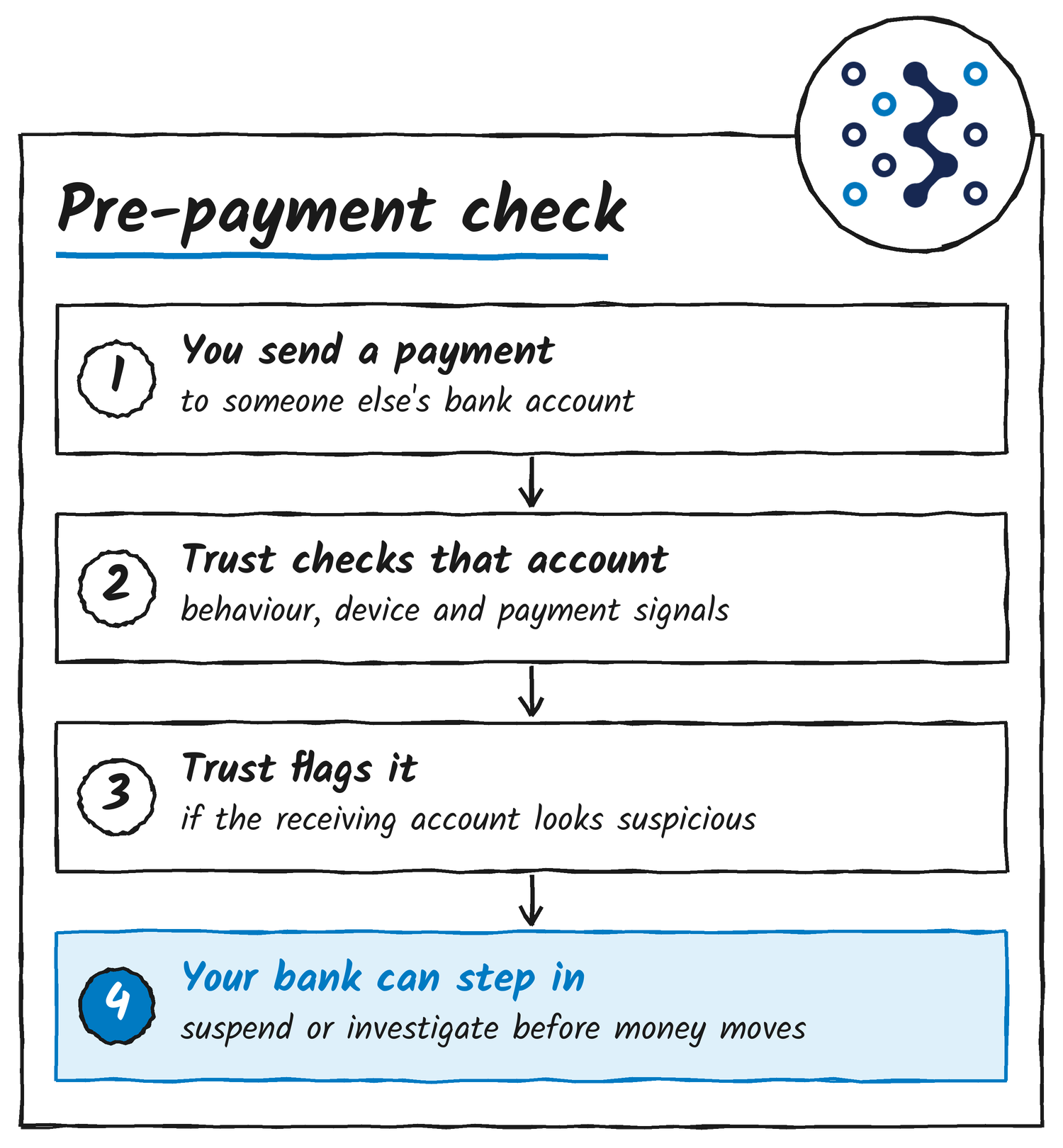
The target is scams where the victim is manipulated outside the banking session, such as investment, romance and email account compromise scams. The customer sends the payment themselves, so the sending bank sees a normal session. The money usually lands in a mule account, which the New Zealand Banking Association describes as a domestic account scammers use to move stolen funds on, whether or not its owner knows. BioCatch chief executive Gadi Mazor said in 2024 that scam payments “are nearly always transferred to mule accounts”.
BioCatch says it doesn’t collect or receive direct customer identifiers, such as names or unmasked account numbers, and that the network works in line with the Privacy Act.
What Trust Australia reports
New Zealand is the third Trust network. BioCatch launched Trust Australia in November 2024, with ANZ, CBA, NAB, Suncorp Bank and Westpac as the founding banks, and Trust Argentina in May 2025. The release says Trust Australia assessed more than 1.3 billion transactions in 2026 to the end of September and has “uniquely detected as much as 30%” of previously missed social engineering scams. It puts the fraudulent attempts the network analysed in that time at more than NZ$730 million; FStech quotes BioCatch’s Australian report as saying more than AU$600 million.
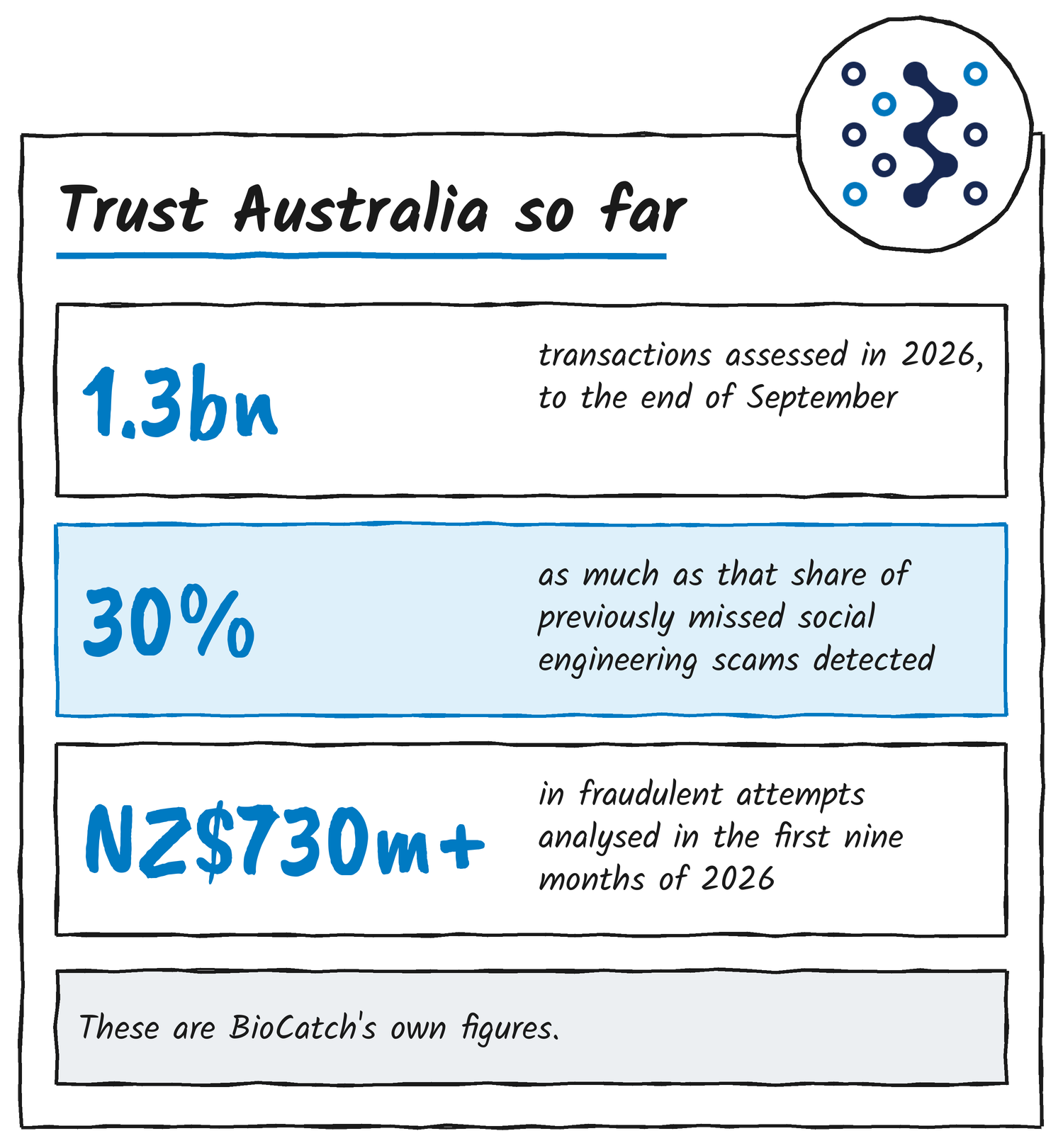
That report covers 11 Australian banks and found scam cases up 32% year on year, FStech reports, with participating institutions recording a 25% fall in remote access fraud sessions. Every figure here is BioCatch’s, and the release cites no independent evaluation.
What New Zealand banks already run
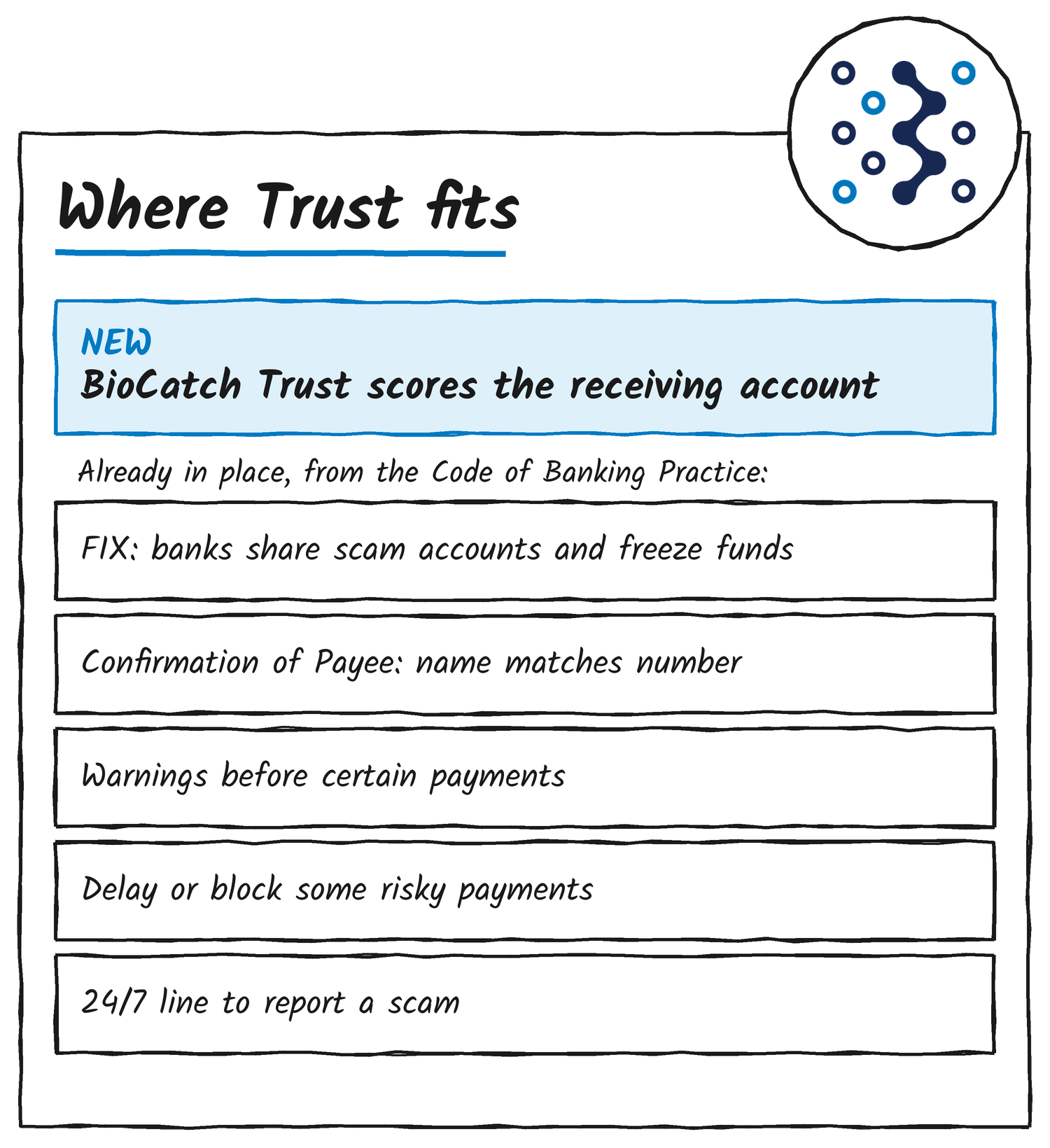
The banks’ scam-prevention commitments in the Code of Banking Practice took effect on 30 November 2025. They cover pre-transaction warnings, Confirmation of Payee, a response to high-risk transactions that can include delaying or blocking them, a 24/7 reporting channel, and sharing scammer account details with other banks so funds can be frozen. That last item is the Fraud Intelligence Exchange (FIX), run by GetVerified, a company the retail banks set up. The Banking Association said on 15 June that FIX had recovered about NZ$10 million for scam victims in nine months and identified nearly 5,000 mule accounts.
The Ministry of Business, Innovation and Employment puts gross reported scam losses at NZ$265 million in the year to October 2025. A Global Anti-Scam Alliance survey of 1,180 New Zealand adults, hosted by Netsafe, extrapolates to about NZ$503 million, within a range of NZ$256 million to NZ$751 million. The first figure counts reported losses; the second extrapolates from survey answers.
What the banks and BioCatch say
ANZ NZ head of customer protection Alan Thomsen said the technology “enhances our ability to identify and stop scam transactions before the payment is processed”. Westpac NZ’s Peter Barnes said “big tech platforms continue to drag their heels” on protecting their users while banks work together. ASB’s Brodie Macdonald and BNZ’s Margaret Miller also gave statements in the release.
The release names only the four founding banks and gives no go-live date. It doesn’t say whether Trust New Zealand will connect to FIX, and the sending bank decides what to do with a flag. BioCatch says the network gets stronger with each bank that joins.
Discover more from Sulat AI & Tech News
Subscribe to get the latest posts sent to your email.