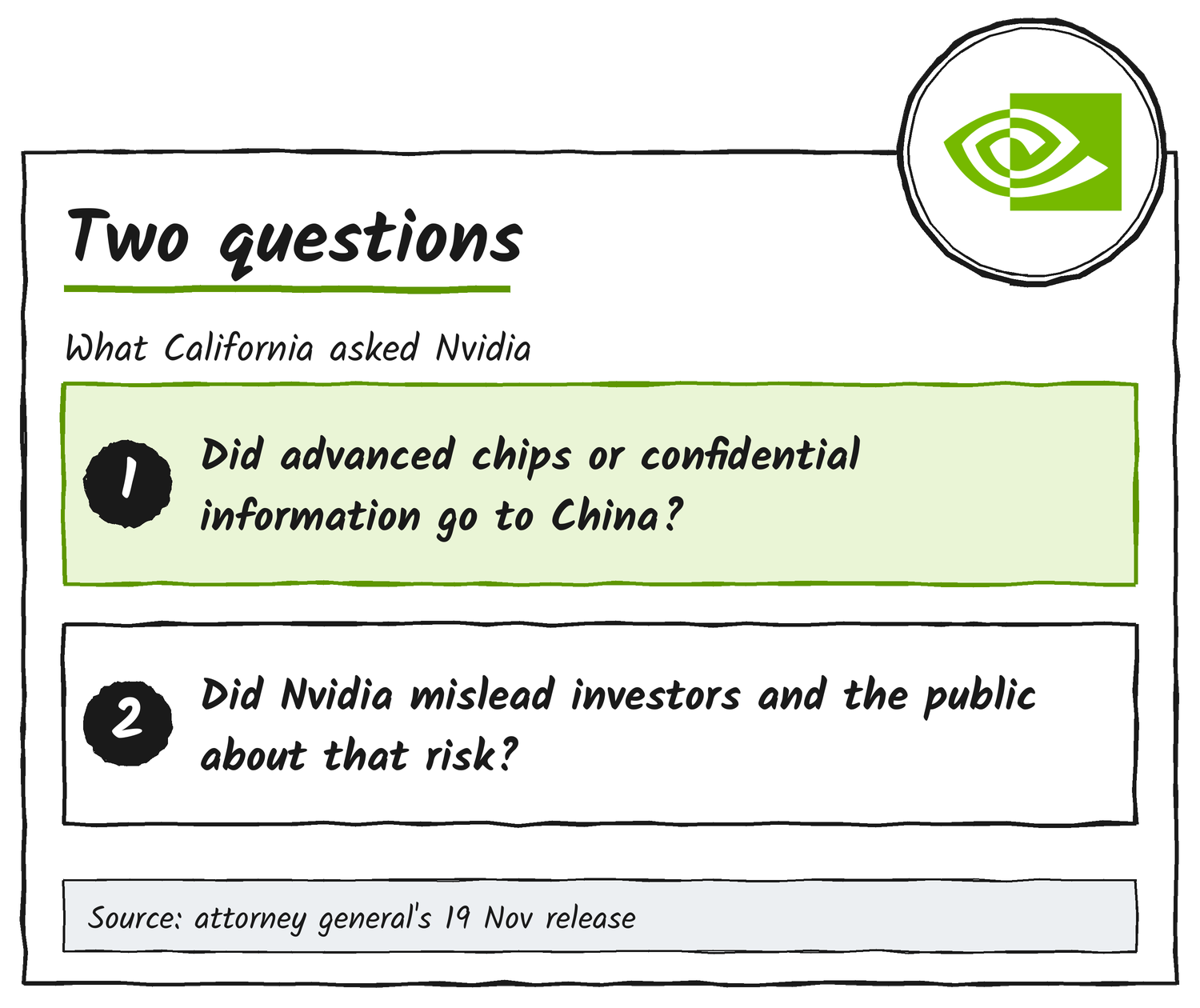
California Attorney General Rob Bonta served Nvidia with an investigative subpoena on Thursday 19 November US time, which was 20 November in New Zealand. His office is asking whether Nvidia’s advanced chips or confidential information may have gone to China, and whether Nvidia misled investors and the public about that risk, according to his press release.
The release ties the subpoena to the news of former chief executive Jensen Huang’s affair with an alleged Chinese spy. It says the answers will help the California Department of Justice judge whether Nvidia’s actions broke California law. A subpoena is a demand for information. It isn’t a lawsuit, and the release makes no finding against Nvidia or Huang.
What Bonta said
Bonta said the conduct of Nvidia and its former CEO “raises bright red flags, including about the ways in which the company may have misled investors”. He added: “Nvidia is in a messy, transnational situation but the underlying principle of our corporate securities law is clear: Companies cannot mislead their investors.” He told Politico: “We’re specifically investigating whether Nvidia’s advanced chips or their confidential information may have gone to China and whether Nvidia misled investors and the public.”
The release doesn’t cite a statute, list the documents requested or give Nvidia a deadline. It doesn’t say whether any other company got a subpoena. I couldn’t find a public Nvidia statement on it.
How the scandal got here
Huang admitted the affair on 8 November, DatacenterDynamics reports, after the New York Times said American officials had concluded a Chinese intelligence asset had built a close relationship with him. The woman, Alice Huang, isn’t related to him. She was an executive at Megaspeed, a Singapore-based company that has bought more than US$2 billion of Nvidia hardware and is under investigation over suspected diversion of Nvidia chips to China. Megaspeed denies involvement in chip smuggling and says Alice Huang left in 2025. China has denied the spying allegation.
Nvidia’s board accepted Huang’s resignation on 11 November and announced it the next day, which I covered at the time. Finance chief Colette Kress is interim CEO.
Who else is looking
California’s subpoena is one of several inquiries. The House Foreign Affairs, Intelligence and China Select committees said on 17 November that Huang will give a transcribed interview on 1 December and Nvidia general counsel Tim Teter on 2 December. The Wall Street Journal reported this week that the SEC is examining whether Nvidia misled investors, and AnewZ reports the Justice Department has opened a separate probe into possible export-control breaches. Nvidia’s independent directors retained Joon Kim and the law firm Wachtell, Lipton, Rosen & Katz on 10 November for their own investigation. Shareholders filed a class action the same day, accusing Nvidia and Huang of failing to disclose the affair.

On Thursday the House Foreign Affairs Committee also released documents showing the US approved sales of nearly 880,000 chips to China, Semafor reports, including to firms seen as fronts for the Chinese military. An Nvidia spokesperson told The Hill that the licensing process “spanned more than half a year, with approvals subject to strict conditions and limited volumes.”
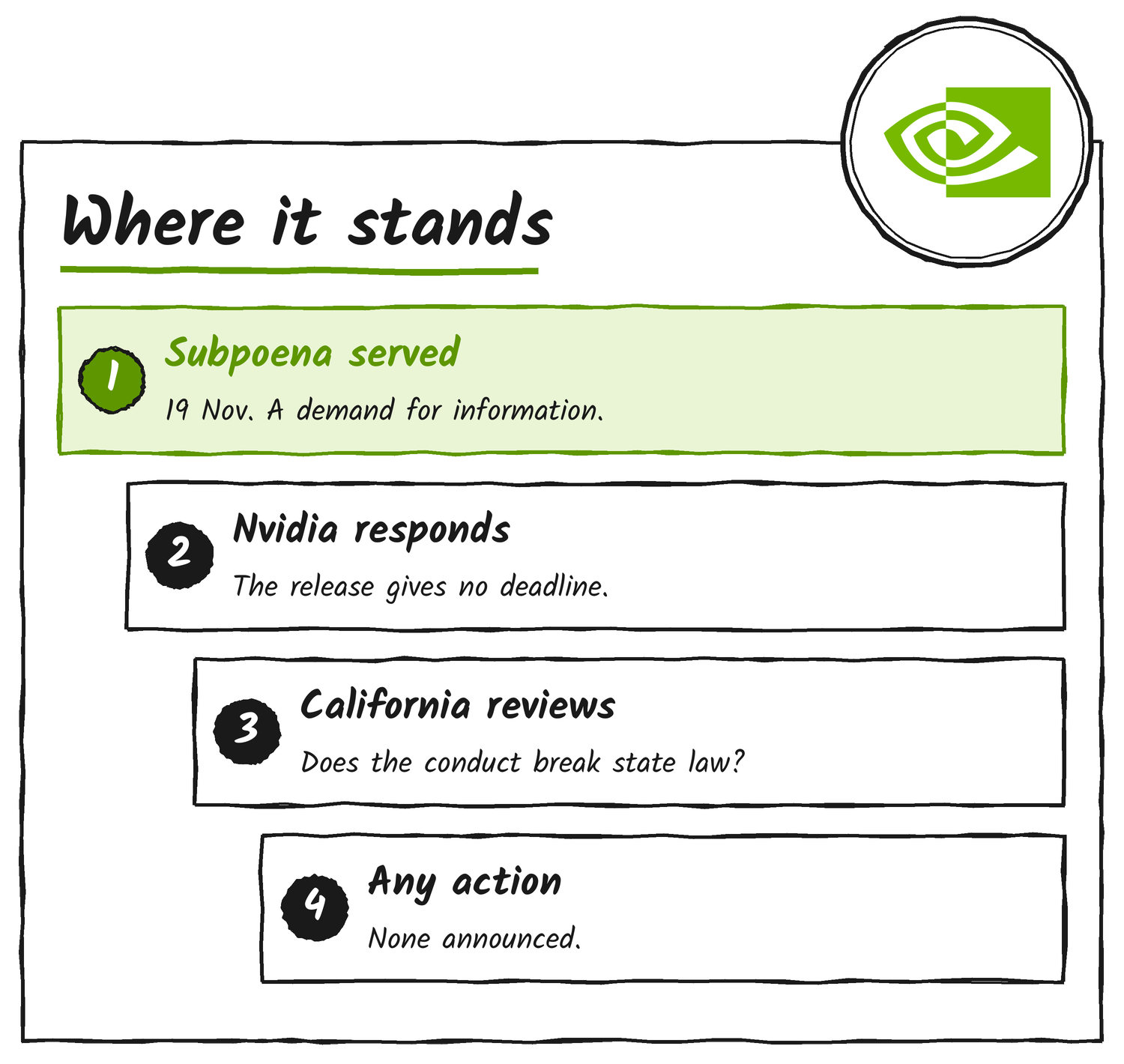
Nvidia’s board created a standing export-control committee on 17 November, before the subpoena arrived. California hasn’t said when it expects Nvidia’s documents or whether it will take any action.
Discover more from Sulat AI & Tech News
Subscribe to get the latest posts sent to your email.