
Plaid Inc., the Tokyo company behind the KARTE customer-data platform, says KARTE will stay offline until a phased restart in mid-January 2027. In its 20 November update, Plaid says it has finished counting what the attacker took: customer data from 570 companies, login keys for other services from 754 companies, and 125,065 email and contact records of its own.
This isn’t the US bank-linking company of the same name. Plaid is listed in Tokyo under the code 4165. KARTE records what visitors do on a company’s website or app and uses that, plus the company’s own member data, to tailor what each visitor sees. Plaid says KARTE has been on sale since March 2015.
What happened on 13 November
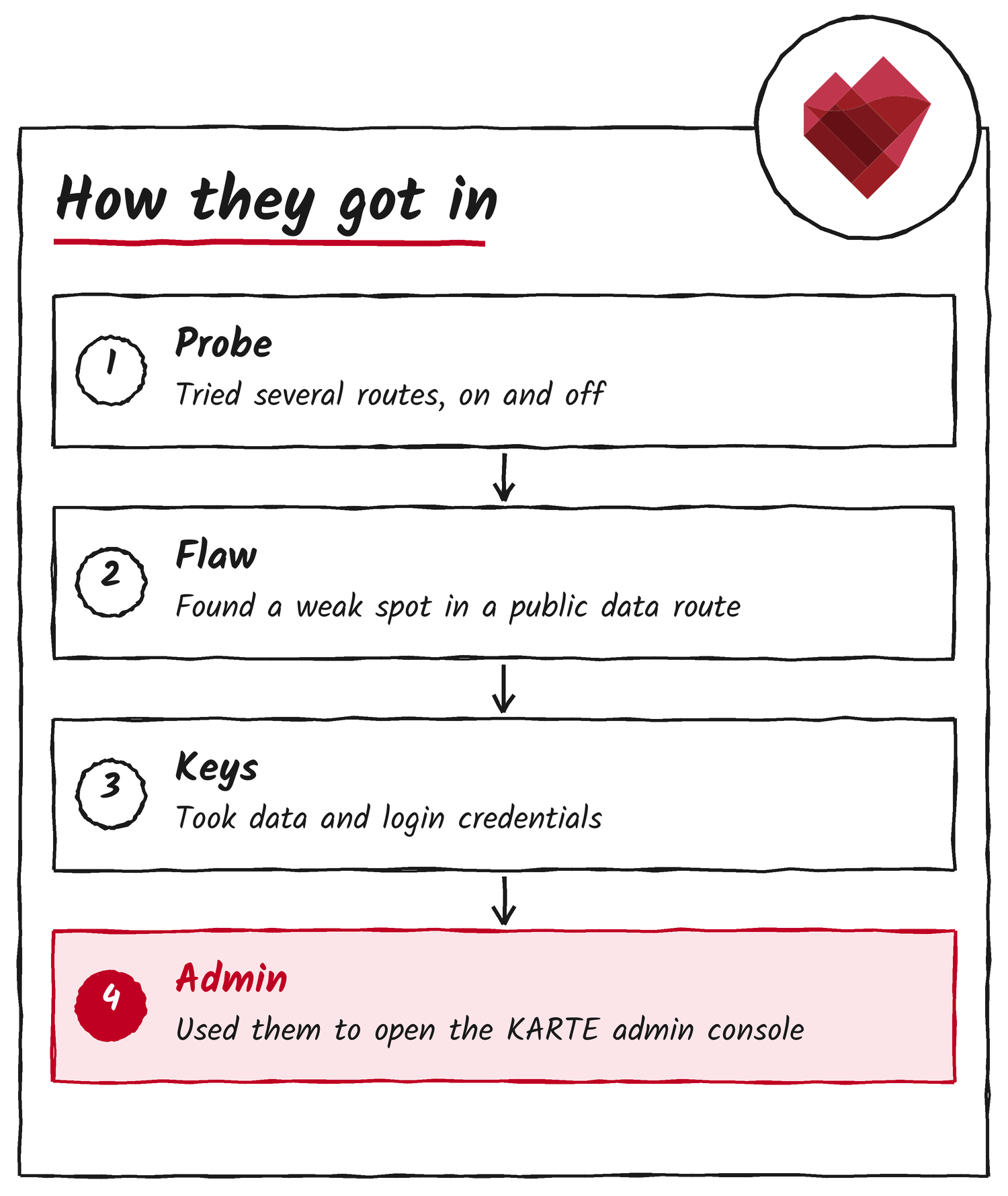
Plaid says a third party made on-and-off attempts against several routes in the early hours of 13 November, then exploited a flaw in some internal processing on a public route used to retrieve data. That gave the attacker some data, and the stolen credentials opened the KARTE admin console. Plaid’s 16 November notice says it detected the intrusion at 8:59am Japan time (12:59pm NZDT), started shutting servers down around 2:27pm and had contained the attack by about 3:23pm. It reports no new unauthorised access since. Plaid says it’s reporting to Japan’s Personal Information Protection Commission and consulting police. It hasn’t named the vulnerability.
Four kinds of company data
Plaid sorts the exposed company data into four groups, and one company can sit in several, so the counts don’t add up to a total. The first is data companies linked into KARTE, such as member records: 570 companies. The second is records of what visitors did, such as page views and button clicks: 487 companies. The third is cache data, a temporary store of visitor identifiers that KARTE uses to work quickly: up to 409 companies. The fourth is keys and passwords that connect KARTE to other services such as email senders: 754 companies, with no personal information in it.
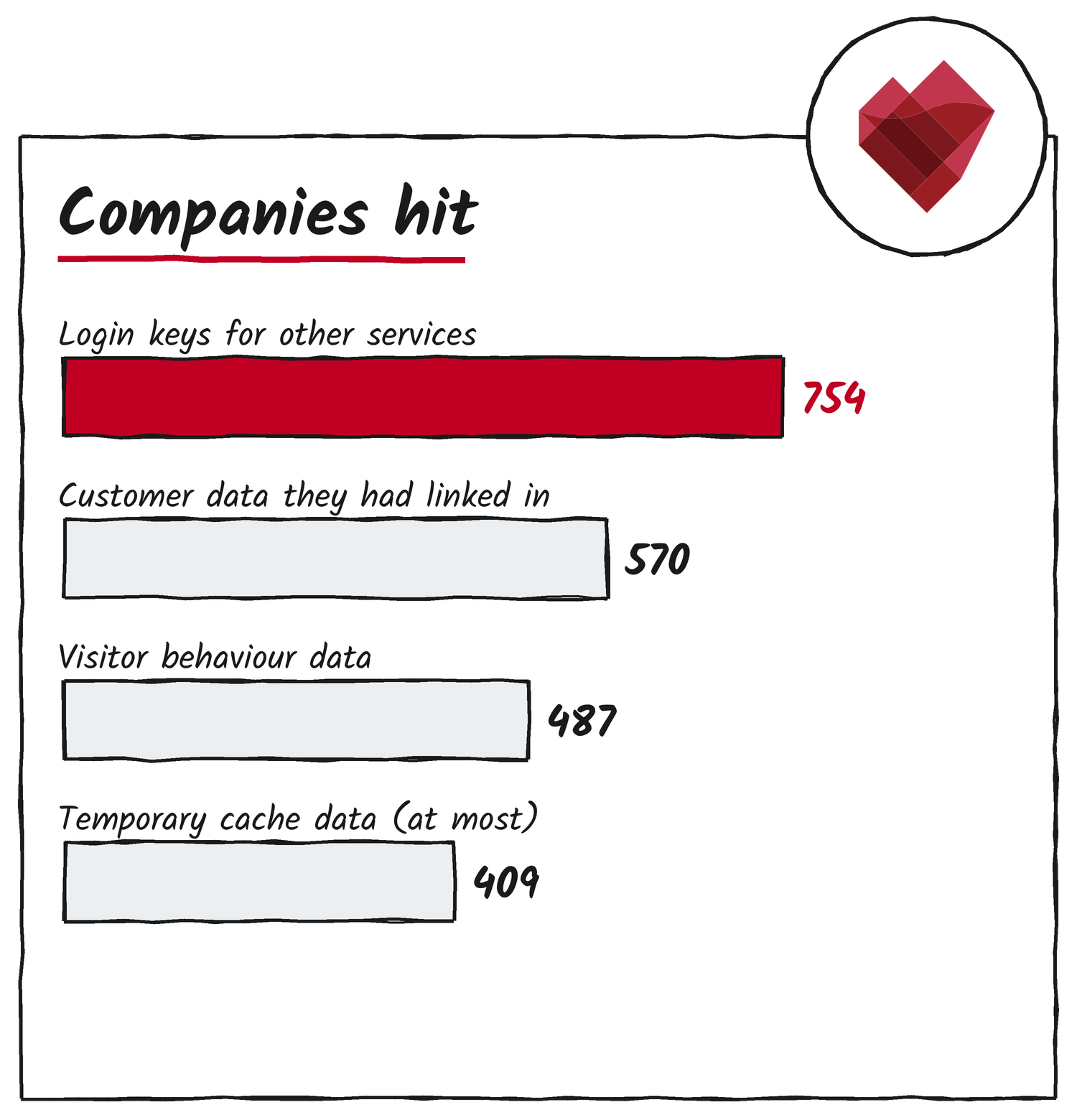
Cache entries are overwritten within a short time, so Plaid says it can’t tell which ones were read. It treats everything stored during the attack window as exposed, which is why 409 is a maximum. Companies start receiving detailed data on exactly what was affected from 24 November.
Plaid also lost data it holds for itself: 79,249 email addresses registered to KARTE accounts, and 45,816 sales and support contacts with names and email addresses. It says it will contact those people one by one, and has warned that the account addresses may receive phishing emails posing as Plaid.
Former customers’ data was still there
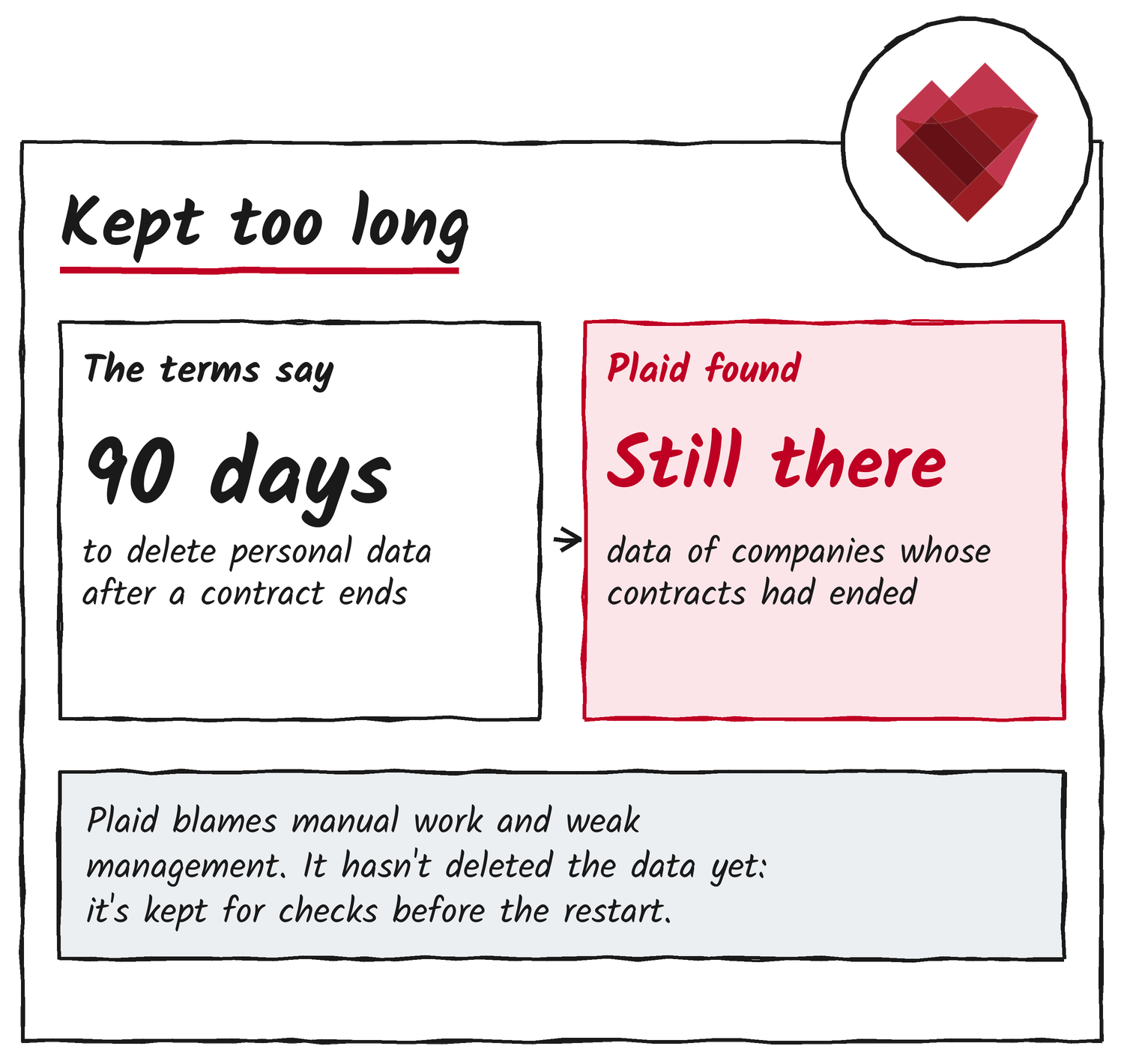
The 20 November notice corrects the 16 November one, which described the affected companies as current customers. Plaid now says the exposed data includes companies whose KARTE contracts have fully or partly ended, because information that should have been deleted after termination was kept through failures in manual operations and management. Plaid hasn’t deleted it yet, since it needs to preserve records for the checks before the restart. It says it will delete the data once those checks finish and will notify people. It hasn’t said how many of the 570 companies are former customers.
Japanese outlet Techno Edge reports that KARTE’s terms set 90 days for deleting personal data after a contract ends. It found at least four companies that said they had stopped using KARTE and still had data exposed, the earliest being Offers operator overflow, whose contract ended in November 2023. Plaid told Techno Edge that data had been kept beyond what its terms allow.
Customers are disclosing their own exposures
Techno Edge counted 72 organisations that had disclosed an effect by 1pm Japan time on 20 November. The largest so far are DHC with about 19.11 million records, JINS with up to about 18.29 million member accounts, Shimamura with about 7 million and MUFG Bank with about 6.5 million. As far as Techno Edge could confirm, the companies say card details and login passwords weren’t in the data.
Restart date, fees and the share price
Plaid says closing the entry point isn’t enough. It decided KARTE’s system structure also needs improving, so mid-January 2027 is the target for a phased restart, after detailed checks and design work and a review by an outside party. It will announce any change to that date. It won’t bill for November or for the shutdown period.
Plaid’s shares hit their daily limit down on 17 November and 18 November, Minkabu reports, falling 100 yen each day to 449 yen. Minkabu also reports Plaid is still assessing the effect on its December 2026 earnings, and the 20 November notice gives no figure.
Plaid says it will publish prevention measures, including for deleting data after contracts end, once its investigation is done.
Discover more from Sulat AI & Tech News
Subscribe to get the latest posts sent to your email.