
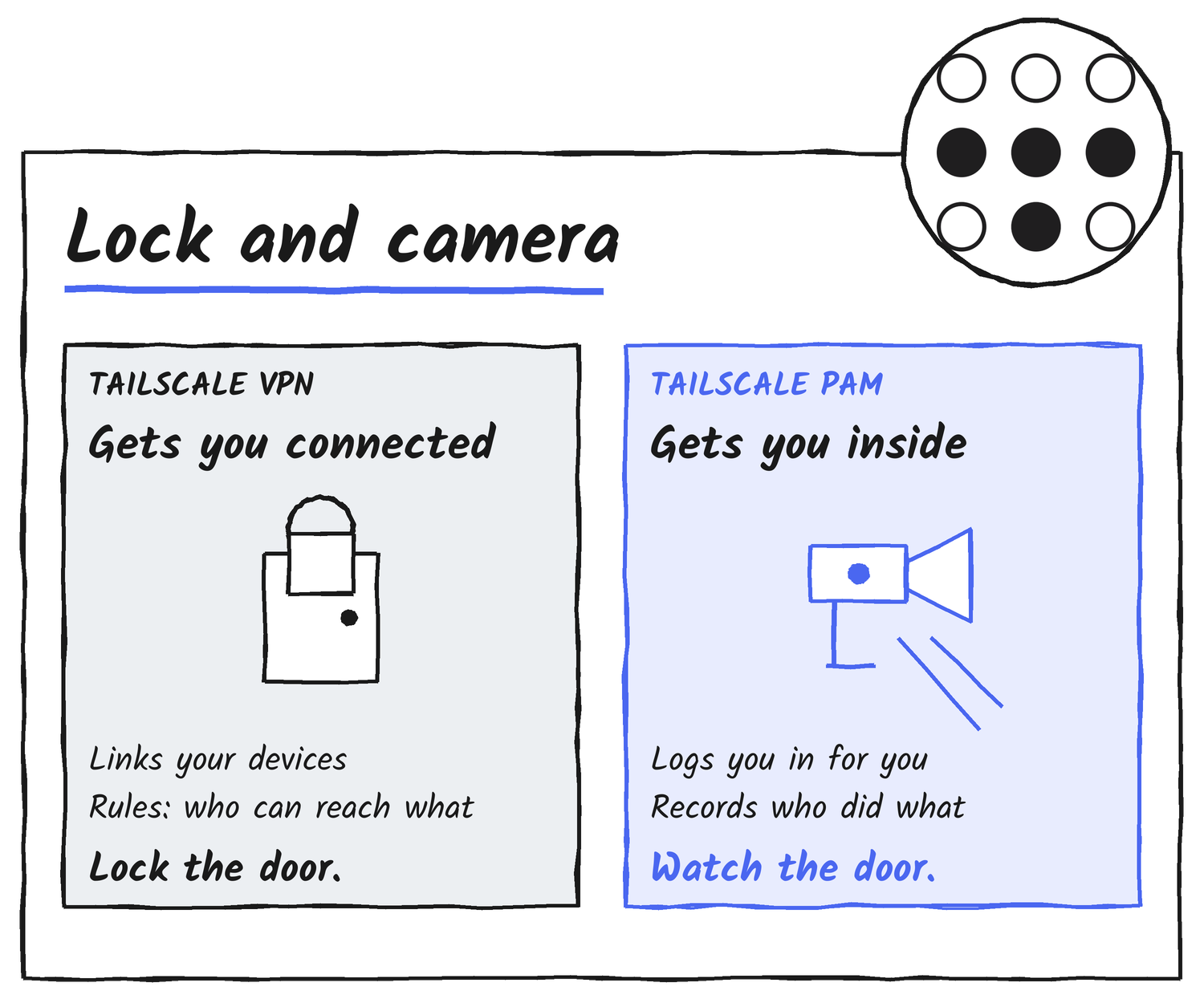
Tailscale says its VPN gets people connected, while Tailscale PAM, its privileged access management product, gets them into databases and servers without passing around passwords and keeps a record of who did what. The company posted the pitch on X on 20 November and linked a 26 October blog post by Tailscale writer Andrew Cunningham that explains where the two products divide.
Cunningham writes that the VPN secures connections between users, devices and apps, while PAM makes infrastructure access easier to set up and administer. His shorthand is that PAM is “the security camera for a door you’ve locked using Tailscale VPN”. Tailscale launched PAM in beta on 26 August, built from its earlier integration with Border0, and its docs still list the product as beta.
What the connector does
PAM needs at least one connector for every network you want to reach, Cunningham writes. A connector is software running on a device, server, container or virtual machine on the same network as the resource. Each user’s device talks to it over a WireGuard-encrypted tunnel, and the connector mediates access from there. Tailscale says you can run several connectors per network for redundancy, and that you don’t need the Tailscale client on every server you want to protect.
| Tailscale VPN | Tailscale PAM | |
|---|---|---|
| What it does | Secures connections between users, devices and apps | Controls and audits access to services such as SSH, databases, Kubernetes, remote desktop and web apps |
| How access is set | Grants and ACLs say which users and devices reach which | Grants tied to a service, with permissions inside it, such as read-only database access |
| Where it runs | Peer-to-peer mesh between devices | A connector inside your network brokers each session |
Cunningham says PAM checks every connection from every user each time it happens, and can limit what someone does inside a service. His example is letting a user add to part of a database while blocking them from deleting existing data. Tailscale’s docs show read-only rules for one or all databases, and SSH permissions that switch shell, command execution, SFTP and TCP forwarding on or off separately.
Credentials and records
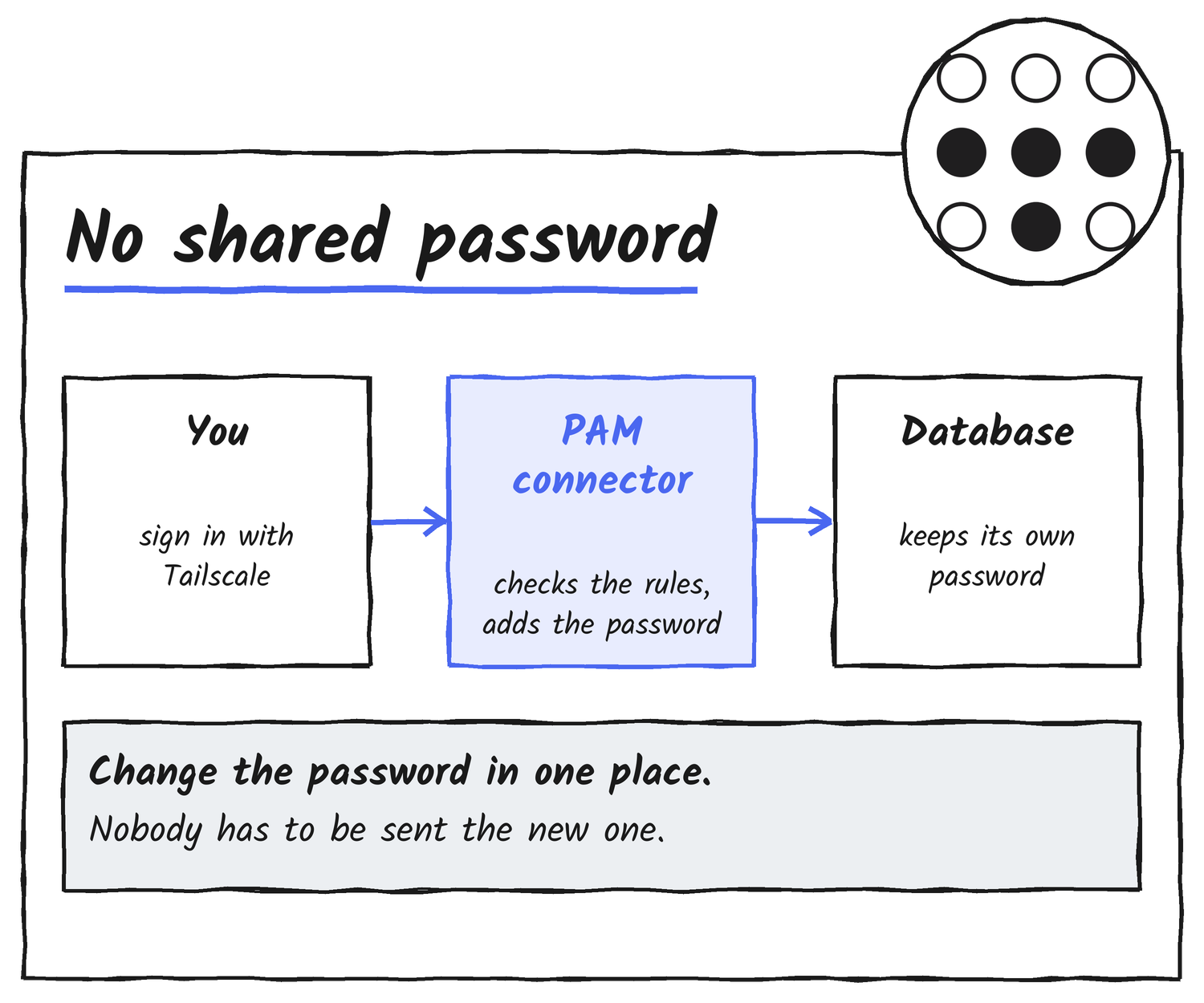
The connector can inject credentials and authentication tokens, so a database password doesn’t go to everyone who needs access. Tailscale says you can change the password in the admin console or an external secrets manager without redistributing it. People with the Tailscale client can open locally installed tools through the connector. Others can use a browser, though they still sign in, and a 29 September changelog entry says the browser client at my.tailscale.com reuses one sign-in across tabs.
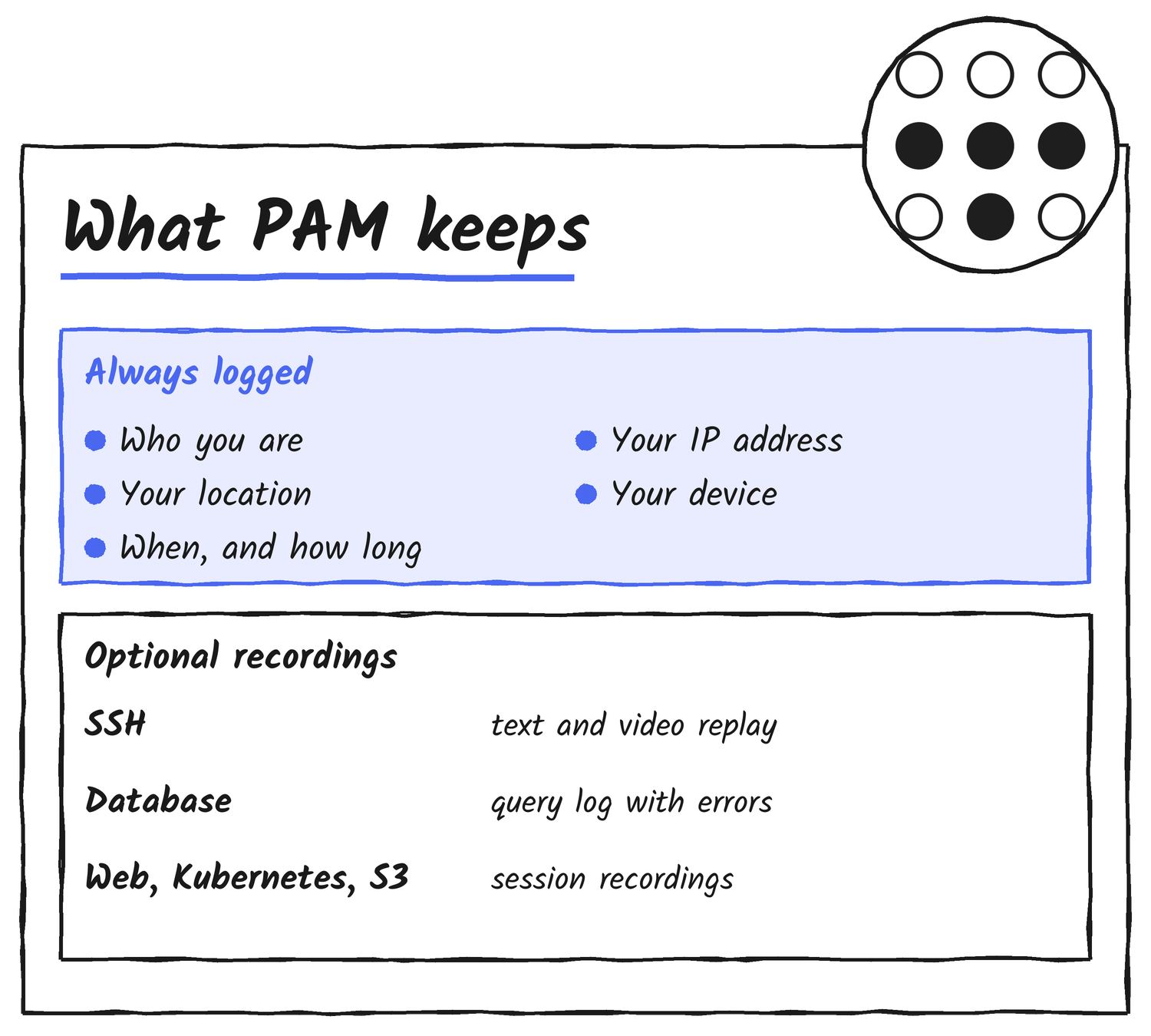
On records, Cunningham says PAM always logs the user’s identity, IP address, IP-derived location, device information, connection time and duration. Optional session recording goes further: a query log with error messages for databases, a text and video replay for SSH, and recordings for HTTP, Kubernetes and S3 sessions. Recordings sit in Tailscale-managed storage by default, and he writes that keeping them in your own Amazon S3 storage is a Premium plan feature.
The August beta announcement, written by Smriti Sharma, adds just-in-time access. Users request a specific service and get approval through Slack, with access limited to a set period.
Availability
Tailscale points people to a waitlist for the beta. Its pricing page lists PAM under platform extensions with a contact-sales button and no published price. The docs list databases including PostgreSQL, MySQL, MongoDB, Microsoft SQL Server, Snowflake, Amazon RDS and Google Cloud SQL. Tailscale hasn’t given a date for general availability.
Discover more from Sulat AI & Tech News
Subscribe to get the latest posts sent to your email.