
The Wall Street Journal reports that Dario Amodei, now Anthropic’s CEO, suggested while he was at OpenAI that immersive video games might be a solution for the political strife caused by AI-induced joblessness. The line sits in the Journal’s profile of Dario and his sister Daniela Amodei, Anthropic’s president, published on 21 November after Anthropic’s 19 November listing.
WSJ reporter Max Zeff, who wrote the profile with Berber Jin and Keach Hagey, flagged the detail on X on 22 November as one of many new ones in the story. The passage, as The Verge quotes it:
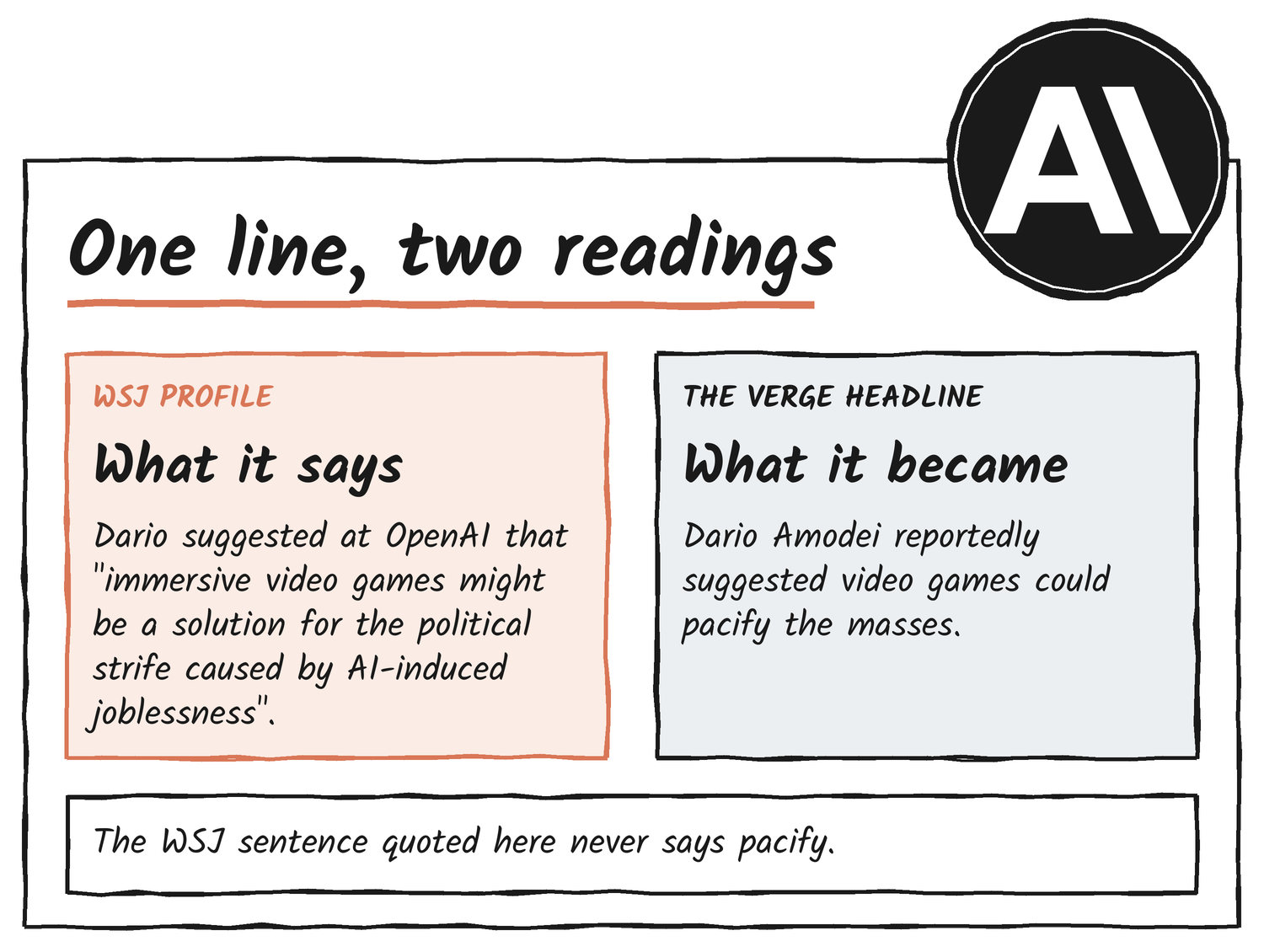
There, he engaged in debates with his fellow employees, suggesting that immersive video games might be a solution for the political strife caused by AI-induced joblessness, according to widely circulated Slack messages.
The Wall Street Journal, 21 November 2026, as quoted by The Verge
Zeff’s post places the debates at OpenAI. The Verge’s Terrence O’Brien ran the passage the same day under a headline saying video games could “pacify the masses”, and he calls the idea “a particularly dystopian solution”. Those are The Verge’s words. The Journal sentence calls video games “a solution for the political strife”, and the word pacify doesn’t appear in it.
What the passage shows
| Question | What’s reported | Source |
|---|---|---|
| Who | Dario Amodei | The Wall Street Journal |
| Where | In debates with fellow employees at OpenAI | The Wall Street Journal, Max Zeff’s post |
| What he suggested | Immersive video games might be a solution for the political strife caused by AI-induced joblessness | The Wall Street Journal, via The Verge |
| How it’s sourced | “Widely circulated Slack messages” | The Wall Street Journal, via The Verge |
| Date of the messages | Not given in either excerpt | The Verge, Max Zeff’s post |
| Response from Anthropic | None in either excerpt | The Verge, Max Zeff’s post |
Nothing in the passage presents the idea as a policy, a product plan or an Anthropic position. It’s a suggestion made in workplace debates, reported from messages the Journal says were widely circulated.
What I could read
The full profile sits behind the Journal’s paywall. I read its headline, standfirst and opening lines, The Verge’s quote of the passage and Zeff’s post. Everything above about the passage comes from those.
How it sits next to what he’s written
In January, Dario published an essay called The Adolescence of Technology. In its closing section he writes that the labour and economic-concentration effects of AI may force us to deal with its other risks “in an environment of public anger and perhaps even civil unrest”. That’s the same concern the Journal’s sentence names: political strife.
On meaning, he writes that people can find purpose “through stories and projects that they love”. He adds that this is a transition society has to make, and that “there is always the risk we don’t handle it well”.
We simply need to break the link between the generation of economic value and self-worth and meaning.
Dario Amodei, The Adolescence of Technology, January 2026
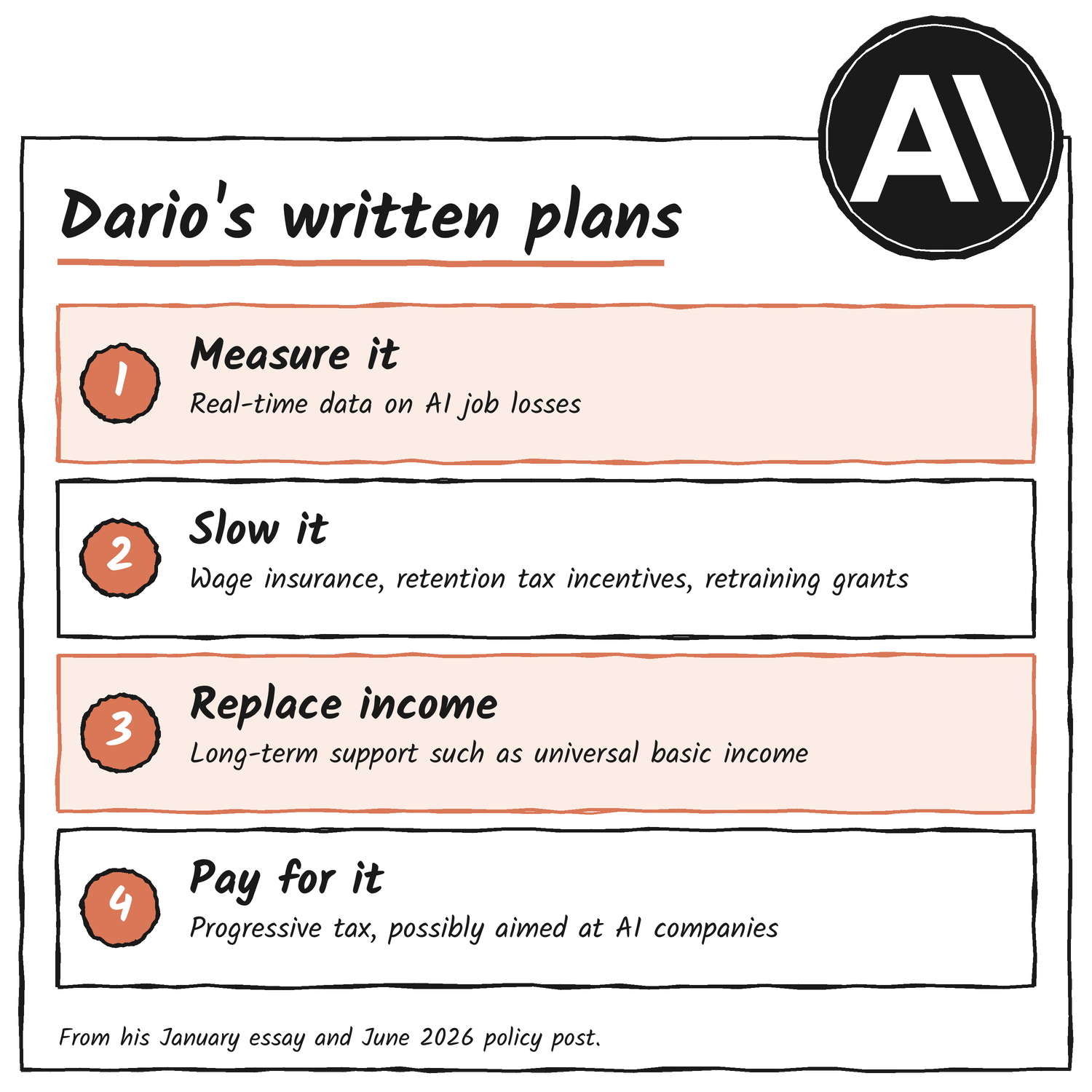
In June, his post Policy on the AI Exponential said there’s “a decent possibility” that AI still causes “significant enduring job loss”. It asks for better data on displacement, wage insurance, retention tax incentives and training grants. If the losses prove large and lasting, it adds long-term income support such as universal basic income, financed through taxes on relevant companies or a higher capital gains tax. The January essay also backs progressive taxation, either general or aimed at AI companies.
Those are published proposals. The video-game line is a reported aside from an earlier job, and neither The Verge’s excerpt nor Zeff’s post gives a date for the messages.
What research says about games and work
The best-known study of video games and work points in a narrower direction. Economists Mark Aguiar, Mark Bils, Kerwin Kofi Charles and Erik Hurst used US time-use diaries and found that men aged 21 to 30 moved their leisure towards gaming and recreational computing, and cut their work hours more than older men or women did. The paper, published in the Journal of Political Economy in 2021, estimates that better games lowered young men’s hours by about 2%. The authors say that’s nearly half of those men’s decline in work hours, according to Yale Insights’ summary.
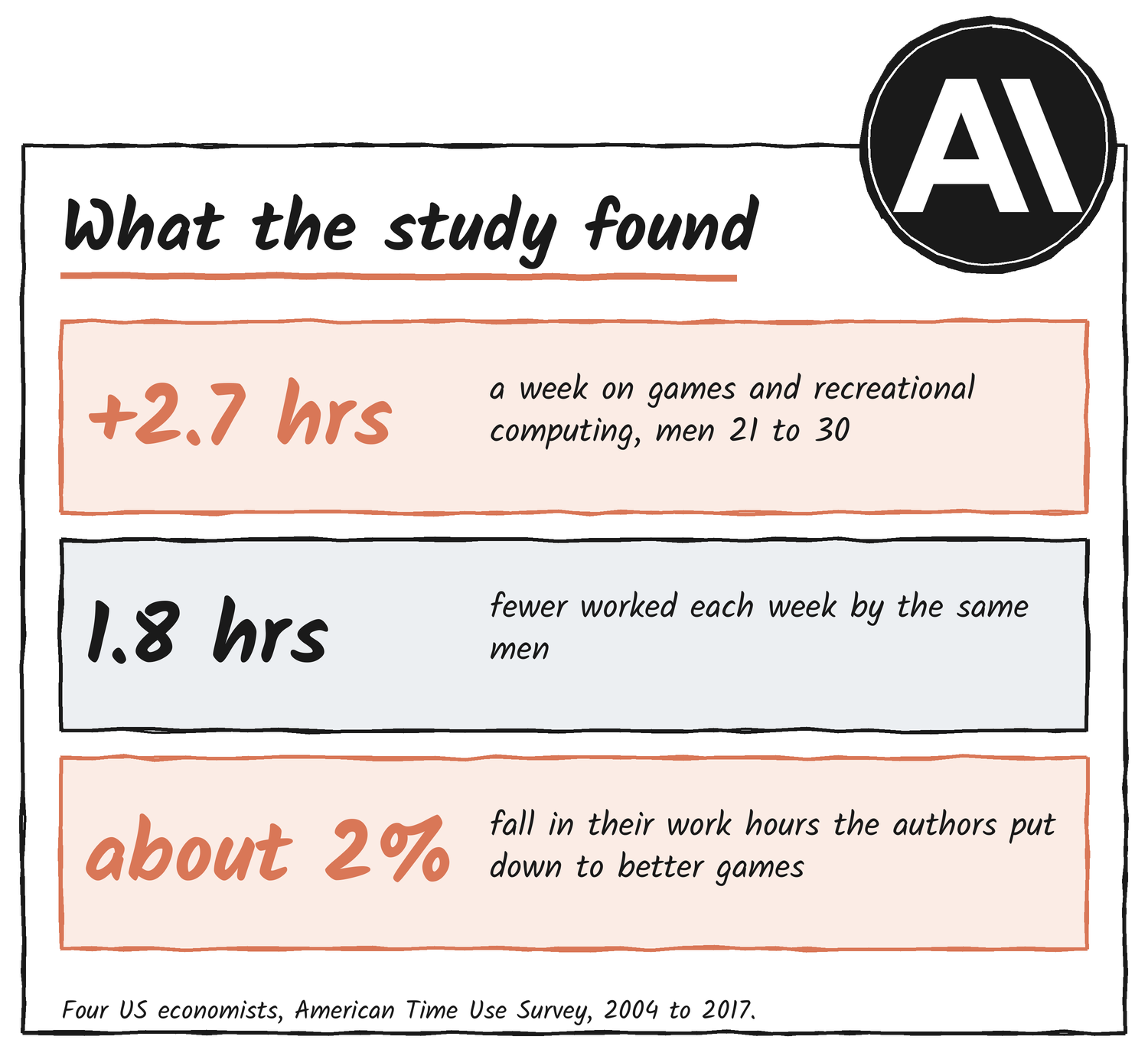
That finding shows games compete with work for time. It doesn’t test whether they calm political tension. Charles Hughes at the Manhattan Institute pointed out in 2017 that, in the same data, young men without jobs also spent more time on job search and education.
Where it landed
The profile arrived as Anthropic’s first week as a listed company closed. The Journal’s standfirst says the Amodeis were on top of the biggest IPO ever on Thursday, then caught in a market rout one day later. Neither Anthropic nor Dario has addressed the Slack line in any coverage I’ve read.
US$83
IPO price per share, with 980 million sold (WSJ)
US$111.50
Price at the open on 19 November (ABC News)
US$1.18tn
Rough market value in the Journal’s profile, after the rout

Sources
- The Wall Street Journal: They Run Anthropic. They Want to Keep It Weird. They’re Brother and Sister., 21 November 2026
- The Verge: Dario Amodei reportedly suggested video games could pacify the masses after AI took their jobs, Terrence O’Brien, 22 November 2026
- Dario Amodei: The Adolescence of Technology, January 2026
- Dario Amodei: Policy on the AI Exponential, June 2026
- Aguiar, Bils, Charles and Hurst: Leisure Luxuries and the Labor Supply of Young Men, Journal of Political Economy, 2021
- ABC News: Who is Dario Amodei, the CEO of Anthropic?, 19 November 2026
Discover more from Sulat AI & Tech News
Subscribe to get the latest posts sent to your email.