
Motion, the video-agent product from San Francisco startup Mosaic, says two channels run by its staff published 116 videos in 38 days and drew more than 475,000 views, with nobody editing a single video by hand. The company made the claim on 23 November in an X article titled “Content Factories Are Here”. Both channels are public, and I checked them against Motion’s numbers on 24 November. The YouTube Shorts page matches Motion’s description of typical results. The Instagram page doesn’t match its counts.
What Motion claims
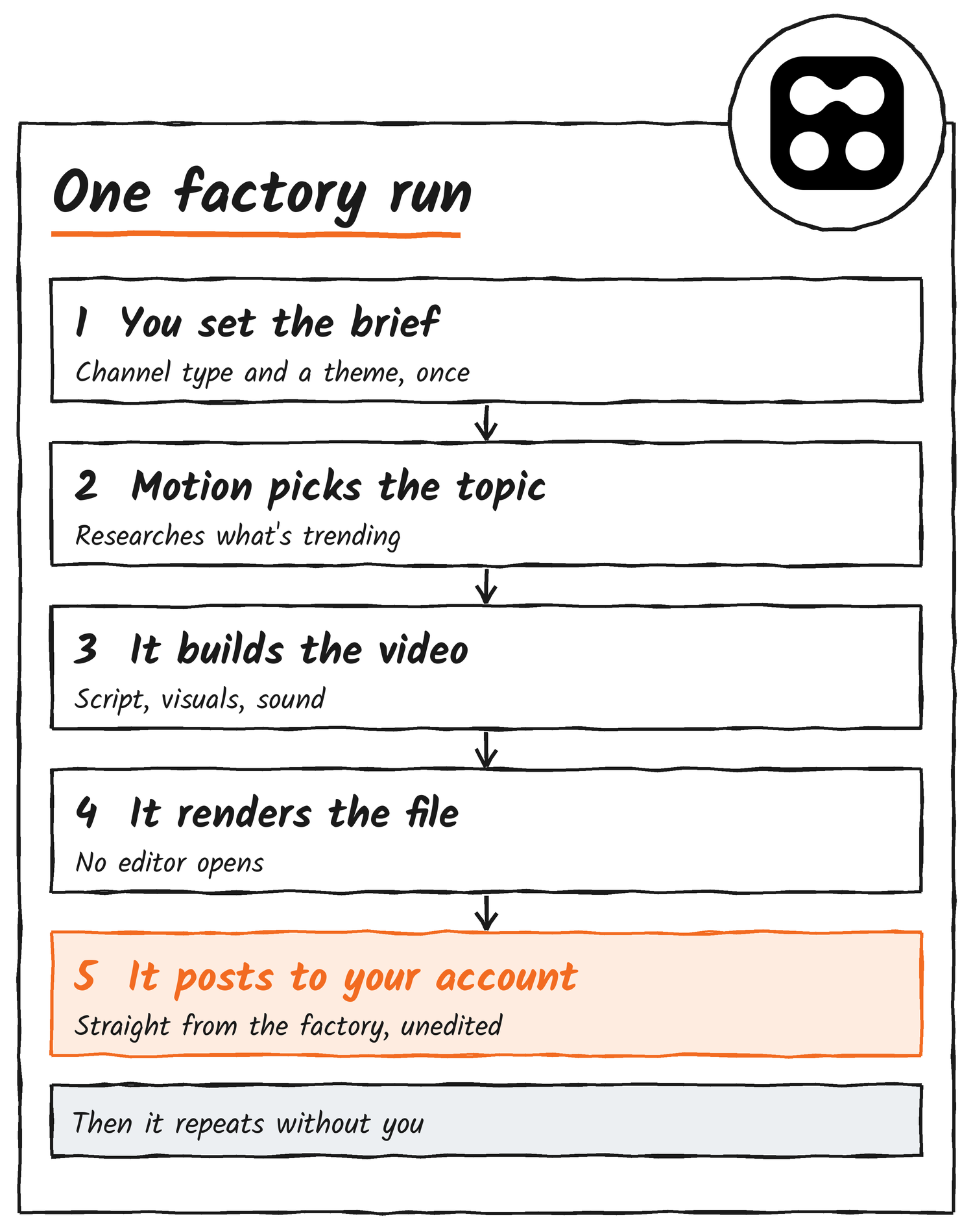
Motion defines a content factory as a system that makes videos at scale without a person making each one. The person tells it what kind of content the channel needs and sets a theme to keep it on brand. The factory then picks the topic for every video, researches trends, builds the video, adds sound, renders it and posts it. Motion compares it to software factories, where developers run systems that write, test and ship code.
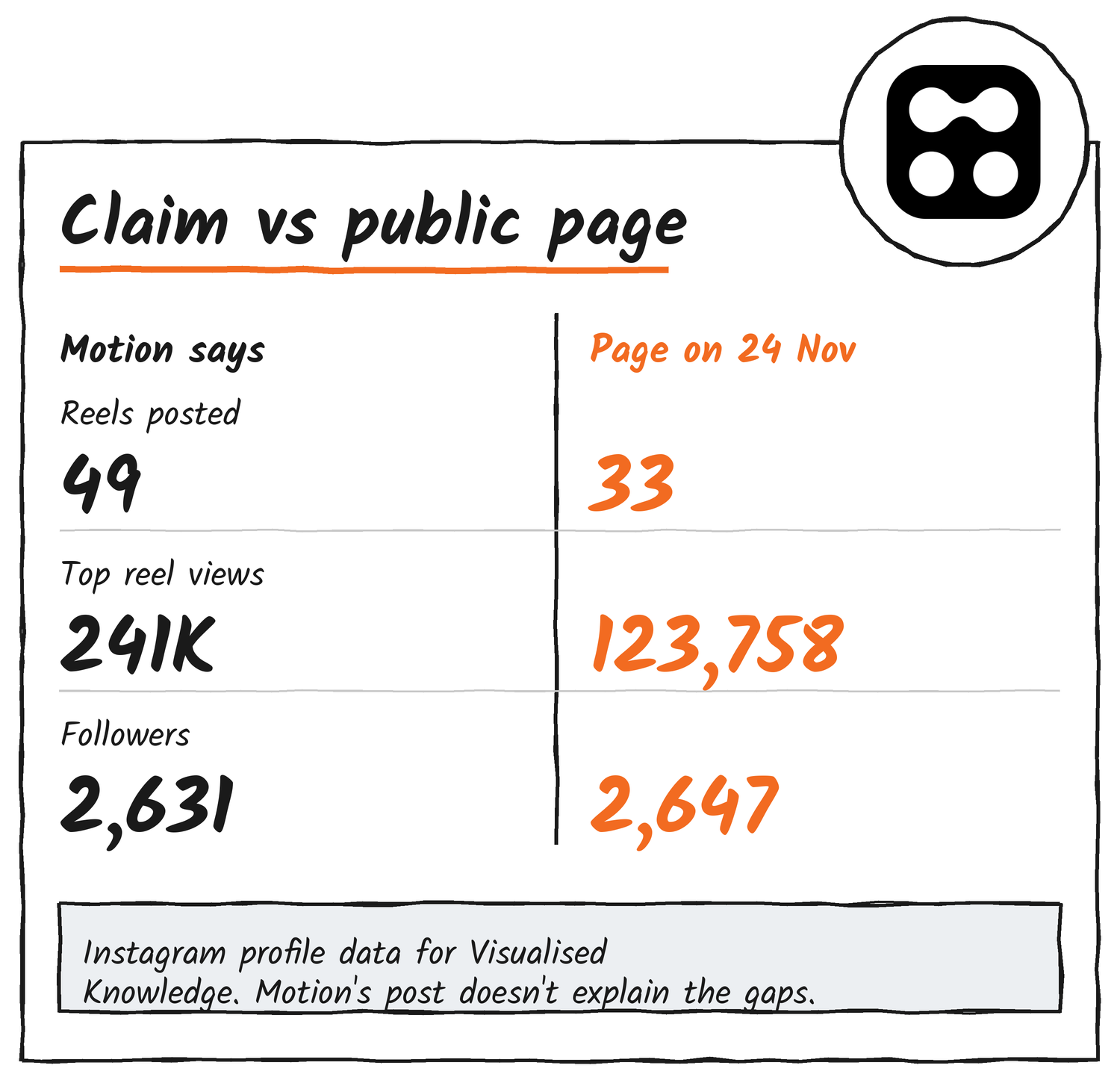
The first factory is an Instagram page called Visualised Knowledge, started on 17 October by Aniket on Motion’s team. It explains hard topics in short reels: world wars, Caesar, how Face ID works, epistemology. Motion says it posted 49 reels in 38 days, about 1.3 a day, for roughly 342,000 views and 2,631 followers. One reel, on the two world wars, reached 241,000 views.
The second is a YouTube Shorts channel, Wait, Seriously?, started on 4 November by Kyle on the team. It tells strange true stories from history. Motion says it posted 67 Shorts in 20 days, four a day for its first two weeks at 12am, 6am, 12pm and 6pm, for over 136,000 views. Most Shorts land around 1,000 views or more, and the best, a Dr. Seuss story, is at 26,800.
What the public pages show
On Instagram, the public profile showed 33 posts on 24 November, not 49 reels, and the most-viewed reel stood at 123,758 views, not 241,000. The follower count, 2,647, is close to Motion’s 2,631. Motion’s post doesn’t explain the gap in posts or views.
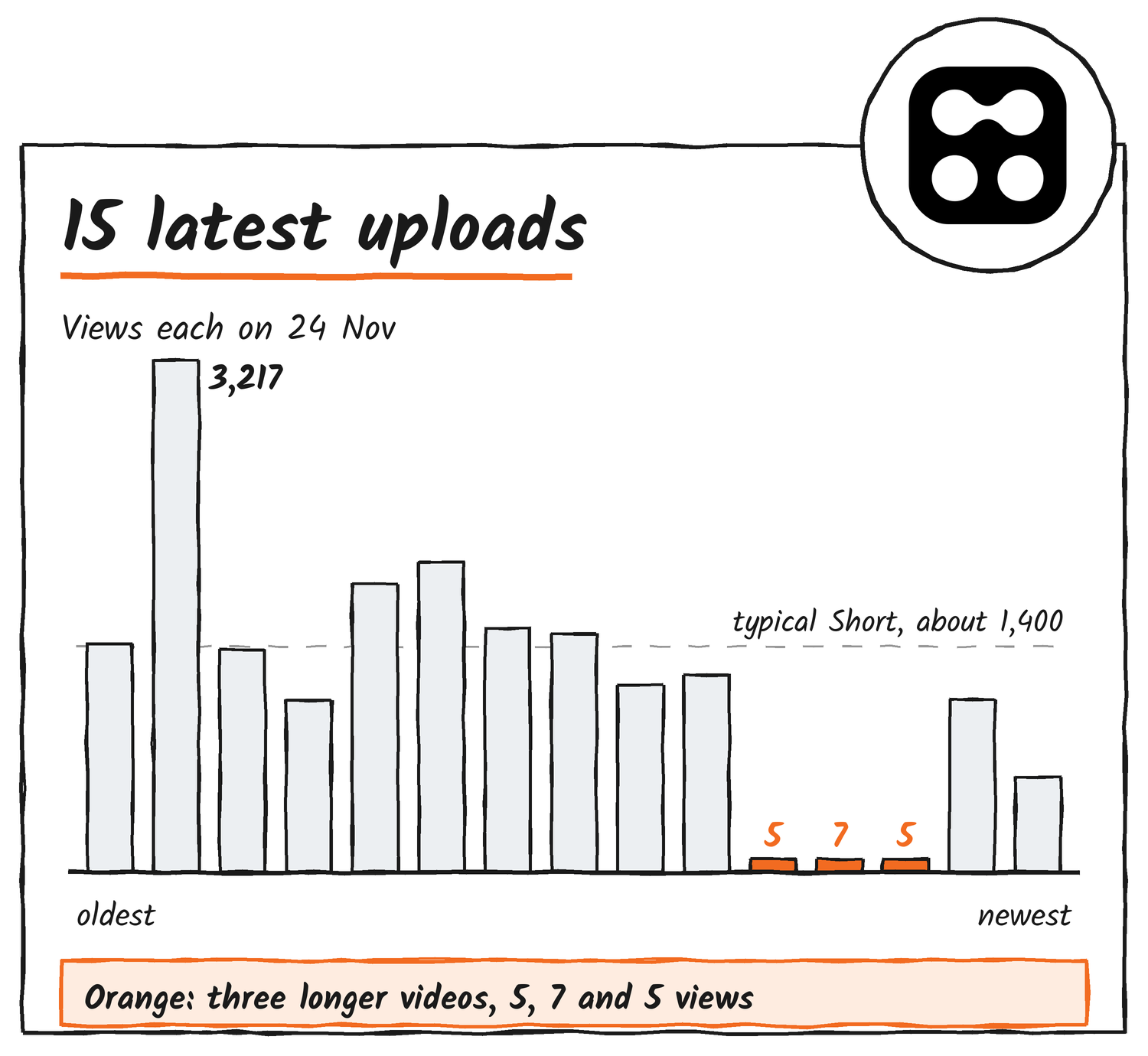
YouTube is easier to check, because each channel publishes a feed of its 15 latest uploads with view counts. Eleven of those 15 have 1,000 views or more, which fits Motion’s line that most Shorts land around 1,000. The best of the 15 has 3,217 views and the typical one sits near 1,400. The feed doesn’t reach back to the Dr. Seuss Short or the 10,500-view Mona Lisa Short Motion mentions, so those two figures can’t be checked from it.
The same feed shows something Motion’s post doesn’t mention. Three of the 15 uploads, posted between 21 and 23 November, are longer videos, and they have 5, 7 and 5 views. The Shorts around them have hundreds to thousands.
How a run works, and what it costs
Motion’s setup is three steps. In Automations, a user clicks Create automation, describes the channel and sets when it runs, either daily or every six hours for four a day, then types @ and picks a connected social account. Each run opens its own chat, and finished videos show up in the user’s scheduled posts. A user can also ask Motion in chat to set the whole thing up.
Motion’s changelog says automations can run on a schedule or when new source material arrives, and that connected accounts let Motion reference past posts and prepare or schedule new ones, with an approval step before anything is posted. Mosaic’s research page adds that users choose whether publishing runs automatically or waits for approval. The two channels in the post ran fully automated.
The post gives no cost. Motion’s docs price Flex packs and manual top-ups at US$6 for 200 credits, or 3 cents a credit, and Pro offers monthly bundles from 1,000 to 50,000 credits. A video’s cost depends on the engine, effort, length, generated media and follow-up edits, and Fast Mode doubles both speed and credit cost. Mosaic’s own test put the average model cost of a film made with Motion at about US$2.87, for the films in that test, not for these two channels. New Pro subscribers get 25% off their first month or year until 27 November, Pacific time.
Who’s behind Motion
Motion is made by Mosaic, a Y Combinator Winter 2025 company in San Francisco. Mosaic announced a US$3.8 million seed round on 7 April 2026, backed by Y Combinator, Mayfield Fund and Elevation Capital among others. It lists TubeScience, which it describes as Meta’s largest ad creative partner, and News Corp as partners. Motion’s General Video Agent went into public beta on 20 October, so the Visualised Knowledge page, started on 17 October, began just before it.
How it compares with other auto-posting tools
Motion is not the first product that makes and posts videos on a schedule. The faceless-channel tools sell the same promise with a fixed set of formats, while clipping tools start from video you already have.
| Product | What it does | Posts for you | Price signal |
|---|---|---|---|
| Motion | Agent builds videos from a brief and runs on a schedule | Connected accounts, with an optional approval step | Flex US$6 per 200 credits; Pro bundles of 1,000 to 50,000 credits a month |
| faceless.so | Picks a niche, writes, voices and edits a series | YouTube, TikTok, Instagram and four other platforms | From US$29 a month, per third-party roundups |
| Revid | Makes short videos from a topic | Scheduled posting to TikTok and YouTube Shorts | US$39 for publishing, per a rival’s comparison |
| OpusClip | Cuts existing long videos into clips | Schedules and posts the clips | Not checked |
The platform rules
YouTube renamed its “repetitious content” policy to “inauthentic content” on 15 July 2025 and said it covers content that’s repetitive or mass-produced. Its monetisation policy page lists AI-generated content made from generic templates, giving the impression of mass production without the creator’s original insight, as ineligible for the Partner Programme. Motion’s post doesn’t say whether either channel is monetised.
Motion’s post doesn’t give a cost per video, the credits the two channels used or any revenue. It doesn’t explain why its Instagram counts differ from the public page, and it doesn’t mention the three longer YouTube videos that drew 5, 7 and 5 views. The channels are linked in the post, so the figures can be rechecked at any time.
Discover more from Sulat AI & Tech News
Subscribe to get the latest posts sent to your email.