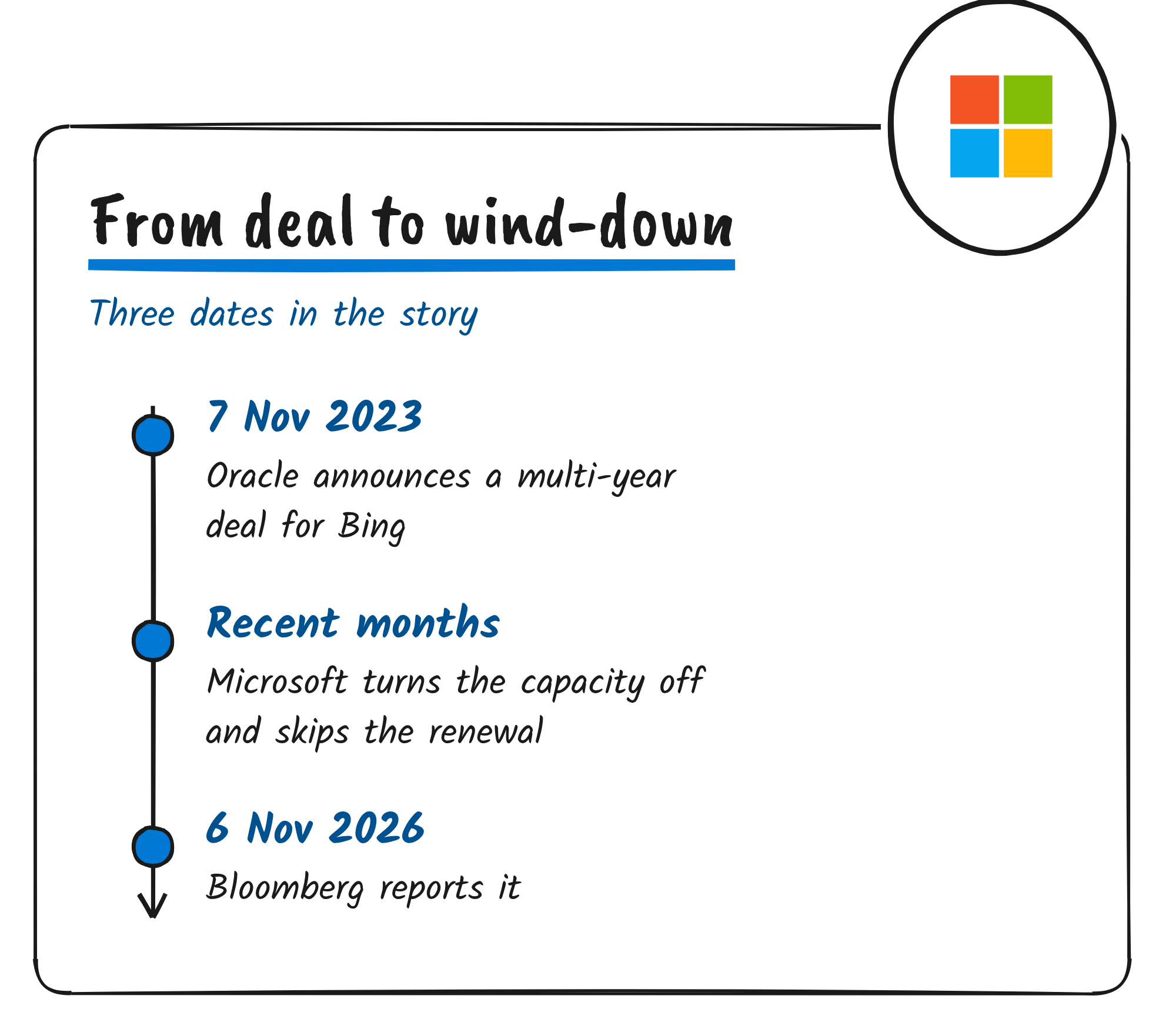
Microsoft is winding down an arrangement to rent AI computing from Oracle, Bloomberg reported on Friday 6 November US time, citing people familiar with the matter. Microsoft declined to renew the contract and has been switching off the rented capacity in recent months, Reuters reports in its summary of the story.
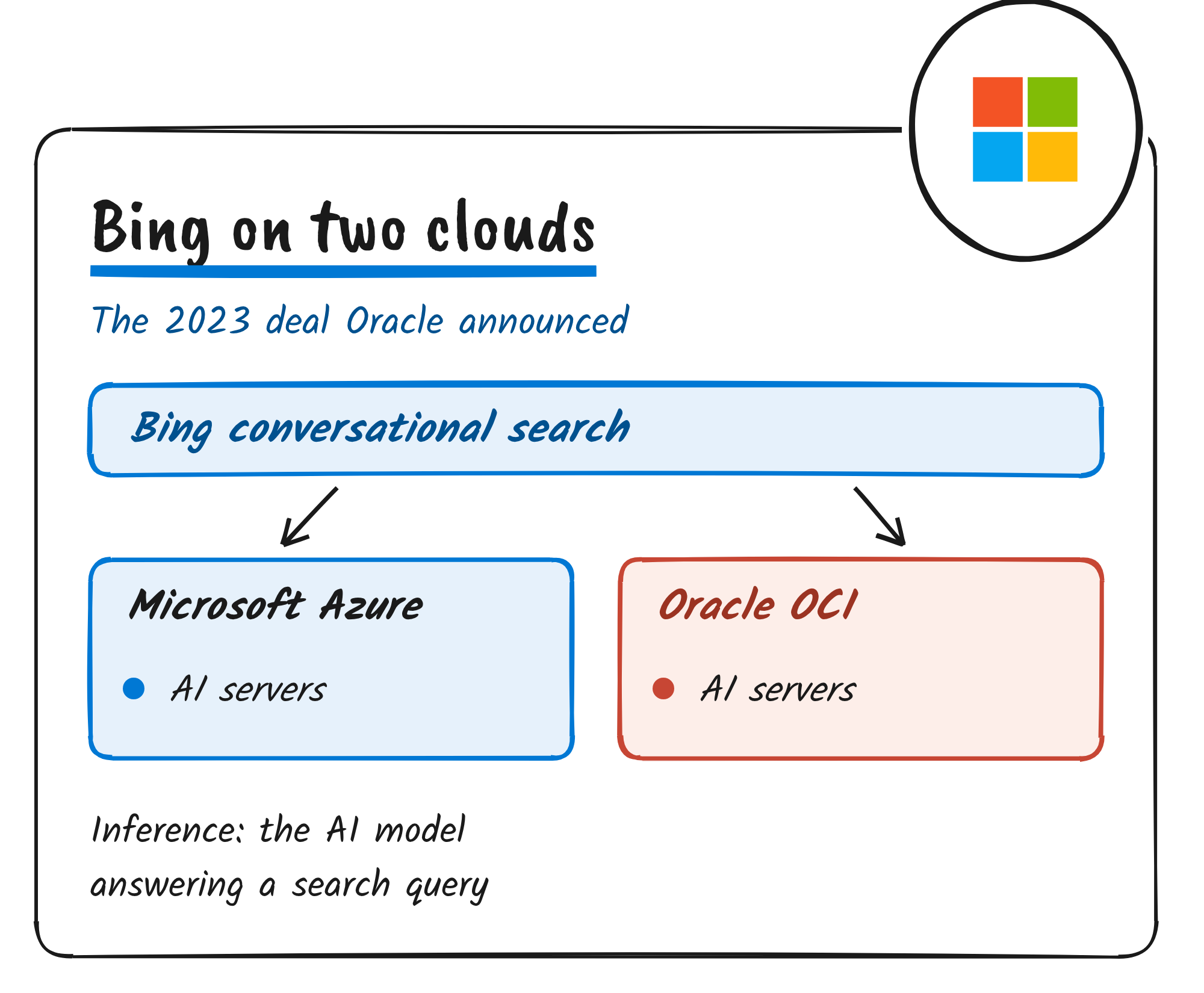
Oracle announced the deal on 7 November 2023. It was a multi-year agreement under which Microsoft ran inference, the step where a trained AI model answers a query, on Oracle Cloud Infrastructure (OCI) alongside its own Azure servers, to power Bing conversational search. Oracle’s release gave no financial terms, and Reuters says they weren’t disclosed.
What Bloomberg’s sources say
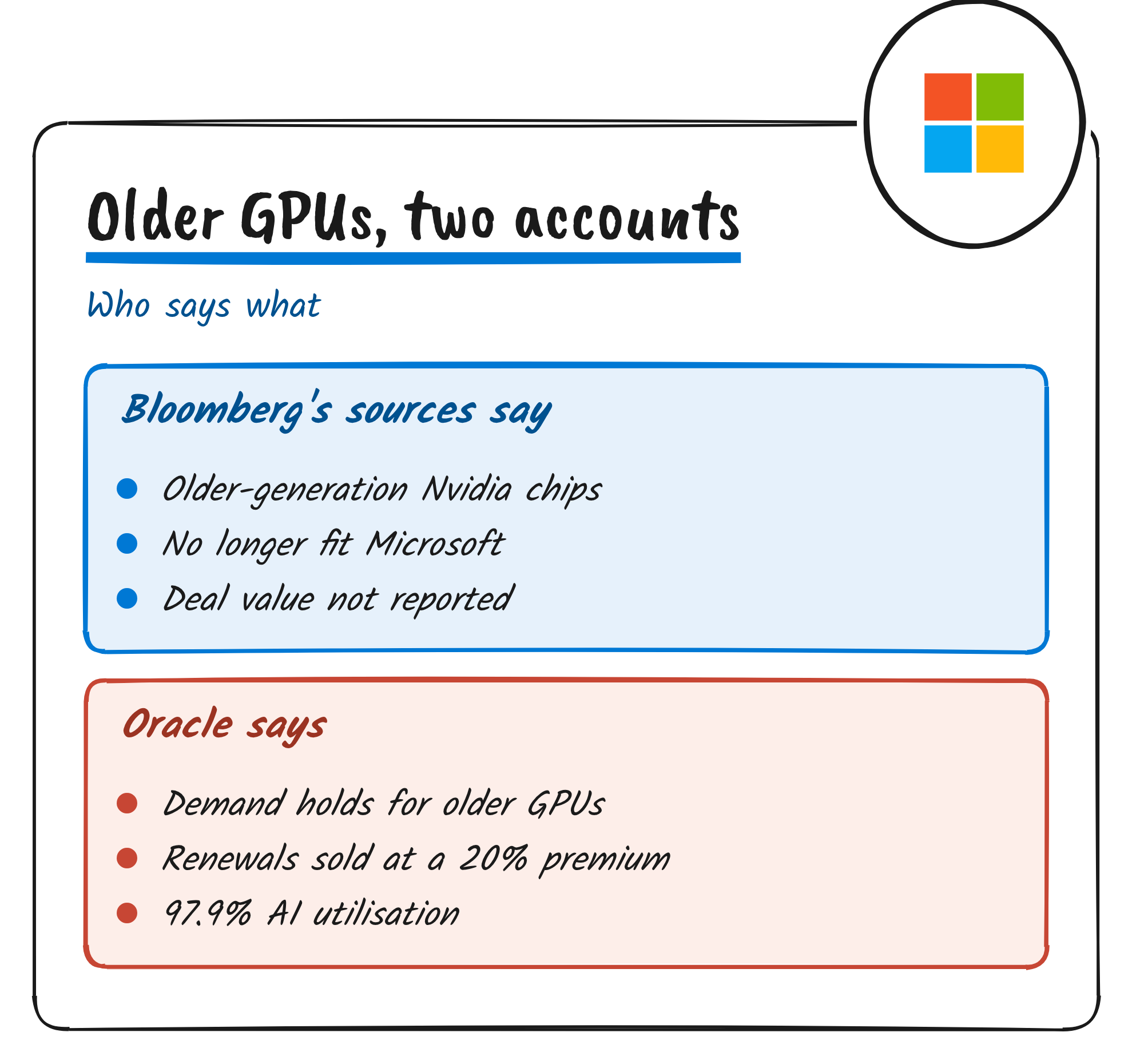
The sources told Bloomberg the rented capacity became less valuable because it no longer met Microsoft’s evolving needs, and that the arrangement was for an older generation of Nvidia chips. Bloomberg couldn’t determine the deal’s full size, and its report doesn’t name the chip model. Oracle’s 2023 release didn’t name the GPUs either; its description of OCI Superclusters cited A100 and H100 chips.
Microsoft declined to comment to Bloomberg. CNBC reported the same day, citing two people, that Microsoft opted not to renew a deal with Oracle and is deciding which neoclouds it will stop using. Neoclouds are companies that build data centres and rent out Nvidia chips. A Microsoft spokesperson told CNBC that reviewing those investments is “a normal and responsible way to manage large, complex infrastructure projects” and that “the pace of our new agreements reflects what we need today.” That statement is about the neocloud reviews, not the Oracle contract.
What Oracle says
An Oracle spokesperson told Reuters: “Demand for OCI’s AI infrastructure remains strong, including for earlier-generation GPUs.” Oracle backs that with figures from its 10 September first-quarter results: GPUs that came up for renewal averaged a 20% renewal or resale premium, and AI infrastructure utilisation was 97.9%. Co-chief executive Clay Magouyrk said on the earnings call that most of those GPUs are four years old or older.
Oracle’s statement doesn’t say whether Microsoft’s capacity was among the renewals, or who will use it next.
| Oracle, quarter ended 31 August 2026 | Figure |
|---|---|
| Cloud infrastructure revenue | US$7.4 billion, up 121% |
| Free cash flow | Negative US$5 billion |
| Remaining performance obligations | US$664 billion |
| AI infrastructure utilisation | 97.9% |
| Average GPU renewal or resale premium | 20% |
The wider review
Bloomberg describes the Oracle wind-down as part of a larger reassessment of billions of dollars in cloud partnerships. It reports that Microsoft has committed more than US$80 billion to rent capacity from firms including CoreWeave, Nscale and Nebius, and that senior leaders have grown frustrated with their costs and delays.
A separate Microsoft and Oracle lease also fell through earlier this year. Reuters reported in June, citing Business Insider, that talks for Microsoft to lease more Oracle capacity fell apart over security and compliance concerns. Oracle called those details inaccurate and said Microsoft is “both an OCI partner and a customer”, DatacenterDynamics reports.
Oracle’s fiscal second-quarter results, for the quarter ending 30 November, are expected in December. It has guided to cloud revenue growth of 64% to 70% in constant currency.
Discover more from Sulat AI & Tech News
Subscribe to get the latest posts sent to your email.