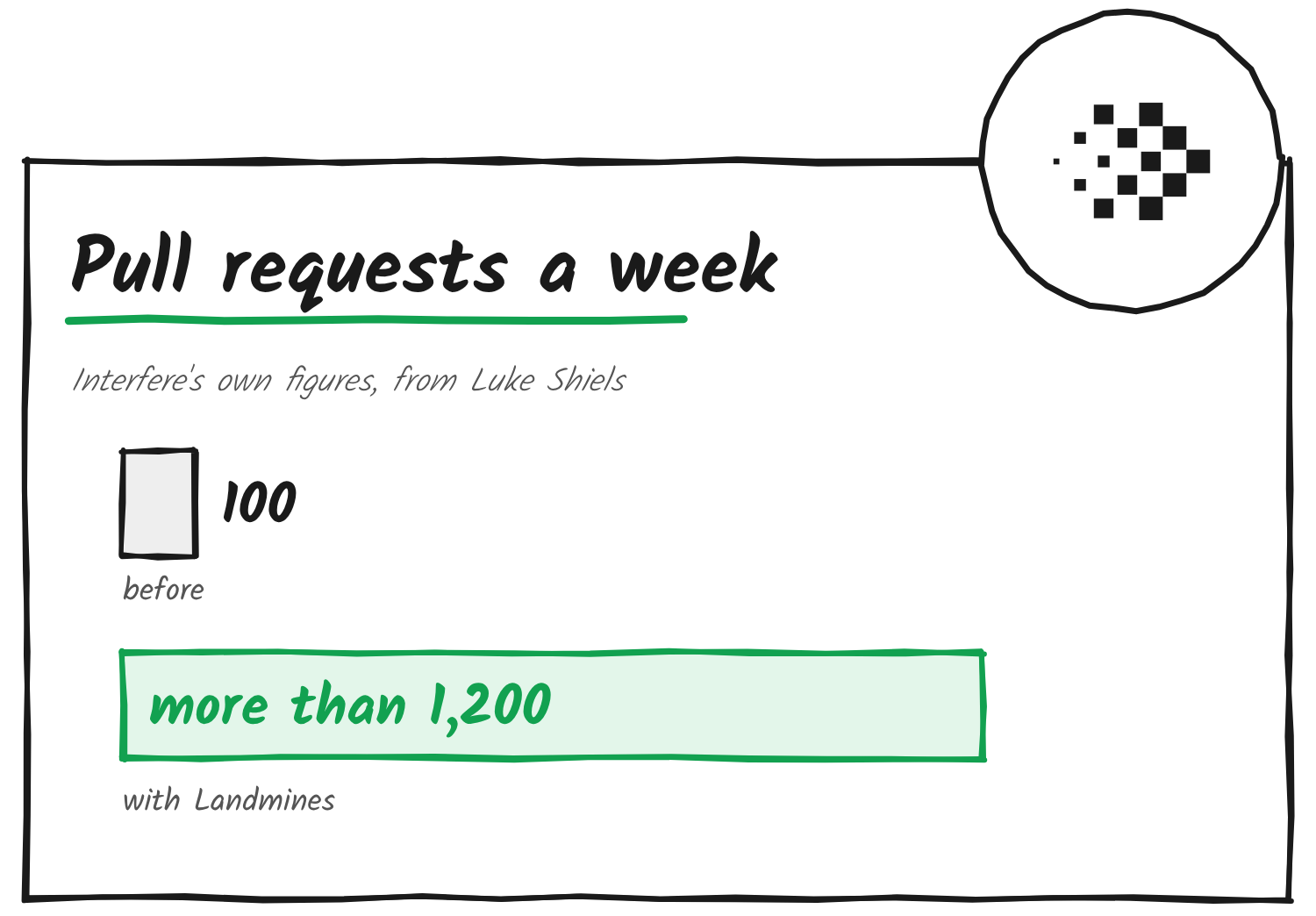
Interfere has released Landmines, a set of open-source Oxlint rules that fail a lint run when an AI coding agent takes a shortcut to a green build: mocking the code under test, sleeping through a race, retrying a flaky test or explaining its diff in comments. Luke Shiels, Interfere’s founder, announced it on X on 17 November and says the rules helped the company go from 100 pull requests a week to more than 1,200.
Oxlint is the fast JavaScript and TypeScript linter, and Landmines plugs into it as a package called @interfere/landmines on npm. Interfere, which sells software that finds and triages bugs in production apps, published version 0.1.0 at 23:16 UTC on 17 November, which was 12:16pm on 18 November in New Zealand. The code is on GitHub under the MIT licence, and the README says Interfere built the rules and uses them in production.
Introducing Landmines
— Luke Shiels (@lukeshiels) November 17, 2026
AI mostly writes useless tests, and no skill file will guarantee it doesn’t take the lazy path to getting CI/CD green.
Landmines is a set of Oxlint plugins that let us at @interfere_ go from shipping 100 PRs/week to >1200/week.
github.com/interfere-inc/… https://t.co/XHJFSKUdUz
What the rules stop
The README opens with the problem. Coding agents chase green checks, it says, so they mock the code being tested, sleep until a race happens to go their way, retry flaky tests, raise timeouts and describe their changes in comments. Every one of those passes CI without showing the code works. Each rule’s failure message says what to do instead, which puts the fix inside the same loop that tripped the rule.
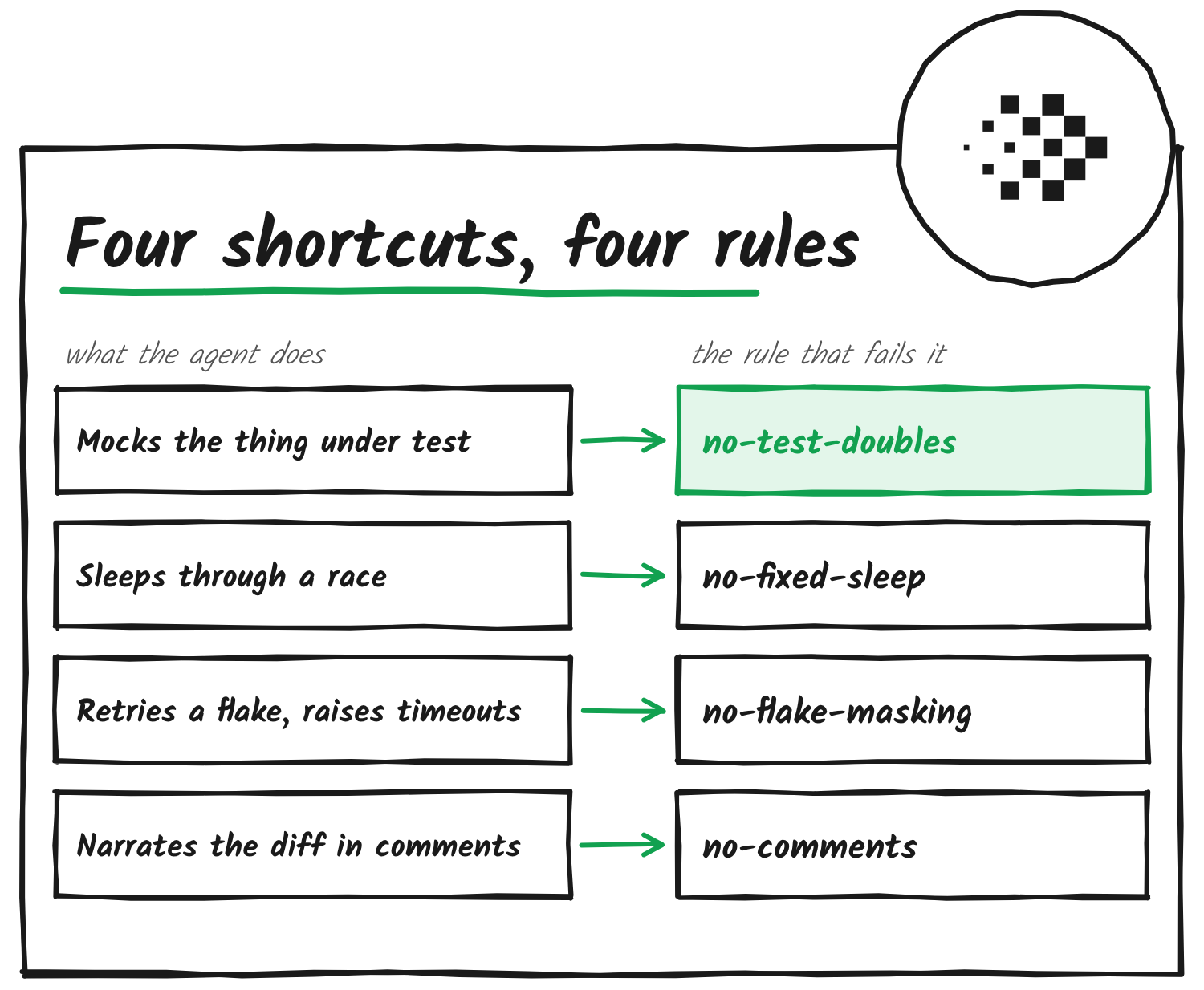
The package has 10 rules in four plugins, listed in the table below.
| Plugin | Rule | What it stops |
|---|---|---|
| landmines-testing | no-test-doubles | Replacing a dependency’s behaviour in tests with mocks, stubs or fakes; observation-only spies are allowed |
| landmines-testing | strict-msw | Starting MSW without onUnhandledRequest: "error" |
| landmines-testing | no-fixed-sleep | Awaiting a fixed delay in a test or hook |
| landmines-testing | no-unsignaled-poll | Polling request recorders and spy state with expect.poll and vi.waitFor |
| landmines-testing | no-flake-masking | Test retries and raised timeouts |
| landmines-style | no-comments | Prose comments |
| landmines-structure | colocated-tests | Tests kept away from the code they import |
| landmines-structure | test-file-names | Names such as .spec.ts, helpers.ts and mocks.ts |
| landmines-structure | package-exports | Unrestricted source exports in package.json |
| landmines-types | no-explicit-return-types | Annotated return types on implementations |
The testing rules are the strictest. The no-test-doubles rule bans module mocks, stubbed globals, patched prototypes and fake responses, and points to the real implementation, with MSW, the Mock Service Worker library, standing in for the network. Spies that only observe calls are allowed. Shiels’s example in his thread is to use the real Stripe SDK in your tests instead of writing a fake version of it.
Shiels says the colocated-tests rule helps agents write and update tests accurately, and that banning unrestricted source exports speeds up test runs a lot. The no-comments rule still allows tool directives, one-line WARNING notes and TSDoc on public APIs. Anything else is out, and the README says the reasoning behind a change belongs in the pull request.
Adopting it on an existing codebase
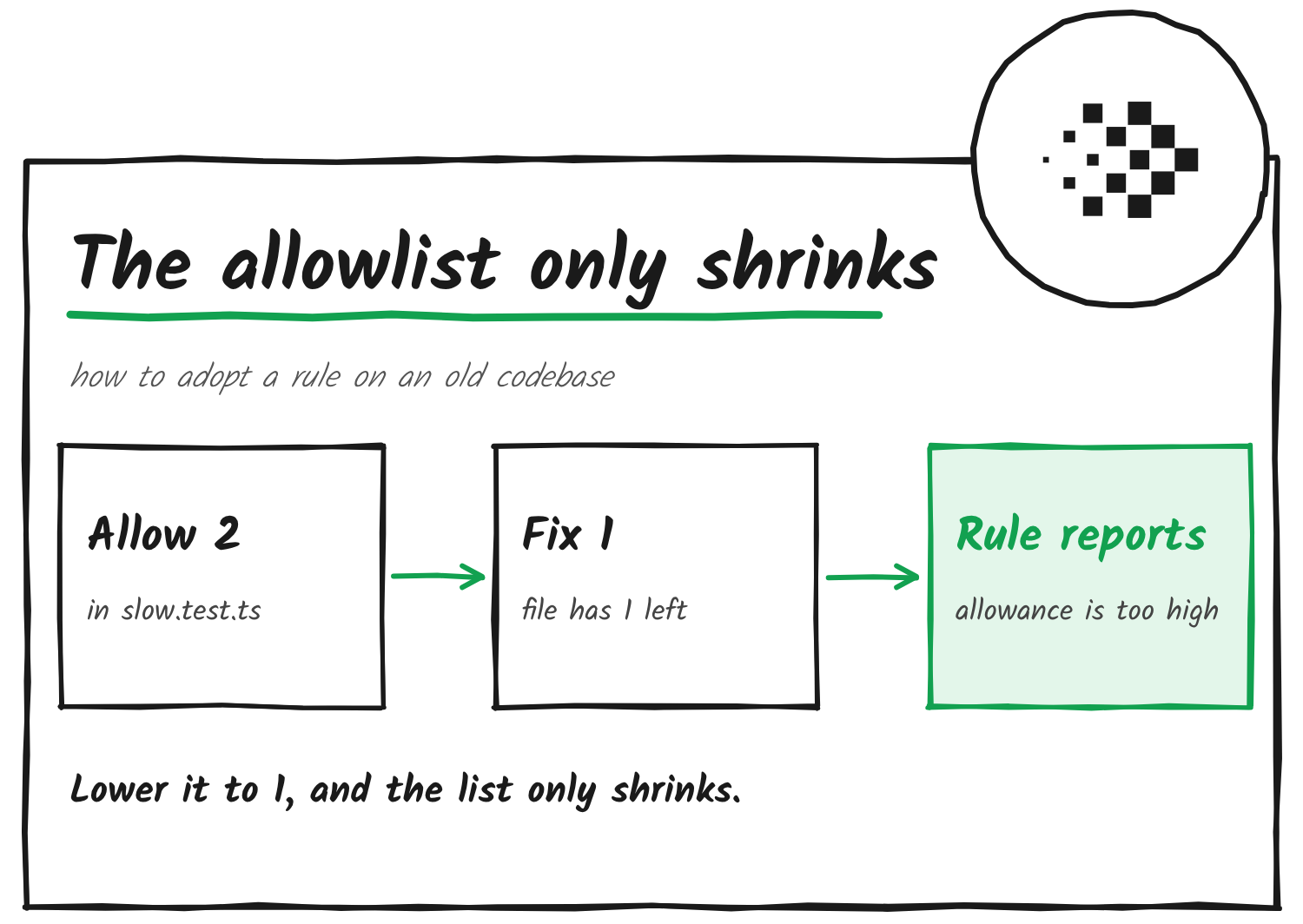
Three rules, no-fixed-sleep, strict-msw and no-flake-masking, take a per-file allowlist with an exact count of allowed violations. The rule reports a file that has fewer violations than its allowance, so the list can only shrink as the code gets fixed.
Install takes one command, and then you extend the recommended config. Landmines needs Oxlint 1.81 or later and Node 22.18 or later, and the README’s example uses Bun.
bun add -d oxlint @interfere/landmines

// .oxlintrc.json
{
  "extends": ["./node_modules/@interfere/landmines/configs/recommended.json"]
}
What Interfere says it gained
Shiels says Interfere rolled the rules out internally at the start of November and that its weekly count of pull requests went from 100 to more than 1,200. Those figures are Interfere’s own.
Shiels says Interfere is testing further categories of bans internally and that more are coming. Landmines is at version 0.1.0, and npm lists no dependents yet.
Sources
- Introducing Landmines, Luke Shiels on X
- interfere-inc/landmines, GitHub
- @interfere/landmines, npm
- Interfere
Discover more from Sulat AI & Tech News
Subscribe to get the latest posts sent to your email.