Google Labs introduced Stitch Loop on 18 November 2026, an experimental agent that connects to a team’s codebase and live product metrics, then opens GitHub pull requests to improve the product after it ships. Access starts with a global waitlist, and Google says eligible Google AI Ultra users get priority.
Justin Toupin, director of product management at Google Labs, announced it in a blog post. Stitch is Google’s AI tool for designing app and web interfaces, and Google calls Stitch Loop part of “a new direction for Stitch”: agents that help lean teams with their product “from ideation through continuous optimization.” The Stitch account’s launch thread describes Loop as “a product agent built for outcomes, not just PRs.”
How a loop works
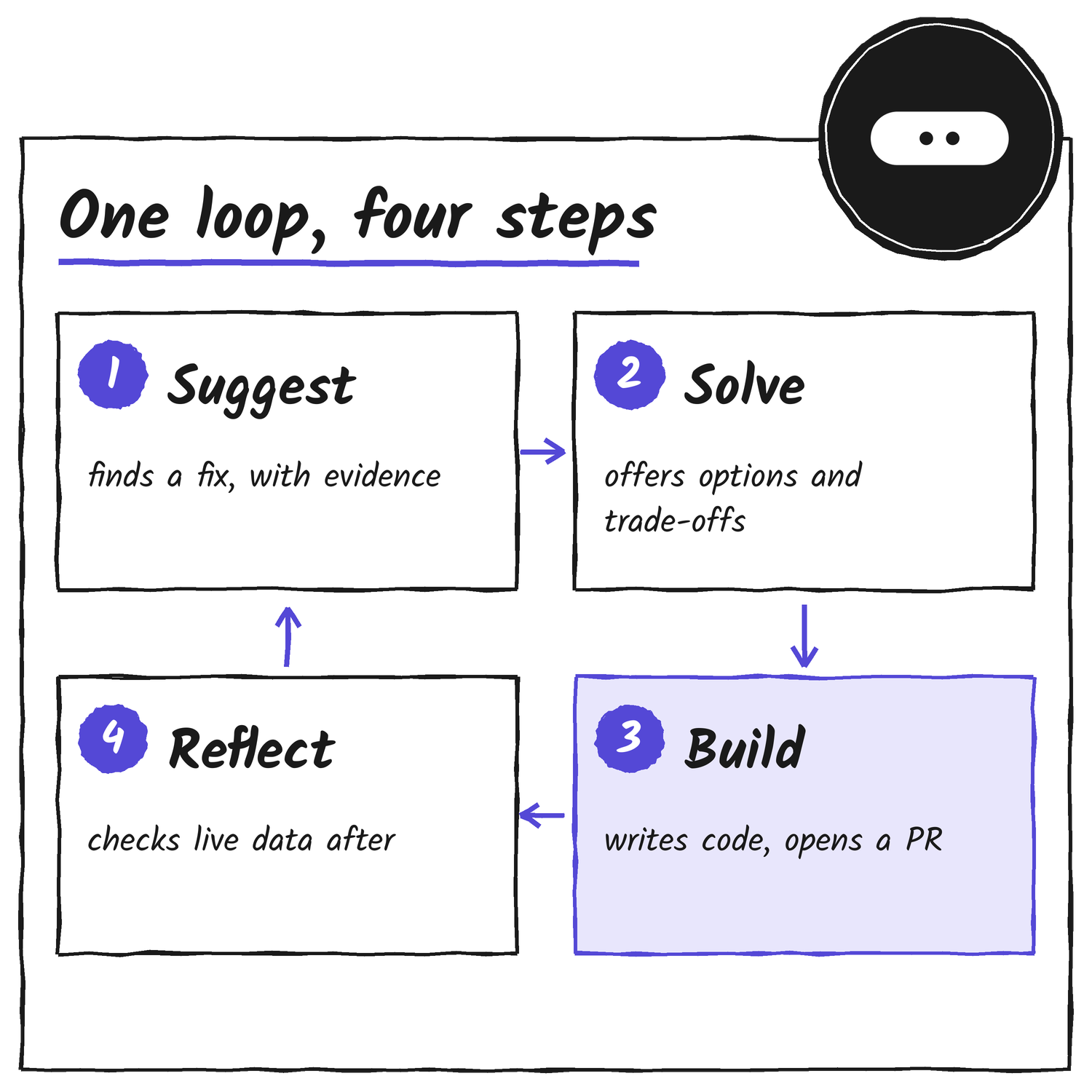
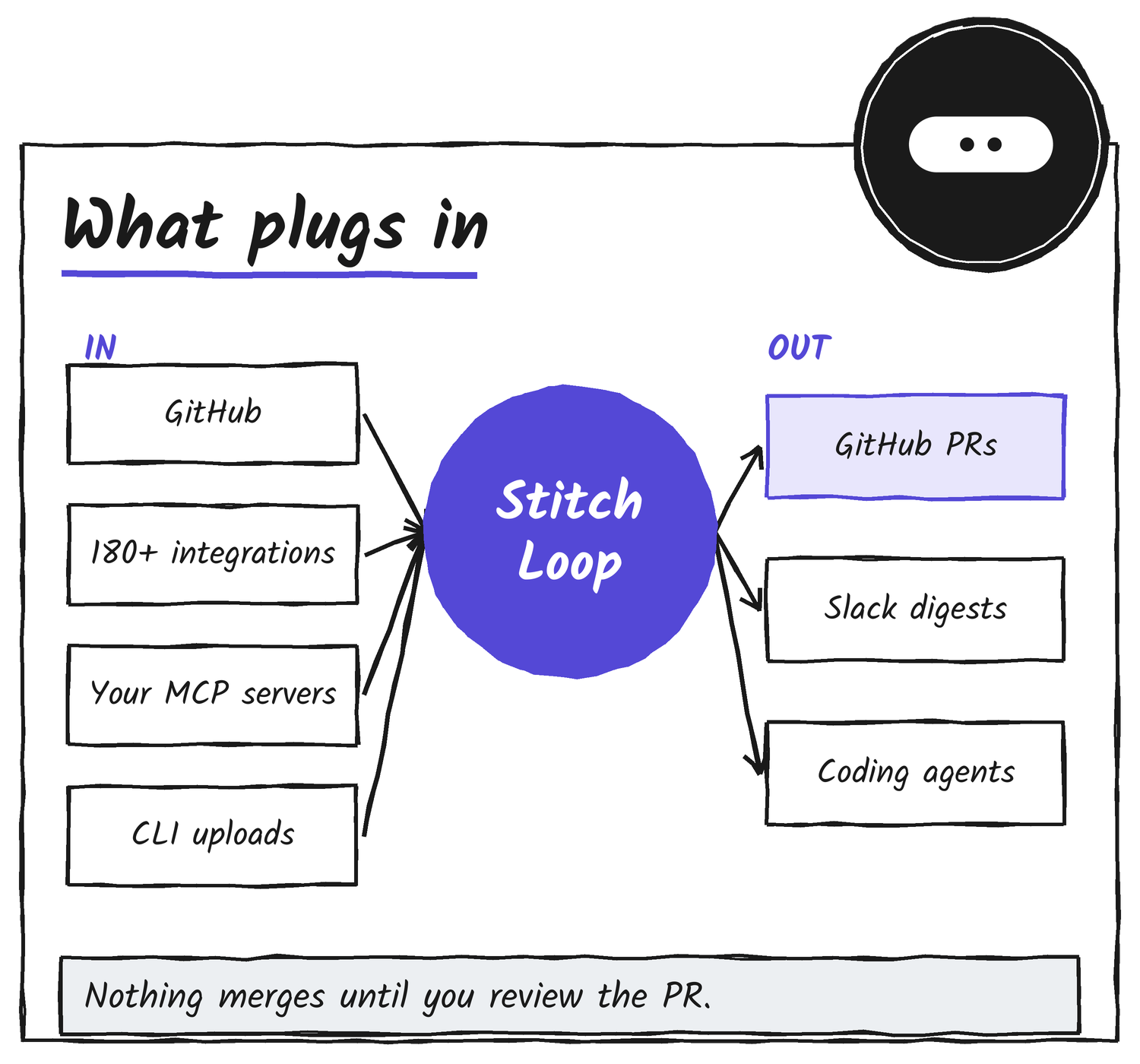
You connect GitHub and your product context, such as logs, user behaviour and feedback, through more than 180 integrations, custom MCP servers or local CLI uploads. MCP, the Model Context Protocol, is the standard that lets an agent call outside tools. Loop then works toward a measurable goal you set, and Google says each loop runs the same four steps: it surfaces suggestions backed by evidence from your product, offers one or more solutions for each with trade-offs and scoping, builds the one you pick by writing code in an isolated cloud sandbox and opening a GitHub pull request, then reflects by watching live data and learning from each result. Once a goal is met, Loop keeps watching in case the metric slips, and the pull requests carry screenshots and videos where relevant. Google’s post says you have the final call, since nothing merges until you review the PR.
Three loops ship by default
Loop ships with built-in loops for security, latency and accessibility, and you can write your own; Google’s examples of custom goals are checkout conversion and support tickets. The security loop pairs the cyber capabilities of Gemini 4 Carbon, Google’s latest frontier model, with CodeMender, Google DeepMind’s autonomous agent for code security. Google made Carbon available to developers, enterprises and consumers on 10 November 2026, and its 28 October announcement reported 88.2% on SEC-bench Pro, a benchmark for finding vulnerabilities, scored without guardrails. Those are model results, and the Stitch Loop posts don’t publish results for the security loop itself.
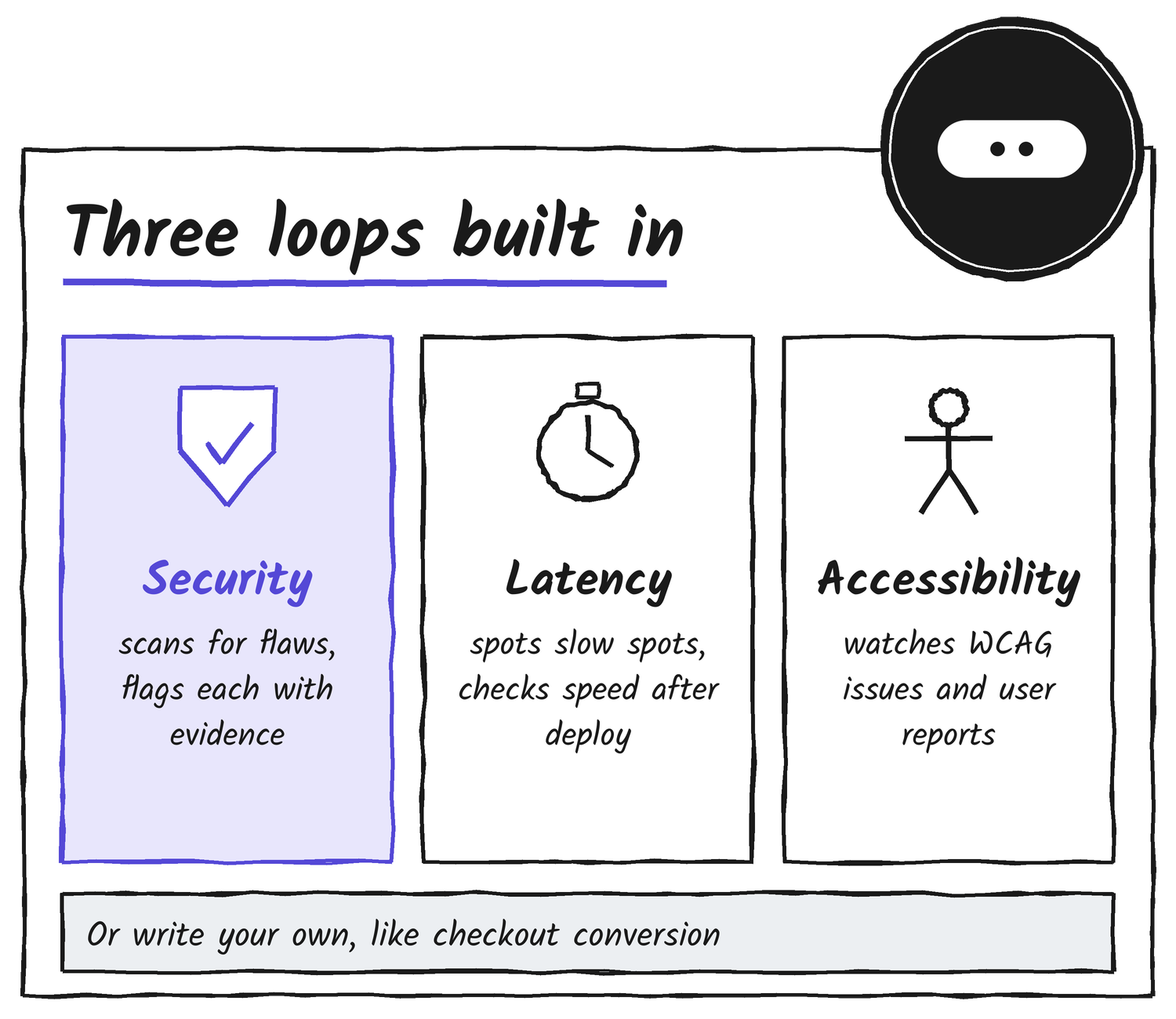
According to the Stitch thread, the latency loop watches live production data for bottlenecks and checks real metrics after each deploy to confirm the product got faster, and the accessibility loop watches for WCAG issues, listens to what users report and verifies each fix in production. The thread also cites Google research that slowing search results by 100 milliseconds measurably reduced how much people searched.
Where it plugs in
Google says Loop can act as a service layer for coding agents such as Google Antigravity, which can pull persistent product context and proposed improvements from it through the Stitch CLI and MCP. In Slack, @stitch sends daily insight digests and creates new loops.
What Google hasn’t published
Google’s announcement doesn’t give a price, a general release date or the number of people it will admit from the waitlist, and it doesn’t list the languages or frameworks Loop supports or publish results from the loops themselves. The name also overlaps with something older: the stitch-loop skill in Google Labs’ stitch-skills repo, which I covered earlier, builds multi-page websites from a single prompt and is a separate tool. The waitlist is at stitch.google.com/loop/waitlist, and Google asks for feedback in the Google Labs Discord.
Discover more from Sulat AI & Tech News
Subscribe to get the latest posts sent to your email.