LangChain co-founder Harrison Chase posted on X on 17 November 2026 that “proactive agents are the next wave”, pointing to a new post by LangChain colleague Sydney Runkle, What We’ve Learned Building Proactive Agents. Runkle says two things decide whether an agent that runs without being asked is useful: memory, and the way it checks in with you.
proactive agents are the next wave
— Harrison Chase (@hwchase17) November 17, 2026
Runkle defines a proactive agent as one that runs in the background and works toward a larger goal instead of waiting for a prompt. The post names Muse, Instinct and OpenAI’s dots as personal agents that popularised the approach, and says Hone describes its Engines as AI that is “assigned goals rather than tasks”.
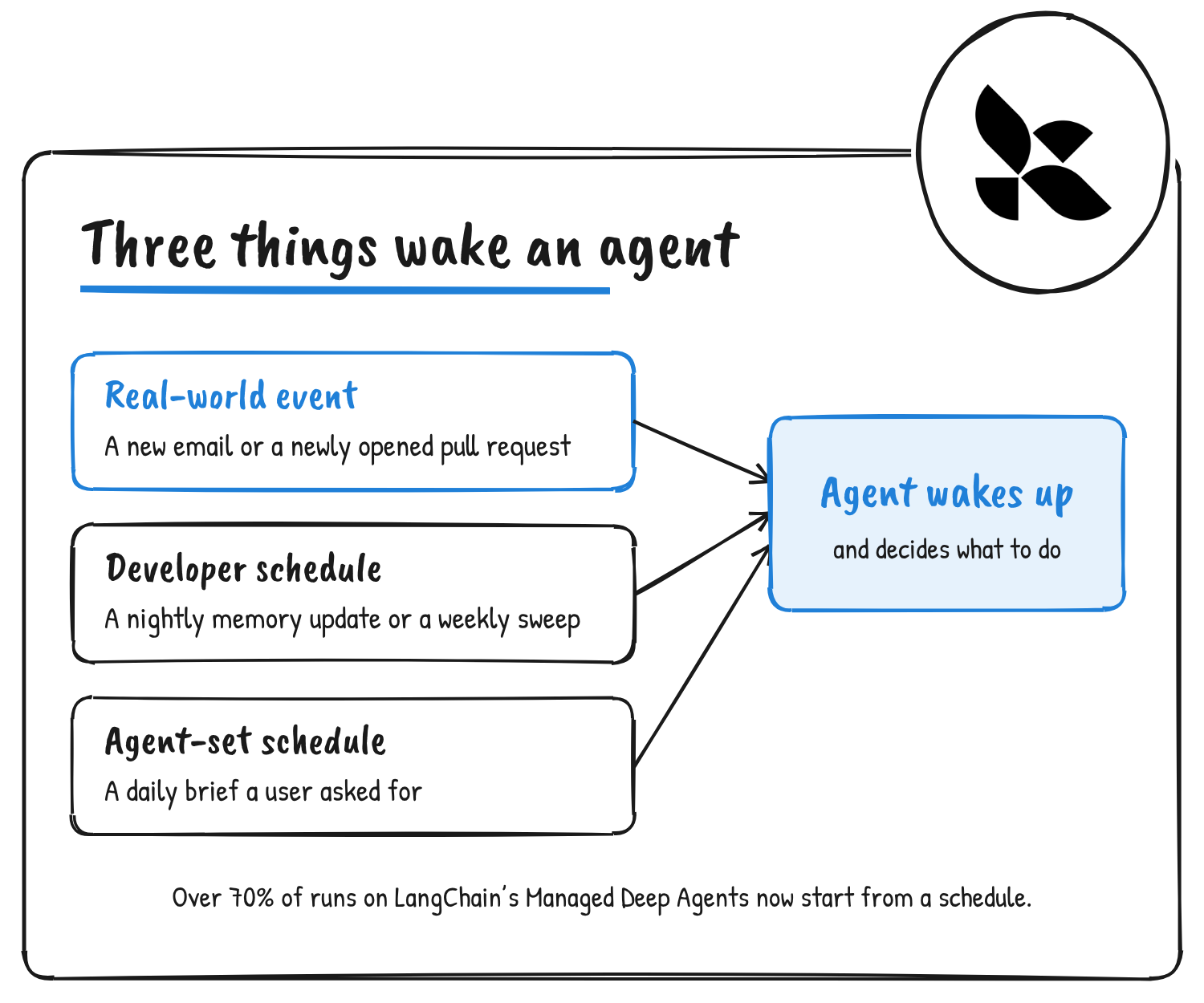
Such an agent responds to events from three places: real-world events, such as a new email or a newly opened pull request; schedules the developer sets, such as a nightly memory update; and schedules the agent sets itself, such as a daily brief a user asked for.
LangChain runs two of these agents internally. GTM Agent, its sales agent, watches for new leads and replies, sends daily briefs and drafts outbound emails. Robin, formerly Open SWE, is its engineering agent and drafts pull requests and reviews every new one. LangChain says both operate on all three kinds of trigger, and both are built on Managed Deep Agents, where Runkle says more than 70% of runs now come from schedules rather than an ad hoc human prompt. LangChain’s Nathan Drezner gave the same figure in a 28 October post on running agents as cron tasks.
Attention is the limit
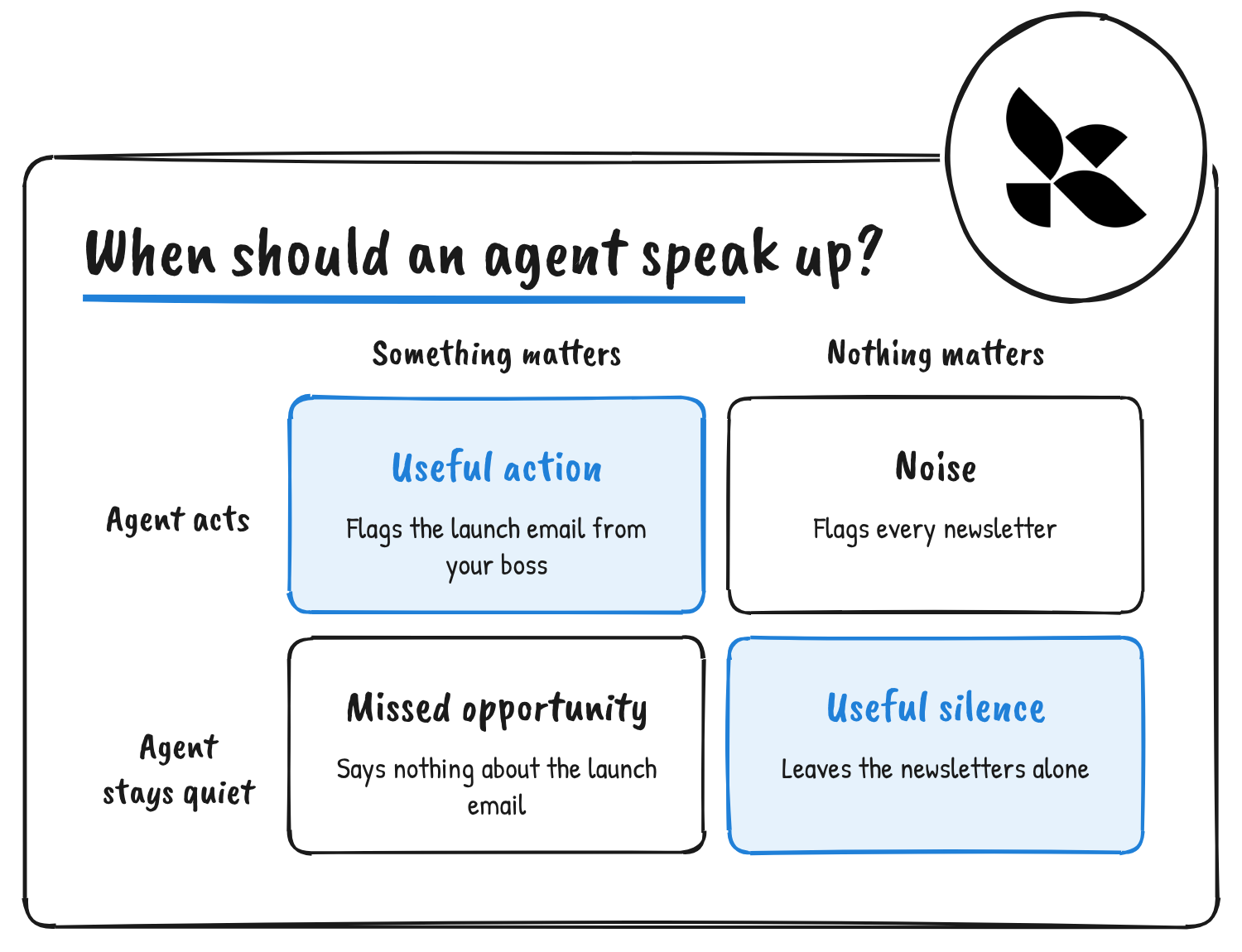
Runkle says that as agents take on more goals, your attention becomes the scarce resource, and each time a proactive agent decides to come to you it spends some of that attention. The post’s example is an executive assistant agent that watches your inbox. It should flag your boss’s message about tomorrow’s launch without flagging every newsletter, and Runkle says it can only tell the two apart if it knows what matters to you. That knowledge comes from memory.
Where the memory comes from
Runkle splits an agent’s memory into three signals, each tied to a point in time. The seed is precedent loaded before the first run, such as your sent folder. Feedback is your response to what the agent proposes, such as rewriting a draft or rejecting it with a reason. Outcomes are what happens after the agent acts, such as whether a drafted email gets a reply.
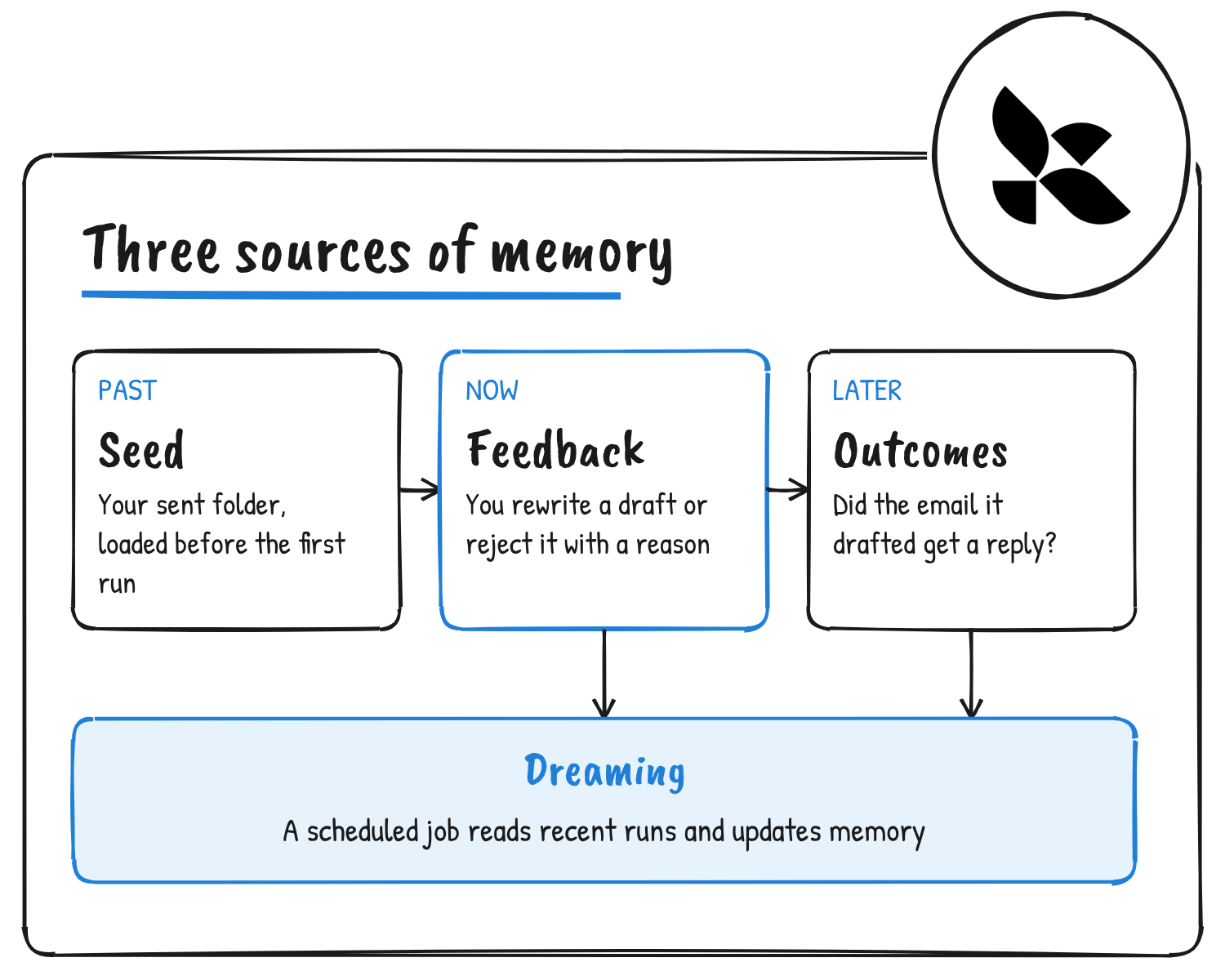
Storing memories is the easy part, Runkle says, because memory is often as simple as a file. The harder job is keeping memory useful as it grows, since an agent acts on whatever it has stored. The post names three problems: salience, which is deciding what’s worth saving; expiry, which is knowing when something like a launch date has gone stale; and duplication, which is merging new information instead of saving a second copy that later contradicts the first. Many proactive agents handle this with “dreaming”, a scheduled background job that reads the agent’s recent traces and updates its memory before the next run. Anthropic’s 13 November guide to always-on agents describes the same step.
To judge whether memory is helping, Runkle suggests tracking the outcomes it should improve: how long the assistant’s drafts take to get approved, how often its emails get replies and the share of its check-ins you act on. The payoff is autonomy. Runkle says an agent that remembers your feedback earns trust, and the assistant could book meetings on its own once you’ve stopped changing the times it proposes.
What a good check-in looks like
Runkle lists three things that have mattered most for LangChain’s internal agents. The first is high signal, meaning the agent surfaces only what’s valuable. GTM Agent’s review UI puts each conversation in one of three buckets: waiting on you, needs a draft reply, or needs no reply. In Slack threads, Robin uses a decision model called Jev to judge when it should join a conversation, instead of chiming in unannounced.
The second is review speed. Runkle says every check-in should be quick to review, because review is how your feedback gets back into memory, and that feedback carries taste and judgment that’s rarely written down. Working through GTM Agent’s backlog of outbound email drafts in Slack was slow, so LangChain built a custom UI for it.
The third is meeting people where they already work. LangChain’s agents live in Slack, where you can message them or tag them in a channel, and scheduled work shows up there too. GTM Agent’s daily brief arrives as a Slack message. Robin leads with a one- or two-sentence headline and puts the detail in a thread reply, and when it opens a pull request it asks for a review in Slack with a one-line summary, the size of the change and a button to claim it.
What you can build it on
Runkle says building agents has been context engineering for models for the last three years, and that proactive agents add the same job for people: the right context, in the right format, at the right time. When memory and UX work together, Runkle says, an agent’s check-ins get sharper and less frequent over time.
LangChain says you can build proactive agents today on Managed Deep Agents, which supports schedules, memory and async subagents. The open source Deep Agents harness has memory and async subagents too, with JavaScript versions of both. Runkle’s post also links the AI Engineer talk Proactive Agent Engineering and five earlier LangChain posts, including Goal Engineering.
Discover more from Sulat AI & Tech News
Subscribe to get the latest posts sent to your email.