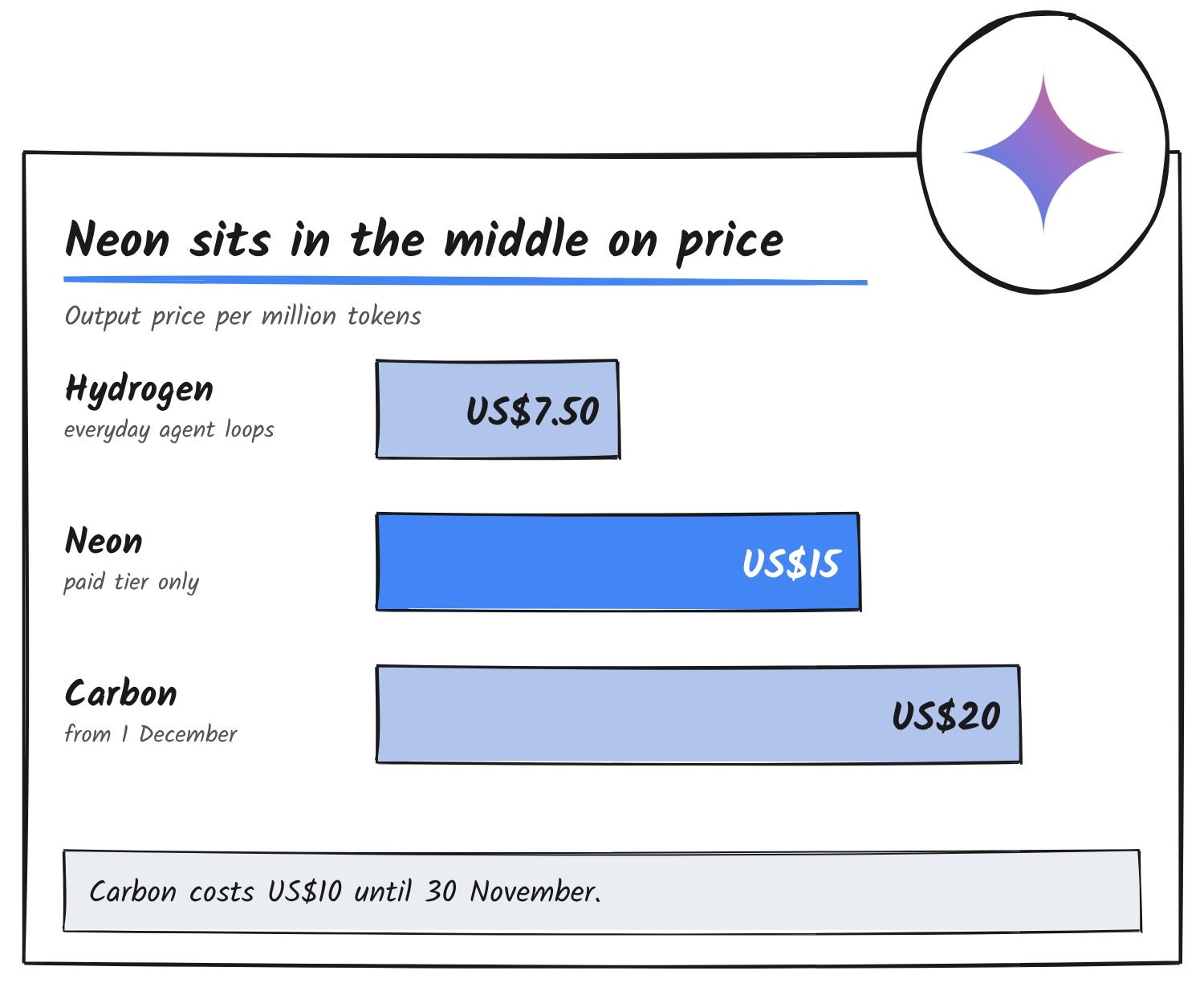
Google has released Gemini 4 Neon, a model that sits between Gemini 4 Hydrogen and Gemini 4 Carbon, according to its Gemini API release notes. It’s on the paid tier only, at US$3 per million input tokens and US$15 per million output tokens, with a 1M-token context window.
Logan Kilpatrick, who works on Gemini and Google AI Studio, announced it on X. He said Neon is available in Google AI Studio, the API and more, and called it “the right balance of intelligence, speed, and usability”.
Introducing Gemini 4 Neon! Pushing the frontier across domains and punching above its model class in a meaningful way. To me, Neon feels like the right balance of intelligence, speed, and usability. Available now across @GoogleAIStudio, the API, and more!
— Logan Kilpatrick (@OfficialLoganK) November 18, 2026
What Google says Neon is for
Google’s docs describe Neon as bringing “frontier-level intelligence with fast end-to-end task completion” to complex software engineering, knowledge work and science. Hydrogen stays the default for everyday coding and agent loops, and Carbon is the pick for the hardest architecture, debugging, science and security problems. Neon covers the high-frequency complex work between them.
For long coding sessions with many tool calls, Google says Neon makes fewer redundant file reads, handles context compaction reliably and invents fewer claims or shortcuts. It also says the model writes code with fewer security vulnerabilities. The release notes and the what’s-new page give no benchmark scores for Neon.
Price and limits
| Model | Input, per million tokens | Output, per million tokens |
|---|---|---|
| Gemini 4 Hydrogen | US$1.50 | US$7.50 |
| Gemini 4 Neon | US$3.00 | US$15.00 |
| Gemini 4 Carbon | US$2.00 to 30 November, then US$4.00 | US$10.00 to 30 November, then US$20.00 |
Neon is flat-priced across the whole window. Cached input costs US$0.15 per million tokens, a 95% discount that applies through implicit caching on prompts of at least 4,096 tokens. Explicit caching isn’t supported. Input, thinking and output tokens share one 1,048,576-token window, and a single response runs to 65,536 tokens by default. Background execution stretches that to 1M tokens. Neon takes text, images, video, audio and PDFs and returns text. The same day’s release notes add direct support for Word, PowerPoint and Excel files in the Gemini API.
Four thinking levels
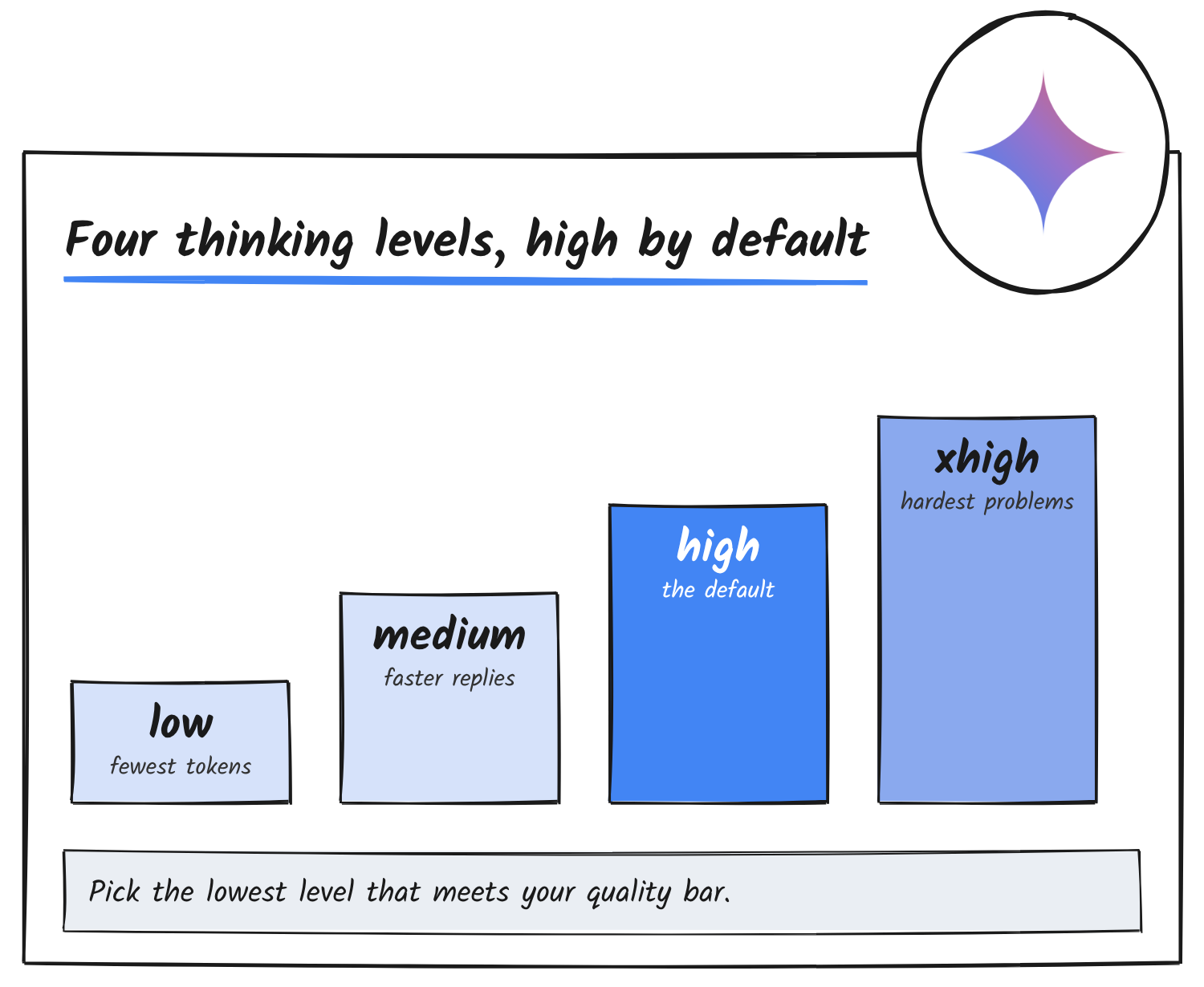
Neon supports low, medium, high and xhigh, and defaults to high. Google advises starting there and reserving xhigh for hard multi-step problems where high falls short, since xhigh uses more tokens and takes longer. Carbon and Argon default to medium and stop at high. Neon returns an error if you ask for minimal.
Moving to Neon
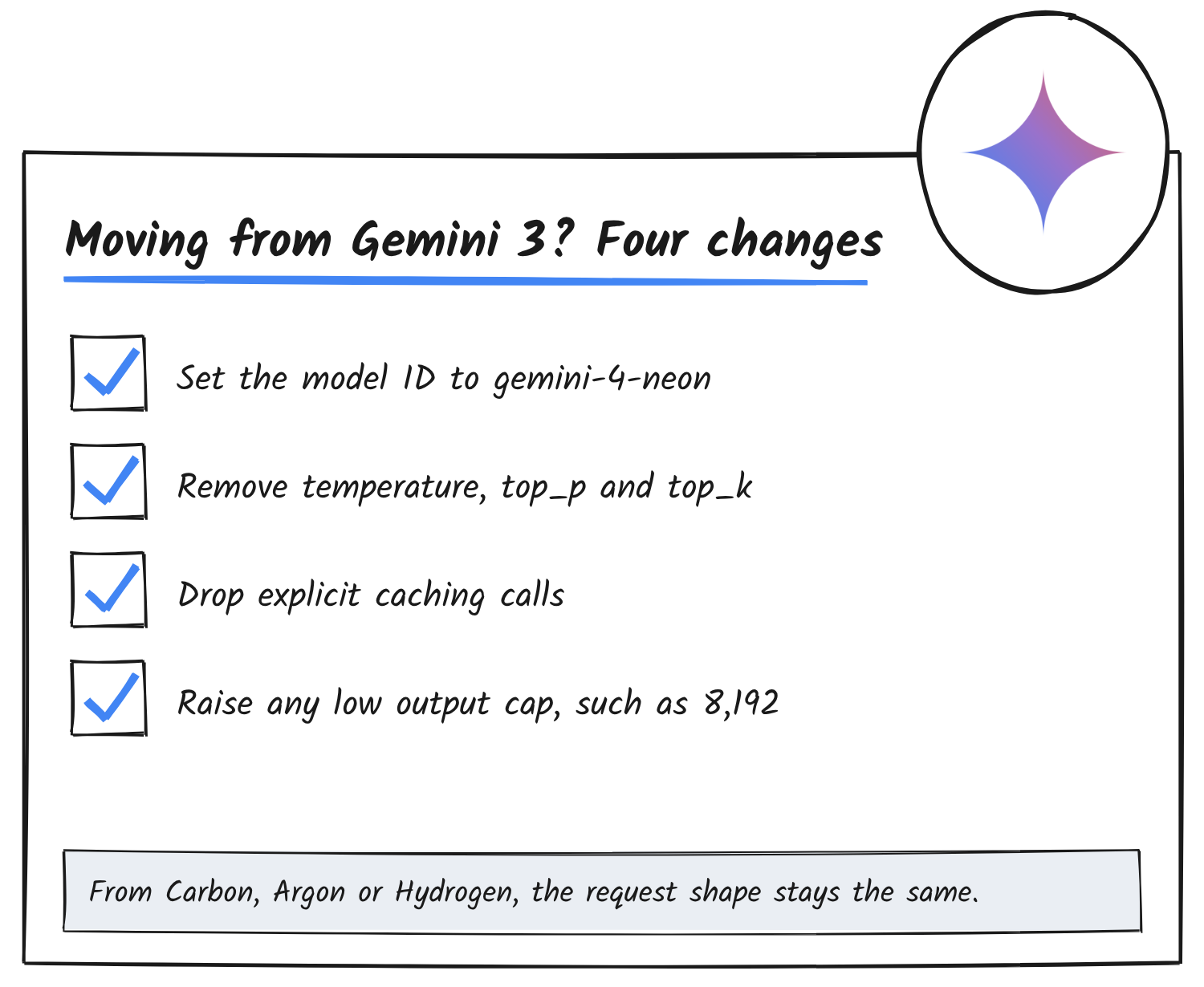
Developers on Carbon, Argon or Hydrogen need no request schema changes. Google’s checklist is to set the model ID to gemini-4-neon, check the thinking level and use a paid-tier project. From Gemini 3 models, Google tells developers to remove temperature, top_p and top_k, since out-of-range values return a 400 error, and to drop explicit caching calls. It also says to raise any low output cap, such as 8,192, to 65,536. The Antigravity agent in Gemini Managed Agents supports Neon on its own or paired with Hydrogen.
On Google Cloud, Neon is generally available on the Gemini Enterprise Agent Platform through the global endpoint and the US and EU multi-regions. Google’s docs say it’s open to verified enterprise customers in select regions. Google lists Neon as a Google Frontier Model subject to Section 34 of its Service Specific Terms, which covers abuse monitoring.
Carbon’s and Argon’s prices double on 1 December, from US$2 and US$10 to US$4 and US$20, which puts Neon 25% below them at list price.
Discover more from Sulat AI & Tech News
Subscribe to get the latest posts sent to your email.