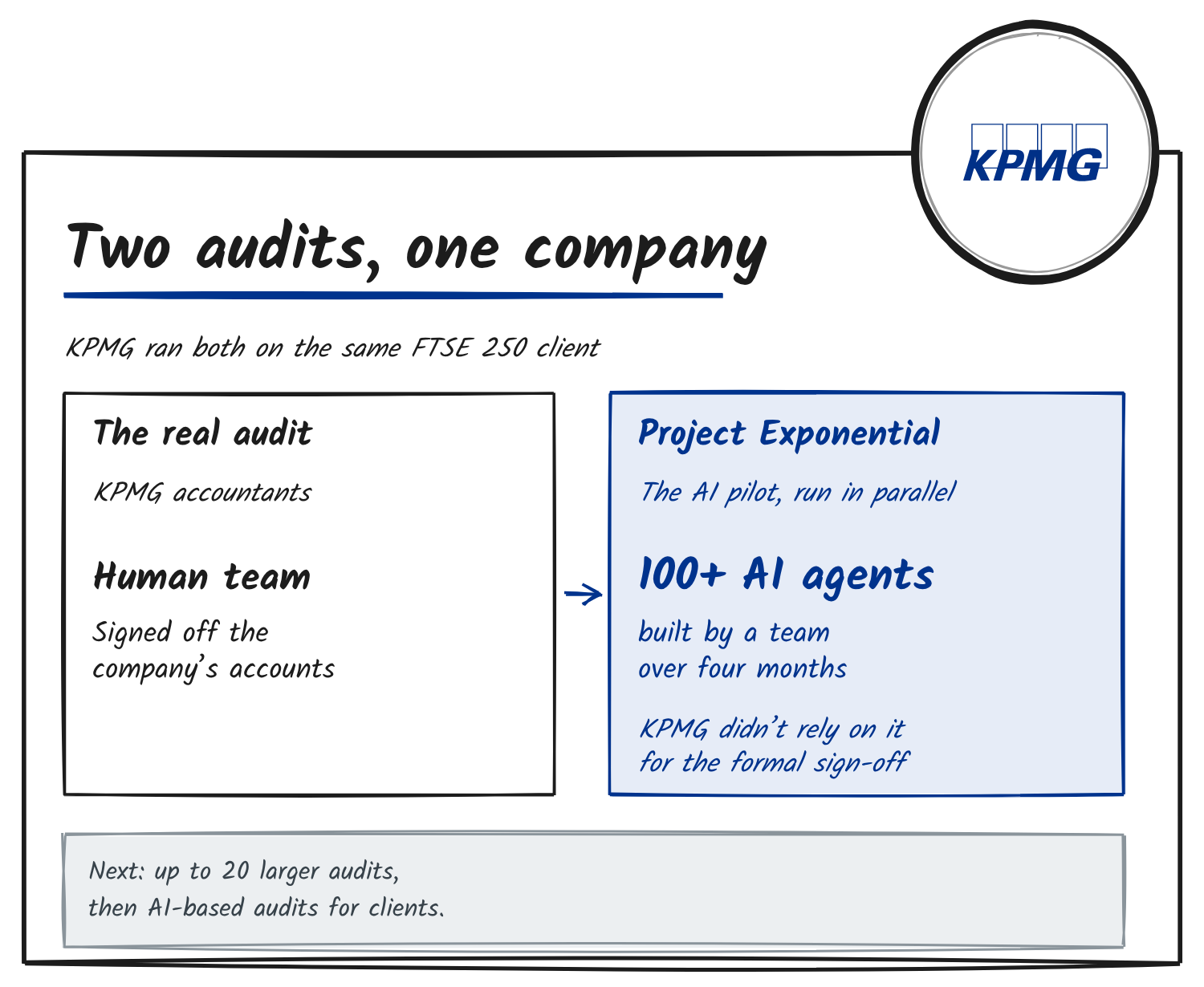
KPMG ran more than 100 AI agents through the audit of an unnamed FTSE 250 company this year, alongside the conventional audit by its accountants, the Financial Times reported on 18 November. The firm says the agents went deeper than the human team in several places and asked better questions in some.
KPMG’s UK head of audit, Cath Burnet, told the FT that a human still had to step in when an agent failed to match a set of regulations to the company’s documents. KPMG didn’t rely on the pilot’s findings when it signed off the company’s accounts.
What KPMG ran
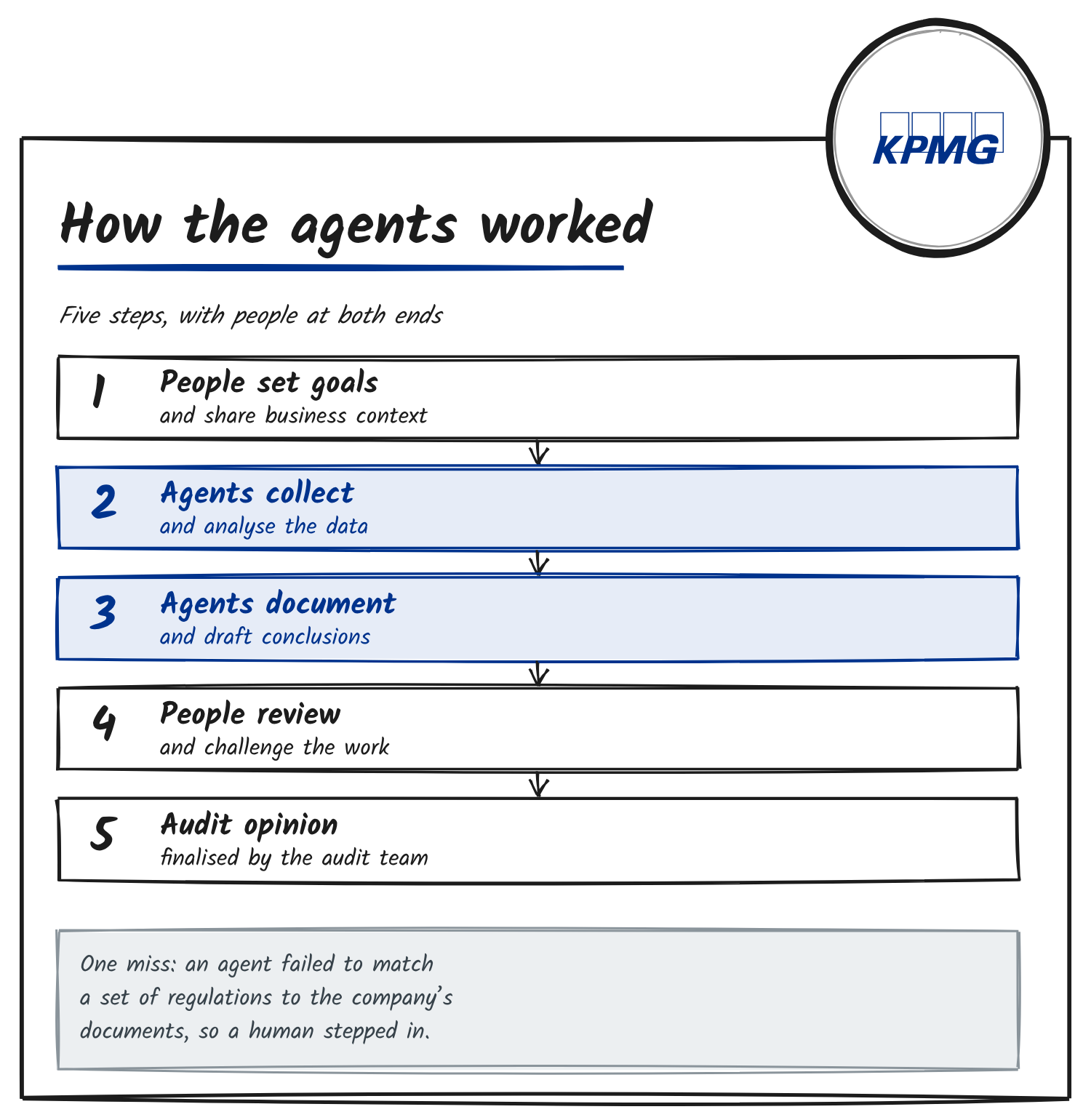
The pilot is codenamed Project Exponential. Earlier audit tools handled single jobs. Here the agents worked across the whole audit. They collected and analysed data, documented their work, drafted conclusions and observations, and suggested next steps to each other. A team built the agents over four months.
People bracketed the process. Staff set the agents’ objectives and gave them background on the company and its previous audits, then reviewed the work and challenged the conclusions before the audit opinion was finalised, Business Standard’s summary of the FT report says. An audit partner signed off the experimental exercise.
Burnet said the system gives full visibility and traceability, recording each agent’s interactions with documents down to individual characters and timestamps.
Where it fell short
The agents missed on one job: matching a set of regulations to the company’s documents, which a human fixed. Burnet also said some companies don’t hold clean enough data for agents to work well, and that the technology isn’t yet available at the scale needed for thousands of audits. She said the pilot team had a different shape and size from a traditional audit team, and that human involvement stays critical.
What’s next
KPMG wants to run the approach on up to 20 larger audits, with the aim of selling AI-based audits to clients in time. It acknowledged clear time-saving opportunities. It hasn’t said whether the savings will lower audit fees.
KPMG isn’t alone. PwC has run parallel audit projects too, its global assurance leader Andy Hammond told the FT, to see how AI performs across the whole process without relying on it.
The regulator and the clients
The Financial Reporting Council published guidance on 16 November on keeping auditors independent when they use technology, including AI. It warns that passing AI-derived insights to an audit client can threaten an auditor’s integrity, objectivity or independence, especially when the work behind the insight sits outside the audit of the financial statements. In March the regulator issued the first guidance from any audit regulator on generative and agentic AI tools in audits, and it says the human auditor is always accountable.
Clients are less settled than the firms. The Centre for Public Interest Audit’s 2026 Audit Trust Index, which surveyed 257 senior finance professionals in August, found 67% had more confidence in an AI tool than in an auditor for reviewing large volumes of data or contracts, against 14% for an auditor. On judgement tasks, such as challenging management’s assumptions and forming the audit opinion, respondents preferred auditors. Satisfaction with how firms deploy AI fell to 79% from 87% a year earlier. The top worry is auditors leaning too hard on AI and losing professional scepticism, at 46%, ahead of AI hallucinations at 34%.
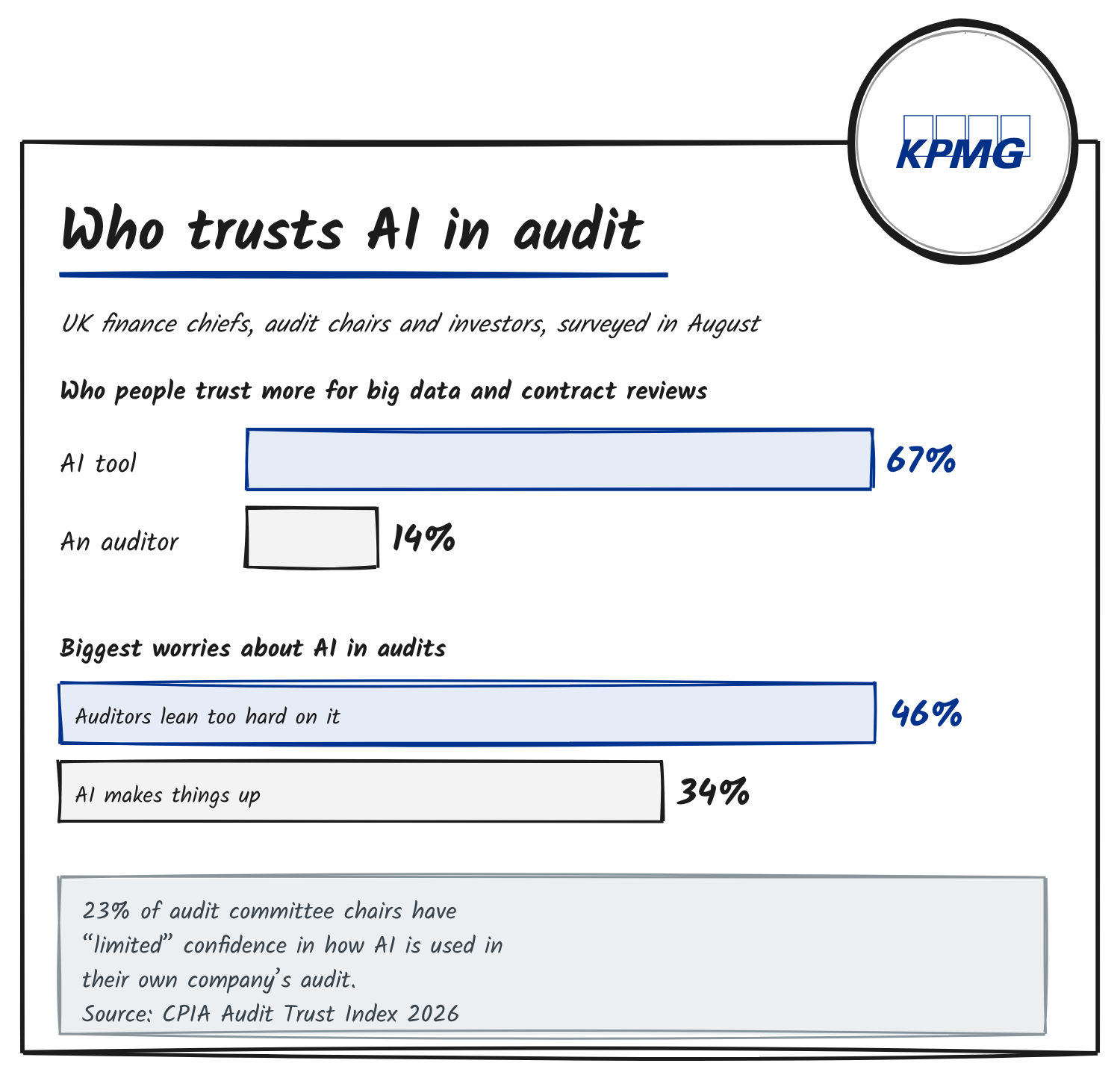
Of the audit committee chairs surveyed, 23% have limited confidence in how AI is used in their own company’s audit. Among investors, 15% said they have limited or no confidence.
KPMG hasn’t named the client.
Discover more from Sulat AI & Tech News
Subscribe to get the latest posts sent to your email.