McKinsey & Company and Cognition, the company behind the Devin coding agent, have formed an alliance to help enterprises choose engineering projects for Devin, set baselines for cost, speed and quality, and redesign teams around the agent, according to McKinsey’s announcement. Business Insider reported the deal on 16 November, which was 17 November in New Zealand, and Cognition published its own post the same day.
Russell Kaplan, Cognition’s co-founder and president, said regulated enterprise clients want to know “what was done, what it would have cost without AI, and what completing the project makes possible.” Saptarshi Ganguly, a McKinsey senior partner, said doubling software development productivity takes more than deploying AI agents: “It requires fundamentally rethinking how work gets done.”
What each company brings
Cognition describes Devin as an autonomous software engineer that works across several engineering projects at once, connected to the systems and security processes a company already uses, and sends its work back to engineers for review. Engineers set direction and decide what ships. Devin is model-agnostic, meaning it matches different AI models to different kinds of work, and Cognition says that gets enterprises frontier performance for up to 60% less. It says it already works with six of the eight US global systemically important banks, the banks regulators designate as systemically important worldwide, and three of the six top US health insurers.
McKinsey says it has helped more than 50 companies rewire for AI-powered software development, and it will bring training and hands-on coaching for engineers, managers and senior executives. Cognition’s post cites McKinsey’s Rewired research, which found that across 20 leading transformations, companies that focused on one to three high-value domains such as software averaged an EBITDA uplift of about 20% and broke even within one to two years. EBITDA is earnings before interest, tax, depreciation and amortisation.
The survey behind the pitch
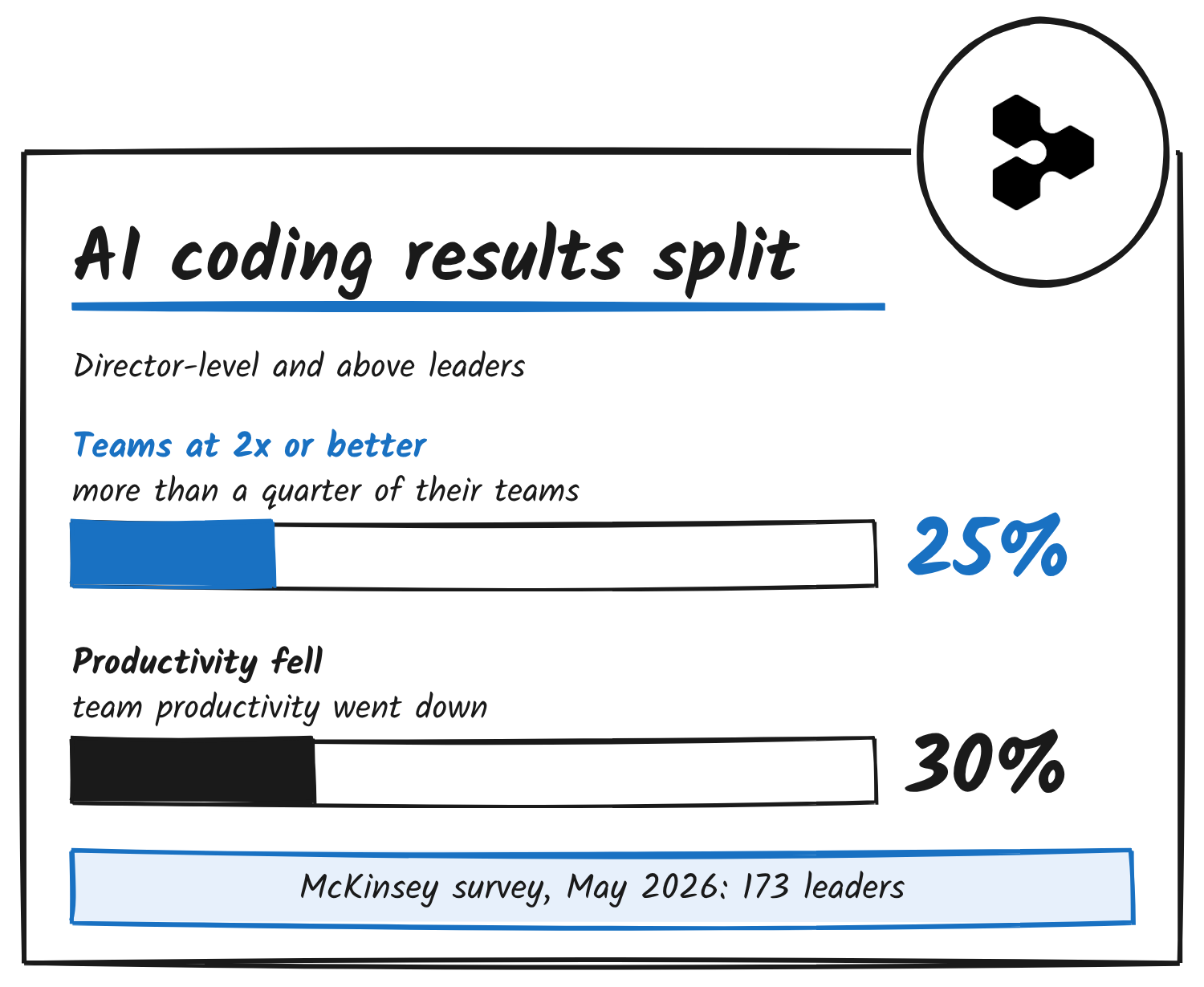
McKinsey’s survey of 334 product and engineering leaders in May 2026 found a split. Among the 173 respondents at director level or above, 25% reported meaningful acceleration, which McKinsey counts as organisations where over a quarter of teams at least doubled their productivity, and 30% said team productivity had fallen. Among the engineers surveyed, about 80% reported an average gain of roughly 3%, while the top 20% averaged 55%.
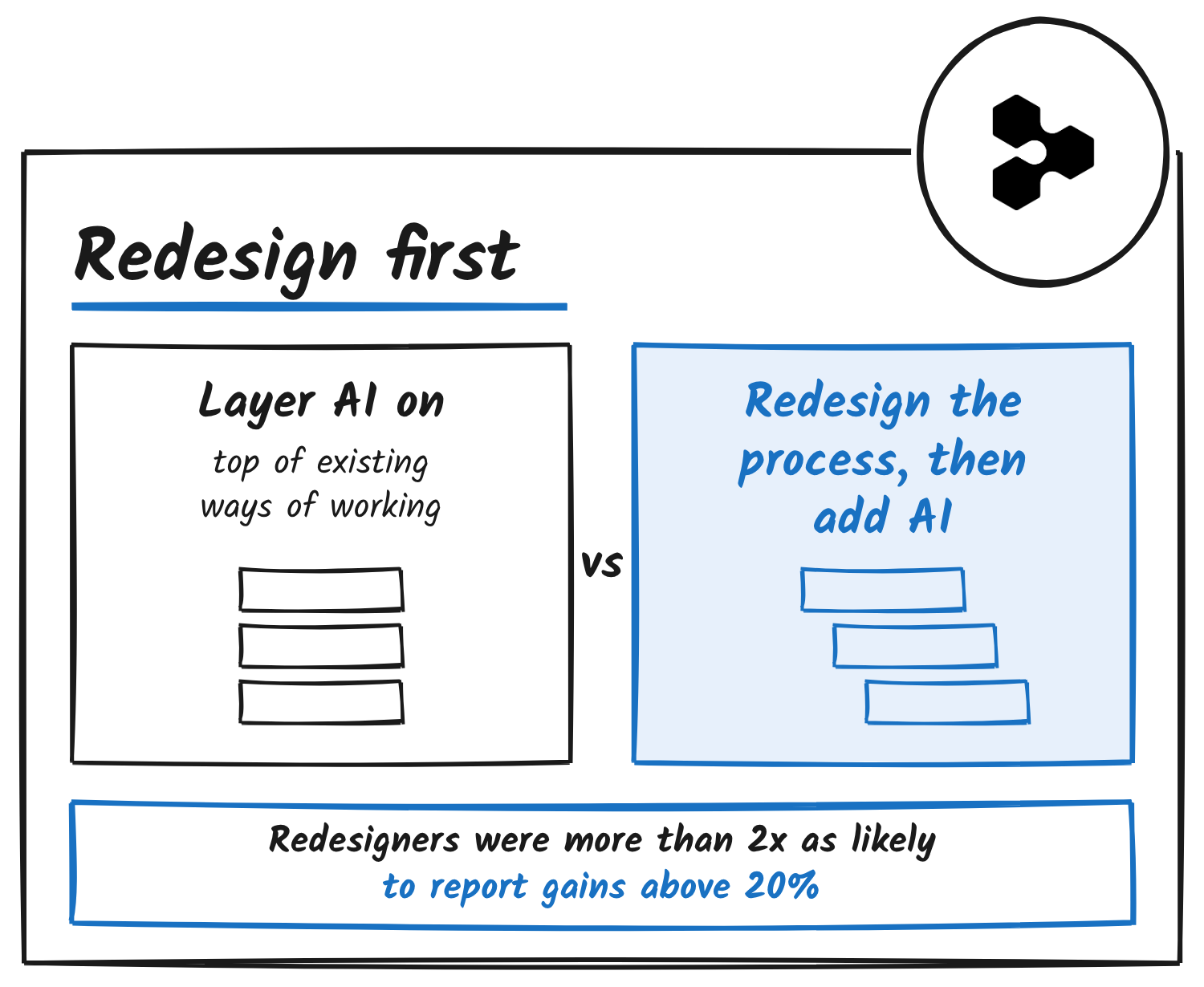
McKinsey says the difference comes from how work is organised rather than which tools a team has. Respondents whose organisations redesigned their processes before adding AI were more than twice as likely to report productivity gains above 20% as those that layered AI onto existing ways of working.
Cost pressure sits alongside that. Business Insider reports that Goldman Sachs, Cisco and JPMorgan have become more selective about who gets access to which AI tools and how they’re used. Cognition’s Art Levy said Devin’s approach suits large software modernisation projects that companies have put off, and pointed to one client whose enterprise resource planning update, expected to take five years, is being compressed into 18 months. “It’s no longer, ‘Can you get the job done?'” Levy said. “It’s, ‘Can you get the job done, and are you cheap at doing it?'”
How Cognition says it counts the value
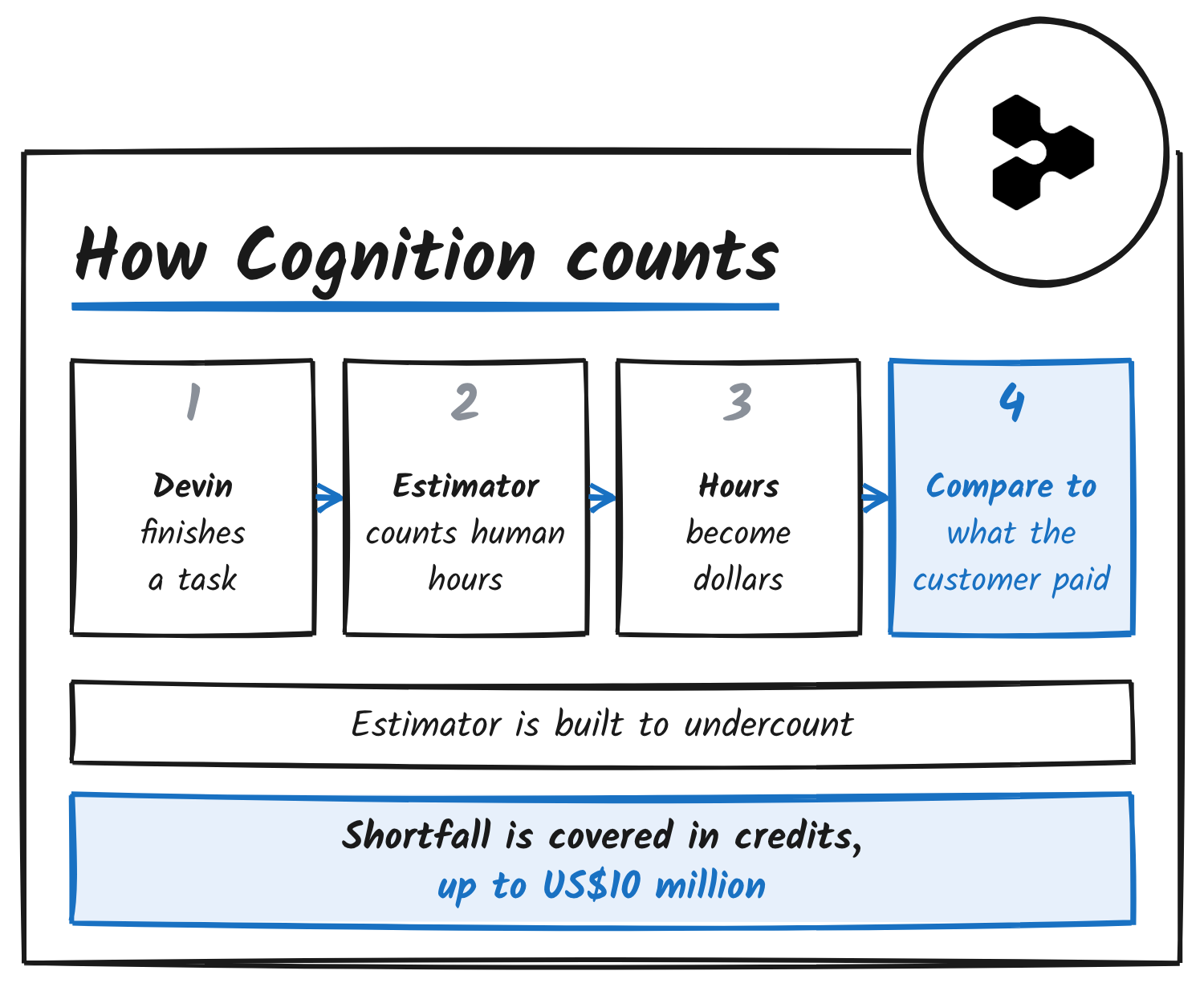
In an interview McKinsey published on 16 October, Kaplan said tokens, seats and lines of code show how much a tool was used, not what it produced. Cognition’s estimator measures the equivalent human engineering hours for each completed Devin task, validates them against engineers’ own estimates, converts the hours into dollars and compares them with what the customer spent. Kaplan said Cognition calibrated it to undercount. Cognition backs it with an AI Productivity Guarantee: if Devin delivers less engineering value than a customer pays for, Cognition covers the gap in usage credits, up to US$10 million.
Comarch, a Central European technology company, is the example in both companies’ posts. Kaplan said it set an 18-month goal to rebuild ERP XL, a 20-year-old system of about ten million lines of code, and ran a controlled proof of concept scored on quality, speed and total cost of ownership. Comarch’s chief technology officer, Tomasz Stachlewski, said McKinsey is helping the company redesign how its teams work. Kaplan also said Devin now writes roughly 95% of the code Cognition ships, and that its total code output grew about 7x in the past six months.
Organisations that want to deploy Devin with McKinsey can contact Cognition’s enterprise team, the post says.
Sources: McKinsey alliance announcement, Cognition alliance post, McKinsey, “Beyond the copilot”, McKinsey interview with Russell Kaplan, Business Insider.
Disclosure: I’m an OpenAI, Firecrawl and Devin ambassador.
Discover more from Sulat AI & Tech News
Subscribe to get the latest posts sent to your email.