
The New Zealand Defence Force says someone gained unauthorised access to its website systems and that a database tied to its Force4Families Defence Discounts scheme has been accessed. The database included the names and email addresses of registered users, according to RNZ’s report of the Defence Force’s statement.
The Defence Force says its website provider notified it on Friday morning, 20 November. It then removed the affected websites from service and began a forensic investigation. It told Stuff the report prompted it to take several public websites offline. This is the longer look at what’s confirmed, what the Defence Force hasn’t said, and what the official guidance tells registrants to do.
In plain words
Someone got into the systems behind the Defence Force’s public websites. Its website provider reported it to the Defence Force, which switched the affected sites off and started a forensic investigation, a technical examination to work out what an intruder reached. One of the things the Defence Force says was reached is the sign-up database for Force4Families, its discount scheme for serving personnel, their families and veterans. That database holds names and email addresses.
A list of real names and email addresses helps scammers write messages that look personal. The Defence Force’s advice to registrants is to stay alert to phishing emails, scams and requests for personal information they didn’t ask for. The National Cyber Security Centre (NCSC) says in its phishing guidance that a phishing email may contain your name if the attacker got your information from a data breach.
What the Defence Force has said
A spokesperson gave the statement to both RNZ and Stuff on 20 November. Preliminary inquiries indicate that a database associated with the Force4Families Defence Discounts scheme was accessed, the spokesperson said, and it included names and email addresses of registered users.
The Defence Force says it has contacted individuals whose information may have been affected and given them advice on protecting themselves from malicious activity. Both reports say it has informed the Privacy Commissioner. Stuff reports that police have been approached for comment.
The spokesperson told RNZ: “At this stage, investigations remain ongoing and we continue to determine the full extent of any information affected.”
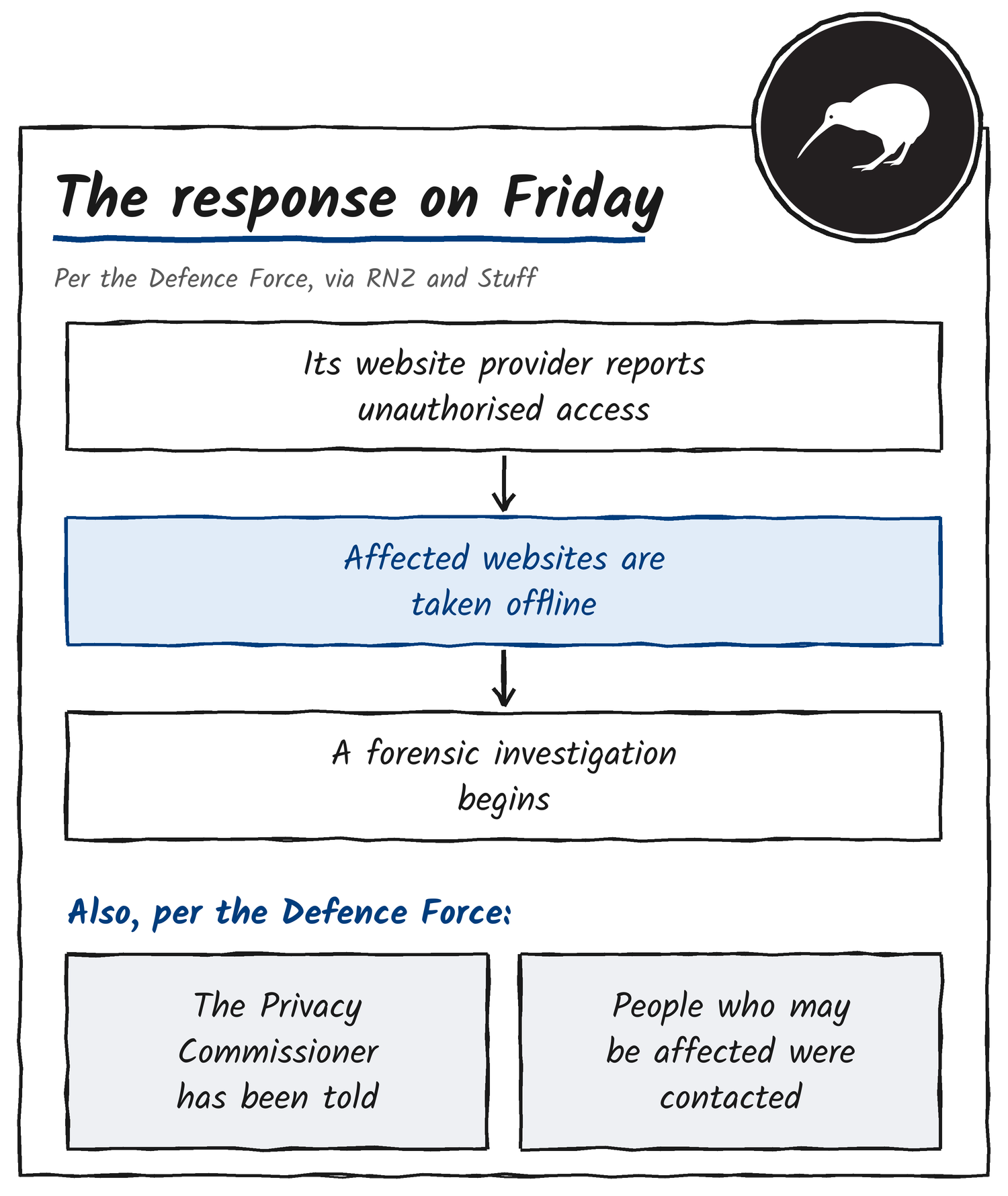
What the websites show now
Just before 10pm NZ time on 20 November, the Defence Force’s main website, nzdf.mil.nz, and the Force4Families address, force4families.mil.nz, both returned a temporary page instead of the normal site. The page reads “We’re working on our website. Our website is temporarily unavailable. We’re sorry for the inconvenience.”
It says career information and applications are still available through the Defence Careers site. It also says “Force4Families Discount registrations and the discount directory are paused until the site returns.” The page lists a general enquiries line, 04 496 0999, and tells people to call 111 in an emergency. Neither the page nor the statement as reported names the websites that were taken offline.
What Force4Families is
Force4Families is the Defence Force’s discount scheme. Its site says the Defence Force has agreements with businesses to give discounted prices to Defence Force members, their families, former serving members and veterans. Registered users get a digital NZDF Whānau Discount Card.
The scheme’s registration page asks for a first name, last name and email address, the person’s relationship to the Defence Force (member, family or whānau, or veteran or former member) and the Service they’re linked to: the Navy, Army, Air Force or Defence Force. The version I could read dates from December 2024. The Defence Force hasn’t said which of those fields were in the database it says was accessed.
What isn’t known
The Defence Force hasn’t said how many people are registered or how many are affected. It hasn’t said which websites it took offline, how the access happened, which company is its website provider, whether the database held passwords or who is behind it. It says it’s still working out the full extent of any information affected.
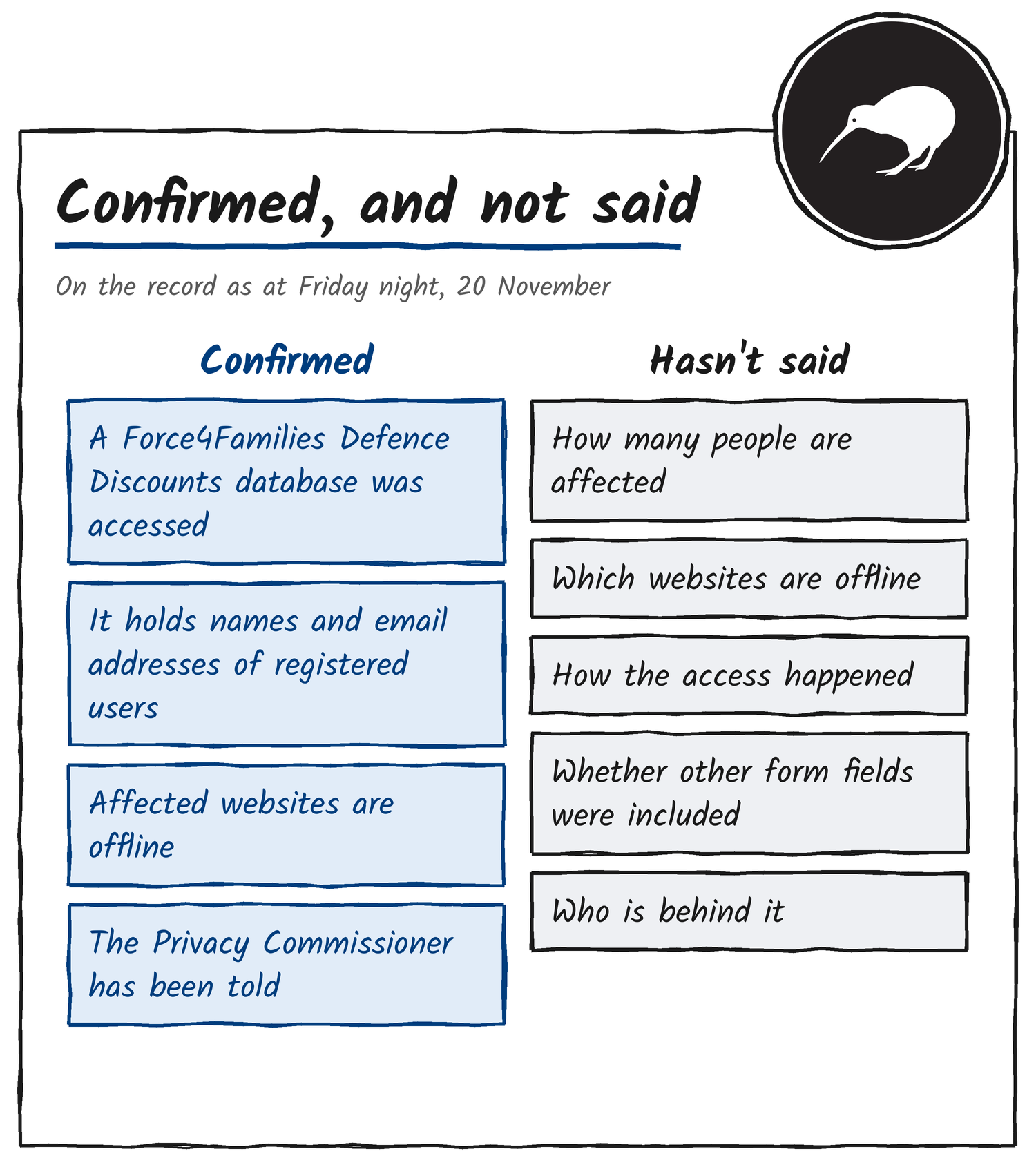
As of about 10pm NZ time on 20 November, I found no public statement on the incident from the Privacy Commissioner, the NCSC or a minister. The Defence Force says it has told the Privacy Commissioner. The Office of the Privacy Commissioner’s published guidance says an organisation must notify affected people and the Commissioner as soon as practicable once it knows a breach is notifiable, and that the office expects to be notified within 72 hours of an organisation becoming aware that a breach is notifiable. The Defence Force hasn’t said whether it treats this as a notifiable breach.
What to do if you registered
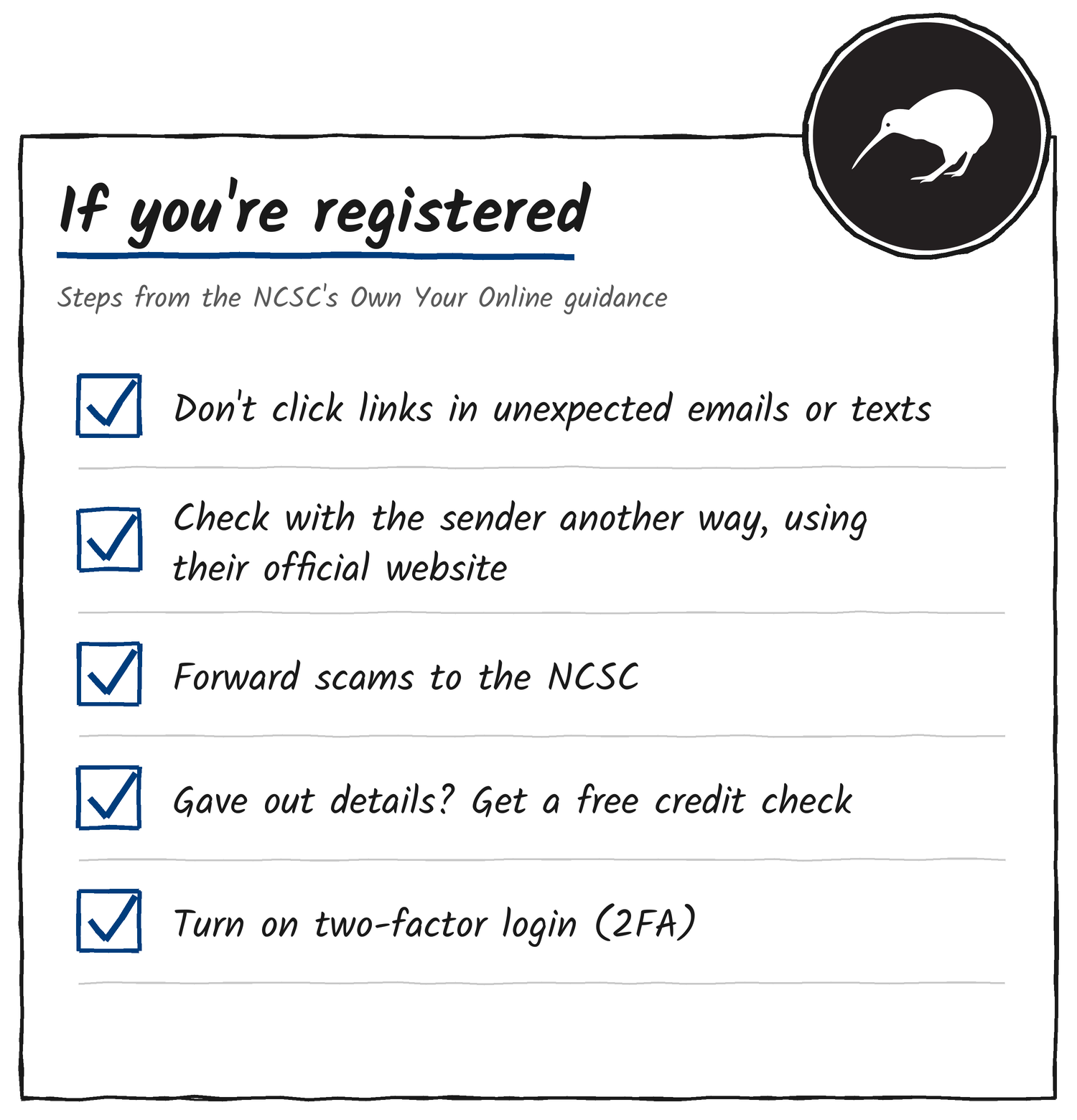
The Defence Force’s spokesperson told RNZ: “As a precaution, individuals registered through the website should remain alert to phishing emails, scams and unsolicited requests for personal information.” The NCSC’s Own Your Online guidance gives the practical steps:
- Don’t click links in messages from someone you don’t know, or that seem out of character for someone you do know. The NCSC says to use bookmarks or a search engine to reach a website instead.
- If you’re not sure why you’re being asked for information, contact the organisation another way, such as the phone number on its official website.
- If you haven’t clicked anything in a phishing email, delete it. The NCSC says your system and personal information are safe if you haven’t clicked on anything.
- Report a scam by forwarding the message to the NCSC through its website or by emailing [email protected].
- If you gave out personal or financial details, contact your bank or email provider, change the passwords on any accounts at risk and get a free credit check. There are three main credit reporting companies in NZ, and you have to contact each.
- Turn on two-factor authentication on your online accounts.
The Defence Force hasn’t said whether passwords were in the database. The NCSC’s general advice after any breach is to change the password on the affected account and on any other account that shares it, and to use each password only once. For free support after a leak, Own Your Online points people to IDCARE, at idcare.org or 0800 121 068.
Glossary
| Term | Plain meaning |
|---|---|
| Unauthorised access | Someone getting into a system without permission. |
| Forensic investigation | A technical examination of systems to work out what an intruder reached and how. |
| Phishing | Scam messages that pretend to come from a trusted organisation to get you to click a link or hand over information. |
| Privacy Commissioner | The head of the Office of the Privacy Commissioner, which oversees the Privacy Act and is told about serious privacy breaches. |
| NCSC | The National Cyber Security Centre, part of the GCSB, which takes reports of cyber incidents and publishes the Own Your Online advice. |
| Two-factor authentication (2FA) | A second check, such as a code from an app, when you log in. |
| Force4Families | The Defence Force’s discount scheme for members, families, veterans and former serving members. |
The Defence Force says its investigation is ongoing, and its temporary page says Force4Families registrations and the discount directory stay paused until the site returns.
Discover more from Sulat AI & Tech News
Subscribe to get the latest posts sent to your email.