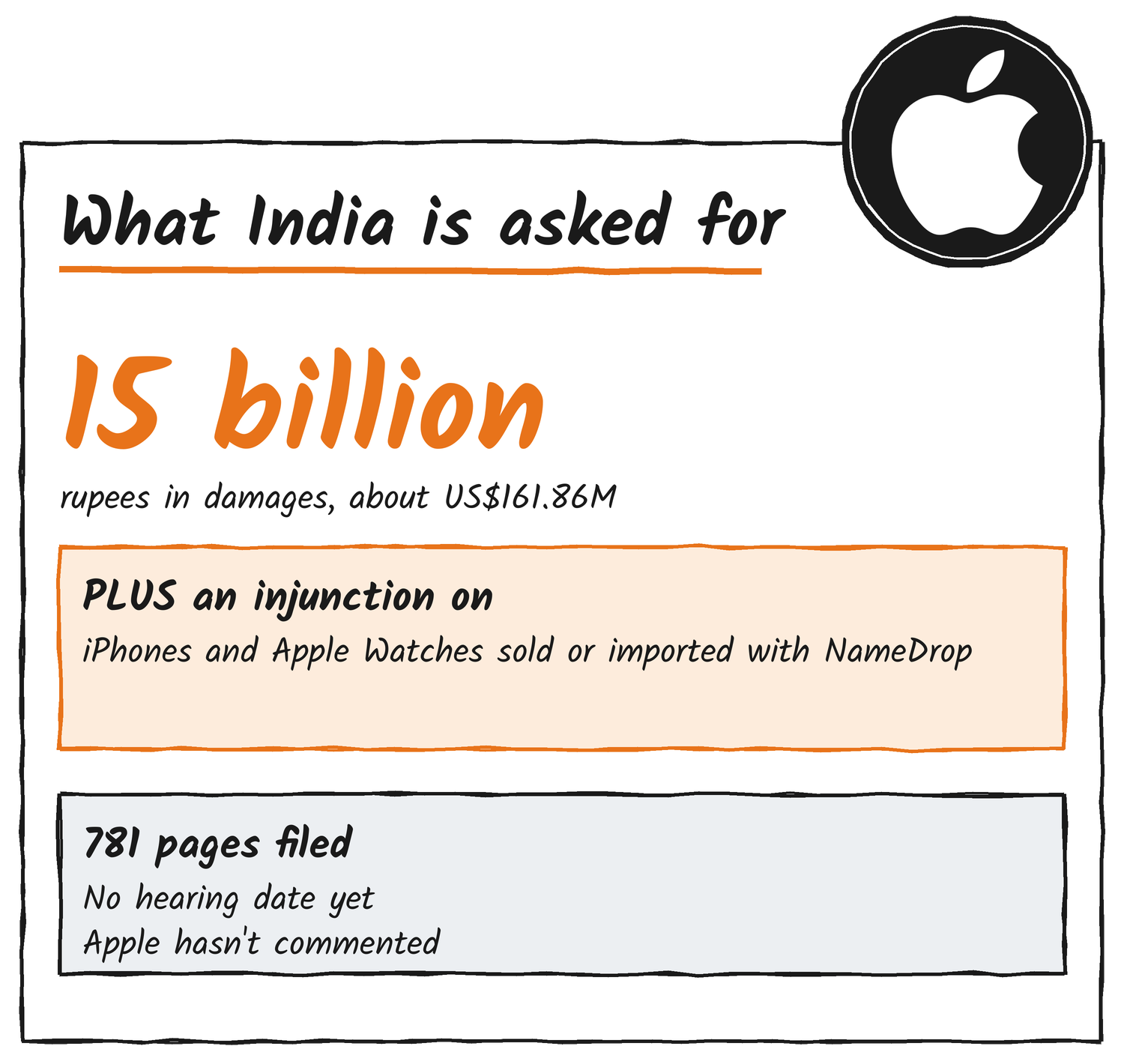
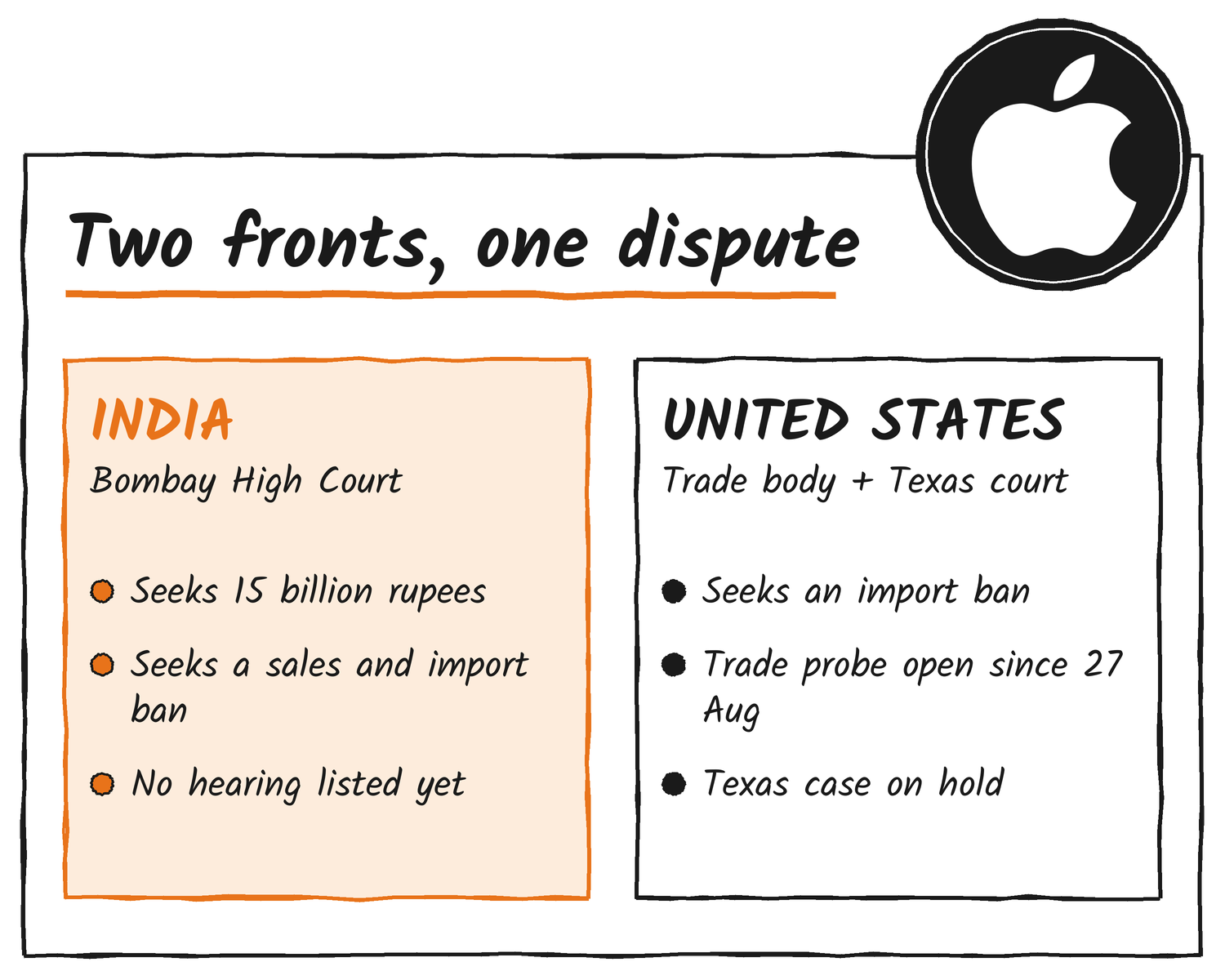
GG Technologies, the Santa Monica company behind the StayTouch contact-sharing app, has sued Apple in India’s Bombay High Court over NameDrop, TechCrunch reported on 20 November. It wants ₹15 billion (about US$161.86 million) in damages and an injunction.
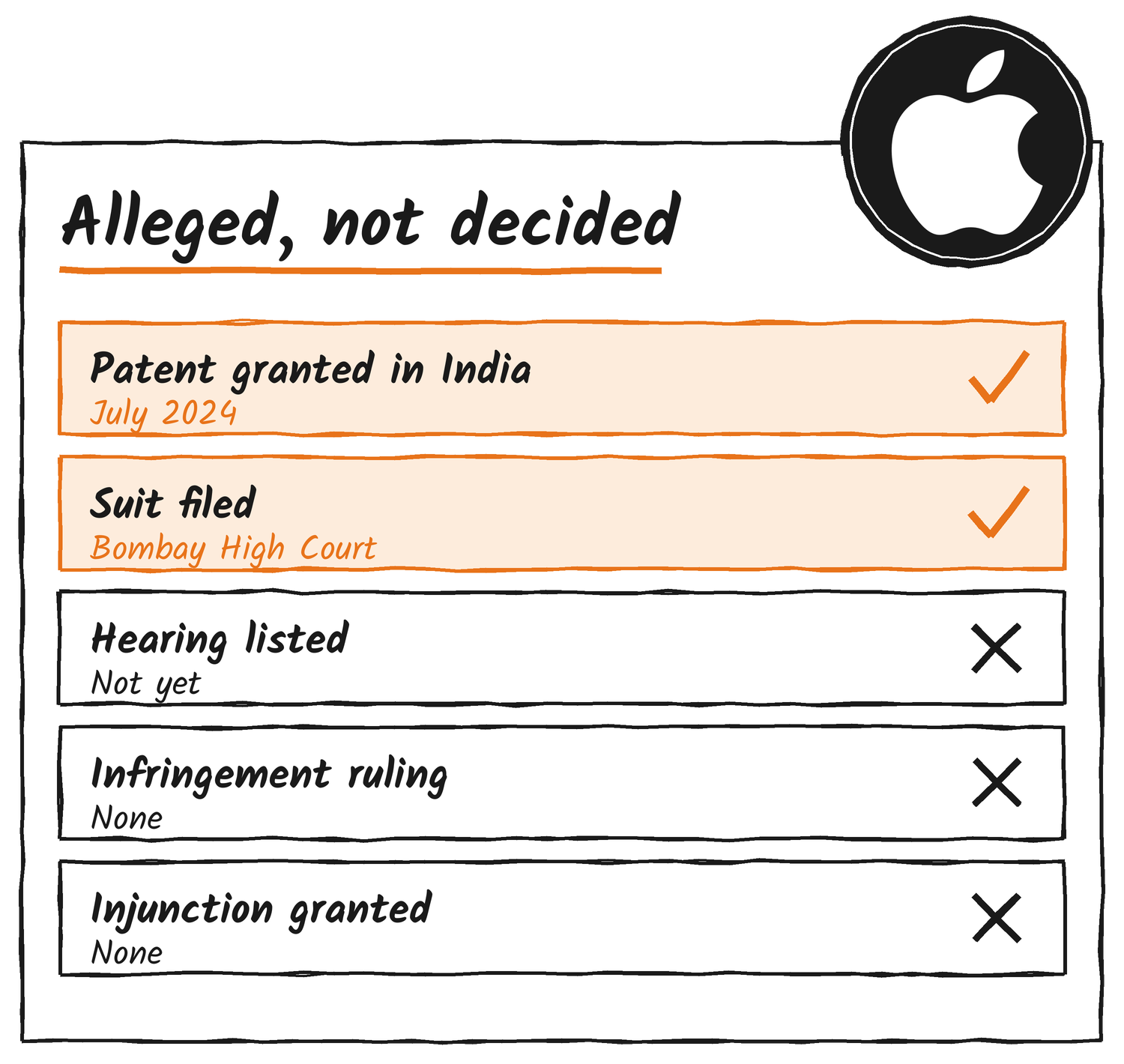
TechCrunch reviewed the 781-page filing. It says GG Technologies asks the court to restrict Apple from selling or importing iPhones and Apple Watches preloaded with NameDrop in India. The case hasn’t been listed for a hearing, and Apple didn’t respond to TechCrunch’s request for comment. Everything in the filing is the company’s allegation, and no court has ruled on any of it.
What GG Technologies says NameDrop copies
GG Technologies launched StayTouch in 2019, the year it first sought US patent protection for the technology. It filed its Indian application in 2021 and received the patent in July 2024, TechCrunch reports. The patent covers technology that lets phones exchange contact details with nearby devices without manual pairing. Gaurav Goel, a former Goldman Sachs investment banker, founded the company in 2018.
Apple announced NameDrop as part of iOS 17 in June 2023. It reached iPhones later that year, and Apple Watch support followed in October 2023 with watchOS 10.1. TechCrunch’s report doesn’t give the Indian patent number or the claims at issue.
“We are seeking an injunction to restrict the usage of the NameDrop feature which is native to iOS.”
GG Technologies, to TechCrunch
The same fight is running in the US
The company’s US cases rest on U.S. Patent 12,022,369, titled “Method and System for Proximity-Based Contact Transfer”, which issued on 25 June 2024. GG Technologies sued Apple in the Western District of Texas on 10 April 2026 (case 6:26-cv-00237), accusing NameDrop on iPhones and Apple Watches of infringing it. That complaint says the company filed an Indian infringement suit the same day. TechCrunch dates the Bombay filing to October, after mediation that began in April failed in September. The two accounts don’t match.
On 28 July the company also filed a complaint with the US International Trade Commission. The Commission opened Investigation 337-TA-1520 on 27 August with Apple as the respondent, covering claims 1 to 3 and 13 to 17 of the ‘369 patent. GG Technologies asks for a limited exclusion order and a cease and desist order. The Commission says it hasn’t decided the merits. An administrative law judge will hold a hearing and issue an initial determination, which the Commission can review.
Apple asked the Texas court to pause the April case while the Commission investigation runs, and the judge granted the unopposed motion on 15 September. On 3 November GG Technologies filed a second Texas suit (6:26-cv-00701) on U.S. Patent 12,784,009, a continuation of the ‘369 family, according to Patent Litigator’s summary of the complaint.
| Forum | Patent | Relief sought | Status |
|---|---|---|---|
| Bombay High Court | Indian patent, granted July 2024 | ₹15 billion and an injunction on sales and imports of NameDrop iPhones and Apple Watches | Filed, no hearing listed |
| US International Trade Commission, 337-TA-1520 | US 12,022,369 | Limited exclusion order and cease and desist order | Open since 27 August, no merits decision |
| W.D. Texas, 6:26-cv-00237 | US 12,022,369 | Infringement claim over NameDrop | Stayed 15 September |
| W.D. Texas, 6:26-cv-00701 | US 12,784,009 | Damages, injunctions and treble damages | Filed 3 November |
What happens next
Nothing is scheduled in India. Pre-institution mediation is generally required before commercial lawsuits there, TechCrunch notes, which is why the Bombay case followed the failed mediation. Until the court lists the case, the injunction request stays a request.
At the Commission, a remedial order takes effect when issued and becomes final 60 days later unless the US Trade Representative disapproves it for policy reasons in that window.
Discover more from Sulat AI & Tech News
Subscribe to get the latest posts sent to your email.